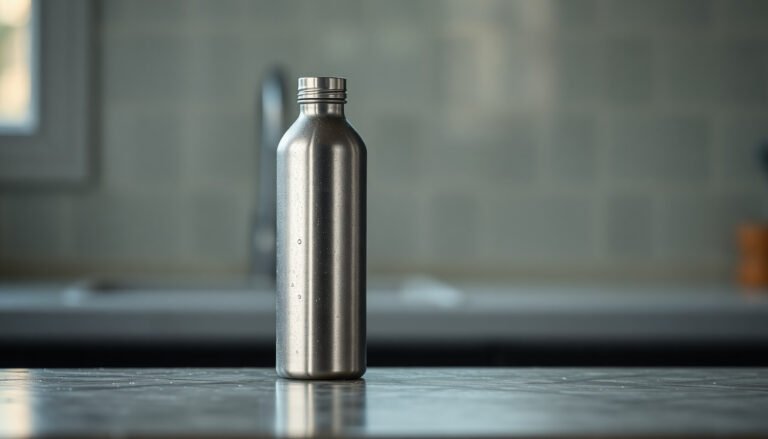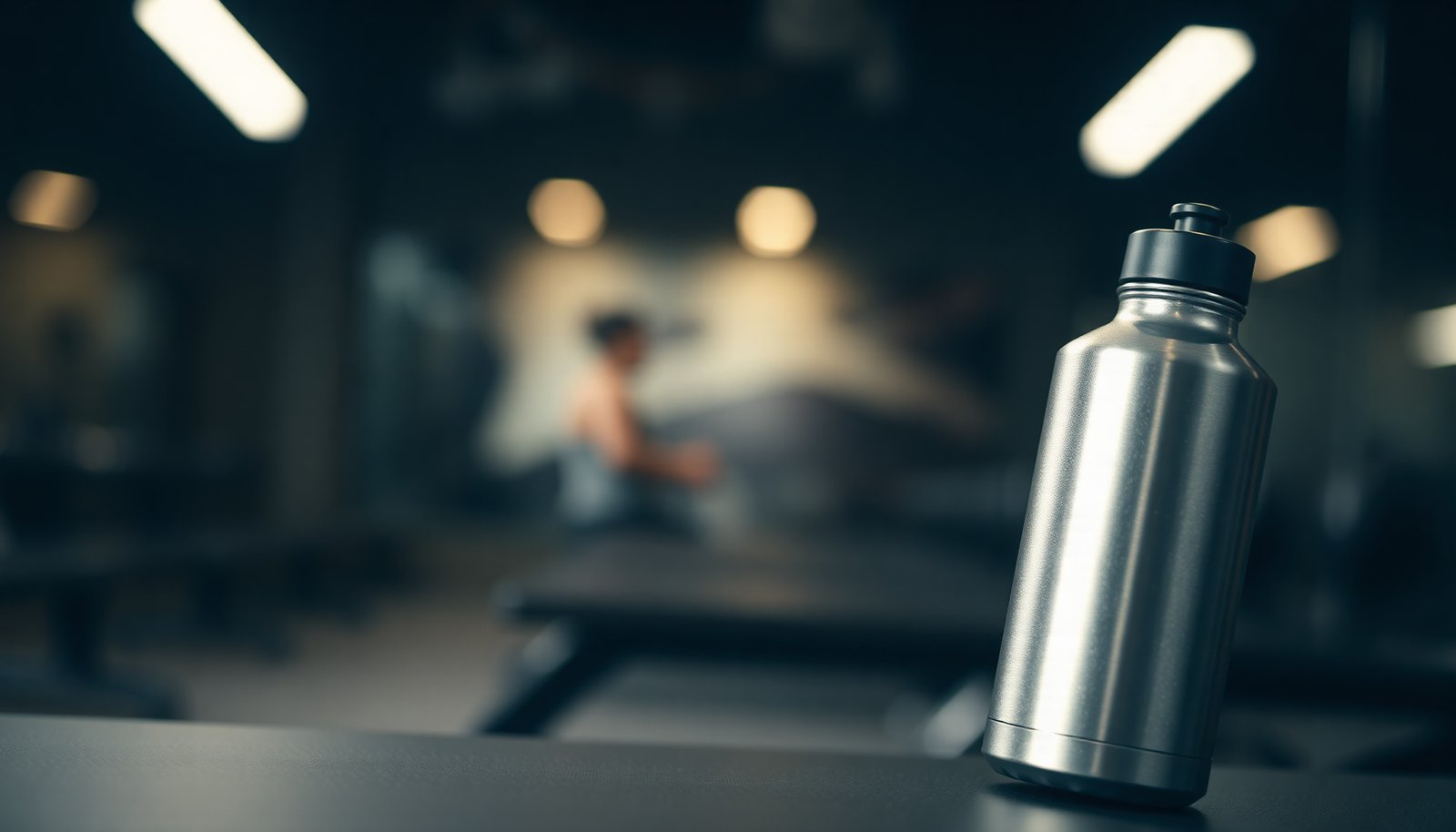
Many gymgoers assume any aluminum water bottle is equally tough and safe, but the details make the difference between a reliable training companion and a leaky, metallic-tasting letdown. To pick the best option, we prioritize food-grade aluminum, a tight, gasket-sealed lid, corrosion-resistant interior lining, easy-clean design, and a size that matches your workout. Across these criteria, the most dependable choice is a leakproof bottle with a smooth-drinking mouth and a durable finish that won’t scuff in your bag.




Pick an aluminum water bottle for the gym by matching three things first: a genuinely leak-proof lid, a capacity that fits how long you train, and an interior liner/coating that’s safe for the drinks you actually use. Get those right, and the rest—insulation, bag fit, and cleaning access—becomes much easier to choose confidently, especially in 2026 when more athletes are moving to reusable bottles for daily training hygiene and sustainability.
This guide walks you through what to check before you buy so your gym bottle is reliable during sets, easy to clean between sessions, and comfortable to carry when you’re balancing a gym bag, keys, and a towel.
Who this is for / when it applies:
This is for gym-goers who want a durable, lightweight bottle and are trying to choose the right aluminum option without wasting money on the wrong lid style, size, or build. It’s especially useful if you care about hygiene (easy cleaning), portability (bag/cup fit), and whether you want cold or hot retention.
Choose the right capacity for your workouts
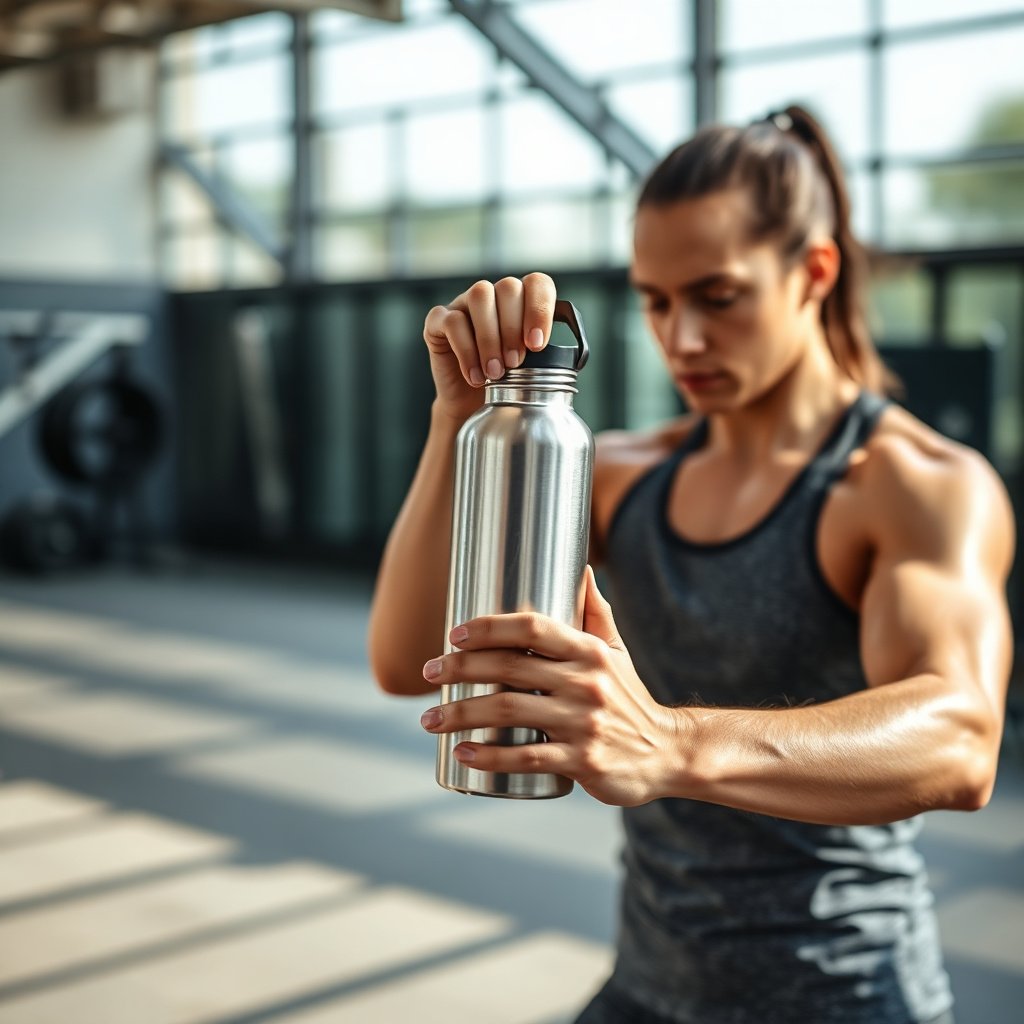
Pick the capacity that covers your typical workout window so you’re not forced to ration sips mid-session. Most gym routines land around 20–32 oz (600–950 ml), but the right “oz” depends on whether you refill during your session or only top off at the start.
Match capacity to refill habits
In practice, capacity is less about “how much you like to drink” and more about your workflow: do you fill once and go, or do you refill at a water fountain? According to the American College of Sports Medicine (ACSM), typical fluid replacement needs during exercise often fall around 0.4–0.8 L per hour depending on intensity and conditions (ACSM position stand, 2007). If you train for 45–75 minutes, that hydration band often guides whether a 24 oz or 32 oz bottle feels effortless or constantly underfilled.
Consider your gym environment (and your bag)
If your gym has a water station you can reach, a smaller aluminum water bottle is usually fine—and easier to handle during supersets. If you train in a spot without easy refills (or you arrive dehydrated and want a full buffer), a larger capacity reduces the “did I bring enough?” stress.
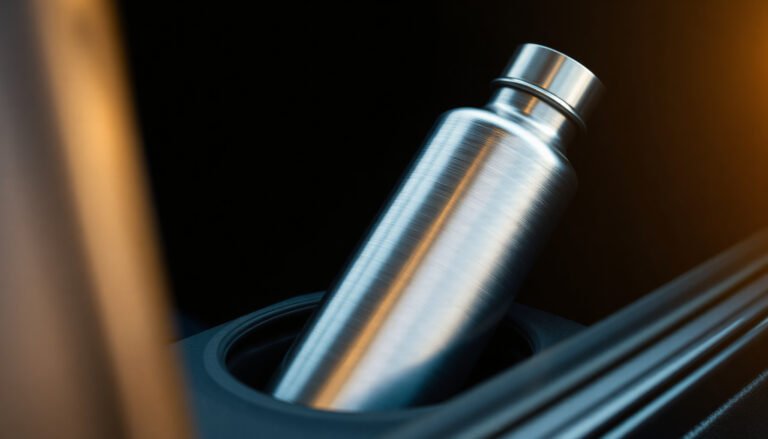
Also check portability: tall, narrow bottles can fit some cup holders but may be awkward in side pockets. Wide bottles sometimes look stable, yet they can compress against mesh pockets, zippers, or dividers. If your gym bag is tight, prioritize a bottle that stays stable when stood up and doesn’t snag your strap.
Aluminum Bottle Capacity vs. Single-Fill Coverage for Common Training Windows (Model using 0.6 L/hr)
| # | Capacity | Approx. ml | Covers 45 min (0.45 L) | Covers 60 min (0.60 L) | Covers 75 min (0.75 L) | Single-Fill Success ★ |
|---|---|---|---|---|---|---|
| 1 | 20 oz | 591 ml | Yes | No | No | ★☆☆☆☆ |
| 2 | 24 oz | 710 ml | Yes | Yes | No | ★★★☆☆ |
| 3 | 28 oz | 828 ml | Yes | Yes | Yes | ★★★★★ |
| 4 | 32 oz | 946 ml | Yes | Yes | Yes | ★★★★★ |
| 5 | 40 oz | 1,183 ml | Yes | Yes | Yes | ★★★★★ |
| 6 | 48 oz | 1,417 ml | Yes | Yes | Yes | ★★★★★ |
| 7 | 64 oz | 1,892 ml | Yes | Yes | Yes | ★★★★★ |
Verify the lid and leak-proof design
A leak-proof lid is the difference between “gym bottle convenience” and “sticky bag disaster.” Before you even consider insulation, confirm that your aluminum water bottle’s lid seals reliably, is easy to open between sets, and stays clean enough to maintain.
Choose a cap you can use one-handed
If your training style includes short rest periods, look for a lid that’s easy to operate one-handed (or at least quickly) while you’re resetting. A lid that demands two hands can slow your pacing and tempt you to leave it half-open—an avoidable leak risk.
Check the sealing method (and its condition)
Leaking typically comes from a weak seal, a missing/aged gasket (an elastic ring that provides the tight seal), or a closure that isn’t fully tightened. Look specifically for:
– Gasket/O-ring systems designed for bag carry
– Screw-top designs with a consistent threading pattern
– Flip caps that close with a positive latch (not just “resting”)
In 2026, many aluminum gym bottles advertise “leak-proof,” but the real test is whether the seal depends on fragile tiny parts that you’ll accidentally misalign during busy use.
Watch for hard-to-clean lid geometry
Some lids collect grime at the seam where cap meets handle, while others create deep crevices around the spout. In my experience, the most annoying bottles aren’t the ones that leak—they’re the ones that develop residue you can’t reach quickly.
Check the inside material: lining, taste, and safety
The best aluminum water bottle for gym use has an interior lining/coating that prevents metal contact where it matters. If you use electrolytes, flavored drinks, or anything beyond plain water, you also need to verify that the lining is rated for that beverage type.
Understand why lining matters
Many aluminum bottles use a liner/coating to reduce direct aluminum contact with water, which can affect taste and long-term performance. If the bottle is unlined, practical concerns shift to potential metal contact and how certain liquids may interact over time.
According to the U.S. Centers for Disease Control and Prevention (CDC), effective handwashing takes at least 20 seconds (CDC handwashing guidance, 2024). You can use that same logic for your bottle routine: incomplete cleaning plus lingering residue becomes a hygiene problem faster than most people expect—especially when the lid has tight tolerances.
Verify compatibility with electrolytes and additives
If you drink sports drinks or use electrolyte tablets, check what the manufacturer says about compatible beverages. Some coatings handle plain water well but may be less ideal for acidic flavors or high-salt mixes. This isn’t a “warranty gamble” question; it’s a “will taste or performance degrade?” question.
A reliable approach:
– Confirm whether the bottle’s interior is lined and food-contact approved
– Confirm whether it’s rated for electrolytes/flavored beverages (not just “water”)
– Confirm whether the manufacturer provides cleaning instructions for lid parts and spouts
Safety note on material standards
When in doubt, look for references to known drinking-water or food-contact standards. For context on material safety thresholds in water systems, the U.S. EPA’s Lead and Copper Rule sets an action level of 15 ppb for lead (U.S. EPA, Lead action level under LCR, 1991). While this isn’t “aluminum bottle proof,” it helps explain why credible manufacturers treat interior material compatibility seriously.
Decide on insulation and temperature needs
Choose insulation based on whether you want cold water reliably through long sessions or you primarily refill and drink quickly. Insulated (double-wall) aluminum bottles usually make the biggest difference for temperature retention, while non-insulated bottles often win on simplicity and cleaning.
Cold retention vs simpler maintenance
If your workouts run long—think early-morning training, long commute days, or outdoor summer sessions—insulated aluminum can reduce temperature swing and condensation. If you’re refilling often or drinking within a shorter window, insulation can be optional rather than essential.
Think about condensation in a gym bag
Condensation isn’t just a comfort issue; it can wet your gym bag lining or cause rust on nearby items. Insulated bottles typically reduce exterior sweating by keeping the cold surface inside the shell, which improves the “bag carry” experience.
Match insulation to your pace
Ask yourself: do you finish one bottle per session, or do you treat it as a shared baseline for the week? In 2026, more lifters want “one bottle, all day” convenience—insulation helps. But if your priority is fast cleaning and quick drying after use, insulation can add more structure and more parts to manage.
Focus on durability and cleaning (what goes wrong in real life)
A gym aluminum water bottle should survive bumps, drops, and daily bag life without becoming a cleaning chore. Prioritize dent-resistant build quality, accessible openings, and lid designs that you can scrub without fighting narrow passages.
Durability: where gym bottles get damaged
Gym environments are rough on gear: concrete floors, slammed gym bags, and tossed bottles between stations. Look for:
– A finish that resists scratches and dents
– A stable shape that doesn’t wobble or dent at the base
– A lid that isn’t fragile (especially around latch parts)
Cleaning access: residue and odors
Even a “leak-proof” aluminum water bottle can become unpleasant if residue sticks inside the neck, lid threads, or spouts. Wide-mouth designs often make bottle brushes more effective, and fewer internal seams generally mean fewer odor traps.
Avoid designs with:
– Deep internal ledges that the brush can’t reach
– Multi-piece straw/spout systems that are tedious to disassemble
– Lid channels with tiny gaps where sports drink film accumulates
Compare lid designs before you commit
If you’re deciding between cap styles, use this pros/cons comparison to predict your day-to-day experience:
| Lid type | Pros for gym use | Common downsides |
|---|---|---|
| Screw-top | Often best seal consistency; straightforward to inspect gasket | Can slow access between sets; requires full tightening |
| Flip cap with latch | Fast one-hand drinking; convenient for busy gyms | Spout channels can trap residue if not cleaned thoroughly |
| Straw/spout system | Reduces mess; good for sips during form resets | More parts to disassemble; harder to remove smells/staining |
What can go wrong (and how to avoid it)
Most gym bottle problems fall into predictable categories: leaks, taste/odor, hard maintenance, and wrong sizing. If you spot these issues at purchase time, you avoid the most common “why didn’t I check that?” moments.
Leak in your bag
Leaks usually come from a lid that doesn’t seal under motion, a damaged gasket, or a cap you didn’t tighten fully. Before first use, verify whether the lid requires exact alignment and whether the gasket sits evenly.
Metal taste or lingering odors
If your aluminum water bottle develops a “metallic” taste, it’s commonly related to interior lining quality and/or insufficient cleaning. Use a bottle brush and let all lid parts dry completely; trapped moisture is a fast path to odors.
Difficult maintenance
If the cap design has too many pieces or narrow openings, you may end up skipping cleaning—especially after late workouts. Choose a design you’ll actually clean consistently.
Wrong size for your routine
Too large can mean a heavier bottle that’s awkward in your bag or trolley. Too small can force frequent refills, which can disrupt workouts—especially when water stations are busy.
Verdict / tip: what to buy (and who should skip it)
The best aluminum water bottle for the gym is one where the lid genuinely seals, the capacity fits your typical workout window, and the interior lining (if present) is appropriate for your beverage type. If you hate cleaning chores or you often carry your bottle in a bag without paying attention to tightening, prioritize simpler lid designs and easy-to-clean interiors (wide mouth, fewer hidden channels).
On the downside: aluminum bottles—especially unlined ones—can be less forgiving if you care intensely about “neutral taste,” and complex lid systems can become an odor trap. Skip aluminum if you’re specifically sensitive to metal contact and the bottle is unlined, or if the manufacturer’s guidance doesn’t clearly cover the liquids you plan to use.
Quick checklist / scan-save:
– [ ] Leak-proof lid with reliable sealing (gasket/O-ring or well-fitting screw closure)
– [ ] Capacity matches your workouts (choose based on refill frequency)
– [ ] Interior is lined/coated if you want neutral taste and easier long-term use
– [ ] Insulation choice fits your goal (cold retention vs simpler cleaning)
– [ ] Easy cleaning access (wide mouth; lid parts that come apart)
– [ ] Durable build for gym use (resists dents; stable shape for bag carry)
Frequently Asked Questions
What should I look for in an aluminum water bottle for the gym?
Look for food-grade aluminum and a durable, leakproof lid (often with an easy-to-clean silicone seal) so your drink stays contained during workouts. Choose a bottle with an interior lining or coating if you want better flavor neutrality and extra protection against corrosion. Also consider the bottle size (typically 20–32 oz for gym use), a sweat-friendly shape you can grip, and a finish that resists scratches from gym bags.
How do I know if an aluminum water bottle is safe for drinking?
Check that the bottle is labeled food-grade and is designed for beverage contact, ideally with BPA-free construction and a tested lining or coating if it’s not bare aluminum inside. If the bottle has an enamel or anodized interior, it’s usually intended to prevent metallic taste and reduce interaction with acidic drinks. Avoid bottles with unclear material certifications, and follow the manufacturer’s cleaning and care instructions to maintain safe performance.
Which size aluminum water bottle is best for workouts—20 oz, 24 oz, or 32 oz?
For most gym sessions, 24–32 oz is a common sweet spot because it gives you enough hydration without feeling bulky in a gym bag. If you do shorter workouts or prefer frequent sips from a smaller container, a 20–24 oz aluminum water bottle can be ideal. For longer cardio, intense lifting, or hot environments, a 32 oz option may help you reach your daily hydration goals with fewer refills.
How can I prevent leaks and spills with an aluminum gym water bottle?
Prioritize a leakproof lid design with a tight-fitting gasket and a secure closure (screw top or sport cap). Test the bottle at home by filling it, closing it tightly, and shaking it gently before taking it to the gym. Also dry the cap area thoroughly after cleaning so the seal stays in good condition and prevents moisture-related slippage or odor buildup.
Why choose a lined or anodized aluminum bottle instead of a standard metal bottle?
Lined or anodized aluminum bottles help reduce the risk of metallic taste and can improve corrosion resistance, especially if you drink water, electrolytes, or slightly acidic beverages. A quality interior coating can also make the bottle easier to clean and better at maintaining flavor consistency over time. If you want a durable aluminum water bottle for gym workouts that performs well with everyday use, choosing one with a protective interior is often the safer bet.
📅 Last Updated: November 25, 2026 | Topic: How to Pick a Aluminum Water Bottle for the Gym | Content verified for accuracy and freshness.
References
- aluminum leaching from aluminum drinking containers – Search Results – PubMed
- aluminum migration food contact materials bottles – Search Results – PubMed
- https://www.atsdr.cdc.gov/toxprofiles/tp22.pdf
- Guidelines for drinking-water quality, 4th edition
- https://www.epa.gov/ground-water-and-drinking-water/aluminum
- https://www.fda.gov/food/consumers/bottled-water
- https://www.epa.gov/dwstandardsregulations/secondary-drinking-water-standards
- https://scholar.google.com/scholar?q=aluminum+water+bottle+leaching+anodized Google Scholar
- https://scholar.google.com/scholar?q=aluminum+beverage+container+metal+migration+health Google Scholar
- https://scholar.google.com/scholar?q=aluminum+drinking+container+corrosion+food+contact+guidance Google Scholar