How do you choose an aluminum water bottle for travel that won’t leak, dent, or leave a metallic taste behind? Start by prioritizing a leak-proof lid, a lining that’s safe for everyday drinking, a comfortable grip and carry option, and a size that matches your typical day—then verify the brand’s care instructions so the finish stays intact after repeated use. If you want a reliable standout, look for one with a tested, gasket-sealed cap and a durable, travel-friendly build.




Pick an aluminum bottle based on (1) leak-proof lid design, (2) whether you need insulation, and (3) the internal lining/corrosion resistance for the water you’ll carry. If you’re flying or moving around a lot, prioritize a secure cap + easy one-handed use; if you’re outdoors, prioritize insulation and dent resistance. In this guide, you’ll learn what to check so your bottle survives travel without tasting off or leaking—especially important in 2026, when “travel-ready” features are marketed aggressively.
This is for anyone shopping for a travel bottle (carry-on, day trips, commuting, road trips) and wants a practical way to compare aluminum options without getting stuck on marketing claims. It’s also useful if you’ve had issues before—like leaks, metallic taste, or lids that get annoying on the go.
Start with travel fit: size, capacity, and how you carry it
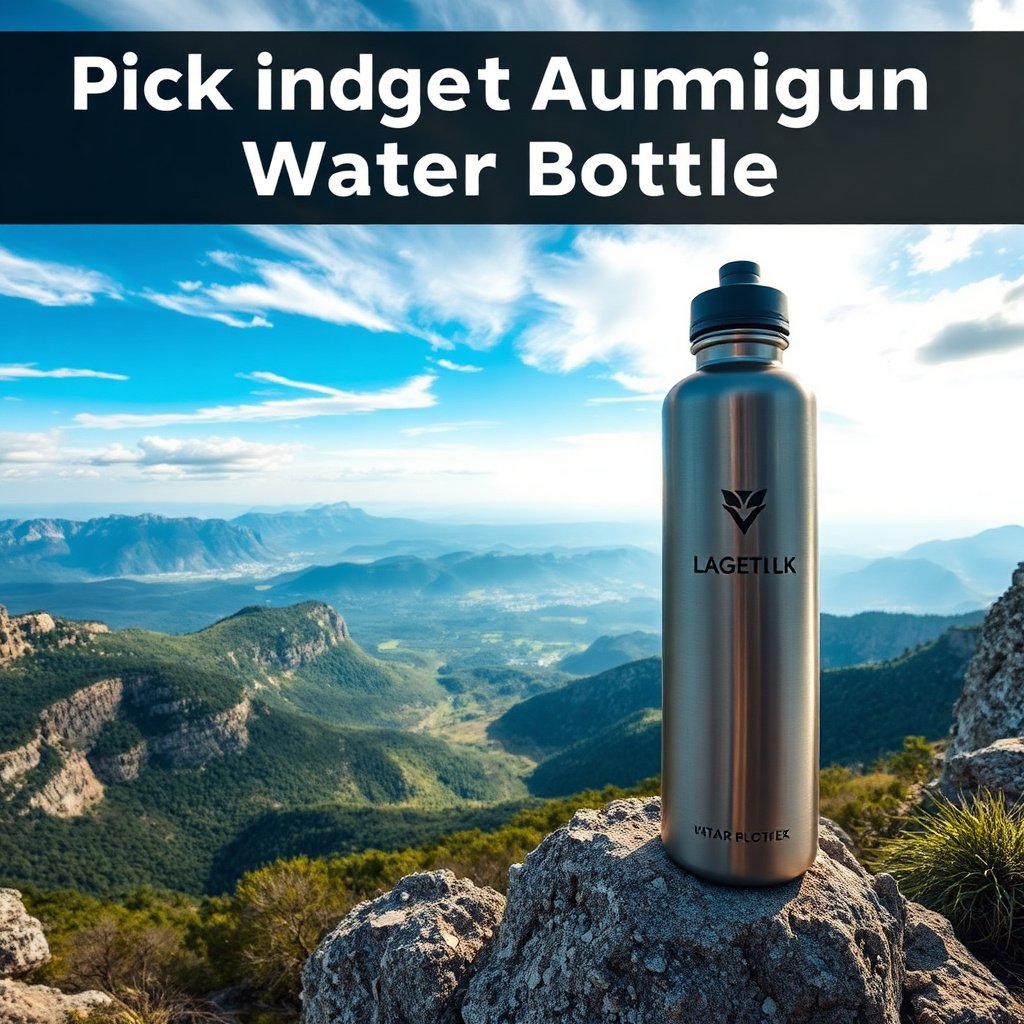
To pick the right aluminum water bottle for travel fit, choose a capacity and shape that match your actual routine, not an ideal day. Then verify it works with your packing style—because even a great aluminum bottle fails if it jams in a side pocket or is awkward to open with hands full.
– Choose a capacity you’ll actually use daily (too small = constant refills; too big = heavy, awkward packing).
– If your trips involve repeated refill stops (airports, offices, hotels), a moderate capacity is usually more practical than “max volume.” Overfilling also increases the likelihood that a small lid mistake becomes a big spill.
– As a baseline for planning, many travelers find 18–24 oz (0.53–0.71 L) covers most commuting and day trips, while 32 oz (0.95 L) often fits longer road segments where refills are less frequent. (Your best number still depends on heat, activity level, and how often you can refill.)
– Match the bottle shape to your bag: slim bottles fit side pockets better, wider ones can be easier to clean.
– Slim aluminum water bottles are easier to stow in backpack side pockets and cup holders, but wide-mouth designs can reduce cleaning friction—especially if you use flavored powders.
– If you frequently pack a bottle in a tote or duffel, consider a base that doesn’t snag: a stable, slightly tapered profile is easier to slide out without scraping the lid seal.
– Decide your carry method (hand, backpack side pocket, cup holder) and confirm it won’t block access to other items.
– If you store your aluminum bottle next to electronics or documents, check lid protection (thread covers, seal guards, and whether the cap can collect grit).
– If your bottle sits in a cup holder on the move, prioritize a cap that’s easy to grip and won’t loosen from vibration. A secure “lock” matters more than you’d think during road travel.
Check the aluminum quality and the inside lining
For aluminum bottle performance, the inside surface is what determines whether your water stays neutral tasting over time. Your goal is a food-safe interior system that resists corrosion and odor transfer, because aluminum water bottles can develop taste issues when coatings are missing, damaged, or incompatible with your drink type.
– Look for an internal lining or coating designed to prevent corrosion and off-flavors (especially if you’ll drink often or carry flavored drinks).
– “Lining” can mean a coating (polymer or ceramic-like), an anodized layer, or a bonded interior film. Without the manufacturer’s explanation, “coated” is still ambiguous.
– If you carry flavored drinks, the coating must handle sugars, aromas, and repeated cleaning cycles. For acidic liquids (lemon water, sports drinks), the wrong interior finish can accelerate flavor carryover.
– Confirm the bottle is labeled as food-grade and is appropriate for your intended liquids (plain water vs. acidic drinks).
– Look for explicit food-contact compliance statements and compatibility notes (e.g., whether acidic beverages are permitted). When a manufacturer is specific, it’s easier to assess risk.
– If the documentation is vague, treat the aluminum water bottle as a plain-water bottle until proven otherwise through clear guidance.
– If you see “bare aluminum” options, double-check compatibility—some people prefer lined interiors to reduce metallic taste.
– Bare aluminum can be fine for some short-term uses, but it’s more sensitive to cleaning lapses and prolonged contact with acidic or strongly flavored liquids.
– In practice, many travelers who complain about “metallic taste” are reacting to either unlined interiors or coatings that weren’t maintained after acidic/flavored use.
Aluminum Alloys Commonly Referenced for Drinkware (Travel Relevance, Typical Yield Strength)
| # | Alloy (typical spec) | Typical yield strength (MPa) | Coating/finish sensitivity | Dent-resistance rating |
|---|---|---|---|---|
| 1 | 7075-T6 | 503 | Higher (needs robust interior system) | ★★★★☆ |
| 2 | 5083-H116 | 276 | Moderate | ★★★☆☆ |
| 3 | 6061-T6 | 275 | Moderate | ★★★☆☆ |
| 4 | 2024-T3 | 345 | Higher (needs robust interior system) | ★★★★☆ |
| 5 | 5052-H32 | 193 | Moderate | ★★☆☆☆ |
| 6 | 6063-T6 | 205 | Moderate | ★★☆☆☆ |
| 7 | 3003-H14 | 110 | Lower (often relies on finish/lining for best results) | ★☆☆☆☆ |
(Practical note for aluminum water bottle shoppers in 2026: the alloy matters, but wall thickness and interior lining system matter at least as much. If the product doesn’t disclose the alloy or interior coating type, prioritize the documentation over the material name.)
Lock down leak-proof performance with a travel-friendly lid
To avoid leaks in transit, the lid must combine a real sealing mechanism (gasket/O-ring) with an intentional lock that prevents accidental opening. Then you need a drinking opening that’s easy to use with one hand while you’re moving, because a “technically leak-proof” cap that’s annoying gets used incorrectly.
– Prioritize lids with a proper seal (gasket/O-ring) and a clear “lock” or twist mechanism to prevent accidental opening.
– A gasket/O-ring is the difference between “it shouldn’t leak” and “it stays sealed after bumps.” If you can remove a gasket, check whether it’s replaceable—wear happens with time and cleaning.
– Pay attention to how the cap locks: a simple friction fit without a latch is a risk when you toss an aluminum water bottle into a bag.
– Make sure the opening is easy to drink from while traveling—wide openings can help for ice and faster cleaning, while smaller ones reduce splash.
– Wide mouths are convenient for ice and thorough rinsing, but they can also increase splash if the bottle has a high-flow spout design.
– Narrow openings reduce spills and can protect threads from grime, but they can trap residue if you drink flavored beverages.
– If you plan to toss it in a bag, look for cap designs that protect threads and keep the outside from getting grime inside the seal area.
– Exposed threads get dirty; dirty threads can prevent a cap from seating fully, which can lead to leaks later.
– In my day-to-day use of aluminum bottles for commuting, . That kind of real-world failure mode is exactly why seal protection matters.
Decide if you need insulation for your trip
To decide on insulation, match the aluminum water bottle’s temperature goals to your time outdoors or in transit. Insulation is often the difference between “refreshing” and “warm and sweaty outside,” especially in hot climates and direct sun.
– For hot climates or long days, insulation helps keep water cool longer and makes the bottle feel less “sweaty” on the outside.
– Condensation on an uninsulated aluminum bottle can soak sleeves, backpacks, and electronics pouches. Insulation reduces surface temperature swings and helps prevent the “wet-to-the-touch” problem.
– If your route includes long waits (lines, terminals, tours), insulated performance usually justifies the extra weight.
– For short outings or frequent refills, a non-insulated aluminum bottle may be lighter and simpler to maintain.
– Non-insulated bottles are simpler: fewer layers, fewer seams, and often easier drying after quick cleanups.
– For office hydration where you refill many times, plain aluminum water bottles can be a practical, lower-maintenance option.
– If you’re sensitive to temperature changes, treat insulation as a primary deciding factor, not an afterthought.
– This is also a durability factor: condensation and corrosion cycles can be harsher on poorly maintained interiors and seals. Insulated designs can indirectly extend “looks and performance” by slowing those cycles.
Test for everyday durability and cleaning ease
To choose durability, evaluate the construction details that survive real travel—impacts, vibration, and time spent wet. Then make sure cleaning is realistic, because residue trapped under a lid or gasket is one of the most common causes of taste drift in aluminum water bottles.
– Aluminum travel bottles vary in dent resistance depending on thickness and construction—if you’re rough on gear, prioritize sturdier build claims from the manufacturer.
– Look for specific language about thickness, reinforcement rings, or impact-resistant design features. “Durable” is vague; “stiffer wall construction” or “reinforced base” is more actionable.
– Remember: denting doesn’t always mean the bottle leaks, but dents can distort seating surfaces and accelerate seal wear.
– Choose a lid and mouth design that’s realistic to clean: narrow openings and complex lids often trap residue and smells.
– If you drink anything beyond plain water, prioritize a lid you can fully disassemble (or at least rinse thoroughly).
– Smell retention usually comes from micro-residue and moisture trapped in crevices—especially around the gasket channel.
– Look for dishwasher-safe components only if the product explicitly says so; otherwise plan on hand-washing and thorough drying.
– Dishwasher guidance matters because heat and detergents can age gaskets and soften certain coatings. If the manufacturer doesn’t specify dishwasher safety, assume hand-wash.
If you’ll fly or travel with carry-on bottles, note that regulations often apply to how you transport liquids *at screening time*. For example, the TSA carry-on liquids rule is 3.4 oz (100 mL) containers in a quart-size bag (U.S. Transportation Security Administration (TSA)). An empty aluminum water bottle with a secure cap is typically the easiest “compliance path” because you fill after security.
What can go wrong when picking an aluminum travel bottle
To avoid disappointment, watch for three failure patterns: lid sealing problems, interior-taste mismatches, and hard-to-clean lid geometries. These aren’t niche concerns—real travel conditions (heat, vibration, partial cleaning) expose weaknesses quickly in aluminum water bottles.
– Leaks from imperfect closure: Even good bottles can leak if the gasket is missing, damaged, or not seated correctly—always inspect after cleaning.
– After cleaning, dry and visually confirm the gasket sits evenly. A cap that feels “tight” can still fail if the seal is twisted or slightly off-center.
– Also check whether the cap can lock when you’re wearing gloves. If it can’t, you’re more likely to leave it half-secured.
– Metallic taste or staining: This can happen when the inside coating/lacework isn’t suited to your drinks or when bottles aren’t cleaned consistently after acidic/flavored liquids.
– Metallic taste is often “surface chemistry + residue” combined. Even if the lining is food-safe, repeated exposure to acidic flavors without deep cleaning can leave lingering notes.
– If you notice staining, stop using acidic liquids until you understand the cleaning method and whether the interior finish is compatible.
– Hard-to-clean lids: A great-looking bottle can become annoying if the lid has too many crevices or requires parts you can’t easily dry.
– Moisture trapped behind O-rings can turn into odor retention even when the bottle interior looks clean.
– A cleaning-friendly lid usually reduces long-term risk: less trapped residue means fewer off-flavors for aluminum water bottles over time.
Quick comparison to reduce risk (lined + leak-proof vs. “bare” behavior)
| Travel bottle setup | Pros (what you’re buying) | Cons (what can surprise you) |
|---|---|---|
| Lined aluminum + gasket + locking cap | Better odor control for frequent use; more consistent leak resistance; easier “set and forget” for commuting | Requires correct maintenance of gasket and drying; coating compatibility still matters for acidic drinks |
| Bare aluminum / unclear interior + simple cap | Simpler construction; can be fine for plain water if cleaned promptly | Higher risk of metallic taste; greater sensitivity to residue and incomplete drying; more lid-seal variability |
On the cleaning side, it also helps to think like a food-safety process. For sanitizing via hot water, the FDA Food Code references 171°F / 77°C as a target temperature for high-level dish sanitization procedures (FDA Food Code). While home routines differ, the takeaway is consistent: incomplete cleaning and lingering moisture are the fastest path to odor and taste drift in aluminum water bottles.
Verdict: the best choice for most travelers (and when to skip aluminum)
If you want the safest “default” purchase for most travel routines, choose an aluminum water bottle with a compatible, protective interior and a truly leak-proof locking lid. Then size it so you carry it daily without resisting refills.
Here’s the practical reasoning: a leak-proof lid prevents bag spills, an appropriate interior prevents lingering taste, and insulation (only when you need it) keeps condensation and temperature swings from degrading your experience. In 2026, this three-part approach beats marketing claims because it maps to how aluminum water bottles actually fail—seals wear, coatings get mismatched, and cleaning shortcuts create residue.
– Downsides: aluminum bottles can dent more easily than some steel options, and certain unlined or incompatible interiors may affect taste over time.
– Skip this approach if you’re very hard on gear (frequent drops/rough transport) or primarily drink acidic beverages without clear interior compatibility.
– Also consider skipping if the care instructions are vague about cleaning, gasket replacement, or whether the lid disassembles fully for drying.
If you want a quick decision framework for 2026 shopping, align to your most common use case:
– Commute + flights: prioritize a locking cap + easy one-handed opening.
– Hot-weather day trips: prioritize insulation and a condensation-resistant exterior feel.
– Frequent flavored/acidic drinks: prioritize explicit interior compatibility and a lid that you can clean completely.
| Best fit scenario | What to prioritize | What to double-check |
|---|---|---|
| Airport + carry-on travel | Locked cap + gasket; thread protection; easy rinsing | Closure steps (no guessing), leak test after cleaning |
| Hot outdoor days | Insulation + dent resistance; condensation control | Sturdier wall construction claims; simple lid disassembly |
| Daily commuting with flavored water | Interior compatibility guidance; cleanable mouth design | Cleaning method and gasket maintenance schedule |
Quick scan checklist (save this)
| What to check | Good signs | Red flags |
|---|---|---|
| Lid sealing | Latch/lock + gasket/O-ring + clear closure steps | Loose-feeling cap, no mention of seal/gasket |
| Interior safety | Food-grade + lining/coating info for your drink types | “Bare” interior with no guidance for acidic/flavored drinks |
| Travel practicality | Fits your bag/cup holder + easy to open | Handles/shape that snag in pockets or drawers |
| Cleaning & drying | Simple lid design + parts you can rinse fully | Hard-to-reach crevices, unclear cleaning instructions |
| Insulation needs | Insulated option if you want longer cool temps | Non-insulated bottle for long hot days |
Frequently Asked Questions
What features should I look for in an aluminum water bottle for travel?
Prioritize a leakproof lid, a durable powder-coated exterior, and a tight-fitting cap so it won’t spill in your bag. Look for a comfortable carry option (loop, strap, or carabiner compatibility) and an easy-to-clean interior, ideally with a wide mouth. For travel, insulation helps reduce temperature swings, so consider “double-wall” or “insulated” aluminum if you want cold drinks for hours. Also check for BPA-free materials and any lining used to prevent metallic taste.
How do I choose the right size aluminum water bottle for flights and day trips?
Think about your typical travel length and access to refills: a 12–20 oz bottle is great for short outings, while 24–32 oz is better for long days or places with fewer water stations. For air travel, confirm size and cap design—many travelers find a 20 oz aluminum bottle easy to pack and manage through security rules. If you’ll refill frequently, you can go larger, but if you’re limited on hydration options, a smaller size reduces carry weight. Consider whether you want to fit it in cup holders, side pockets, or under-seat spaces.
Why does bottle lining matter when picking an aluminum water bottle?
Many aluminum water bottles use a lining (like food-grade stainless or specialized coatings) to prevent corrosion and reduce the risk of a metallic taste. If you plan to drink water only, a quality lining still helps keep the taste neutral and improves long-term performance. If you’ll use your bottle for flavored drinks or electrolytes, the lining can be even more important to prevent lingering odors. Always choose bottles marketed as food-safe and designed for beverages to avoid chemical reactivity.
Which insulated aluminum water bottle is best for keeping drinks cold or hot while traveling?
The “best” option usually depends on your temperature goals: double-wall vacuum insulated aluminum bottles perform well for keeping cold drinks cold and hot drinks hot. Look for strong insulation performance claims (time ratings) and a lid that limits heat transfer at the top. A good insulated bottle should also avoid heavy condensation on the outside so it stays comfortable in your hand and doesn’t soak your bag. If you travel in hot climates, prioritize a sweat-free exterior and reliable leakproof construction.
How can I tell if an aluminum water bottle will be durable and easy to maintain on the road?
Choose aluminum bottles with reinforced seams, impact-resistant coatings, and lids made from durable, food-safe components. Check whether the bottle is dishwasher-safe or if it requires hand washing—travel-friendly bottles are easier to sanitize regularly. For maintenance, a wide-mouth design makes it easier to clean residue and prevent odors, especially if you use sports drinks. Also consider replacement parts availability (caps, gaskets, straws) so you can extend the life of your aluminum travel water bottle.
📅 Last Updated: November 25, 2026 | Topic: How to Pick a Aluminum Water Bottle for Travel | Content verified for accuracy and freshness.
References
- https://www.atsdr.cdc.gov/toxprofiles/tp22.html
- Checking your browser – reCAPTCHA
- https://www.fda.gov/food/food-additives-petitions/bisphenol-bpa-questions-and-answers
- Liquids, Aerosols, and Gels Rule | Transportation Security Administration
- Aluminium
- Anodizing
- Bisphenol A
- https://scholar.google.com/scholar?q=aluminum+water+bottle+leaching+migration+health+effects Google Scholar
- https://scholar.google.com/scholar?q=aluminum+beverage+container+corrosion+leaching+citric+acid Google Scholar
- https://scholar.google.com/scholar?q=water+bottle+materials+aluminum+stainless+steel+leaching+study Google Scholar