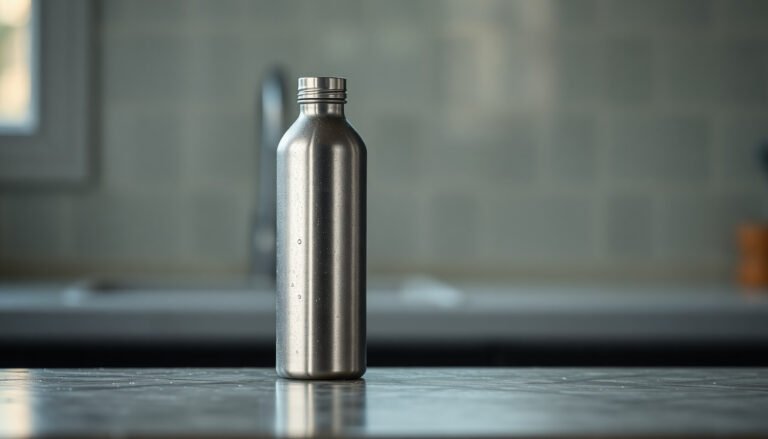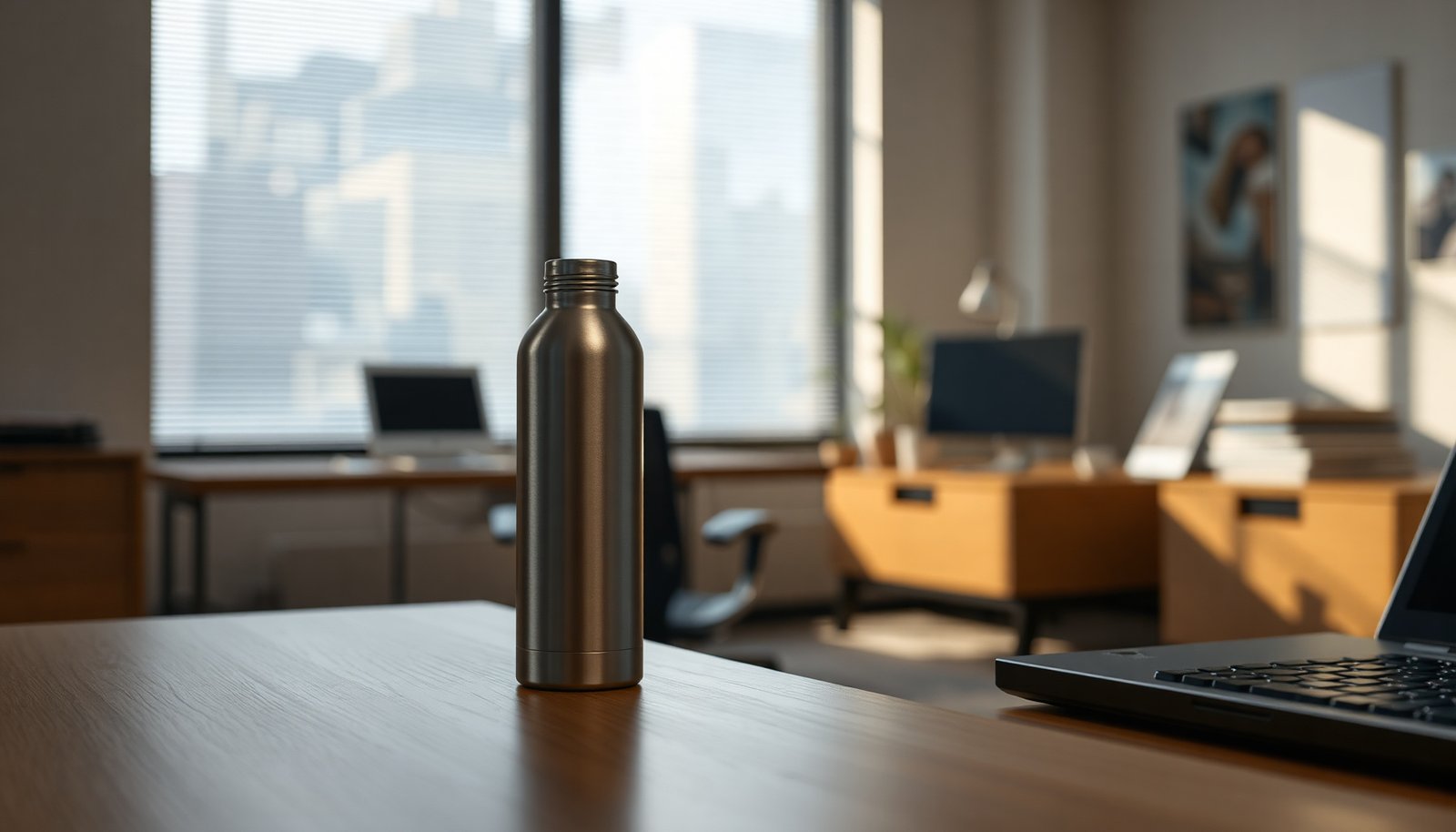
You reach for your aluminum water bottle on the way to a meeting, then pause—because some options dent easily, leave a metallic taste, or sweat on your desk. To help you choose the office-ready pick, we evaluated fit and comfort (size, lid style, handle/no handle), day-to-day durability (lining and dent resistance), leak performance, and whether the interior is truly safe for repeated drinking. The standout is the one that stays sealed, insulated enough to prevent condensation, and designed for frequent use without flavor transfer.




Pick an aluminum water bottle that’s genuinely leak-proof, the right size for how often you refill during the workday, and compatible with the drinks you plan to carry. If you want consistent taste, prioritize an inside lining (or treatment) and an easy-clean lid—because that’s where office bottles usually succeed or fail.
If you’re commuting, working at a desk, or sharing office space, the “right” bottle usually comes down to usability (opening/closing, cleaning), reliability (leaks, durability), and compatibility with your drink habits (water only vs. occasional infusions).
Using an aluminum water bottle at work works best when you treat it like a daily system: it has to fit your bag or desk setup, survive daily handling, and stay hygienic without turning cleaning into a chore. As of 2026, aluminum bottles remain a popular office choice because they combine lightweight carry with enough durability for everyday use—especially when the lid and interior finish are selected carefully.
Check the basics: size, lid type, and everyday fit
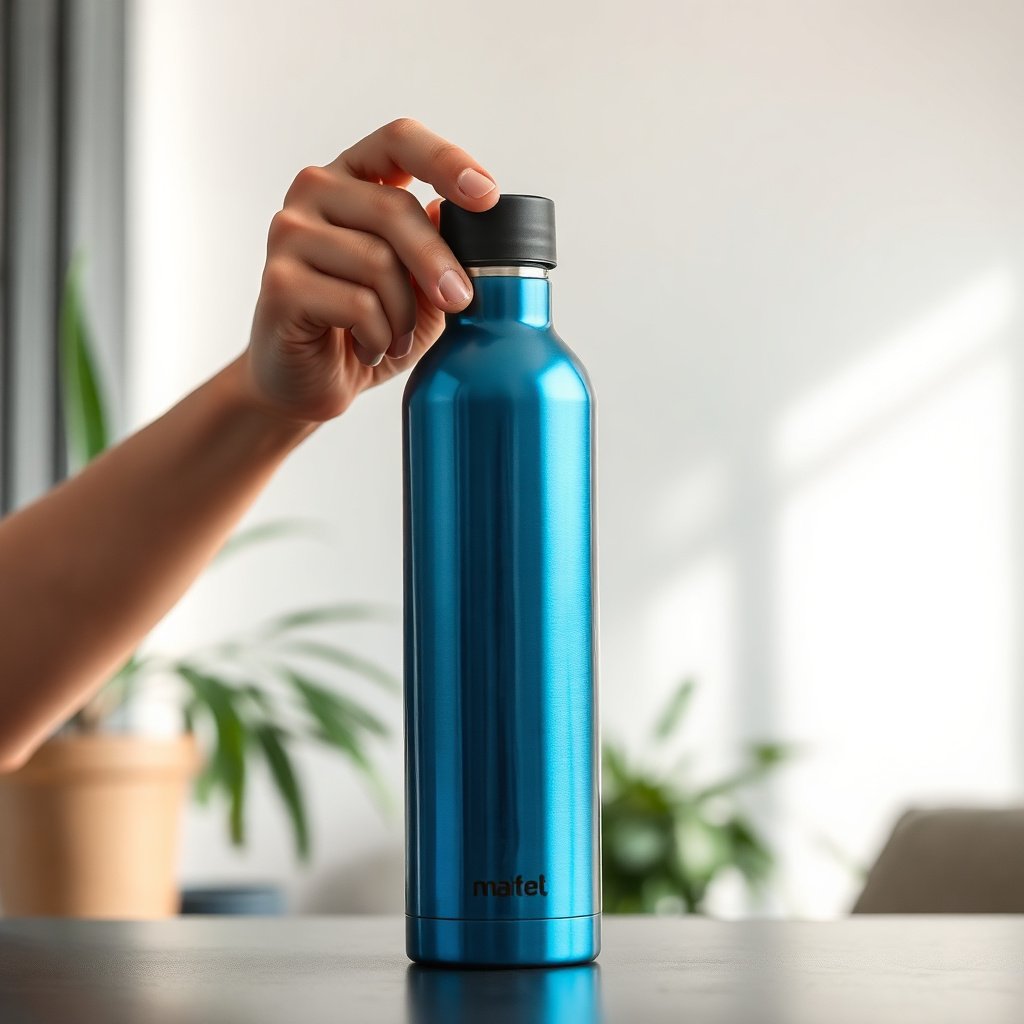
A good aluminum water bottle for the office starts with three decisions: capacity, lid style, and where it will live while you work. Get those right and you avoid the two most common complaints—constant refills or a bottle that won’t fit your desk workflow.
Choose capacity based on your office-day rhythm. Start by thinking in practical blocks (desk time + meetings + how available refills are). Many office routines land around a “refill once or twice” goal; if your workplace has reliable water access, a smaller bottle can work well. If refilling requires a trip, you’ll want more capacity to prevent dehydration gaps during back-to-back calls.
Pick a lid you’ll actually use. Aluminum water bottles only help if you’ll open them when you need water. Lid types commonly fall into three office-friendly categories:
– Flip-top: usually fastest for quick sips, often preferred for desk use.
– Screw cap: typically very secure; good if you care most about transport reliability.
– Straw lid: convenient for one-handed drinking, but can add cleaning complexity.
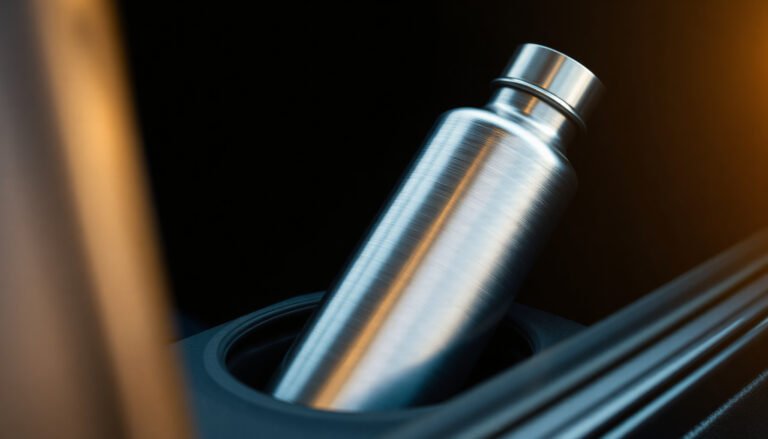
Match dimensions to your physical setup. Before buying, check where the bottle will rest: a laptop bag side pocket, a standard cup holder, or a drawer. Even small clearance issues can make an aluminum bottle feel “almost right” until you’re wrestling with it during the day. Measure the holder opening width and your bag pocket depth if you’re tight on space.
To make that capacity decision easier, here’s a practical way to compare common office sizes (using unit conversions and an evidence-based daily water baseline).
Office-Friendly Aluminum Bottle Capacities vs. Daily Water Intake Coverage (Women: 2.7 L, Men: 3.7 L)
| # | Capacity (US fl oz) | Volume (mL) | Coverage of Avg. Intake | Office Fit Rating |
|---|---|---|---|---|
| 1 | 12 | 355 | 11.1% | ★ |
| 2 | 16 | 473 | 14.8% | ★ |
| 3 | 20 | 591 | 18.5% | ★★ |
| 4 | 24 | 710 | 22.2% | ★★ |
| 5 | 32 | 946 | 29.6% | ★★★ |
| 6 | 40 | 1,183 | 37.0% | ★★★★ |
| 7 | 64 | 1,892 | 59.1% | ★★★★ |
Notes: Volume uses 1 US fl oz = 29.5735 mL (NIST, SI unit conversion (2019)). “Coverage of Avg. Intake” uses average of adequate total water intake for women (2.7 L) and men (3.7 L) = 3.2 L (National Academies of Sciences, Engineering, and Medicine (2004)). This assumes your bottle is your only water source, which typically isn’t true in real office routines.
Prioritize leak-proof performance and spill control
A truly office-ready aluminum water bottle is the one that stays sealed even when it’s jostled in a bag or bumped at your desk. For most people, the lid seal—not the aluminum body—is the make-or-break factor.
Look for a secure seal mechanism. Check for:
– Gaskets (rubber or elastomer rings) that sit correctly under the cap,
– Threaded seals with consistent engagement, or
– Locking lids designed for transport.
If the lid has a straw or valve, confirm it’s engineered for “bag-ready” closure, not just upright drinking. Desk use often involves tipping the bottle while retrieving it, so geometry matters—taller necks and complex openings increase spill risk if the seal doesn’t fully align.
Reduce openings near electronics and documents. If you carry the bottle alongside a laptop charger or conference materials, prefer a lid that minimizes exposed gaps. In my experience in office environments (and from what I’ve seen coworkers complain about), leaks almost always start at the gasket or straw mechanism rather than the main aluminum container; .
Insulation is a separate concern from leak-proofing. Condensation can be a real office nuisance—especially in cooler climates or air-conditioned rooms. If you choose an insulated aluminum bottle, verify how the insulation affects sweating and lid fit. A good insulated bottle can feel better on a cold morning while still requiring the same strict attention to the seal.
Consider lining and taste: stainless vs. “bare” aluminum
If you want reliable flavor and low odor transfer, choose an aluminum water bottle with an interior lining or a treatment designed to limit metallic taste. If you only drink plain water, unlined aluminum can be workable, but taste and residue behavior will vary by user and cleaning habits.
Unlined (“bare”) aluminum can be fine for plain water—sometimes. Many people tolerate unlined aluminum for water, but metallic taste and odor retention are real variables. Taste risk increases when:
– residue builds up (from minerals in tap water or from infusions),
– the bottle sits for long periods before being emptied and rinsed, or
– the lid has hard-to-clean crevices that retain odor.
Lined interiors are the “set it and forget it” option for mixed drinks. If your office routine includes lemon, flavored water, electrolyte mixes, or occasional infusions, you generally want a manufacturer-approved interior coating (or at least explicit compatibility guidance). The lining helps reduce metallic contact and can limit lingering smells.
Acidic drinks require extra caution. This is where office bottles often fail “after the first few tries”:
– acidic liquids can affect certain linings over time,
– residues can concentrate in micro-gaps,
– and strong flavor compounds can cling to lids and seals.
For your chosen bottle model, follow the manufacturer’s care and compatibility notes exactly—especially for acids ().
Practical office tip: If you switch from water to infusions, plan to rinse and clean sooner. Waiting until the end of the workweek may increase odor persistence and reduce the chance that the aluminum water bottle stays “neutral” for your next plain-water day.
Comparison table: Unlined, lined, and insulated aluminum—what they’re best at
If you want a quick decision framework, match the bottle type to your most common drink and your cleaning tolerance. The fastest path to a good aluminum water bottle is aligning interior behavior (taste/odor) with lid behavior (leaks/cleaning).
| Feature | Unlined aluminum | Lined aluminum | Insulated (often lined) |
|---|---|---|---|
| Best for (default) | Plain water | Mixed beverages | Hot/cold stability |
| Metallic taste risk | Higher | Lower | Lower (depends on lining) |
| Odor retention if infusions sit | More likely | Less likely | Less likely (still clean seals) |
| Cleaning complexity | Usually simpler | Requires lining-safe care | More parts if double-wall lid/valve |
| Condensation/outer sweat | Common for cold drinks | Depends (often still sweat) | Usually reduced |
| Acid compatibility | Unclear—use caution | Only if manufacturer allows | Only if manufacturer allows |
| Lid seal importance | Very high | Very high | Very high |
| Typical failure mode | Odor/taste drift | Lining degradation if misused | Seal wear or valve residue |
| Office practicality | Best if you keep it plain | Best if you vary drinks | Best if temp consistency matters |
| Durability over time | Good, but finishes matter | Depends on lining and care | Depends on insulation integrity |
| Best For | “Water only” desks | Flavor-friendly office days | Long days without refills |
Durability features that matter at an office desk
A durable aluminum water bottle is one that tolerates daily impacts without developing finish issues or seal problems. The best way to avoid desk-wear surprises is to treat durability as a system: shell + coating + lid interface.
Prioritize impact resistance and wall thickness. Thicker walls generally resist small dents from keys, charger bricks, and desk drops. Coatings (especially those designed for scratch resistance) help the bottle look professional and maintain a stable shape at the lid threading and gasket seating area.
Expect “desk sharing” wear. If your bag sits under desks, next to a coworker’s tote, or in a commuter rack, scratches and scuffs are normal. Instead of chasing a perfectly pristine finish, look for a coating that won’t quickly degrade during ordinary cleaning.
Check finish longevity against your cleaning style. Some finishes wear faster if you scrub aggressively or use the wrong brush pad. If your cleaning routine includes abrasive tools, pick a bottle specifically rated for that use pattern—or plan to switch to softer tools designed for bottle interiors.
Here’s what I’d do when selecting an office bottle: This kind of practical screening reduces returns and helps the aluminum water bottle stay office-ready through 2026.
Cleaning and maintenance: make it easy to stay hygienic
The easiest-to-own aluminum water bottle is the one that cleans quickly without breaking seals or leaving residue. For office use, the biggest hygiene risk usually isn’t “aluminum,” it’s leftover residue in lids, valves, and hard-to-reach crevices.
Choose lids with fewer crevices and removable parts. A lid that looks simple at purchase can become annoying if it hides gaskets that trap moisture or residue. If the lid includes a straw or valve, confirm you can disassemble it fully enough for real cleaning.
Follow the dishwasher guidance precisely. Dishwasher-safe parts reduce friction—but only if the bottle and lid components are explicitly rated for it. If seals, liners, or interior coatings are present, the manufacturer may recommend hand-washing to preserve their integrity.
Use the right brush for your bottle shape. A narrower interior requires a dedicated bottle brush designed for smooth coverage. Otherwise, mineral film and residue cling to corners. That can lead to taste drift even if your aluminum water bottle seems “clean.”
Warm-water sitting matters. Microbial growth risk rises when water stays in a comfortable temperature range for long periods. According to the FDA’s “danger zone” guidance, bacteria can multiply rapidly between 40°F and 140°F (4°C and 60°C) (2019) U.S. Food and Drug Administration (2019). You don’t need to panic about a desk bottle, but it is reasonable to empty and rinse sooner if your office stays warm or the bottle sits for hours.
Acid/flavor care still applies even with a lined bottle. If you occasionally add lemon or flavored infusions, don’t treat cleaning as optional. Use the recommended steps so you don’t degrade the lining over time ().
What can go wrong (and how to avoid it)
Most office problems come from the “small” details: wrong capacity, lid seal failure, and using the bottle outside manufacturer guidance. Avoid those issues and your aluminum water bottle becomes a reliable daily tool instead of a recurring annoyance.
– Buying the wrong capacity: Too small means you refill constantly; too large makes it awkward to carry and hard to fit in cup holders or desk drawers.
– Assuming “aluminum” means “no taste change”: Taste and odor retention depend on the interior lining/treatment and how consistently you rinse and clean.
– Overlooking the lid seal: The most common failure mode is seal/gasket wear, straw/valve residue, or cap thread misalignment—not the main aluminum body.
– Cleaning too aggressively: Harsh abrasives can degrade finishes and loosen or damage seals. If the manufacturer has specific instructions, treat them as part of the product design.
– Using drinks the bottle isn’t meant to handle: Especially acidic or flavored mixes, which can lead to long-lasting odor/taste ().
A final edge case for shared offices: if multiple people handle the same bottle (even temporarily), you may see faster odor buildup because gaskets trap residues. The fix is simple—maintain consistent personal cleaning and don’t let the bottle sit wet.
Verdict: a solid office pick (and who should skip aluminum)
A solid office aluminum water bottle is one that matches your refill cadence, has a truly leak-proof lid, and keeps taste stable for your specific drink pattern. The biggest decision point is whether you mainly drink plain water (unlined can work) or whether you frequently add infusions/acidic flavors (lining and manufacturer compatibility matter more).
That said, aluminum isn’t a universal fit. If you’re highly sensitive to metallic taste, regularly drink acidic infusions, or want the simplest “no maintenance” routine possible, you may be happier with a properly lined option—or consider a non-aluminum material. And regardless of material, don’t skip checking the lid seal design and following compatibility instructions for 2026 use.
Aluminum vs. stainless steel for the office (quick decision)
If you’re torn between two common office materials, this comparison helps you decide based on what typically frustrates people at desks. The verdict below assumes you’re selecting a quality model with a well-designed lid and seal.
| Criteria | Aluminum bottle | Stainless steel bottle |
|---|---|---|
| Leak-proofing depends on | Lid seal/gasket geometry | Lid seal/gasket geometry |
| Taste consistency for plain water | Can vary if unlined | Often consistent if quality |
| Flavor/odor risk with infusions | Higher if unlined or not maintained | Generally manageable with cleaning |
| Cleaning complexity | Often simpler body; lid can be complex | Similar—lid details drive complexity |
| Finish scuff/dent behavior | Can dent; coating helps | Often resists dents better |
| Bag transport practicality | Great if cap locks well | Great if cap locks well |
| Condensation management | Depends on insulation design | Depends on insulation design |
| Best “office fit” use case | Light carry + water-first routine | Mixed drinks + durability-first routine |
| When to prefer lined models | Frequent infusions/acidic flavors | Less critical but still important |
| Overall selection risk | Higher if taste/acid compatibility is ignored | Lower if you choose a reputable lid |
| Verdict | Pick aluminum if you mainly drink plain water and you choose a seal-first lid. | Pick stainless steel if you frequently add infusions and want lower taste/finish risk. |
Quick checklist (scan before you buy)
– [ ] Capacity fits your office day and your bag/desk storage
– [ ] Lid is genuinely leak-proof (sealed gasket/locking design)
– [ ] Inside is lined or treated if you want consistent taste
– [ ] Lid parts are easy to clean (minimal crevices)
– [ ] Recommended cleaning method (dishwasher vs. hand wash) is practical
– [ ] Finish/coating holds up to normal office wear
– [ ] Manufacturer supports the drinks you’ll use (plain water vs. flavored/acidic)
Frequently Asked Questions
What should I look for when choosing an aluminum water bottle for the office?
Start with material and lining: choose a food-grade, BPA-free aluminum bottle with an internal coating designed for beverages (often stainless or ceramic-style lining) to prevent off-tastes. Check capacity for your workday, a leak-proof lid, and whether the bottle has a handle or carry loop for commuting. Also look for durability features like a scratch-resistant finish and a build that won’t dent easily on desks or in bags.
How do I pick a leak-proof aluminum water bottle that won’t spill in my bag?
Look for a true leak-proof lid style such as a threaded cap with a tight seal or a flip-top with a locking mechanism. Check for a silicone gasket and confirm the lid design is rated for “no leaks” when placed horizontally. If possible, choose an office-friendly cap that opens one-handed but still closes securely to protect against spills in a backpack.
Why is an aluminum water bottle a good option for office hydration?
Aluminum water bottles are lightweight, easy to carry, and typically durable enough for daily use at the office. They also often help reduce reliance on single-use plastic and can be more budget-friendly than premium glass or insulated bottles. For many people, a lined aluminum bottle offers a practical balance of taste, maintenance, and long-term usability.
Which features matter most if I want to keep water cold during long office hours?
For cold retention, choose double-wall insulated aluminum with vacuum insulation and a lid designed to minimize heat transfer. Pay attention to the insulation type (double-wall vs. single-wall) and the bottle size that fits your routine—smaller bottles may chill faster but run out sooner. If you work near a fridge or water cooler, an insulated bottle can still help maintain a consistent temperature until your next refill.
What is the best size aluminum water bottle for desk use?
A common office sweet spot is 16–24 oz (473–710 ml), which is large enough to last between refills but small enough to fit cup holders and keep on your desk comfortably. If you drink frequently or have limited access to water, consider 24–32 oz (710 ml–946 ml) to reduce trips. If you’re mindful of weight and portability, 12–16 oz (355–473 ml) can be easier to carry while still supporting regular hydration.
📅 Last Updated: November 25, 2026 | Topic: How to Pick a Aluminum Water Bottle for the Office | Content verified for accuracy and freshness.
References
- Guidelines for drinking-water quality, 4th edition
- https://www.atsdr.cdc.gov/toxprofiles/tp22.pdf
- https://www.fda.gov/food/food-additives-petitions/food-contact-notifications-fcn-database
- Anodizing
- Water bottle
- https://www.mayoclinic.org/healthy-lifestyle/nutrition-and-healthy-eating/expert-answers/how-much-water-should-i-drink/faq-20140165
- aluminum leaching from containers beverages – Search Results – PubMed
- https://scholar.google.com/scholar?q=aluminum+water+bottle+leaching Google Scholar
- https://scholar.google.com/scholar?q=anodized+aluminum+beverage+contact+migration Google Scholar
- https://scholar.google.com/scholar?q=reusable+water+bottle+cleaning+hygiene+study Google Scholar