Most people think an aluminum water bottle automatically releases unsafe metals, but safety depends on the bottle’s alloy and lining. The key question is whether it stays inert and how coatings handle acidic drinks, heat, and wear. Understanding what materials and chemicals are used helps you choose a bottle that fits your routine and reduces unnecessary concerns.


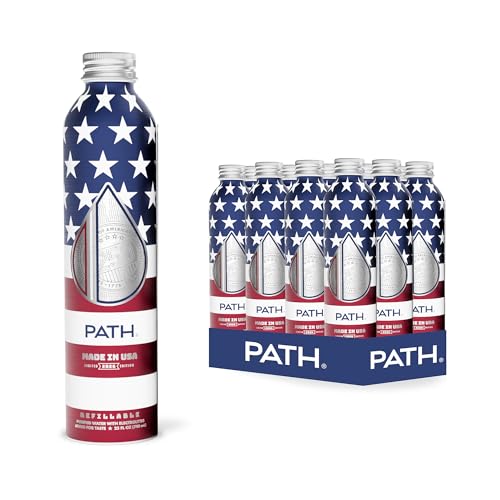

Yes—an aluminum water bottle can be safe, but it depends on whether the interior has a durable lining/coating and on what you put inside. The biggest risks usually involve bare (unlined) aluminum or a lining that’s scratched, worn, or improperly cured, because acidic or salty liquids can increase metal contact and off-tastes.
If you’re choosing a bottle for water, sports drinks, coffee/tea, or anything more acidic, this matters. It’s also helpful if you’ve noticed an odd taste, visible wear on the inside, or you’re trying to figure out what “food-grade” really means on a label.
How aluminum water bottles work (and where risk shows up)
An aluminum bottle is generally “safe by design” when the interior stays intact and separated from the liquid. The risk shows up when the protective surface is disturbed or when your drink chemistry (pH, salts, temperature) pushes corrosion or leaching.
– Aluminum is generally stable when it’s clean and intact, but exposure can increase when the protective surface is disturbed.
– Leaching risk is most relevant from the bottle’s interior—especially if it’s bare aluminum or its coating is compromised.
– The “safe or not” question is mostly about liner/coating condition and the beverage’s chemistry (pH, salts, temperature).
A key reason this happens is that aluminum naturally forms an oxide film on the surface, but that film can be less protective in acidic conditions—especially if the bottle interior is scratched. When direct contact increases, aluminum ions can dissolve into liquids, and the drink can pick up a metallic taste. From a safety perspective, regulators typically frame aluminum in drinking water as a contaminant concern at higher exposure levels; for context, the World Health Organization lists a health-based guideline for aluminum in drinking water of 0.2 mg/L (World Health Organization, Guidelines for Drinking-water Quality (2017)). The U.S. EPA also sets a secondary (aesthetic) guidance range for aluminum of 0.05–0.2 mg/L (U.S. Environmental Protection Agency, Secondary Drinking Water Standards (1994)).
To understand why drink acidity matters in practical terms, it helps to know how common beverages differ in pH. Lower pH generally correlates with faster corrosion on reactive metals.
Typical pH of Common Bottle Drinks (What’s “more acidic” in practice)
| # | Drink (common use) | Acidity level | Why it matters for aluminum | Typical pH |
|---|---|---|---|---|
| 1 | Plain water | ★★☆☆☆ | Lowest corrosion pressure when the liner is intact. | 6.5–7.5 |
| 2 | Sports drink | ★★★☆☆ | Moderately acidic; can increase metal contact if coating is compromised. | 3.0–3.5 |
| 3 | Black coffee | ★★★☆☆ | Acidity varies by bean and brew; heat can stress coatings. | 4.5–5.2 |
| 4 | Tomato juice | ★★★★☆ | Typically acidic and can be salt-containing depending on brand/dilution. | 4.0–4.4 |
| 5 | Carbonated water | ★★★★☆ | Carbonic acid lowers pH; repeated exposure matters more in storage. | 4.0–4.7 |
| 6 | Cola-style soda | ★★★★★ | Often one of the more acidic options; avoid long storage in aluminum. | 2.3–2.6 |
| 7 | Lemon juice | ★★★★★ | High acidity is the most likely to accelerate corrosion if liner fails. | 2.0–2.4 |
Materials that change the safety answer
The correct short answer is that aluminum bottles are safest when they have a reliable internal barrier—and riskier when they expose bare metal. The material design (liner type, thickness, and how well it adheres) determines whether “food-grade” is actually meaningful for your beverage.
– Bare aluminum interior: no internal barrier; higher sensitivity to acidic drinks and repeated exposure over time.
– Lined/aluminum composite bottles: often include an internal coating or liner meant to separate liquid from aluminum.
– Different “liners” behave differently: some use ceramic-like coatings, polymer coatings, or thin barriers—what’s used affects both flavor and durability.
Here’s what to look for on the specific bottle label/manual you’re considering. In 2026, many brands still phrase this information in marketing terms rather than specifying liner chemistry, so the goal is to find verifiable constraints, not just wording:
– Look for explicit “food-contact” or “food-safe” language that refers to the interior surface (not only the exterior finish).
– Look for a description of the interior coating type (epoxy, polymer, ceramic-style, or comparable barrier) and whether it’s intended for hot liquids and acidic beverages.
– Check if the manual says to avoid bleach, abrasives, or metal cleaning tools inside—those instructions often reflect known coating wear mechanisms.
– If the bottle is sold as “double wall” or “vacuum insulated,” confirm whether the liquid-contact wall is lined; double-wall doesn’t automatically mean chemically protected everywhere.
Also keep in mind that aluminum itself is widely present in the environment—about 8.1% of Earth’s crust by mass is aluminum—so the question isn’t whether aluminum exists, but whether the bottle design limits migration into your liquid (U.S. Geological Survey, Mineral Commodity Summaries (2024)). With an intact liner, aluminum contact is typically minimized; with damage, contact becomes more plausible.
Chemicals and coatings: what “food-safe” usually means
A bottle’s safety hinges on the coating/liner chemistry and its condition, not just on whether it says “BPA-free.” Coatings can be “food-contact” materials, but they can still degrade under heat, abrasion, and certain liquids, changing both chemical migration and taste.
– Many lined bottles rely on an epoxy/polymer or ceramic-style coating to reduce direct contact with aluminum.
– “BPA-free” (if stated) helps with one common chemical concern, but it doesn’t automatically guarantee all coatings are risk-free for every beverage.
– Heat, abrasions, and aggressive cleaning can degrade coatings and increase the chance that chemicals (or metal ions) interact with the drink.
What does “food-safe” mean in chemistry terms? Usually, it implies the manufacturer expects the liner to remain stable during normal use and within an intended temperature range. But “stable” depends on:
1. Adhesion and micro-scratching: Even a small scratch can create a pathway where liquid repeatedly contacts aluminum.
2. Temperature cycling: Warm liquid and repeated warming can accelerate wear. If a liner is meant for cold drinks only, hot coffee can be outside spec.
3. Cleaning chemistry: Strong alkaline cleaners, oxidizers, or abrasive scrubbers can roughen the surface or attack certain polymers.
From a practical standpoint, I treat the interior finish as the “key safety layer” in the same way engineers treat weld integrity in food equipment: once the barrier is compromised, the rest of the system matters less. When I inspect bottles at the time of purchase or replacement, I’m looking for uniform smoothness and no “tell-tale” transition spots where coating ends or thins.
What to do in daily use to lower exposure
The safest everyday approach is to use your aluminum bottle in ways that minimize direct contact with aluminum—especially for acidic drinks. With a good liner and sensible habits, many people can use aluminum bottles without issues, including in 2026.
– Stick to water for the most straightforward option; for coffee/tea or citrus/sports drinks, follow manufacturer guidance and consider shorter contact times.
– Avoid prolonged soaking of acidic or salty liquids (like lemon water or electrolyte drinks), especially in warm conditions.
– Clean gently: harsh abrasives or metal scrubbers can scratch liners, and those scratches are where problems start.
If you want a clear routine, keep it simple:
– After acidic drinks: rinse soon after you finish, then wash as directed.
– For coffee/tea: let it cool first if your bottle manual allows hot filling only up to a stated temperature.
– For sports drinks/electrolytes: don’t store them in the bottle for hours unless the manual explicitly allows it.
– For cleaning: use soft brushes and non-abrasive detergents. If the bottle has a mouthpiece/gasket, follow the cleaning method for those parts too, since gaskets can trap residues that affect taste and odor.
What can go wrong (common mistakes and edge cases)
The most reliable “don’t do this” answer is to avoid using aluminum bottles when the interior coating is damaged or when you store acidic/salty liquids for long periods. The edge cases are usually about time, temperature, and abrasion—not one single ingredient.
– Scratched interior coating: visible scuffing or peeling is a strong “stop using for that bottle” signal.
– Strong acidity + time + heat: more acidic drinks (and warmer liquid) can increase reactivity and off-taste risk.
– Odors that won’t wash out: persistent smells after cleaning can indicate the coating/liner is holding onto residues (or has degraded).
– Compatibility surprises: carbonation, salty drinks, or frequent hot filling may push some coatings past their intended limits.
Here are additional edge cases that often get overlooked:
– Deodorizing mistakes: Leaving baking soda, vinegar, or strong cleaners soaking can change the interior surface even if it improves smell temporarily.
– Dishwasher use: Some liners tolerate top-rack cleaning; others don’t. Heat and detergents can accelerate coating failure.
– Carbonation: CO₂ pressure can alter how liquids contact micro-scratches, and carbonation tends to lower pH.
Verdict: is it safe for you?
If your aluminum bottle has a durable interior liner in good condition—and you mainly use it for water—then it’s typically a reasonable choice. Skip or replace it when the interior coating is scratched/peeling or when you frequently store acidic drinks for long periods.
– If your aluminum bottle has a durable interior liner in good condition and you mostly use it for plain water, it’s typically a reasonable choice.
– Skip aluminum (or replace it) if the interior coating is scratched/peeling, if you frequently store acidic drinks for long periods, or if you need maximum caution for beverages intended for very young children—consider a lower-risk material like glass or stainless steel instead.
– Best practice: treat the inside finish as the key safety layer; when that layer degrades, the “safe” answer changes quickly.
To make the decision easier, here’s a direct comparison you can use for everyday judgment:
- Intact-lined aluminum bottle
- Pros: Lightweight, good taste control for water, typically lower metal contact when coating remains intact.
- Cons: Not ideal for long storage of very acidic liquids; coating wear can gradually change performance.
- Bare aluminum interior (no barrier)
- Pros: Simple construction, often cheaper.
- Cons: Higher sensitivity to acidic/salty drinks; higher likelihood of metallic taste and increased aluminum migration.
- Stainless steel (good food-contact grade)
- Pros: Generally robust with acidic drinks; often more forgiving of heat and daily use.
- Cons: Some grades can still develop off-tastes if residues accumulate; not immune to misuse.
Quick checklist: evaluate your aluminum bottle fast
– Does the bottle specify an internal coating/liner (not bare aluminum)?
– Is the inside surface smooth with no flaking, peeling, or deep scratches?
– Are you mainly filling with water, or do you regularly use acidic/salty drinks?
– Do you ever fill it hot or leave drinks sitting for hours?
– Are you using a gentle cleaner (no abrasive scrubbers inside)?
Frequently Asked Questions
Is an aluminum water bottle safe for drinking water?
Generally, an aluminum water bottle is safe for drinking water when it has a food-grade lining or protective coating approved for contact with beverages. The main safety concern is whether the bottle’s interior is properly sealed to prevent aluminum from leaching into the water. If the lining is intact and the bottle is designed for reuse, aluminum bottles can be a practical and lightweight option.
What chemicals can leach from an aluminum water bottle?
Pure aluminum can leach small amounts in certain conditions, especially if the bottle is unlined or damaged. If the bottle has a liner (such as epoxy resin or plastic), deterioration, scratches, or wear may increase the risk of releasing lining-related chemicals. To minimize chemical exposure, use bottles with reputable food-contact certifications and replace them if the interior lining becomes cloudy, cracked, or flaking.
How can I tell if my aluminum bottle is food-grade and safe?
Look for labeling that specifies food-grade materials and safety certifications for beverage contact. A safe aluminum bottle should have an intact interior coating without peeling, pitting, or strong lingering odors. If you don’t see clear manufacturing details, consider switching to a brand that provides material information and guidance for safe use.
Why might aluminum bottles be risky for acidic drinks or hot water?
Acidic beverages (like citrus water) and very hot liquids can increase corrosion and may speed up metal leaching or degrade certain liners. Heat can also stress protective coatings, making them more likely to wear over time. For best results, follow the manufacturer’s temperature guidelines and avoid storing acidic drinks in the bottle for long periods.
Which aluminum water bottle lining is safest for everyday use?
The safest option depends on how you plan to use the bottle: a durable, food-safe interior coating designed for water storage is typically preferred for reduced aluminum exposure. If you’re choosing between common liners, look for coatings specifically rated for “food contact” and “BPA-free” (if applicable) with strong durability against scratches and odors. For the most reliable long-term safety, prioritize reputable brands, inspect the interior regularly, and replace the bottle when the coating shows wear.
📅 Last Updated: November 25, 2026 | Topic: Is a Aluminum Water Bottle Safe? Materials and Chemicals Explained | Content verified for accuracy and freshness.
References
- Guidelines for drinking-water quality, 4th edition
- https://www.atsdr.cdc.gov/toxprofiles/tp7.html
- https://www.cdc.gov/healthywater/drinking/public/contaminants/aluminum.html
- https://www.epa.gov/sdwa/aluminum
- Checking your browser – reCAPTCHA
- aluminum leaching from beverage containers – Search Results – PubMed
- Aluminium toxicity in people on dialysis
- https://scholar.google.com/scholar?q=aluminum+water+bottle+leaching Google Scholar
- https://scholar.google.com/scholar?q=aluminum+drinking+water+health+effects Google Scholar
- https://scholar.google.com/scholar?q=aluminum+contact+materials+food+migration Google Scholar