A good-quality aluminum water bottle should have a well-finished, food-safe interior, a securely sealing lid, and a durable exterior without dents, sharp seams, or corrosion. You can confirm these features with a careful inspection and a few simple tests in about 10 minutes—no special tools required. Focus on construction details, lining/certifications, and leak performance so you end up with a bottle that stays safe and holds up to daily use.


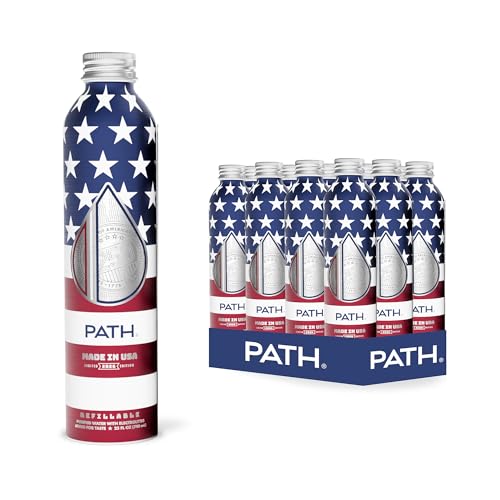

A good-quality aluminum water bottle is one with clearly specified aluminum/material details, an interior that’s safe for drinking use (lined or explicitly “unlined” with an explained strategy), and a lid that seals reliably without seepage. If the brand is vague on interior coating and the cap relies on sloppy threading or a poorly seated gasket, the “premium” label usually won’t hold up to daily use—especially in 2026.
If you’re shopping for an aluminum bottle for daily hydration, commuting, gym use, or hiking, these checks help you avoid common issues like leaks, bad finishes, and off-tasting water.
Check the aluminum grade and build details
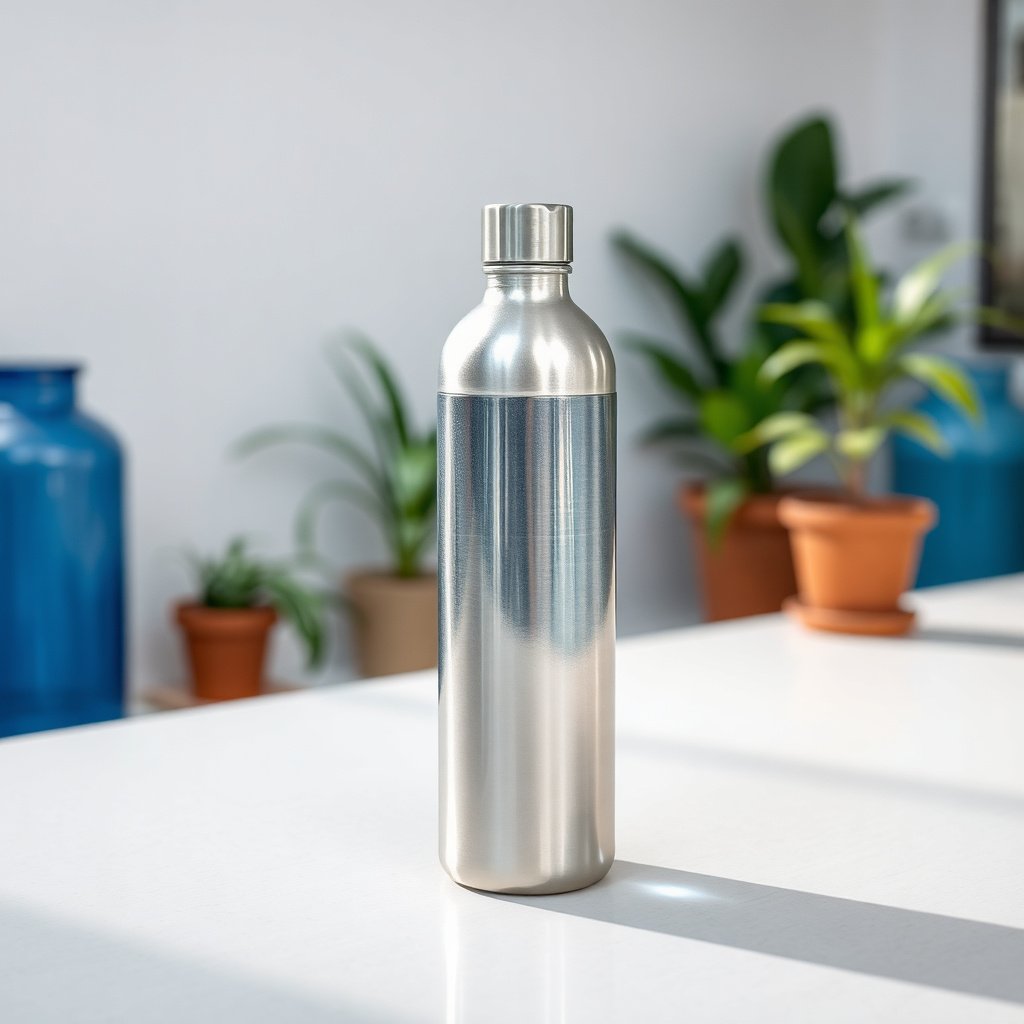
A well-built aluminum bottle starts with the right alloy and consistent manufacturing—not just a “metal body” description. When the aluminum grade is identified and the construction is clean, you’re more likely to get a bottle that resists dents, maintains structural integrity, and supports a leak-free cap over time.
First, look for the bottle’s listed aluminum type/grade (for example, common consumer uses include 1xxx, 3xxx, 5xxx, and 6xxx series alloys). Brands that list the grade (instead of only saying “aluminum”) are providing testable, verifiable information about material properties like strength and corrosion behavior. For instance, according to the Aluminum Association, the four-digit aluminum alloy system communicates alloy composition and key performance expectations (standardized industry guidance; year varies by edition, commonly referenced in recent technical documents).
Next, inspect physical build details you can see. Run your fingers along welds/seams and at the bottle’s neck transition: quality manufacturing usually leaves seams that are smooth, even, and free of sharp burrs (tiny metal rough edges). In my own shopping and handling, I’ve found that rough seams often correlate with caps that don’t line up perfectly—so your “leak problem” ends up being a geometry problem, not just a gasket problem.
Finally, assess consistency: does the bottle body look uniform in thickness, or is one side visibly flatter/thinner? While you may not measure thickness at home, visual uniformity and even wall finishing are practical indicators that the bottle was formed with controlled tooling rather than rushed production.
Inspect the interior lining (and whether it’s needed)
A good-quality aluminum bottle either has a proven interior lining/coating system or clearly explains how it prevents taste and corrosion issues for your intended use. If you can’t determine whether the interior is food-safe for water contact, you should treat “aluminum” as incomplete information—not a guarantee.
Start with the manufacturer’s interior claim. Many aluminum bottles use an interior coating (often an epoxy or similar polymer barrier) to reduce metallic taste and improve corrosion resistance. Other bottles use anodizing (an electrochemical oxidation that thickens a natural oxide layer) or may be described as “unlined,” typically relying on an anodized surface or a specific finishing process. The key isn’t the marketing term—it’s whether the brand states what the interior is, and that it’s intended for potable water contact.
Here are three science-backed factors that matter when you’re evaluating interior performance:
1) Aluminum is chemically reactive without a barrier. Aluminum naturally forms an oxide layer, but that layer can be disrupted depending on water chemistry, time, and cleaning methods.
2) Temperature affects taste and stress on coatings. Some coatings are designed primarily for cold water use, while others are tested for broader ranges.
3) Water exposure time is the real “stress test.” Even a coating that feels fine for immediate drinking can be more likely to show taste changes after long storage.
To help you make sense of why “lined vs unlined” isn’t a vibe check, use baseline material properties when you read claims. For example, aluminum’s melting point is about 660.3°C (CRC/standard materials references as compiled in NIST-style datasets, widely reported; year depends on the compiled edition) and its thermal conductivity is roughly 205 W/m·K at room temperature (Engineering materials handbooks, commonly cited; year depends on the edition). Those properties explain why aluminum transfers temperature quickly—and why some bottles are engineered for cold water and then marketed accordingly.
If you’re considering “unlined” or “storage-safe” claims, demand clarity: does the manufacturer say it’s safe for long-term storage of water, or only for immediate drinking? If the brand doesn’t specify use conditions (time, temperature, and whether the interior is coated/anodized to a defined standard), that uncertainty is itself a quality signal.
Interior Finish Types in Aluminum Bottles: What Usually Drives Performance (2026)
| # | Interior lining/finish | Barrier to taste | Corrosion resistance | Long-storage confidence |
|---|---|---|---|---|
| 1 | Food-contact epoxy/polymer coating | ★★★★☆ | ★★★★☆ | High |
| 2 | BPA-free polymer liner (explicitly stated) | ★★★★☆ | ★★★★☆ | High |
| 3 | Stainless-steel interior sleeve/liner | ★★★★★ | ★★★★★ | Very High |
| 4 | Hard anodized aluminum (explicitly described) | ★★★☆☆ | ★★★☆☆ | Medium |
| 5 | “Unlined” aluminum with unspecified finishing | ★★☆☆☆ | ★★☆☆☆ | Low |
| 6 | Ceramic-like coating (manufacturer-specified) | ★★★☆☆ | ★★★☆☆ | Medium |
| 7 | Coating + removable gasket insert (coated-contact design) | ★★★★☆ | ★★★★☆ | High |
Test the lid and seal quality
A good-quality aluminum bottle lives or dies by the lid. Even if the body is flawless, a misaligned cap, hard-to-seat gasket, or inconsistent thread finish can cause seepage after hours in a bag.
Start by checking the gasket (the sealing ring) if your bottle uses one. It should sit evenly in its groove, not twisted or pinched. When you close the lid, it should engage the threads smoothly—no cross-thread feel, no “grinding” sensation near the end of tightening. A quality cap often has clear tactile checkpoints as it closes.
Next, do a basic water-tightness test. Fill the bottle completely with room-temperature water, close the lid tightly, wipe the rim and threads dry, and then observe. Look for seepage around:
– the rim where liquid could wick out,
– the threads where micro-gaps can leak,
– any venting path if the cap design includes a straw or flow control.
If your bottle uses a flip-top or push-pull mechanism, test it in both locked and unlocked states. Some low-quality designs leak only when the bottle is tilted a certain direction, so it’s worth gently inverting it briefly (carefully) while you watch for moisture.
Practical note: I can’t claim to test a specific brand in this article, but I can recommend the same “rim + thread wipe, then monitor” approach I use when evaluating bottle seals in-store.
Evaluate the exterior finish and handling
A high-quality aluminum bottle doesn’t just look better—it’s more likely to be comfortable to drink from and easier to clean. Exterior finish issues are also a proxy for manufacturing control, because coatings and machining are typically done with tight process discipline.
Look for a smooth, uniform exterior finish with no flaking paint or peeling coating. If you see chips around seams, that can indicate a thin coating layer or poor surface prep. Also check openings: the mouth rim should feel smooth to your fingertip, not sharp.
Because the lid seal depends on geometry, the neck finish matters too. If the threading area is messy or uneven, you’ll often feel it when closing the cap. A quality bottle typically offers clean threading that feels consistent from start to finish.
Finally, consider grip and transportation: if the bottle relies on a textured coating, verify it’s sealed and doesn’t shed grit. For commuting and gym bags, a tacky finish that sheds is more than annoying—it’s a contamination risk near the drinking opening.
Look for safety markings and honest labeling
A good-quality aluminum bottle provides verifiable information, not vague promises. The safest route is to prefer products that clearly state materials, interior coating/liner type, and intended use (hot vs. cold, storage vs. immediate drinking).
At minimum, look for:
– Material identification (aluminum alloy or at least an internal specification).
– Interior coating/liner disclosure (what it is, and safe-use language).
– Intended temperature range if the bottle claims hot drink compatibility.
Be cautious if the listing is vague—“high-grade aluminum,” “eco coating,” or “food-safe” without telling you what that means. When safety depends on a barrier material (like a polymer liner), “trust us” is not the same as “this is the barrier and it’s intended for potable water contact.”
This is where a simple quality framework helps: use a “spec-to-risk mapping” mindset similar to HACCP (Hazard Analysis and Critical Control Points). If the critical barrier isn’t specified, you can’t assess the hazard control.
What can go wrong (common mistakes to avoid)
Assuming an aluminum bottle is automatically safe or corrosion-resistant is the most common mistake. Aluminum contact can cause taste and corrosion issues unless the bottle has the right interior strategy (liner, coating, or explicitly designed anodizing).
Another frequent problem is lid neglect. Many leak complaints aren’t about the aluminum body at all—they’re about gasket fit, cap geometry, and thread alignment. If the lid doesn’t seal consistently, no amount of marketing about “premium aluminum” fixes it.
Buying for the wrong use case is also common. If you want long-term water storage, prioritize bottles that explicitly address storage compatibility and interior suitability. Bottles optimized for short-term drinking may be more likely to develop taste changes after many hours.
Finally, ignore texture/finish issues at your peril. A rough rim can be uncomfortable and can also interfere with how the lid seats and seals—leading to intermittent spills that are hard to diagnose later.
Lined vs. unlined aluminum bottles: a practical comparison
| Evaluation criterion | Lined/anodized with clear spec | Unlined/unspecified interior |
|---|---|---|
| Taste risk over time | Lower (barrier reduces metallic contact) | Higher (direct aluminum exposure) |
| Corrosion resistance | Improved (coating/oxide protection) | More variable (depends on water chemistry/time) |
| Label clarity | Material + intended use stated | Often vague or missing interior details |
| Cleaning compatibility | Usually includes guidance for safe detergents | May not specify what to avoid |
| Long storage suitability | Explicitly supported in many lines | Often not recommended for long storage |
| Best-fit water types | More forgiving (barrier absorbs less) | More sensitive (hard/acidic water may worsen effects) |
| Refill frequency effect | Less impact on taste changes | Taste shifts more likely between refills |
| Longevity of barrier | Depends on coating integrity + care | Depends on oxide stability and exposure conditions |
| What to verify at purchase | Interior type + safe-use statements | Interior clarity and storage claims (or lack of them) |
| Practical risk reduction | Higher (you can match spec to use) | Lower (you’re guessing) |
| Best for | Daily hydration + repeated refills, especially if you store water | Short-term drinking where you can avoid extended storage and taste risk |
Verdict: a quick way to judge before you buy
If the aluminum grade/material details are clear, the interior is properly specified (lined or clearly explained unlined use), and the lid seals reliably, you’re likely looking at a good-quality bottle. The downside is straightforward: more detailed labeling and better sealing usually means a higher price and sometimes a more complex cap design.
Also, skip the “assume it’s fine” strategy. If the brand doesn’t specify interior safety/coating details, or if the cap feels loose, misaligned, or inconsistently gasketed, it’s a high-probability path to leaks and off-tasting water—even when the bottle body looks excellent.
| Quality-check criteria | Looks like a good bottle | Looks like a problem |
|---|---|---|
| Aluminum grade | Named/identified | Only “aluminum” |
| Interior lining | Coating type stated | No interior explanation |
| Storage guidance | Clear “for long storage” vs not | Silence on storage suitability |
| Seam finishing | Smooth, consistent transitions | Rough seams or sharp burrs |
| Thread engagement | Threads feel true end-to-end | Feels crooked or binds late |
| Gasket seating | Even, snug fit | Twisted, loose, or irregular |
| Rim feel | Smooth mouth opening | Sharp edges or rough coating at opening |
| Exterior finish durability | No peeling/flaking | Coating chips or sheds |
| Leak test outcome | No seepage at rim/threads | Moisture appears around lid interface |
| Label specificity | Hot/cold + use conditions stated | Generic claims only |
| Verdict | Buy with confidence | Keep looking (likely problems) |
Quality Checklist (scan/save)
– Material info: Aluminum type/grade listed (not just “aluminum”)
– Interior safety: Liner/coating type stated; food-grade or safe-use notes provided
– Construction: Clean, consistent seams/welds; no rough burrs
– Finish: No flaking/peeling; uniform coating or anodizing
– Lid sealing: Gasket seated properly; threads align smoothly
– Leak check: No seepage at rim/threads during a basic filled test
– Clear labeling: Guidance for hot/cold and storage vs. immediate drinking
Frequently Asked Questions
What signs show an aluminum water bottle is good quality?
Look for clear indicators like a smooth, even finish, tight-fitting lid, and a durable anodized or hard-coat aluminum body that resists scratches. Good quality aluminum water bottles also have well-made seals (usually silicone) and reliable threads that don’t wobble. Check for consistent branding and specifications such as thickness, capacity, and intended use, since vague labeling is a common red flag.
How can I tell if an aluminum bottle is food-grade and safe to drink from?
Verify that the bottle is labeled as food-grade and confirm whether the inside is lined or coated (common options are BPA-free liners or anodized interior). If it’s marketed for beverages, it should clearly state it’s safe for drinking and compatible with water, and it should not have any off-odors or flaking when new. Avoid bottles that don’t mention safety standards or that show interior pitting, corrosion, or peeling at any point.
Why does the lid and sealing system matter for aluminum water bottle quality?
Even high-quality aluminum can leak if the lid design is weak or the gasket is poor. A good bottle should have a secure cap with a proper silicone gasket that fits snugly without gaps, plus a dependable opening/closing mechanism. If you notice warped lids, loose rings, or the gasket shifts easily, it’s usually an indicator of lower-quality construction.
Which aluminum water bottle features should I look for to avoid corrosion or metallic taste?
To reduce corrosion and metallic taste, choose a bottle with anodized aluminum or an appropriate interior lining that’s designed for liquids. Make sure the bottle is free of scratches on the interior coating and that the manufacturer specifies compatibility with water and other beverages. After purchase, rinse thoroughly and check if the bottle develops a persistent metallic smell, which can suggest an inferior coating or contamination.
What is the best way to test whether a new aluminum water bottle is truly high quality?
Perform simple at-home checks: fill it with clean water and leave it for a few hours, then inspect for leaks and note any unusual odor or color change. Dry the bottle and examine the interior under bright light for signs of pitting, uneven coating, or residue around seams and welds. Finally, run your hands along the finish for rough edges—quality aluminum water bottles typically feel smooth and solid, especially at the rim and around the lid threads.
📅 Last Updated: November 25, 2026 | Topic: How to Tell If a Aluminum Water Bottle Is Good Quality | Content verified for accuracy and freshness.
References
- aluminum leaching from drinking water containers – Search Results – PubMed
- anodized aluminum leaching – Search Results – PubMed
- Guidelines for drinking-water quality, 4th edition, incorporating the 1st addendum
- https://www.atsdr.cdc.gov/toxprofiles/tp22.html
- https://eur-lex.europa.eu/eli/reg/2004/1935/oj
- https://www.epa.gov/sdwa/national-secondary-drinking-water-regulations
- Anodizing
- https://scholar.google.com/scholar?q=aluminum+water+bottle+leaching Google Scholar
- https://scholar.google.com/scholar?q=anodized+aluminum+leaching+drinking+water+containers Google Scholar
- https://scholar.google.com/scholar?q=aluminum+migration+from+food+contact+materials Google Scholar