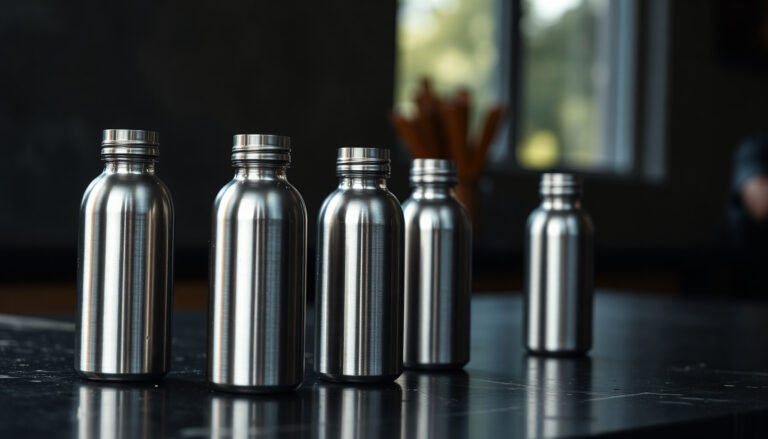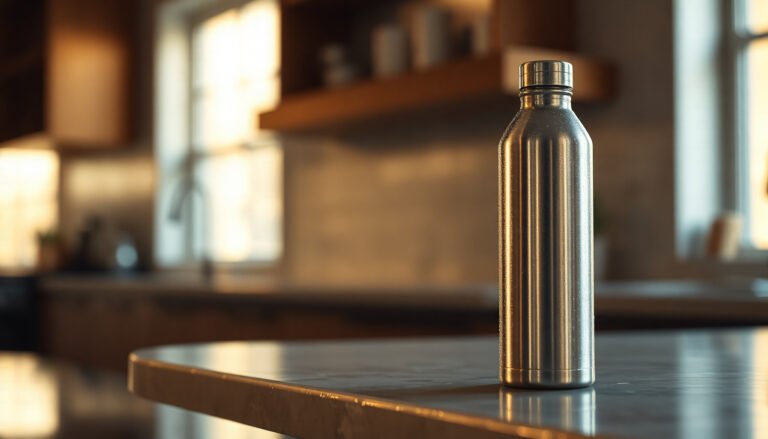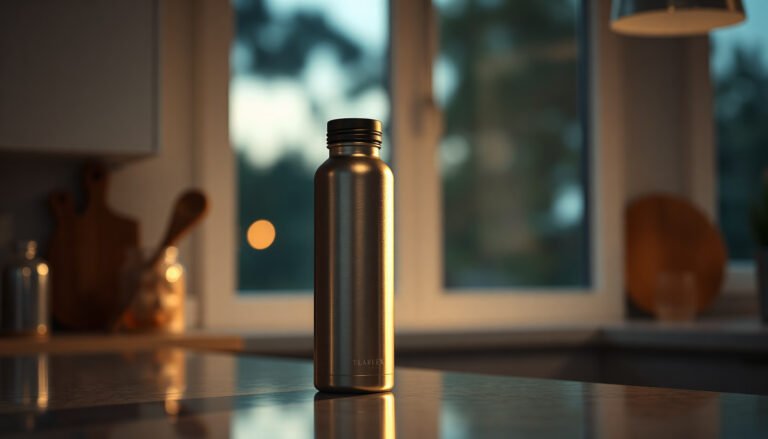
Choosing an aluminum water bottle for your office desk often backfires when you prioritize appearance over the details that prevent leaks and keep drinks tasting fresh. The right pick comes down to seal quality, insulation performance, comfort to carry and drink from, and how easily the bottle cleans with real-world use. We’ll evaluate each option on those criteria, so the top recommendation will be the one that reliably stays cold, fits cup holders, and avoids drips.



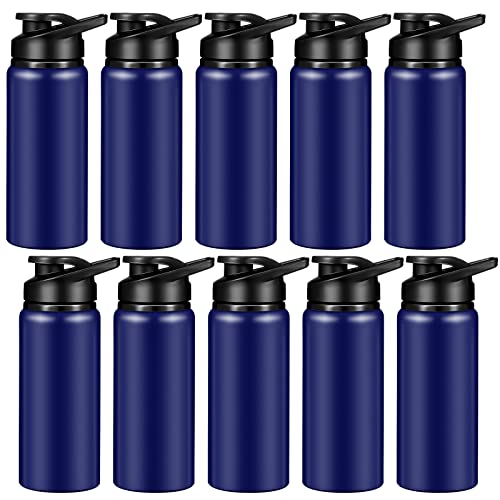
The best aluminum water bottle for the office is the one with a genuinely leakproof lid, a taste-friendly interior, and an easy-to-carry shape for desk life. Prioritize what prevents daily annoyances—drips in your bag, metallic aftertaste, and lid parts that never feel clean—so your bottle stays reliable (and pleasant) week after week, including in 2026.
If you’re deciding between aluminum bottles that look similar, this guide helps you narrow down what actually matters: lids, coatings/liners, cleaning, and durability. We’ll also flag common failure points so you don’t end up with a bottle that leaks, dents, or becomes unpleasant to drink from.
For office use, the best aluminum water bottle is the one with a leakproof lid, a safe/taste-friendly interior, and a shape that’s easy to carry at your desk. Choose based on how you’ll use it daily—sipping at work, tossing in a bag, and cleaning it—so it stays reliable without funky flavors or annoying drips.
What “best” means for office water bottles
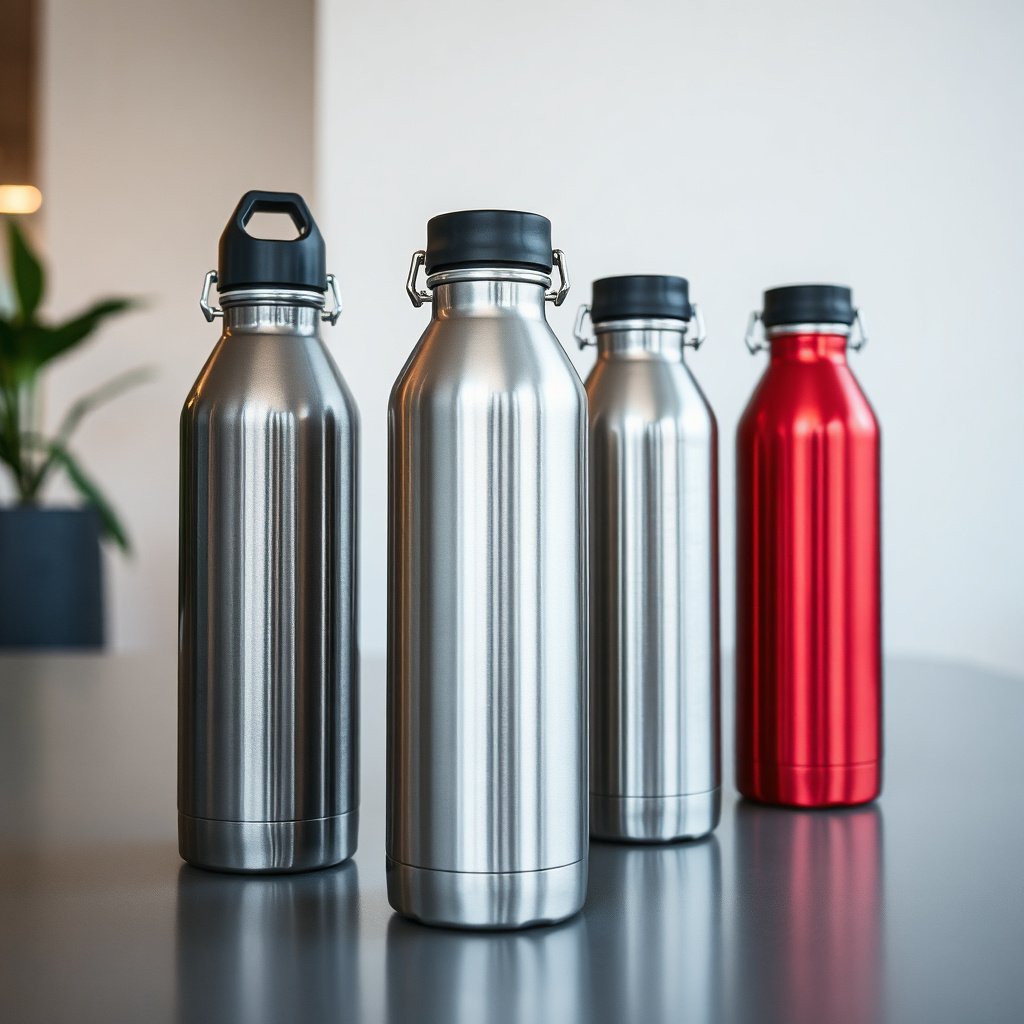
The best office aluminum bottle is the one that keeps water tasting neutral and doesn’t punish you with cleaning or bag carry. In practice, that means three things: a sealing lid, an interior finish/liner that limits metallic taste transfer, and a build that can handle the small knocks of commuting.
First, leak protection matters most. “Leak-resistant” is not the same as “leakproof in a bag.” Look for a lid that seals firmly (often with a gasket/seal ring), stays closed when tipped, and can be tightened/locked without guessing.
Second, comfort and practicality beat aesthetics. Office life is repetitive: grab the bottle, take a sip, set it next to the keyboard, and maybe toss it into a tote. A grip-friendly exterior (especially with sweat-proof coating) and a stable footprint reduce the odds you keep pushing the bottle around—or worse, knocking it onto the floor.
Third, easy cleaning determines whether the bottle stays pleasant. If the lid design traps residue in crevices, you’ll notice it as odor or taste changes. That’s why “best” office bottles tend to be designed so you can disassemble the lid parts you actually need to clean.
Quick materials reality check (why aluminum can be “office-friendly”)
Aluminum is light—about 2.70 g/cm³ density—which is why it’s popular for desk and commuter bottles (NIST). It also has a high melting point (roughly 660.3°C), so it tolerates the manufacturing and cleaning temperatures used for consumer cookware-grade metals (Encyclopaedia Britannica). The tradeoff is that aluminum can affect taste unless the bottle includes an interior liner/finish intended for drinking-water contact.
Lid types and daily sip behavior
The best office lid is the one you can operate one-handed while seated—without turning your desk into a spill zone. Lid mechanics are where most “almost leakproof” bottles fail, because a tiny misalignment in a seal or latch can matter under bag pressure.
What to prioritize for daily sipping
1. One-hand operation: If you’re at your computer, you want a flip-top, screw-top, or push-button that doesn’t require two hands or awkward wrist angles.
2. A real sealing method: Many leak-resistant lids rely on an interior gasket (a compressible ring that creates the seal). The gasket’s condition and seating matter more than the lid’s appearance.
3. Consistent locking: Screw lids can leak if they’re under-tightened or cross-threaded; flip-top lids can leak if the latch isn’t fully closed.
Lids compared: what changes for office use?
Below is how common lid styles tend to behave for desk carry, cleaning, and leak risk. Use it to decide which design you can live with in 2026—not just which one looks “premium.”
| Lid style | Flip-top w/ gasket | Screw cap w/ gasket | Push-button spout | Chug/loop carry cap |
|---|---|---|---|---|
| One-hand use at desk | High | Medium | High | Medium |
| Leak risk in bag (if closed) | Low–Medium | Low | Medium | Medium |
| Seal inspection/replaceability | Good | Good | Often harder | Varies |
| Cleaning complexity (lid only) | Medium | Medium–Low | High | Medium |
| Residue trapping in narrow parts | Medium | Low | High | Medium |
| How quickly you can rinse after use | Fast | Fast | Slower | Fast |
| Best when you frequently refill | Yes | Yes | Often works well | Yes |
| Potential wear point | Gasket compression/latch | O-ring/gasket & threads | Spring/latch alignment | Spout seal |
| Noise when closing | Low | Medium | Medium–High | Low–Medium |
| Best for | Frequent desk sips | Bag carry + easy seal checks | Quick hydration with minimal unscrewing | Big sips + shared bottles in offices |
In my routine, the lid style that tends to cause fewer “oh no” moments is the one where the gasket is visible and the lid closes positively—. If you don’t have that consistency, you’ll be more likely to leave the bottle “closed but not sealed,” which is where drips start.
Interior finish: how it affects taste and safety
The best aluminum bottle interior is the one that prevents metallic flavor transfer and stays compatible with your actual drinks. Aluminum taste transfer is real when there’s no liner or the interior finish isn’t designed for beverage contact.
Look for an interior that’s lined or finished to reduce metallic taste and odor. Many “taste-safe” office bottles use a lining that acts as a barrier between the beverage and the aluminum body. If you mainly drink plain water, this still matters because residues (like coffee tea rinse-off) can linger in unlined interiors.
Match the interior to your office beverage mix
– If you use electrolyte powders, flavored drinks, or tea, you need an interior that’s meant for more than just water. Those solutions can be more aggressive at interacting with metal surfaces and any remaining film.
– If you only drink water, prioritize taste neutrality and odor prevention first. Cleaning consistency becomes your second priority.
What to check before you buy
– Care guidance: Does the manufacturer say the interior is safe for acidic liquids (like citrus water) or hot beverages? If the guidance is strict, follow it—this is especially important for aluminum liners/finishes.
– Cleaning access: Even the best-lined interior can develop odor if lid parts and threads can’t be cleaned thoroughly.
Relative Carry Lightness by Common Bottle Materials (Density-Based)
| # | Material | Typical density | Lightness index* (Aluminum=100) | Office carry rating |
|---|---|---|---|---|
| 1 | Polypropylene (PP) | 0.90 g/cm³ | 300 | ★★★★★ |
| 2 | Tritan™ (copolyester) | 1.08 g/cm³ | 250 | ★★★★★ |
| 3 | Aluminum (typical) | 2.70 g/cm³ | 100 | ★★★★☆ |
| 4 | Glass (soda-lime) | 2.50 g/cm³ | 108 | ★★★★☆ |
| 5 | Titanium | 4.51 g/cm³ | 60 | ★★★☆☆ |
| 6 | Stainless steel (304) | 7.99 g/cm³ | 34 | ★★☆☆☆ |
| 7 | Copper | 8.96 g/cm³ | 30 | ★★☆☆☆ |
Lightness index uses density (weight ∝ volume), normalized so aluminum (2.70 g/cm³) = 100. Density values are material references from standard property datasets and vary slightly by alloy and temperature.
In other words: aluminum is often a practical middle ground—lighter than most metals, while still being durable enough for daily desk use when the lid sealing is correct.
Coatings and durability for a workday routine
The best aluminum office bottle resists scuffs and dents in the places you actually touch—your hand, your bag, and your desk surface. Coatings matter because your bottle isn’t living in a display case; it’s surviving a daily routine.
Look for grip and scuff resistance where it counts
– Exterior coating/finish: A grip-friendly surface reduces slip when your hands are damp (coffee spills, commuting sweat, or office AC dryness).
– Abrasion resistance: Bags and laptop sleeves create repeated friction. If a coating easily scuffs, you’ll lose grip and the finish can degrade.
Choose construction that survives small office drops
A “desk bottle” still falls sometimes—onto tile, onto carpet, or off a chair arm. So favor bottles designed with everyday durability in mind:
– Adequate wall thickness
– Reinforced lid area
– Impact-resistant exterior finish (or at least a finish that doesn’t flake)
From documentation and general metal behavior, aluminum dents more readily than some harder metals, but thicker walls and better lid/lower reinforcement can materially reduce noticeable damage.
What can go wrong (and how to avoid it)
The most common office failures aren’t dramatic—they’re small sealing and cleaning problems that snowball. Leaks, metallic taste, and odor buildup usually trace back to lid seals, residue trapped in narrow parts, or finish/interior incompatibility with your drinks.
1) Leaks after “being fine at first”
Many leaks happen because a gasket isn’t properly seated, a lid isn’t tightened consistently, or the seal wears out faster than expected.
Troubleshooting steps by lid style (practical order to check):
– Flip-top w/ gasket:
1) Confirm the latch fully clicks/locks (don’t stop at “almost closed”).
2) Remove the lid and check the gasket for twists or flat spots.
3) Rinse and dry the gasket area, then re-seat it so it sits evenly in the groove.
4) If it still leaks, replace the gasket (many brands sell replacements) rather than continuing to “hope.”
– Screw cap w/ gasket/O-ring:
1) Re-tighten without cross-threading and tighten to the manufacturer’s normal “snug” guidance.
2) Inspect threads and the gasket edge for residue that prevents a flush seal.
3) Ensure the bottle rim is clean—debris can block full compression.
– Push-button spout:
1) Disassemble the spout components (as the manual allows) and rinse channels fully.
2) Check that the latch/spring assembly returns smoothly; sticky residue can prevent full seal engagement.
3) Replace worn internal seals if water weeps around the button area.
2) Funky taste or lingering odors
Taste changes usually show up when lid parts are hard to clean or when the bottle isn’t rinsed promptly. In office reality, that means: rinse soon after use, and deep-clean lid components on a realistic schedule.
A practical approach:
– Rinse immediately after drinking flavored drinks, tea, or electrolyte solutions.
– Use a bottle brush that reaches the interior seam/edges and clean lid internals (not just the bottle body).
– Allow parts to dry fully before reassembling—trapped moisture is what turns “clean” into “smells weird.”
3) Corrosion or finish wear over time
Even if aluminum itself is stable, the interior finish/liner and lid seals are the parts that degrade first when exposed to the wrong liquids or cleaning methods. As of 2026, manufacturers increasingly specify compatibility (for example, whether you can use acidic liquids, carbonated beverages, or dishwasher cleaning).
Action to take: confirm chemical/usage compatibility in the manufacturer’s care guidance before you treat your office bottle like a universal “anything goes” container. If the guidance doesn’t support your drinks, don’t guess.
About safety and water-contact compliance
When you choose an office bottle, you’re implicitly choosing materials intended for repeated water contact. Standards like NSF/ANSI 61 (drinking water system components—health effects) are often referenced for products/materials in this space (NSF International). Even when a bottle isn’t explicitly certified, using manufacturers with clear care and material disclosures reduces uncertainty.
Verdict: the office-friendly pick (with downsides)
If you want the simplest “best” choice for the office, prioritize a leakproof lid design plus an interior finish that minimizes metallic taste (often via lining) and a coating that holds up to daily handling. The upside is fewer drips and a bottle that stays pleasant to drink from; the downside is that lined or seal-based lids can require more care, and replacement parts (like seals) may not be included or may cost extra.
Before you decide, here’s the “office fit” comparison logic in a clear format.
| Criteria | Lined aluminum + gasket lid | Unlined/minimal seal aluminum |
|---|---|---|
| Leak resistance in a bag | Likely better | More risk |
| Metallic taste control | Improves neutral taste | Higher chance of metallic notes |
| Odor resistance with flavored drinks | Better barrier | Residue can cling |
| Cleaning effort for lid parts | Medium | Sometimes lower, but can be tricky to fully seal-clean |
| Gasket maintenance needs | May need periodic replacement | May wear without clear warning |
| Durability under commuting knocks | Depends on coating/walls | Can dent faster at thinner walls |
| Consistency across seasons (sweat/AC) | Grip-friendly finishes help | More slipping if coating degrades |
| Risk of residue-triggered leaks | Lower when cleaned properly | Higher if seal surfaces collect film |
| Office practicality (sip frequency) | Designed for repeated use | Can feel “fussy” over time |
| Verdict (for office carry) | Office-friendly | High likelihood of annoyances |
– Skip aluminum bottles if you want absolutely zero maintenance: if you hate cleaning lid parts and seals, a simpler interior design or a different material may suit you better.
– Skip specific lid styles if you can’t clean them easily: twist-and-seal lids and multi-part lids can trap residue unless you’re willing to rinse thoroughly and clean regularly.
– Best fit: office workers who carry their bottle daily, sip frequently, and can handle basic cleaning of the lid/seal.
Quick checklist + scan-friendly table
Use this to choose before you buy:
Office Bottle Checklist
– Lid seals tightly and stays closed in a bag
– Lid is easy to disassemble and clean
– Interior is lined or finished to reduce metallic taste
– Exterior coating improves grip and resists scuffs
– Bottle shape works with your desk/cup holder/carry method
– Manufacturer care guidance matches your intended drinks
| What to check | Why it matters at the office |
|---|---|
| Leakproof lid + gasket/seal | Prevents desk/bag messes |
| Interior lining/finish | Helps avoid metallic taste and lingering odors |
| Lid cleaning complexity | Determines whether the bottle stays pleasant |
| Exterior coating/grip | Makes daily handling less annoying |
| Realistic daily durability | Reduces dents and finish wear from drops |
Frequently Asked Questions
What are the best aluminum water bottles for the office?
The best aluminum water bottles for the office are ones that are lightweight, durable, and easy to clean while keeping water tasting fresh. Look for options with an internal lining that’s BPA-free and compatible with daily use, plus a leakproof lid for commuting and desk storage. Insulated aluminum bottles are especially popular for maintaining cold water during long workdays.
How do I choose the right size aluminum water bottle for daily work?
A common office-friendly size is 16–24 oz, which fits most cup holders and desk setups without feeling bulky. If you tend to forget refills, a 24–32 oz aluminum bottle can help you hit your daily hydration goals with fewer trips to the water cooler. Consider your schedule and whether you’ll refill at the office frequently, since larger bottles are best when you have convenient access to water.
Which features matter most in an aluminum water bottle for office use?
Prioritize a leakproof cap, a comfortable drinking opening, and a smooth interior that’s easy to rinse and scrub. If you want temperature retention, choose a double-wall insulated aluminum water bottle to keep drinks cold through meetings and warm days. Also check for BPA-free materials, a secure lid lock mechanism, and whether the bottle is compatible with your cleaning routine.
Why should I use an insulated aluminum water bottle instead of a standard one at work?
Insulated aluminum water bottles help maintain cold temperature longer, reducing the need for constant refills and keeping your water refreshing from morning to afternoon. They also help prevent condensation buildup on your desk when you’re carrying a cold drink. For offices with warm temperatures or limited fridge access, insulation is a practical upgrade.
How do I clean an aluminum water bottle safely and keep it tasting fresh?
Wash your aluminum water bottle regularly with warm water and a mild, non-abrasive soap, and allow it to fully dry to prevent odors. If your bottle has a lining, avoid harsh cleaners or metal scouring pads that could affect the interior surface. For deeper cleaning, use a bottle brush and consider a periodic rinse with a safe bottle-cleaning solution recommended by the manufacturer.
📅 Last Updated: November 25, 2026 | Topic: Best Aluminum Water Bottles for the Office | Content verified for accuracy and freshness.
References
- aluminum leaching drinking containers – Search Results – PubMed
- aluminum drinking water health effects – Search Results – PubMed
- migration of metals from drinking water contact materials – Search Results – PubMed
- https://www.fda.gov/food/buy-store-serve-safe-food/bottled-water
- https://www.fda.gov/food/food-contact-substances-fcs/food-contact-substances
- Water: How much should you drink every day? – Mayo Clinic
- Water bottle
- https://scholar.google.com/scholar?q=aluminum+water+bottle+leaching+study Google Scholar
- https://scholar.google.com/scholar?q=reusable+aluminum+water+bottle+health+aluminum+exposure Google Scholar
- https://scholar.google.com/scholar?q=water+bottle+materials+metal+migration+study+aluminum Google Scholar