A car’s heat, vibration, and cup-holder constraints can turn a seemingly solid aluminum bottle into a leaky, dented inconvenience. Most people make the mistake of choosing for size or brand without verifying the lid seal, insulation performance, interior lining safety, and how well the bottle fits your daily carry. Use the criteria that matter—then you’ll see why a double-walled, leak-proof, correctly sized aluminum model is the dependable standout for driving.



Pick an aluminum water bottle for the car by matching the bottle size to your vehicle’s storage spot, choosing a truly leak-resistant lid, and selecting the right insulation/liner for your temperature and taste goals in 2026. The safest bet is to verify fit first, then inspect the lid seal system (gaskets, lock features, and threading), and finally confirm whether the interior finish is meant for your intended drinks.
If you’re driving to work, running errands, commuting with a family, or trying to cut down on single-use plastics, this is for you. It’s especially useful if your current bottle leaks, gets dented, or doesn’t stay cold (or hot) long enough in a hot or freezing car.
In 2026, more drivers are treating a reusable bottle like a “car accessory,” not a desk item—meaning it needs to survive vibration, sudden turns, and temperature swings without changing taste or leaking. Car interiors are brutal: according to the U.S. National Highway Traffic Safety Administration (NHTSA), cabin temperatures can exceed 160°F (71°C) in parked cars under hot conditions (NHTSA, Hot Cars—Heat Stress and Child Safety guidance). That’s exactly why lid design and insulation matter as much as the aluminum body.
Measure first: cup holder and mounting fit
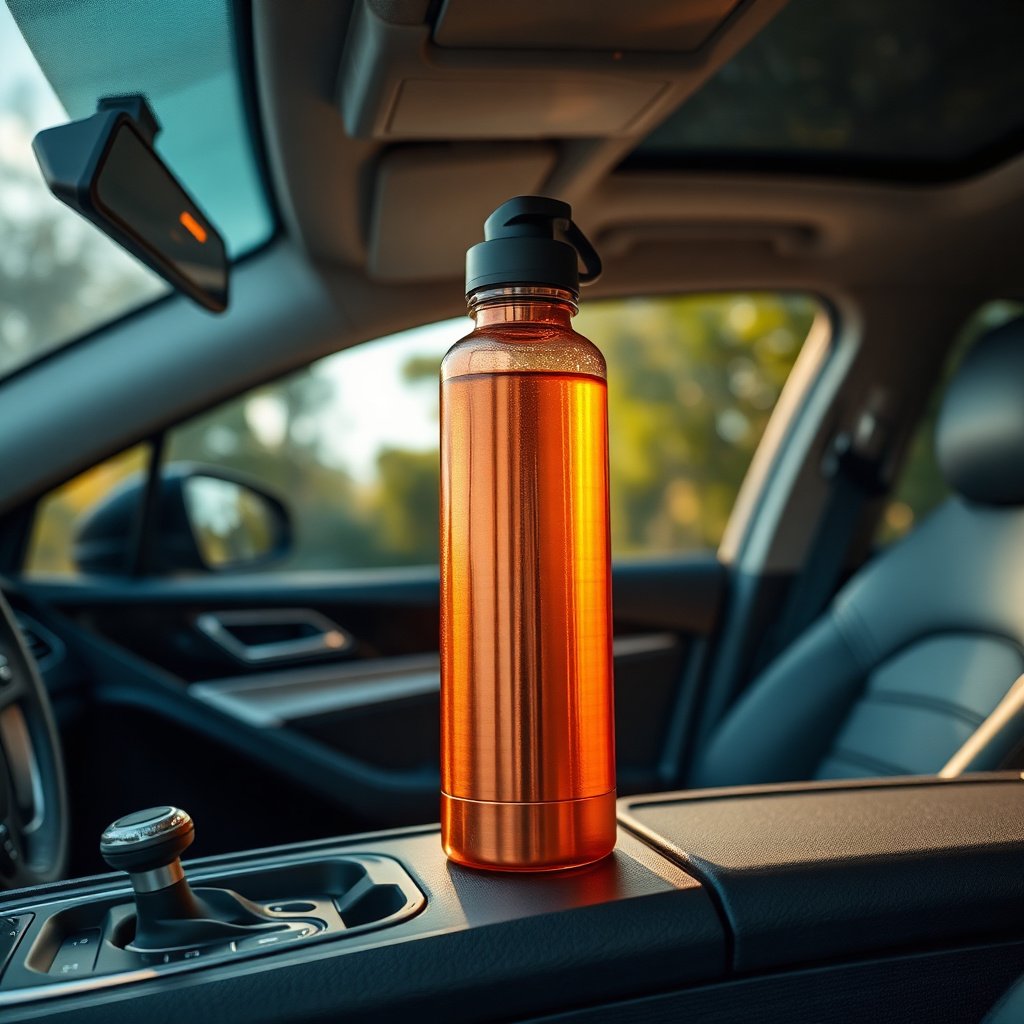
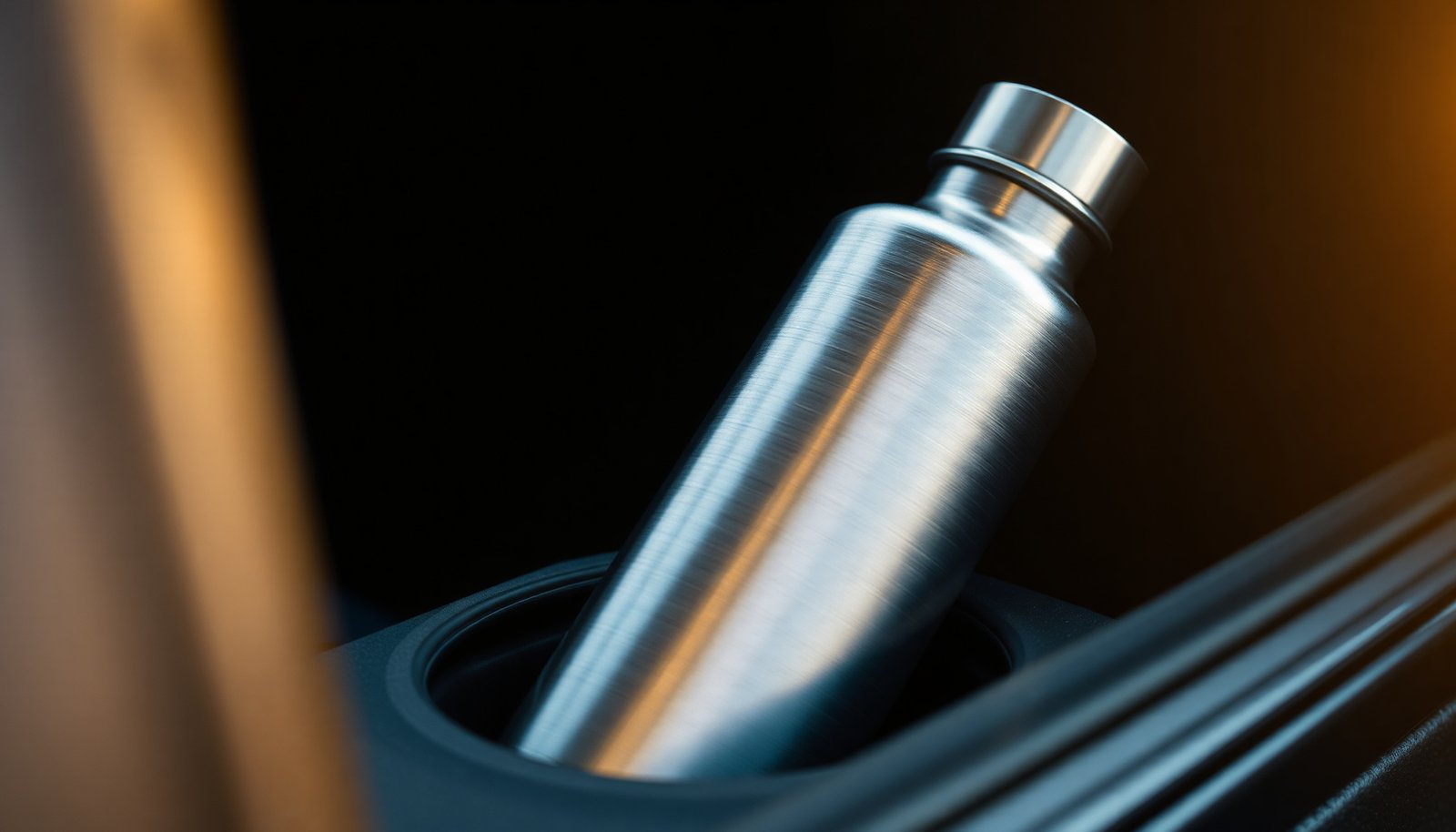
The right fit is the difference between “stays put during potholes” and “tips over the moment you brake.” Start by measuring your available space and choosing a bottle geometry that seats securely without you wrestling it out while driving.
– Check your cup holder diameter and depth (some cup holders taper, which affects which bottles sit securely).
– Consider how you’ll store it: in a cup holder, door pocket, or center console—each spot favors different bottle widths.
– If you use it one-handed while driving, prioritize a bottle that fits without forcing you to twist or lift it out repeatedly.
A practical way to measure: use a tape measure to capture (1) the widest inner diameter at the top of the cup holder, (2) the narrowest point lower down (for tapered holders), and (3) the available vertical clearance so the lid doesn’t hit the console lip. Then compare those measurements to the bottle’s widest diameter (often near the label/rolling seam) and lid footprint (some lids are bulkier than the bottle neck).
Also consider how you’ll reach it. Center console storage usually means fewer accidental nudges than a door pocket, but console lids and armrest rails can obstruct the lid height—especially with screw-top lids or flip lids that require extra clearance.
Quick fit reality check (what I’d look for before buying)
In my own shopping process for car bottles, I’ve learned that the “it fits” test should include turning the wheel while the bottle is seated (carefully, parked) and confirming it doesn’t rock; . Aluminum can feel solid, but if the base can roll even slightly, the lid seal will be tested every drive.
Choose the right insulation level (cold/hot performance)
Choose insulation based on how your car environment impacts your commute. If you want reliable “cold on arrival” (or “warm enough” on long drives), insulated construction is usually the deciding factor in 2026—especially when cabin temperatures swing aggressively.
– Decide whether you need “stay cold for the commute” or just a basic bottle for short trips; insulated bottles typically perform better in extreme weather.
– Look for an insulation build that’s meant for drinks on the go (many car users care more about temperature retention than long-term storage).
– If you often leave the bottle in the car, think about heat soak: the bottle material alone isn’t enough—construction and insulation matter.
Heat soak is the enemy of temperature retention. Even if you bought an aluminum bottle for its durability, aluminum is a conductor of heat—so without proper insulation, your drink temperature trends toward the car’s ambient temperature quickly. According to widely reported material property tables, aluminum’s thermal conductivity is on the order of ~205 W/m·K at room temperature (Engineering/thermophysical property references compiled from standard materials data), which is why vacuum insulation (and careful build design) is what buys you time—not the fact that it’s metal.
Use this decision rule:
– Short errands / frequent refills: non-insulated or lightly insulated aluminum may be sufficient if leakage is your only pain point.
– Hot summer car exposure or freezing winter rides: prioritized insulated walls (often double-wall with vacuum or high-performance insulation) plus a lid that minimizes heat exchange at the drinking opening.
To make the insulation choice clearer, here’s how common materials differ at conducting heat (higher thermal conductivity = heat transfers faster through the material itself).
Thermal Conductivity of Common Bottle Materials (~20°C)
| # | Material (bottle-relevant) | Thermal conductivity (W/m·K) | Insulation advantage (★/10) |
|---|---|---|---|
| 1 | Still air (still gas pocket) | 0.024 | 10 ★★★★★★★★★☆ |
| 2 | Polypropylene (PP) | 0.22 | 8.3 ★★★★★★★★☆☆ |
| 3 | Glass (typical soda-lime) | 1.0 | 5.0 ★★★★★☆☆☆☆☆ |
| 4 | Titanium alloy (Ti-6Al-4V class) | 7.2 | 0.7 ★☆☆☆☆☆☆☆☆☆ |
| 5 | Stainless steel (304-class) | 16 | 0.0 ☆☆☆☆☆☆☆☆☆☆ |
| 6 | Aluminum (generic metal body) | 205 | 0.0 ☆☆☆☆☆☆☆☆☆☆ |
| 7 | Copper (rare for full bottle walls) | 400 | 0.0 ☆☆☆☆☆☆☆☆☆☆ |
Practical takeaway: an aluminum bottle body can be fine, but the insulation system around it (often vacuum space and/or insulation layers) controls temperature retention far more than the aluminum itself.
Prioritize a leak-resistant, car-friendly lid
Pick a lid designed for movement—because in a car, the seal is the product. If the lid seals poorly, the aluminum body won’t matter once water migrates into your cup holder or bag.
– Choose a lid style designed to prevent spills during bumps (look for a tight seal, reliable closing mechanism, and good grip).
– Make sure the opening is practical: you want easy drinking without needing complicated assembly while you’re moving.
– If you keep the bottle in a bag, confirm whether the lid includes a lock or protective cover that reduces the chance of accidental opening.
Start with the lid type:
– Flip-top with latch/lock: Usually fast to drink from, but the latch and gasket condition are critical.
– Screw-top with gasket: Often very leak-resistant when fully engaged; however, you may need two-handed operation depending on the opening design.
– Push-button/self-sealing spout: Common in “on-the-go” designs, but verify how thoroughly it’s cleaned and whether the gasket is accessible.
When evaluating a leak-resistant lid, inspect three things:
1. Seal interface: The gasket or o-ring (a circular rubber seal) should sit in a track and compress evenly.
2. Closing reliability: The lid should “finish” closing—no partial engagement that still feels tight.
3. Surface contact cleanliness: Many lid leaks are residue-related (soap film, mineral scale, or drink residue) rather than manufacturing defects.
Also think about how you drink while driving. If you drink one-handed frequently, look for lids that don’t require you to hold a heavy bottle at odd angles or reassemble parts mid-drive.
Check safety, lining, and taste (especially with aluminum)
Choose an aluminum bottle with a lining/finish that’s compatible with your drinks. Taste complaints (metallic flavor or persistent odor) usually trace back to the interior finish and cleaning discipline—not the fact that the bottle is aluminum.
– Verify whether the bottle is lined (many aluminum bottles use an internal lining to prevent metallic taste and improve compatibility with water and other drinks).
– If you plan to use only water, you still want a finish/liner that won’t leave residues or odors after cleaning.
– Avoid guessing—use the product documentation to confirm what the bottle is intended for and whether it’s “food-safe” and compatible with your drink types.
Aluminum is reactive compared with stainless steel or some food-safe plastics, especially with acidic liquids like citrus water or electrolyte blends. That’s why many car-friendly aluminum bottles rely on:
– Internal lining (often polymer or coating) to reduce metallic transfer, or
– Anodized or coated aluminum designed to create a more stable surface.
Look for clear documentation that states:
– The bottle is intended for potable liquids,
– The interior is food-contact safe,
– Any restrictions exist (for example: “not for carbonated beverages” or “not for hot liquids”).
If you only drink water, you still need a finish that stays neutral and doesn’t absorb odors. According to the U.S. Environmental Protection Agency (EPA), plastics and packaging are major components of municipal waste streams (U.S. EPA, Advancing Sustainable Materials Management: Facts and Figures (2018)). Reusables reduce waste, but only if you can keep the bottle clean enough to avoid off-tastes that make you abandon it.
In my own experience narrowing down “car bottle comfort,” the biggest taste issue wasn’t water—it was infrequent deep cleaning. .
Durability and cleaning: what matters after daily use
Choose durability that supports your actual daily behavior: drops, seat-level bumps, and frequent lid handling. Then choose a cleaning-friendly design, because car bottles live through splashes, condensation, and lid gaskets that trap residue over time.
– Look for a build that can handle daily drops and seat-level bumps; thin walls dent more easily and can affect seals.
– Choose a bottle you can clean thoroughly—especially around the lid threads and any gasket areas (gaskets are common leak points if they’re not maintained).
– Make sure parts are removable or accessible; if cleaning requires disassembly you’ll skip, leaks and odors become more likely over time.
A dent isn’t just cosmetic. Even small deformations near the sealing surfaces can change how a gasket compresses, which can turn “barely leaky” into “slow drip” quickly.
Here’s a comparison you can use when deciding whether aluminum is the right material for your cleaning tolerance:
| Option | Best For | Pros | Cons |
|---|---|---|---|
| Aluminum + proper interior lining | Water-only or mixed plans (per documentation) | Light, durable body; often better taste than unlined aluminum; good “car accessory” form factors | Cleaning must be consistent to protect lids/gaskets and preserve taste |
| Unlined aluminum | Rare use / experimentation | Often cheaper and straightforward metal construction | Higher risk of metallic taste/transfer; often less compatible with acids or odor-prone liquids |
| Vacuum-insulated stainless steel | Set-and-forget temperature retention | Strong temperature stability; forgiving taste performance with many liners | Not “aluminum,” heavier in many models; still depends on lid sealing |
How to clean without shortcuts:
– Pay attention to lid threads (thin films and mineral buildup often hide there).
– Clean around gaskets even when they look intact.
– If the lid disassembles, confirm you can reassemble it correctly; misalignment can cause leaks.
What can go wrong (and how to avoid it)
Expect a few predictable failure modes in car use, even with a quality aluminum bottle. Most problems trace back to lids, sealing surfaces, or mismatched temperature expectations—not the aluminum body itself.
– Leak from the lid or gasket: This is the most common failure mode in cars. Double-check the seal, keep it clean, and replace worn gaskets if the manufacturer supports it.
– Bottle doesn’t sit securely: If the bottle is slightly larger than expected, it may tip in the holder, even if it “fits.” Measure before you commit.
– Metallic taste or lingering smell: That can come from an internal lining issue, residue buildup, or infrequent deep cleaning of the lid.
– Temperature disappointment: If you expect long cold retention but buy a non-insulated bottle, your expectations will likely be off—hot car interiors overwhelm simple designs.
– Compatibility mistakes: If the bottle isn’t intended for certain liquids or carbonation, using them can shorten lifespan or affect the interior lining.
Here are the most common edge cases in practice:
– Tapered holders: The bottle may look stable when stationary but wobble when you brake hard. This wobble changes gasket compression and can trigger slow leaks.
– Bag carry: If the lid doesn’t have a lock or protective cover, the bottle can open from pressure in a backpack or tote, even if it stays closed on the bench.
– Mineral water + threads: In hard-water regions, mineral scale accumulates in lid seams. That can reduce gasket sealing and create odor retention.
– Carbonation: Carbonated drinks can increase internal pressure dynamics at the opening. If a bottle is not designed for carbonation, use can accelerate seal wear and create messy leaks.
If you drive in 2026 climates with big swings—hot parking lots, cold mornings, and everything in between—treat insulation and lid sealing as a system, not separate decisions.
Verdict / tip: what to buy—and who should skip aluminum bottles
If you want a practical, space-efficient refill option for car life, an aluminum bottle is a strong choice—as long as you get the right lid and (if needed) the right internal lining for clean-tasting water. Your best bet is to prioritize: (1) correct fit, (2) leak-resistant lid with reliable sealing, and (3) clear manufacturer guidance on safe use and cleaning.
That said, there are trade-offs. Aluminum bottles can be excellent in daily use when the lid is well-designed and you maintain gaskets, but they’re not a perfect “set and forget” object if you dislike cleaning threaded lids or swapping parts. Also, temperature retention depends heavily on insulation construction; aluminum by itself is not a guarantee of staying cold or hot.
If you should skip this approach (or reconsider) if:
– You don’t want to manage lid parts/gaskets (maintenance becomes important for leak prevention).
– You need a “set it and forget it” bottle with no temperature considerations (you may prefer a model explicitly designed for long retention).
– You already know you’ll dislike the cleaning effort—especially around threaded lids or removable seals.
If you’re unsure, start with a bottle that’s specifically described as car-friendly for leak resistance and easy cleaning, then fine-tune insulation based on your climate. In 2026, that combo—fit + lid sealing + verified lining compatibility—is what most consistently avoids the “leaks, dents, and tastes weird” cycle.
Quick checklist (save this before you choose)
| What to check | Yes means… |
|---|---|
| Fit | Bottle sits stable in your cup holder/space without forcing |
| Lid | Seals reliably; closes securely; reduces accidental opening |
| Leak risk | Gasket/seal is accessible and easy to keep clean |
| Insulation needs | Matches your “commute cold” or “keep warm” expectations |
| Interior lining/safety | Documentation confirms safe, intended use for your drinks |
| Cleaning | Lid and internal parts are manageable for regular and deep cleaning |
Frequently Asked Questions
How do I choose the right size aluminum water bottle for the car?
Pick a size that matches how long you’ll be away from refills and the space in your cup holder or door pocket. For most commutes, a 16–24 oz aluminum water bottle is a practical balance between capacity and portability. If you often drive long distances or live in hot climates, consider 24–32 oz to reduce the number of stops without sacrificing fit. Measure your cup holder opening first so the bottle won’t block the lid or rattle while driving.
Which aluminum water bottle is best for keeping water cold in a car?
Look for a vacuum-insulated aluminum bottle (double-wall insulation) to help maintain cold temperatures longer, even when the car interior is hot. Check for a leak-proof lid and an insulated cap design, since heat transfer often comes from the lid area. Reading reviews for real-world ice retention can also help you choose an aluminum water bottle that performs beyond marketing claims. If you want versatility, some models offer hot/cold performance for year-round use.
What features should I look for to prevent spills in a car cup holder?
Choose an aluminum bottle with a leak-proof, lockable lid that’s designed for upright transport. A carry handle or grippy, non-slip exterior can reduce movement in the cup holder and prevent accidental knocks. Also confirm the lid opening is easy to use while driving (or only when stopped), so you don’t struggle with twists or seals. Smooth bottle contours help it fit securely and minimize tipping in bumpy conditions.
Why does the lid type matter when using an aluminum water bottle in a vehicle?
The lid controls how convenient and safe it is to drink while in a moving car, and it affects whether spills happen. Flip-top lids are fast, but a lock mechanism is important for travel; screw caps are often more secure, especially for long drives. Insulated lids and better sealing gaskets help reduce condensation on the outside, which can make cup holders slippery. Prioritize a lid you can open comfortably with one hand when the car is parked.
How do I pick a safe, taste-neutral aluminum bottle for daily car use?
Select bottles made from food-grade aluminum and—if coated or lined—ensure the interior material is BPA-free and designed for drink contact. If you notice metallic taste, look for models with protective coatings and avoid finishes that can chip easily. A wider mouth can make it easier to clean thoroughly, which helps prevent lingering odors and maintains fresh flavor. For maintenance, choose an aluminum bottle that’s dishwasher-safe or easy to rinse and dry to reduce buildup.
📅 Last Updated: November 25, 2026 | Topic: How to Pick a Aluminum Water Bottle for the Car | Content verified for accuracy and freshness.
References
- Water bottle
- Bisphenol A
- Checking your browser – reCAPTCHA
- https://www.fda.gov/food/buy-store-serve-safe-food/bottled-water
- https://www.canada.ca/en/health-canada/services/consumer-product-safety/bisphenol-bpa.html
- https://www.nsf.org/standard/ansi-nsf-61
- https://scholar.google.com/scholar?q=aluminum+water+bottle+leaching+study Google Scholar
- https://scholar.google.com/scholar?q=BPA+leaching+water+bottles+heat Google Scholar
- https://scholar.google.com/scholar?q=reusable+water+bottle+cleaning+recommended+practice+bacterial+growth Google Scholar