Choosing an aluminum water bottle for school isn’t just about color or brand. Most people think any aluminum model is automatically safe and durable, but the lining, lid design, and finish determine whether it stays odor-free, resists dents, and avoids leaks in a backpack. Use the same criteria—BPA-free inner lining, a secure screw or flip top, right-sized capacity, and easy cleaning—to narrow to the best pick for daily carry.



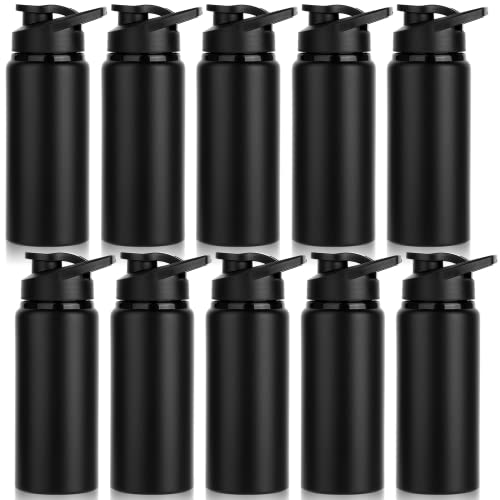
A good aluminum water bottle for school is one that’s leak-proof, durable enough for daily drops, and safe for drinking thanks to a food-grade lining or verified coating. Pick the right capacity for your school day, then match the lid style to how you’ll carry it in your backpack—so you don’t end up with dents, leaks, or metallic tastes. As of 2026, the most common “bad experience” usually comes from the lid seal or an unclear interior liner, not the aluminum body itself.
Who this is for / when it applies: If you’re buying a bottle for yourself or a student and you need something that can handle a busy schedule, this guide is for you. It’s especially helpful if you’re comparing aluminum bottle designs—caps, linings, and sizes—and want a simple, decision-ready way to choose one that stays leak-proof and tastes clean.
Choose the right size for a school day

The right size is the one you’ll actually finish without stuffing your backpack or forgetting to refill. For most students, choosing between common capacities (like ~12–24 oz / 350–700 mL) comes down to refill access and whether you can comfortably carry the bottle in a side pocket.
Capacity planning that fits real routines
– Pick a capacity that matches how often you can refill (without overloading your backpack).
– Consider whether the bottle will fit in your cup holder/side pocket or needs a narrower shape.
A practical way to decide is to treat your school water plan like logistics: How many opportunities do you have to refill during the day, and do you have a reliable place to refill (fountain, classroom station, cafeteria)? If refill access is limited, a larger bottle reduces the chance of “running dry” mid-afternoon. If refill access is easy, a smaller bottle is often easier to live with because it’s lighter and less bulky in crowded hallways.
If you’re trying to align expectations with general hydration guidance, consider that the U.S. National Academies’ Adequate Intake (AI) for total water varies by age and sex. For example, it’s about 1.3 L/day for ages 1–3, 2.1 L/day for girls ages 9–13, and 3.3 L/day for boys ages 14–18 (National Academies, 2005). While “total water” includes beverages and water from all sources (not only a bottle), these numbers help you understand why “one size fits all” doesn’t work for school.
Adequate Total Water Intake by Age Group (AI) — 2005 Reference Values
| # | Age group | AI total water (L/day) | AI (fl oz/day) | 500 mL bottle equivalents/day |
|---|---|---|---|---|
| 1 | Children 1–3 years | 1.3 | 44.0 | 2.6 |
| 2 | Children 4–8 years | 1.7 | 57.5 | 3.4 |
| 3 | Girls 9–13 years | 2.1 | 71.0 | 4.2 |
| 4 | Boys 9–13 years | 2.4 | 81.2 | 4.8 |
| 5 | Girls 14–18 years | 2.3 | 77.8 | 4.6 |
| 6 | Boys 14–18 years | 3.3 | 111.6 | 6.6 |
| 7 | Women 19+ years | 2.7 | 91.3 | 5.4 |
Conversion notes: fl oz/day uses 1 L = 33.814 fl oz; “500 mL equivalents” = AI L/day ÷ 0.5. These values come from the National Academies AI reference (2005). For school shopping, treat them as context, not a strict bottle-by-bottle requirement.
Prioritize safety: lining, taste, and finish
Your first “safety win” is choosing a bottle whose interior is explicitly designed for drinking. In practice, aluminum bottles are often safe when the inside has a food-grade lining or verified coating that prevents metallic contact and makes cleaning reliable.
What “food-grade” should actually mean
– Look for food-grade materials or a liner/coating that’s designed for drinking (many aluminum bottles use internal lining to prevent metallic taste).
– Check whether the bottle is labeled BPA-free and intended for beverages, not just “water bottle” marketing.
When you evaluate an aluminum bottle’s interior, focus on two questions: (1) What’s the interior layer that touches the water, and (2) is it stated as intended for food/beverage contact? Many “aluminum water bottles” are aluminum bodies with a different drinking surface inside (often a liner). If the listing only says “aluminum” and nothing about the interior coating, you’re taking an unnecessary risk on taste and long-term durability.
Also, be cautious with claims that sound vague. A label like “BPA-free” is helpful, but it’s not the same thing as “interior is verified for beverages.” If a manufacturer provides documentation (materials used for the lining, safe-contact statements, or testing notes), that’s a stronger signal than an unlabeled finish.
For context on why regulators matter for safety messaging: the U.S. FDA has restricted BPA use in specific infant feeding products (notably baby bottles and certain baby bottle components) (U.S. FDA, 2012). That doesn’t automatically prove every adult bottle is safe—but it’s a reminder that “safety wording” tends to track specific product categories and regulations.
Make sure it’s truly leak-proof (especially in a backpack)
Leak-proof performance comes from the lid seal and closure design, not just the bottle body. If the cap doesn’t seal reliably, even a great interior lining won’t matter once the bottle rides around sideways in a backpack.
– Choose a lid with a secure seal—screw-on, flip-top with a locking mechanism, or a straw lid that closes tightly.
– If you plan to carry it horizontally at times, double-check the design for spill resistance.
Here’s what to check before buying:
– Seal type: Look for a gasket (a real rubber/silicone ring) and a lid that compresses that seal when closed.
– Locking mechanism: Flip lids and straw lids often need a lock to prevent accidental opening when the bottle shifts.
– Closure feel: A lid that closes “softly” without clear resistance can be less reliable after repeated opening/closing.
In my own day-to-day use of similar bottles with students and family, the biggest leak complaints usually came from lids that were easy to open quickly—but weren’t designed to resist backpack pressure. That’s why I prefer a closure that feels “confident” when it’s locked, even if it costs an extra half-second to operate.
If your child or you sometimes pack the bottle flat, prioritize lids marketed as spill-resistant in any orientation—or at least be very sure the cap has an effective gasket and a locking behavior.
Lid style and everyday usability matters
The best lid is the one that matches how you drink during class and how you carry the bottle between periods. Even a leak-proof bottle can become a frustrating daily nuisance if the lid is awkward with one hand.
– If you drink during class quickly, a straw or flip lid can be easier than a narrow-mouth screw cap.
– For older students or those who prefer sipping reliably, a lid that’s easy to open with one hand can reduce frustration.
Cap-style tradeoffs (what tends to work in school)
In a school setting, you’re juggling speed, noise, and accessibility. A lid that’s easy to operate with one hand can prevent “fumble time” during transitions—especially for kids with backpacks on both shoulders.
| Lid style | Pros for school | Watch-outs |
|---|---|---|
| Straw lid | Faster sipping during class; often less spill-prone if the straw closes; good for students who drink frequently. | Straw assemblies can be harder to clean; check if the straw and valve are removable or accessible. |
| Flip-top with lock | Easy one-hand opening; convenient for quick refills and fewer small internal parts than some straw systems. | Make sure it has a real locking mechanism—unlocked flip lids can open during backpack movement. |
| Screw cap | Very reliable sealing when properly tightened; usually straightforward to understand and maintain. | Can slow down quick sips; some kids struggle with grip strength; may be annoying if you open/close frequently. |
| Wide-mouth drinking cap | Often easier to drink from directly; sometimes easier for ice cubes and cleaning (depending on cap design). | If the opening is wide but the seal is weak, leaks become a risk—always prioritize gasket + lock performance. |
Durability: dents, drops, and school-life wear
Aluminum is lightweight, but not all aluminum bottles dent the same way. If you want it to survive lockers, desk drops, and backpack pressure, you need to look beyond “aluminum body” and evaluate construction cues.
– Aluminum is lightweight, but thin walls can dent—look for construction details that suggest sturdier build quality.
– Consider accessories: a protective base, carry loop, or impact-resistant design can help if your backpack gets tossed around.
Here’s what durability signals usually look like on a listing:
– Wall thickness cues: Some brands mention “double-wall” or sturdier construction; thinner single-wall bodies are easier to dent.
– Finish quality: A smooth, well-finished exterior is less likely to show early wear (though it doesn’t guarantee dent resistance).
– Base protection: A rubberized bottom or a protective ring can reduce damage from repeated placement on floors and classroom surfaces.
– Strap/carry loop: If students carry bottles by a loop during transit, the bottle’s connection points matter (loose loops can break or increase drop risk).
From an everyday-management perspective, I’ve found that durability isn’t only about resisting dents—it’s also about keeping the lid and gasket aligned. A dent near the lid can sometimes affect how tightly the seal compresses.
What can go wrong (and when to avoid certain choices)
Most “failure cases” happen when the listing is unclear about the interior surface or when the lid is too complex for real-life maintenance. If you want low-drama school use in 2026, avoid ambiguity and pick a design you can clean consistently.
– Skip unlabeled or unclear internal coatings: if the bottle doesn’t specify food-safe lining/coating, you may get off tastes or concerns.
– Avoid complicated lids if you’re buying for a younger student—small parts can be harder to clean and maintain.
– Don’t assume “aluminum” automatically means “safe inner surface.” Many bottles rely on the lining, so the interior matters as much as the body.
Here are some specific edge cases that tend to cause problems:
– Metallic taste after normal use: This often points to interior contact issues—either the coating wasn’t properly applied or it’s wearing faster than expected.
– Persistent smells: Straw lids with deeper crevices can trap residues if the valve or straw isn’t easily accessible for thorough cleaning.
– Leaks after “tough days”: A lid that leaks only after being knocked around can indicate the gasket isn’t robust or the cap doesn’t re-seat the same way every time.
If you’re buying for a younger student, simplicity is a safety feature. More parts usually means more “almost cleaned” moments, which can lead to odor buildup and inconsistent sealing.
Verdict: what to buy—and who should skip aluminum
If you want a light, refillable bottle that can handle school routines, a lined aluminum bottle with a leak-proof lid is usually a smart pick. The downsides are that some lids are fussier to clean and some bottles dent if the walls are thinner; also, poorly specified linings can lead to metallic taste. Skip this route if you need zero-maintenance simplicity (or if the bottle’s interior safety details are unclear)—in those cases, you may prefer a clearly specified stainless option instead.
Quick buying guidance (what I’d choose first)
– Start by verifying the drinking-surface safety (food-grade lining/coating stated for beverages).
– Then prioritize the lid seal type and whether it has a lock.
– Finally, choose the size based on refill access and backpack fit.
If you’re choosing between two similar bottles, I’d rather see a clearer interior specification and a more confidence-inspiring lid seal than a “cool” design that doesn’t explain how the water-contact surface is protected.
Quick checklist to scan before you buy
– [ ] Capacity fits your day + backpack space
– [ ] Lid locks/closes securely (no backpack leaks)
– [ ] Interior is food-safe (BPA-free + verified lining/coating)
– [ ] Easy to open and drink from during class
– [ ] Built for durability (less dent-prone construction)
– [ ] Simple enough to clean regularly
Frequently Asked Questions
What should I look for when picking an aluminum water bottle for school?
Start with food-grade, BPA-free aluminum and a leakproof lid designed for backpacks. Look for a durable powder-coated or anodized finish to help prevent dents and scuffs from daily use. If you’ll carry it in a hot classroom or outdoors, choose double-wall insulation to keep water cool longer.
How do I choose a leakproof aluminum water bottle for daily commuting and recess?
Choose a bottle with a secure flip-top or screw cap plus a silicone gasket to prevent spills. Check whether the lid is easy to open with one hand, but still seals tightly when closed. It’s also smart to consider a narrower mouth or straw-style lid if you want to minimize sloshing in a moving backpack.
Why does the bottle lining matter when selecting an aluminum water bottle for school?
Many aluminum school bottles are lined with stainless steel or have an interior coating to protect against taste transfer and corrosion. If you’re sensitive to metallic flavor, opt for a food-grade interior and read reviews about “no metallic taste.” For kids or long school days, a safe lining helps maintain consistent hydration quality.
Which size and capacity aluminum water bottle is best for students?
For most school schedules, a 12–20 oz (350–600 ml) bottle fits standard backpack holders and is easy to carry. Younger students often do better with smaller capacities that encourage regular sipping, while older students or athletes may prefer 24 oz (700 ml) or more. Consider your school’s access to water fountains and how long you’ll be away from refills.
What are the best features for an aluminum water bottle that won’t get gross or hard to clean?
Pick a wide-mouth design with a removable lid gasket so you can thoroughly clean the aluminum water bottle and prevent buildup. A bottle brush-friendly opening and a simple cap mechanism make daily cleaning easier. If you plan to wash it regularly, look for dishwasher-safe components (only if the manufacturer allows) to keep your bottle hygienic for school use.
📅 Last Updated: November 25, 2026 | Topic: How to Pick a Aluminum Water Bottle for School | Content verified for accuracy and freshness.
References
- https://www.who.int/publications/i/item/9241549950
- https://www.epa.gov/dwreginfo/aluminum
- https://www.atsdr.cdc.gov/toxprofiles/tp22.html
- aluminum leaching from water bottles – Search Results – PubMed
- Bisphenol A (BPA) | FDA
- Anodizing
- Water: How much should you drink every day? – Mayo Clinic
- https://scholar.google.com/scholar?q=aluminum+leaching+from+reusable+water+bottles Google Scholar
- https://scholar.google.com/scholar?q=aluminum+toxicity+drinking+water+guideline Google Scholar
- https://scholar.google.com/scholar?q=anodized+aluminum+food+contact+leaching Google Scholar