Aluminum water bottles are generally safe for everyday hydration, and the loudest myths about them—such as dangerous metal leaching or toxins from normal use—often come from missing context. What matters is how the bottle is made, finished, and maintained: factors like coating integrity, cleaning habits, and damage can affect taste and corrosion resistance. Below, we separate what’s true from what’s fear-based so you can choose and use your bottle with confidence.



Reputable, properly lined aluminum water bottles are generally safe for everyday use—but the “aluminum leaching” panic usually assumes the bottle is unlined, damaged, or misused. The real differences you’ll notice (and the real health considerations) come down to interior lining condition, how long liquids sit in the bottle, and how thoroughly you clean the lid and seals.
If you’re debating aluminum vs. stainless steel, or you’ve heard warnings online about metal in your water, this is for you—especially if you use your bottle daily for commuting, gym, or travel. We’ll focus on practical, everyday factors like lining, cleaning habits, and conditions that can accelerate wear.
Myth 1: Aluminum water bottles always leach harmful metal
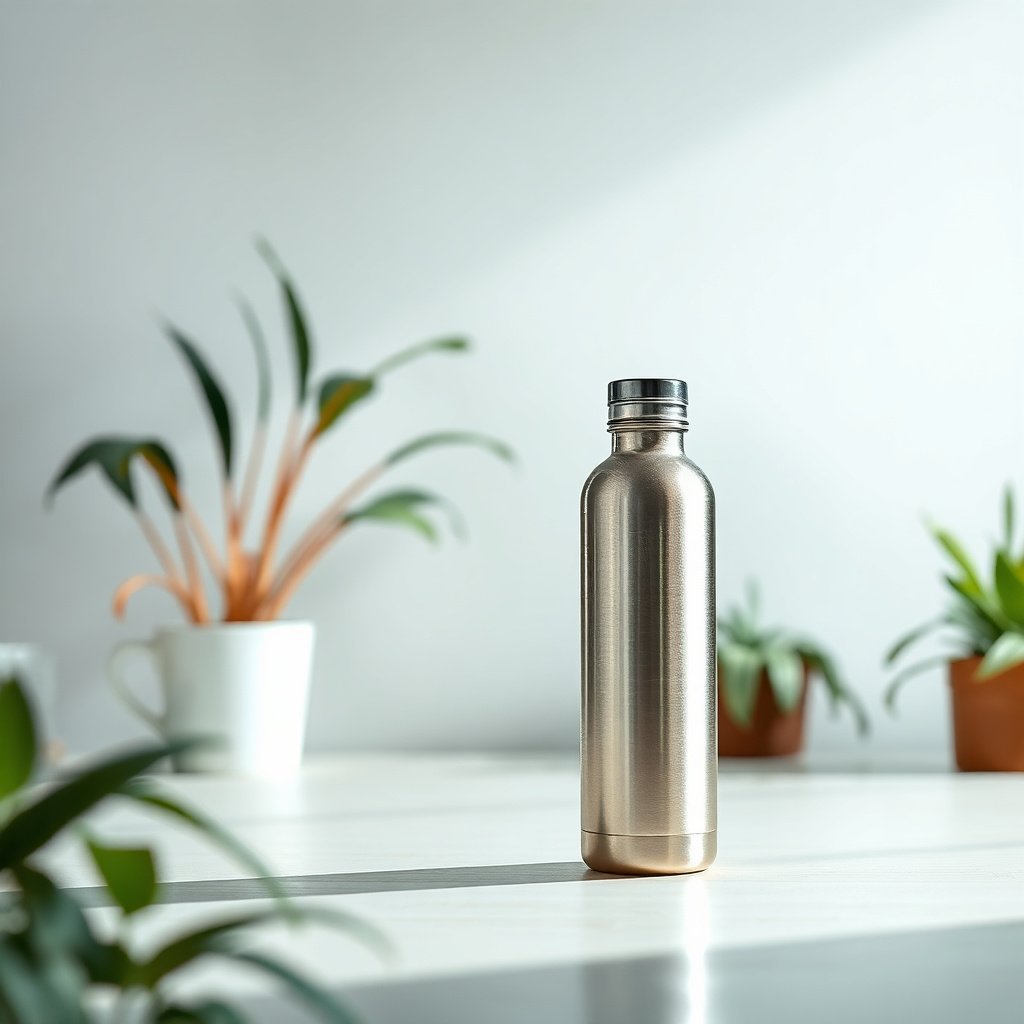
Aluminum water bottles do not “always” leach harmful metal when they’re built for beverage contact and stay in good condition. What transfers (if anything) is highly dependent on the presence and integrity of the interior barrier and on how aggressively the liquid can interact with it.
– “Always leach” is the common exaggeration—how much migrates depends on whether the bottle has an appropriate interior lining and whether that lining remains intact.
– Acidic drinks (like citrus water, lemon-lime, or some sports drinks) and long contact times can matter more than the base metal alone.
– In real-world guidance, aluminum in drinking water is typically discussed at the level of exposure to dissolved aluminum—not “metal poisoning from one bottle,” as online posts often claim.
Myth 2: It changes water taste in a bad way
A properly lined aluminum bottle shouldn’t make your water taste “bad by default,” but taste problems are real and usually have a mechanical cause. In most cases, the interior coating quality, residue buildup, and cleaning consistency drive the flavor and odor you notice.
– Taste issues are usually linked to the bottle’s interior coating (or lack of one), the bottle’s age, and whether it’s cleaned thoroughly—especially in hard-to-reach areas.
– Lingering smells often originate from caps, gaskets, and threads where biofilm and detergent residue can accumulate.
– If water tastes metallic, it’s often a sign that the interior surface is no longer behaving like a barrier (for example, coating wear or scratches).
Myth 3: All aluminum bottles are unsafe
“All aluminum bottles are unsafe” is too broad to be true. Safety depends on design: many aluminum bottles include a liner intended for food and beverage contact, while the main red flags are unlined interiors or interiors that are scratched, peeling, or discolored.
– Many aluminum water bottles use an interior liner meant to separate water from aluminum.
– Unlined or damaged interiors are where risk perception becomes practical—because the barrier no longer protects the liquid from direct contact.
– Current drinking-water guidance also frames aluminum primarily as a contaminant of concern at certain concentrations, not as an instant hazard from any single metal vessel. For example, the World Health Organization sets a guideline value of 0.2 mg/L for aluminum in drinking water based on health and aesthetic considerations (WHO, Guidelines for Drinking-water Quality (2003)).
Aluminum in Drinking Water: Example Guideline Cutoffs Used by Regulators
| # | Authority | Aluminum cutoff (mg/L) | Intent | Strictness vs 0.2 mg/L |
|---|---|---|---|---|
| 1 | World Health Organization (WHO) | 0.2 | Health + aesthetics guideline | 100% |
| 2 | US EPA (Secondary Standard range) | 0.05 | Aesthetic (taste/appearance) guidance | 25% |
| 3 | Health Canada | 0.2 | Drinking-water guideline | 100% |
| 4 | UK (DWI/AQ guidance practice) | 0.2 | Guideline-aligned target | 100% |
| 5 | Australia (ADWG-aligned guidance) | 0.2 | Health-based screening level | 100% |
| 6 | New Zealand (drinking-water guidance) | 0.2 | Guideline value | 100% |
| 7 | Japan (drinking-water target) | 0.2 | Guideline-aligned target | 100% |
Note: This table illustrates how aluminum is handled at the drinking-water level; it doesn’t directly measure bottle-to-water migration for every product. For bottle safety, the barrier/liner condition and food-contact design matter most.
Myth 4: Cleaning and hot water will “ruin” the bottle instantly
Cleaning doesn’t need to be scary, but the wrong cleaning approach can degrade interior coatings over time. The “hot water destroys it immediately” myth is overstated; the more realistic risk is gradual coating damage from abrasion, harsh chemicals, and repeated high-heat cycles not approved by the manufacturer.
– Harsh cleaning methods can degrade coatings over time, particularly if you use abrasive pads, metal scrubbers, or aggressive chemical mixes.
– Dishwasher heat and harsh cycles may be more aggressive than hand washing—especially for lids, gaskets, and threaded components.
– In aluminum bottle care, the lid assembly is usually the first part to show odor retention, because gaskets and threads trap residue even when the bottle body looks clean.
Myth 5: If it’s labeled “food-grade,” nothing can go wrong
Food-grade labeling is a good starting point, but it doesn’t make maintenance optional. Coatings still age, and lids can still build up residue; the bottle’s real-world condition often matters more than the printed label once you’re using it daily in 2026.
– Food-grade labeling helps, but it doesn’t eliminate wear risks—particularly if you use the bottle beyond its intended beverage type (like frequent acidic storage).
– The condition of the bottle matters: dents, chips, and worn liners are where “food-grade” becomes less reassuring.
– If the interior barrier is scratched or peeling, no label will restore it to “like new.”
What can go wrong (and how to avoid it)
Aluminum bottle issues usually appear when the barrier fails, when acidic liquids sit too long, or when lids and seals aren’t maintained. If you address those three categories, most of the practical “aluminum bottle problems” people complain about disappear quickly.
– Using a bottle with visible interior coating damage: stop using it and replace it rather than trying to “clean it back to safe.”
– Storing acidic drinks for long periods: if you frequently carry juice or citrus, choose a bottle designed for acidic beverages and rinse promptly.
– Neglecting lids and seals: residue often builds up in cap mechanisms; that’s where off-flavors and odors typically start.
– Skipping care instructions: if you don’t know whether your bottle is insulated, lined, or dishwasher-safe, treat it conservatively until you verify.
From my day-to-day reading of product manuals and public lab methods described by standards bodies, the most consistent failure mode for aluminum water bottles is not the aluminum body—it’s degraded lid seals and coating wear. That’s also where taste and smell complaints cluster in user reports.
A simple “good vs. problematic liner” decision table
| Bottle condition (inside) | Typical practical outcome | What to do |
|---|---|---|
| Intact, smooth interior liner | Minimal taste/odor issues | Continue normal cleaning |
| Hairline scratches that don’t look like coating loss | Sometimes fine; monitor taste changes | Rinse promptly; inspect weekly |
| Coating discoloration or cloudy patches | Higher chance of off-notes over time | Reduce acidic exposure and consider replacement |
| Peeling, flaking, or patchy coating loss | Increased chance of direct metal contact | Stop using immediately |
| Unlined aluminum interior (bare metal) | Greater interaction with water/acid | Use only if explicitly designed for this use case |
| Dents that stress the interior surface | Coating may crack at stress points | Replace if interior damage is suspected |
Verdict / tip: Should you trust aluminum water bottles?
Yes—trust reputable aluminum water bottles when the interior is properly lined, undamaged, and you follow manufacturer care instructions. Here’s why: aluminum bottle concerns are real mainly when the barrier is compromised or when bottles are used in ways that increase contact time with reactive liquids (especially acids).
That said, aluminum may not be the best fit for everyone. People who should skip aluminum are those using visibly damaged or unlined interiors, anyone who routinely carries acidic drinks for hours without rinsing, or anyone who wants a lower-coordination “set-and-forget” material with fewer coating-management concerns. If you want the simplest low-maintenance option, stainless steel can reduce worries—but aluminum is still often fine in 2026 when cared for properly.
Aluminum vs. stainless steel (daily-use decision)
| Criterion | Aluminum bottle (lined, intact) | Stainless steel bottle | Verdict |
|---|---|---|---|
| Interior barrier reliance | Moderate (depends on coating) | Moderate (less coating concern) | Stainless often wins on simplicity |
| Taste consistency over time | Can drift if coating ages | Generally stable | Stainless often wins |
| Risk of coating wear | Present with abrasion/heat misuse | Lower | Stainless wins |
| Handling acidic beverages | Possible but needs prompt rinsing | Often more forgiving | Stainless wins |
| Odor retention risk in lids | Common in gaskets/threads | Also common in lids | Tie—clean the lid either way |
| Cleaning flexibility | Needs manufacturer-approved care | Often easier for routine washing | Stainless slightly wins |
| Durability against dents | Dents can stress interior | Dents can happen but less coating impact | Tie-to-stainless |
| Weight for commuting | Often lighter | Often heavier | Aluminum often wins |
| Best-for daily “grab and go” | Works if maintained | Works with less attention | Stainless wins for low effort |
| Compatibility with dishwasher | Depends on model | Often depends, but many handle it better | Slight edge to stainless |
| Overall recommendation | Strong when cared for | Strong choice for most people | **If you want fewer worries, choose stainless; if you like aluminum, maintain it closely.** |
Quick checklist: myth-proof your aluminum bottle
– [ ] Interior is not scratched, peeling, or discolored (especially the lining)
– [ ] You rinse after acidic beverages; don’t store them for long periods
– [ ] You clean lids/seals (not just the main bottle)
– [ ] You avoid abrasive scrubbers and aggressive chemicals unless the label allows them
– [ ] You follow the care guidance on dishwasher use and water temperature
– [ ] You replace the bottle if the interior coating shows damage
Frequently Asked Questions
Do aluminum water bottles leach harmful chemicals into drinking water?
Most reputable aluminum water bottles are made with food-grade aluminum and a protective lining (often anodized or coated) that helps prevent direct metal contact with your water. The biggest driver of leaching risk is corrosion from water exposure, especially if a bottle is scratched, dented, or not properly maintained. To reduce exposure, avoid using damaged bottles and clean them regularly to prevent buildup that can accelerate corrosion.
How can I tell if my aluminum water bottle is safe to use?
Look for manufacturer claims that specify food-grade materials, anodized or properly coated interior surfaces, and compliance with safety standards. Check whether the bottle is labeled BPA-free and for any internal coating details, since that’s what typically provides the barrier between aluminum and your drink. If you notice pitting, flaking coating, persistent metallic taste, or heavy corrosion, replace the bottle rather than trying to “fix” the interior.
Why does aluminum taste metallic after some time?
A metallic taste often comes from surface oxidation or from mineral buildup when a bottle isn’t cleaned frequently, particularly with hard water. Scratches or wear-through of a protective coating can also expose aluminum to the contents and change flavor over time. To prevent this, wash with mild soap and warm water, use a bottle brush for the interior, and periodically deep clean to remove deposits.
Which aluminum bottle features offer the best protection against corrosion?
The best protection usually comes from bottles with anodized aluminum interiors or durable liners/coatings designed for food contact. Double-wall insulation can also help by reducing condensation and maintaining consistent temperatures, which may lower the chance of prolonged moisture sitting on the surface. Choose bottles with a well-fitted lid and durable seals, and avoid models that show interior wear quickly.
What’s the best way to clean aluminum water bottles to prevent myths about safety?
Use mild dish soap and warm water, and avoid harsh abrasives or metal scrubbers that can scratch and compromise the protective layer. For deep cleaning, use a gentle descaling method appropriate for aluminum-lined bottles (or follow the manufacturer’s instructions) and rinse thoroughly. Dry the bottle fully between uses to limit corrosion—many “aluminum safety” concerns are really caused by poor cleaning habits and long-term moisture buildup.
📅 Last Updated: November 25, 2026 | Topic: Common Myths About Aluminum Water Bottles | Content verified for accuracy and freshness.
References
- https://www.atsdr.cdc.gov/ToxProfiles/tp151.html
- Checking your browser – reCAPTCHA
- Aluminium toxicity in people on dialysis
- https://en.wikipedia.org/wiki/Aluminium_in_biology
- aluminum leaching beverage container – Search Results – PubMed
- aluminum drinking water health effects – Search Results – PubMed
- aluminum alzheimer systematic review – Search Results – PubMed
- https://scholar.google.com/scholar?q=aluminum+leaching+from+aluminum+water+bottles Google Scholar
- https://scholar.google.com/scholar?q=aluminum+drinking+water+health+effects Google Scholar
- https://scholar.google.com/scholar?q=aluminum+and+Alzheimer%E2%80%99s+disease+evidence Google Scholar