Getting an aluminum water bottle truly clean—without leaving a metallic taste, stubborn residue, or lingering odor—can feel frustrating, especially when it’s been stored closed for a while. You can restore it to a fresh, ready-to-drink state in about 15–25 minutes with a few simple supplies and a careful, step-by-step method. Have your bottle brush, mild dish soap, and either baking soda or vinegar on hand, and you’ll be able to tackle every part, including the lid and straw or gasket.




Clean an aluminum water bottle with warm water, a few drops of mild dish soap, and a soft bottle brush—then rinse extremely well and dry completely. For odors or mineral buildup, use a brief, manufacturer-safe soak (diluted vinegar or baking soda), rinse again, and finish with thorough drying so aluminum stays protected and stays fresh.
If your bottle has a cap with a gasket, a straw, or an insulated coating, the cleaning order matters—especially for the creases where smells collect. This step-by-step method focuses on everyday cleanliness, plus the “what if it smells/stains?” moments that typically appear after a few days of use with an aluminum water bottle.
This guide is for anyone using an aluminum water bottle at home, the office, the gym, or on the commute—especially if you’re dealing with lingering odors, hard-water spots, or buildup around the lid. As of 2026, more households are switching to reusable bottles, and the most common cleaning failures are still simple: not brushing the seam, not rinsing fully, or leaving the gasket damp.
Before you start: check the bottle parts and materials
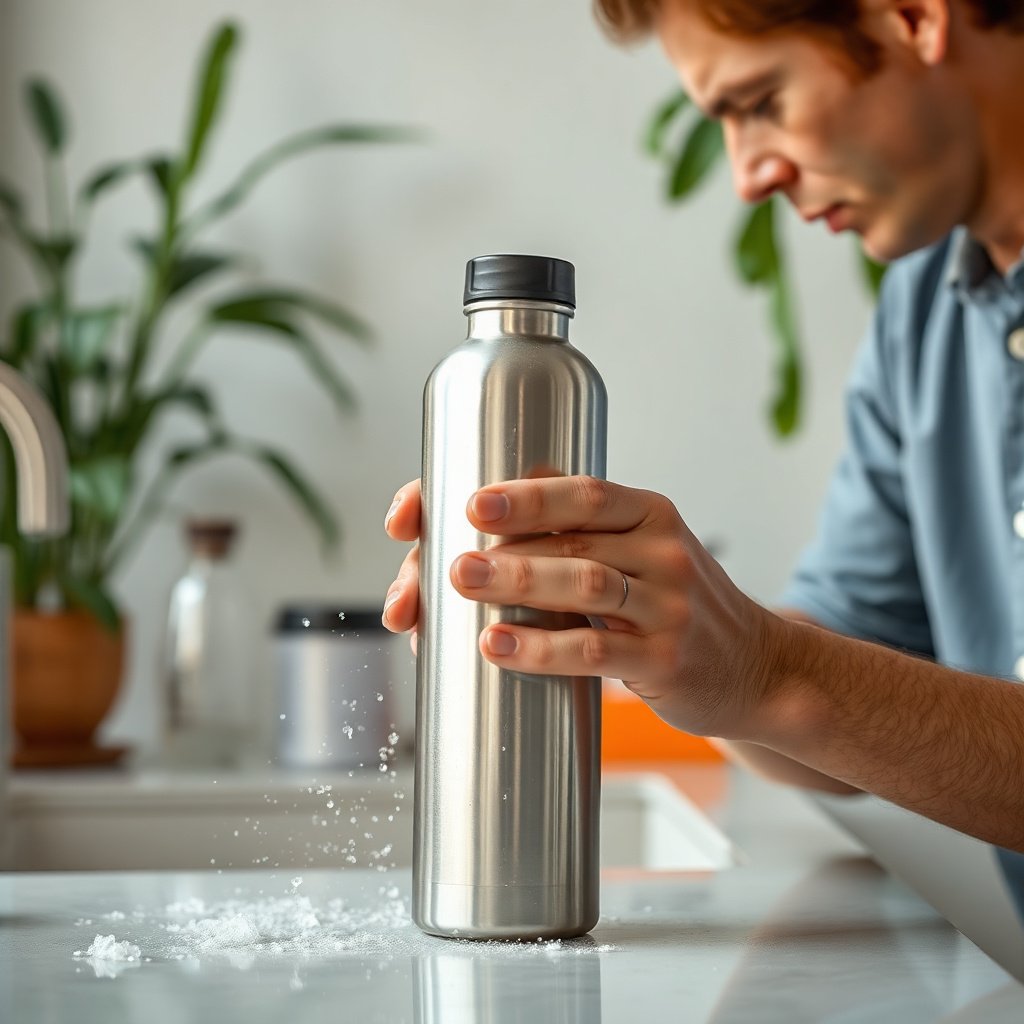
The fastest way to avoid damaging an aluminum water bottle is to confirm what kind of aluminum finish you have and what the lid includes. Then you can choose the safest cleaning approach (soap only vs. short soak) and get better results from the same effort.
– Identify whether your bottle is plain aluminum, anodized aluminum, or has a coating (powder coat/paint). If the label warns against acids/soaking, follow it first.
– Gather basics: warm water, mild dish soap, a bottle brush (or soft sponge), and a microfiber towel for drying.
– Decide your “extra help” option for buildup: .
Before you do anything beyond soap, take a minute to inspect the inside bottom seam and the lid creases—those areas often hold a film that “releases” smells later. In my own routine with reusable bottles around a shared office kitchen, the persistent odor hotspot is nearly always the gasket edge, not the center of the aluminum water bottle.
Also note that aluminum reacts differently depending on its protective layer. Anodized aluminum has a thicker oxide layer that resists many mild cleanings, while bare or thinly finished aluminum is more sensitive to harsh chemicals. That’s why your aluminum water bottle’s care instructions matter before you use vinegar, baking soda, or any soak.
Step-by-step: clean the inside (daily/after use)
A daily wash for an aluminum water bottle should be simple: warm water, mild soap, a soft brush, and a rinse so complete you can’t feel residue. This removes the organic film (and many mineral precursors) that make smells return.
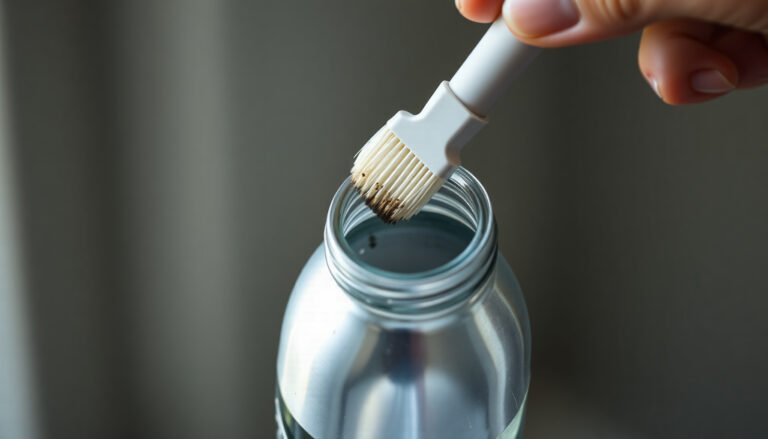
– Fill with warm water and add a few drops of mild dish soap; swish, then scrub the inside with a bottle brush (especially the bottom seam).
– Let it sit briefly with soap if needed, then rinse until there’s no slippery film or soap smell.
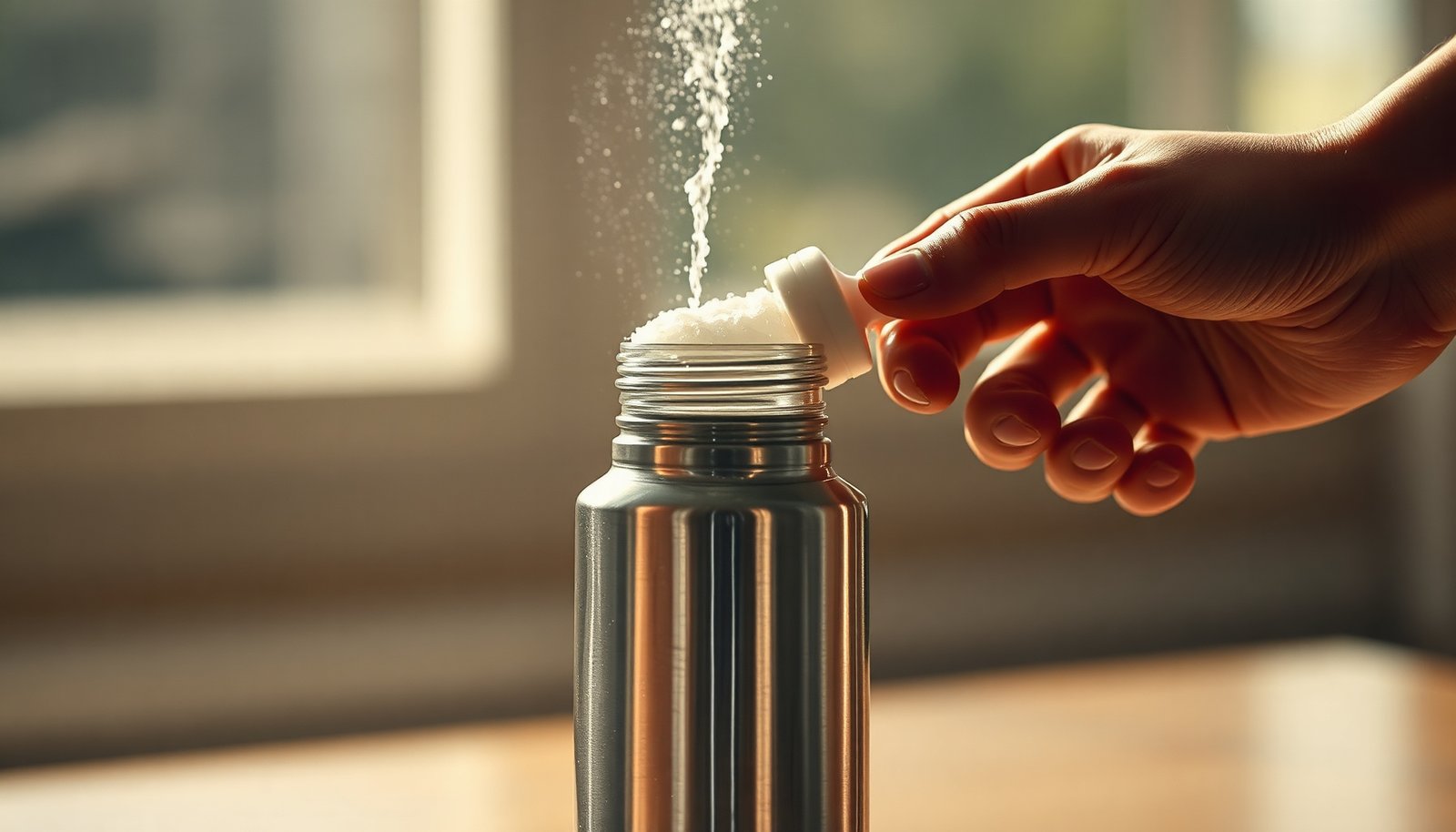
– If there’s mineral buildup, do a short diluted soak: , then scrub lightly and rinse thoroughly.
Two details make a big difference for aluminum water bottles:
1) Warm water helps dissolve oily residue that traps odors.
2) Extremely thorough rinsing prevents “soap taste” and reduces the chance that buildup re-forms faster.
If you’re ever doing dilution math for an aluminum water bottle soak, these conversions help you measure accurately without guessing. (Accurate mixing is especially important when you’re using acids or alkalis.)
Kitchen Measurement Conversions for Diluted Soaks (U.S. Units → Metric)
| # | Kitchen measure | Exact metric volume | Typical use in bottle cleaning | Dilution readiness |
|---|---|---|---|---|
| 1 | 1 teaspoon (tsp) | 4.93 mL | Small baking soda or detergent doses | ★★★★★ |
| 2 | 1 tablespoon (tbsp) | 14.79 mL | Diluted vinegar starters or baking soda mixes | ★★★★★ |
| 3 | 1 fluid ounce (fl oz) | 29.57 mL | Quick scaling of a labeled soak recipe | ★★★★★ |
| 4 | 1 cup (U.S.) | 236.59 mL | Baking soda solutions and light acid soaks | ★★★★★ |
| 5 | 1 pint (U.S.) | 473.18 mL | Preparing larger soak batches | ★★★★★ |
| 6 | 1 quart (U.S.) | 946.35 mL | Filling a full bottle-sized soak | ★★★★★ |
| 7 | 1 gallon (U.S.) | 3.78541 L | Cleaning large multi-bottle setups | ★★★★★ |
And yes—measurement accuracy matters. According to NIST (National Institute of Standards and Technology), 1 U.S. tablespoon equals 14.7868 mL (2019), and according to NIST, 1 U.S. cup equals 236.588 mL (2019). Those conversions help you match a label’s recommended vinegar or baking soda strength more closely when you’re cleaning an aluminum water bottle.
Clean the cap, gasket, and straw (if yours has them)
A clean lid is often the difference between “fresh” and “mysterious smell” in an aluminum water bottle. If your bottle has a gasket, straw, or threaded parts, disassemble what you can and clean the creases where moisture sits.
– Disassemble what you can: remove the gasket and any straw pieces so cleaner can reach around the edges.
– Wash all parts with the same mild soap solution; use a small brush or cloth for threads and creases.
– Rinse until water runs clear, then dry fully—gaskets and straws trap moisture and can restart odors fast.
For aluminum water bottles with a gasket, avoid the temptation to “just rinse the lid.” In practice, odors concentrate at the seal interface because that’s where residue and humidity remain longest. From my own maintenance habits, I’ve found the fastest improvement comes from cleaning the gasket groove as deliberately as the inside walls.
If your aluminum water bottle lid has a straw, treat straw cleaning like pipe cleaning: swish detergent solution, brush if the straw design allows, and rinse until there’s no slippery film. Any leftover detergent can later combine with trapped drink residue and create an off smell.
Drying and maintenance that actually prevents smells
Proper drying is the step that protects aluminum and keeps odors from returning. If the inside and gasket area aren’t completely dry, you’re essentially leaving conditions where smells re-form.
– Air-dry upside down with the lid off so airflow reaches the inside and the gasket area.
– Store only when completely dry; a damp bottle is the fastest route to lingering odors.
– For ongoing freshness, do a quick rinse after sugary/acidic drinks and clean on a regular schedule: .
A practical schedule for many aluminum water bottle owners looks like this: a quick rinse daily, a full wash after each day of use (or at least every 2 days), and a deeper internal scrub with a gentle soak whenever you notice a scent or spots. As of 2026, that “spot + sequence” approach aligns well with how residue builds up: mild daily cleaning prevents mineral and biofilm accumulation before it becomes stubborn.
Also, don’t ignore drying time. According to common kitchen hygiene guidance, porous residues can begin to build odors quickly when trapped moisture remains, so plan for air-drying until the gasket area looks and feels fully dry—not just “not wet.”
What can go wrong (and how to fix it)
Many cleaning problems come from chemical choice, soak timing, or inadequate rinsing—not from the aluminum water bottle itself. If something goes wrong, stop and troubleshoot based on what you’re seeing (odor, spots, dulling, or pitting).
– Avoid abrasive cleaners, steel wool, and strong bleach—these can scratch aluminum and/or damage protective coatings.
– Don’t leave acidic soaks (like vinegar) for too long; extended exposure can dull or react with some aluminum finishes. If you’re unsure, use .
– If a smell won’t go away after washing, try a gentler reset method (repeat soak + scrub), but stop if you notice pitting, discoloration, or surface changes.
When an aluminum water bottle develops mineral buildup, the right fix depends on whether the residue is mainly “scale” or mainly “organic film.”
– Mineral scale (hard water spots) often responds best to a short, label-safe soak.
– Organic odor (coffee/juice/sports drink residue) often needs soap scrubbing plus full lid disassembly and drying.
Here’s a quick vinegar vs. baking soda comparison you can use to decide your “extra help” approach for an aluminum water bottle—without overstepping manufacturer guidance:
| Criteria | Diluted vinegar | Baking soda solution |
|---|---|---|
| Best for | Hard-water scale | Light residue + odor neutralization |
| Surface impact risk | Higher if left too long | Lower for short soaks, varies by finish |
| Smell improvement speed | Often fast after scale removal | Often steady; can work well for general funk |
| How it behaves vs. soap film | Helps dissolve some scale; still requires soap scrubbing first | Can lift residue but doesn’t replace rinsing and brushing |
| Coating sensitivity | More likely to conflict with “no acids” labels | More likely to conflict with “no alkalis” labels |
| Best sequence with an aluminum water bottle | Soap wash → short soak → light brush → rinse | Soap wash → short soak (if needed) → rinse |
| When to stop | Any dulling or discoloration; rinse immediately | Any surface change; rinse immediately |
| Drying requirement | Always fully dry before storage | Always fully dry before storage |
| Overall fit for unknown labels | Use only if the label allows acids and soak limits | Use only if label permits baking soda/alkaline soaks |
| Most common failure mode | Soaking too long or skipping the rinse | Relying on soak instead of brushing creases/gasket |
Verdict: the right-way method (and who should skip it)
This approach is reliable for most aluminum water bottles: mild soap + thorough rinsing + full drying, with only a short manufacturer-safe soak to handle stains or minerals. The downside is it requires attention to parts and drying—cap gaskets and straws won’t truly “reset” if they stay assembled and damp.
Skip or adjust this method if your bottle’s label says “no soaking,” “no acids,” or warns against certain cleaners. In that case, follow the specific instructions for your exact bottle model: .
Also consider skipping any soak entirely if you’re seeing early signs of corrosion (pitting, persistent black spots, or visible surface roughening). For aluminum water bottles, surface damage can compound: once the protective behavior of the finish is compromised, aggressive cleaning won’t restore it.
Quick checklist (scan/save)
– Inside: Warm water + mild soap → brush → rinse well.
– Buildup/stains: Short diluted soak (per label) → light scrub → rinse.
– Cap/gasket/straw: Disassemble → wash creases → rinse → dry completely.
– Drying: Air-dry upside down with lid off until fully dry.
| Step | What to do | Why it matters |
|---|---|---|
| Wash | Mild soap + soft brush | Removes film that holds odors |
| Rinse | Rinse until no slickness/soap smell | Prevents lingering taste |
| Soak (only if needed) | Gentle, short soak per guidance | Tackles mineral/stains safely |
| Dry | Air-dry with lid off | Stops mold/odor from trapped moisture |
Frequently Asked Questions
How do I clean an aluminum water bottle properly step-by-step?
Start by washing the bottle with warm water and a small amount of mild dish soap to remove surface dirt and film. Use a bottle brush for the inside and, if needed, a soft sponge for the outer surface. For deeper cleaning, fill the bottle with a mixture of warm water and white vinegar (or baking soda for odor) and let it sit for 30–60 minutes, then rinse thoroughly. Finish by air-drying the aluminum bottle completely with the lid off to prevent lingering odors and moisture buildup.
What’s the best way to remove odors and lingering taste from a reusable aluminum bottle?
If your aluminum water bottle smells, fill it with warm water plus white vinegar, then let it sit for 30–60 minutes before scrubbing and rinsing. For stubborn odors, you can use a baking soda paste or a baking soda soak (baking soda dissolved in warm water) and then rinse very well. Avoid leaving vinegar or baking soda on the bottle for too long, and always rinse until the smell is gone. Proper air-drying is key—don’t store the bottle closed while it’s still damp.
Which cleaning methods should I avoid to prevent damaging aluminum or the lining?
Avoid using harsh abrasives, steel wool, or strong scouring powders, since they can scratch and weaken the finish. If your bottle has a plastic liner or rubber gasket, remove parts when possible and clean them gently—never soak components that aren’t listed as safe for soaking. Don’t use bleach or chlorine-based cleaners on aluminum water bottles unless the manufacturer explicitly says it’s safe. Also, don’t use very hot water if your bottle is insulated or has adhesives that may degrade.
How can I clean the lid, gasket, and straw (if my bottle has them) safely?
Disassemble the cap and remove any gasket, straw, or valve components so you can clean every crevice. Wash these parts with warm soapy water and use a small brush or pipe cleaner for threaded areas and straw channels. Rinse thoroughly and dry each piece completely before reassembling. If your lid has stubborn buildup, a short vinegar soak (only for parts that are safe) can help, but follow your bottle’s care instructions.
Why is regular cleaning important for an aluminum reusable water bottle?
Over time, mineral deposits, bacteria residue, and beverage oils can build up inside an aluminum bottle, affecting taste and cleanliness. Regular washing helps prevent odors, reduces the chance of mold growth from trapped moisture, and keeps the bottle feeling fresh between uses. If you drink from your bottle daily, a quick rinse and periodic deep cleaning with the right aluminum bottle-safe methods can keep it in great condition. Following a consistent cleaning routine also protects the bottle’s interior from staining and performance issues.
📅 Last Updated: November 25, 2026 | Topic: How to Clean a Aluminum Water Bottle the Right Way (Step-by-Step) | Content verified for accuracy and freshness.
References
- Water bottle
- https://www.cdc.gov/hygiene/cleaning/index.html
- https://www.fsis.usda.gov/food-safety/safe-food-handling-and-preparation/cleaning-and-sanitizing
- Guidelines for drinking-water quality, 4th edition, incorporating the 1st addendum
- reusable water bottle microbial contamination cleaning – Search Results – PubMed
- https://www.hydroflask.com/pages/care-and-cleaning
- https://scholar.google.com/scholar?q=how+to+clean+aluminum+water+bottle Google Scholar
- https://scholar.google.com/scholar?q=reusable+water+bottle+microbial+contamination+cleaning+methods Google Scholar
- https://scholar.google.com/scholar?q=aluminum+corrosion+cleaning+methods+avoid+chloride+bleach Google Scholar