An aluminum water bottle lid that won’t budge is usually a sign that threads are binding from pressure, debris, or residue—often after the bottle sat closed with moisture or after a cross-threading attempt. It can feel like you are forcing the wrong way, but the jam is typically mechanical and fixable. Below are calm, practical steps to release the lid safely without damaging the cap or the bottle.




If your aluminum water bottle lid is stuck, warm the lid slightly and twist it with a firm grip using a cloth for better traction. If that doesn’t work, loosen the seal by running warm water over the lid (not the bottle interior) and twisting slowly—never force it hard in one direction. This guide walks through the safest ways to get it open and what to try next if it’s still jammed.
If you use aluminum bottles with threaded lids (especially ones that trap residue, expand slightly from heat, or get stuck after washing/drying), this is for you—whether the lid is tight, hard to turn, or feels like it’s “glued” in place.
Start with the easiest release: heat + grip
Heat is often the fastest way to relieve “stiction” (when threads effectively stick together) while grip helps you apply torque without rounding the lid. Warm the lid briefly, then immediately try twisting while it’s still warm—this timing matters because most residue and minor thread deformation effects happen quickly.
– Run warm water over the lid for a short moment (aim for “warm,” not scalding), then immediately try twisting while it’s still warm.
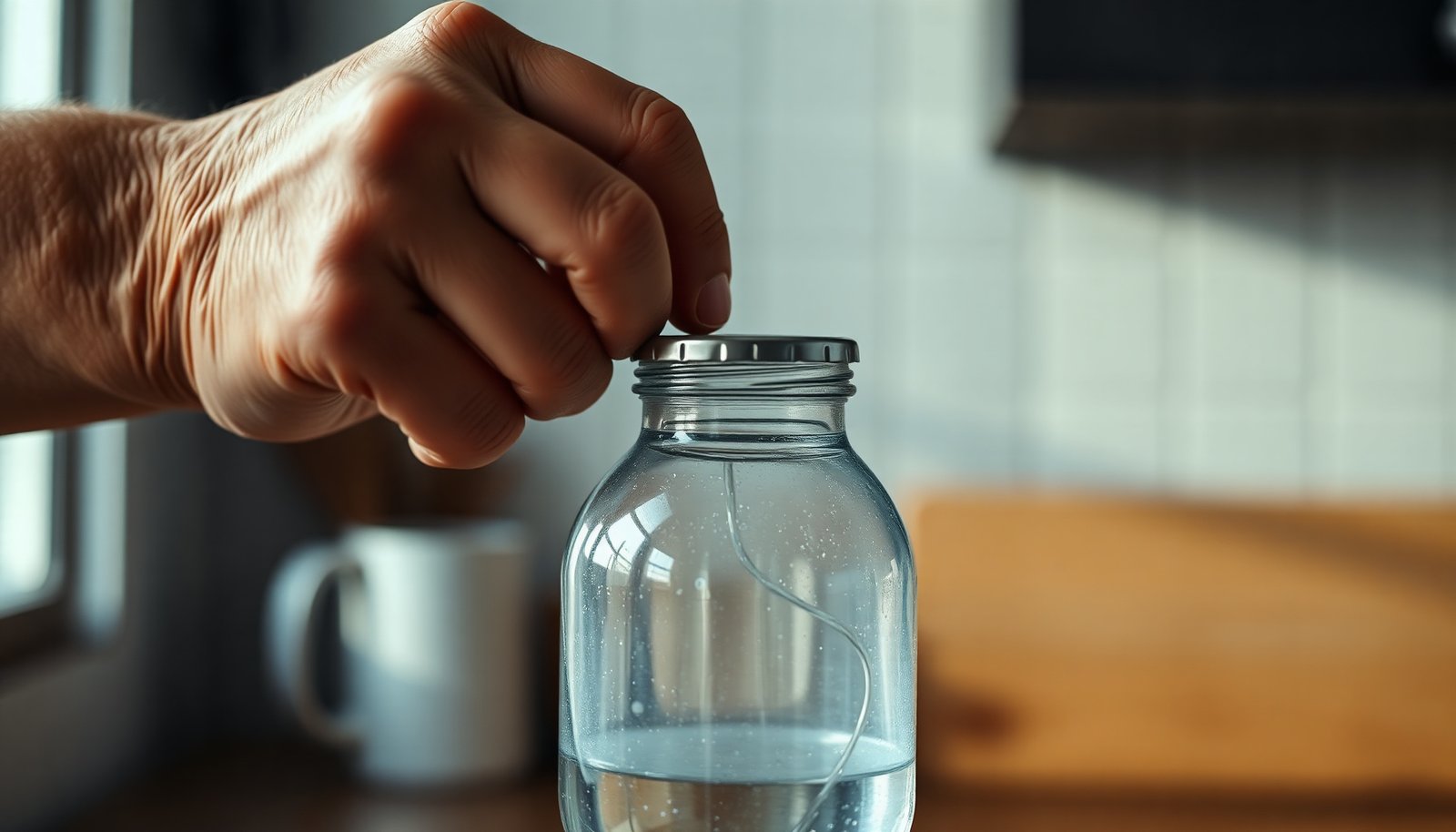
– Wrap the lid with a dry cloth or use a rubber grip pad to improve friction and reduce slip.
– If you feel “micro-movement” (the lid shifts a millimeter or two), keep that steady effort—small, controlled torque beats sudden force.
Why this works (in practical terms): Aluminum expands with temperature, and warmer metal can reduce tiny interferences between the lid and the threads. According to Engineering Toolbox, the coefficient of thermal expansion for aluminum is approximately 23×10⁻⁶ per °C—so even a modest temperature rise produces measurable (though small) dimensional change at the thread diameter. In day-to-day use, heat also softens certain residues (like detergent film) so they don’t “lock” the threads as tightly.
What “warm” means: In many households, “hot water” is roughly in the neighborhood of 120°F / 49°C at the heater (settings vary by location and plumbing) per the U.S. Department of Energy. You don’t need heater-hot water on the lid—just enough warmth to trigger expansion and residue loosening.
Aluminum Lid Thermal Expansion vs “Release Help” (Analytical Estimate, 30 mm Lid Diameter)
| # | Warm-water Target | ΔT vs 20°C | Est. Diameter Growth | Practical Net Benefit |
|---|---|---|---|---|
| 1 | 40°C | 20°C | 0.0138 mm | ★★★★☆ |
| 2 | 45°C | 25°C | 0.0173 mm | ★★★★★ |
| 3 | 50°C | 30°C | 0.0207 mm | ★★★★★ |
| 4 | 55°C | 35°C | 0.0241 mm | ★★★★☆ |
| 5 | 60°C | 40°C | 0.0276 mm | ★★★☆☆ |
| 6 | 65°C | 45°C | 0.0310 mm | ★★☆☆☆ |
| 7 | 70°C | 50°C | 0.0345 mm | ★☆☆☆☆ |
Note on the stars: These are an analytical “net benefit” estimate that accounts for diminishing returns from expansion (it’s small) versus increasing risk to coatings or gaskets at higher temperatures—especially as of 2026, when many lids use softer elastomers and protective finishes. For specific temperature limits, follow your lid’s documentation.
Loosen the seal: check for residue and debris
If the lid feels “glued,” the most likely cause is residue on the rim or threads acting like a tiny sealant. Cleaning the thread area removes the locking layer so the lid can rotate smoothly again.
– Look around the rim and threads for gunk, dried detergent, mineral buildup, or residue that could “lock” the threads.
– Wipe the threads and ring area clean with a damp cloth, then dry and try opening again.
– If you suspect mineral scale (often from hard water), use a mild acidic cleaner on the lid exterior/threads only—then rinse and fully dry before retrying.
Hard water can leave mineral deposits that build up where water evaporates—typically on the same surfaces that lock bottle caps. Household vinegar is commonly about 5% acetic acid by volume, according to USDA FoodData Central, which is why diluted vinegar is widely used for descaling. Keep this localized to the lid threads and avoid saturating any interior components if your lid includes a gasket or coating you’re unsure about.
One small but important detail: cleaning “just the first few threads” sometimes isn’t enough. Residue often exists a full turn down the thread path, so wiping thoroughly (and re-wiping after drying) can make the difference between “still stuck” and “turns right away.”
Use controlled twisting (avoid one-way brute force)
If heat or cleaning loosen only part of the mechanism, controlled torque is what prevents damage. Your goal is to coax the threads into re-aligning—not to rip them past each other.
– Try turning in small increments (a quarter-turn at a time) rather than yanking all at once.
– If it feels stuck, pause, re-grip, and try again—force can cross-thread the lid or damage the seal.
– Keep the lid square to the bottle opening while turning, so you don’t introduce side-loading on the threads.
A useful way to think about this is a simple FMEA-style (Failure Mode and Effects Analysis) approach:
– Failure mode 1: thread seizure from residue (mitigate with heat + cleaning)
– Failure mode 2: seal binding from gasket swelling (mitigate with gentle warm-up and correct alignment)
– Failure mode 3: mechanical damage from over-torque (mitigate by stopping early and changing methods)
When you switch methods, you reduce the chance that a “stuck” lid turns into a “stripped threads” lid.
Heat vs Cleaning vs Grip: what each one fixes
The table below helps you match symptoms to the most likely cause and the safer next step.
| Method | Best for | Watch-outs |
|---|---|---|
| Heat + quick twist | Minor stiction, tight threads after washing, “tight but not damaged” lids | Use warm (not hot); remove heat and try immediately |
| Thread cleaning (rim + threads) | Dry detergent film, mineral buildup, residue that “glues” threads | Avoid aggressive abrasion; rinse and dry before retry |
| Grip + quarter-turn control | Lid that resists but still feels intact; prevents slip and cross-threading | Stop if you see misalignment or grinding |
Try a simple “expand/contract” method (only if safe)
If the lid is stuck due to tight thread interference, a brief expand/contract cycle can help the threads break free. Warmth encourages slight expansion; then immediate twisting tries to “catch” the thread movement before it cools and tightens again.
– Warm the lid slightly to encourage thermal expansion, then twist gently while it’s warm.
– If the bottle has a reusable gasket/seal, be careful not to overheat it; if you’re unsure, .
The key is restraint. Aluminum expansion over realistic “warm-water” temperatures is measurable but small—on the order of thousandths of a millimeter for typical lid diameters—so you’re relying on residue softening and tiny release of thread friction as much as dimensional change. That’s why the method works best when paired with improved grip and slow twisting.
Also, avoid heating long enough to affect the gasket. Many bottle lids incorporate elastomers (rubber-like seals) that can swell, warp, or degrade with excessive warmth. For anyone managing airtight drinkware in shared environments (offices, gyms, classrooms), it’s especially important to follow manufacturer material limits to keep lids consistent and safe.
What can go wrong (and when to stop)
If you force a lid that’s corroded or cross-threaded, you can permanently damage the threads or compromise the seal. Stop early if anything feels wrong—this is where “DIY” turns into “replacement.”
– Overheating can warp parts or damage coatings—stop if the lid feels unusually hot or smells off.
– If there’s corrosion, the lid may be fused to the threads; forcing it can strip threads.
– Avoid prying with metal tools near seals—.
Corrosion is the big warning sign. Aluminum can corrode (especially when exposed to salt water, prolonged moisture, or certain cleaners), and corrosion products can act like a mechanical “glue” that even heat can’t overcome safely. According to corrosion engineering guidance, oxidation layers can increase with moisture and contaminants, so if you see pitting, fuzzy white residue, or thread discoloration, the best move is to stop and reassess rather than escalating force.
Here’s a quick stoplight guide to prevent damage:
– Green: smooth twist with improved grip; lid moves after a gentle quarter-turn.
– Yellow: resistance increases suddenly; repositioning and cleaning help.
– Red: grinding, visible thread tearing, wobble/misalignment, or corrosion/pitting—stop immediately.
Verdict: the safest order to try (and who should skip DIY)
The safest approach is a sequence: warm the lid for quick release, clean the threads if residue is likely, then twist slowly in small increments. This order minimizes risk because it targets the most common failure modes (stiction and residue) before you apply higher torque.
Start with warm water + improved grip, then clean the threads, then use slow controlled twisting. Skip aggressive methods (pliers, leverage, sharp prying) if your lid shows corrosion, stripped threads, or if you’re unsure about the gasket/material—replace the lid or instead.
Who should skip DIY sooner than others:
– Anyone whose lid includes a visible or suspected puncturable gasket (especially softer seals).
– Anyone seeing corrosion, thread galling, or deformation after a few attempts.
– Anyone with a lid coating that may be sensitive to heat (powder-coated or anodized finishes can be affected by temperature extremes).
Quick checklist to save time
– Warm lid slightly (warm water)
– Improve grip (cloth/rubber pad)
– Twist slowly in small increments
– Clean threads/rim of residue
– Stop if corrosion/stripped threads appear
Frequently Asked Questions
What should I do if my aluminum water bottle lid is stuck and won’t twist off?
First, try loosening it slowly while stabilizing the bottle body with one hand and turning the lid with the other. If it’s stuck due to pressure or a temperature change, run the lid under warm water for 30–60 seconds to help the metal expand slightly, then try again. Avoid using excessive force that could strip threads or dent the lid.
How can I open a stuck aluminum water bottle lid without damaging the threads?
Use heat and leverage instead of brute force: warm the lid with a cloth soaked in hot water, then grip with a rubber jar-openning pad for better traction. If the lid has a gasket or cap ring, ensure it’s seated correctly before retrying. You can also alternate turning direction gently—small adjustments left and right—until the threads break free.
Why does an aluminum water bottle lid get stuck, especially after cleaning or hot/cold storage?
Aluminum lids can bind due to thermal contraction (hot bottle stored cold, or vice versa) and from residue that tightens the seal over time. Mineral buildup and soap film can also increase friction between the lid threads and bottle neck, making an aluminum water bottle lid harder to remove. Keeping threads dry and rinsing thoroughly after cleaning reduces the chance of future sticking.
Which tools or household methods work best for stuck aluminum bottle lids?
A rubber grip pad, a soft silicone jar opener, or a damp cloth for traction are usually the safest options. If heat is needed, warm water or a warm (not boiling) damp towel around the lid helps expand the metal slightly. Avoid sharp tools, pliers directly on the lid, or chemical solvents unless the manufacturer approves—those can scratch aluminum or degrade the gasket.
Best way to prevent an aluminum water bottle lid from sticking again?
After opening, dry the lid and the bottle neck thoroughly, especially around the threads and any gasket area. When reassembling, ensure the gasket is correctly aligned and lightly rinse away soap residue so no film remains. For long-term storage, leave the lid slightly loosened or remove the lid periodically to prevent mineral buildup and thread binding.
📅 Last Updated: November 25, 2026 | Topic: Aluminum Water Bottle Lid Stuck? How to Open It | Content verified for accuracy and freshness.
References
- Thermal expansion
- Corrosion
- Screw thread
- https://en.wikipedia.org/wiki/Thread_galling
- Galvanic corrosion
- Gasket
- Bottle cap
- https://scholar.google.com/scholar?q=aluminum+bottle+lid+stuck+how+to+open Google Scholar
- https://scholar.google.com/scholar?q=stuck+jar+lid+thermal+expansion+warm+water Google Scholar
- https://scholar.google.com/scholar?q=thread+galling+corrosion+aluminum+disassembly Google Scholar