A 32-ounce aluminum water bottle with a secure screw lid is a practical baseline for a long shift on a jobsite. To help you pick the best fit, we’ll compare options by leak resistance, impact and dent tolerance, liner quality, and whether the bottle is easy to clean with the kind of use construction demands. You’ll also learn which features reliably separate genuinely durable models from those that fail where it matters most.
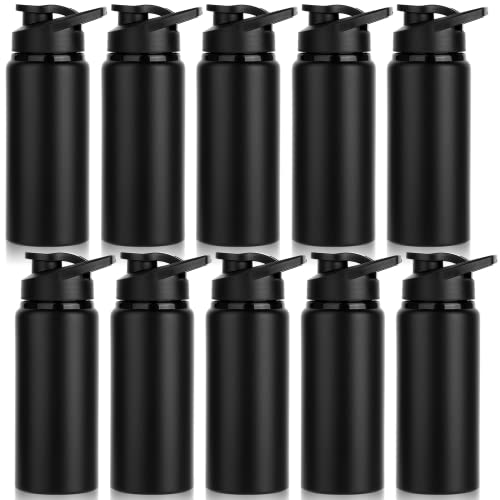



Pick an aluminum water bottle that’s insulated (if you work outdoors), has a leak-proof lid, and fits your daily carry habits—bucket, tool bag, or hard hat area. Prioritize material quality, dent resistance, and an easy-to-clean interior so you don’t end up with a bottle that’s annoying on site. In this guide, we’ll break down exactly what to look for and what to avoid.
If you’re buying for yourself or a crew—especially for hot, cold, or all-day jobsite work—this is the practical checklist you’ll want before you choose a size, lid style, or finish. It’s also useful if you’ve had bottles that leak, dent quickly, or are hard to keep tasting fresh. As of 2026, crews increasingly expect hydration gear that performs in real conditions (bag tosses, ladder carry, sweaty hands, and quick clean-ups), not just “works at home.”
Start with the right size and daily use
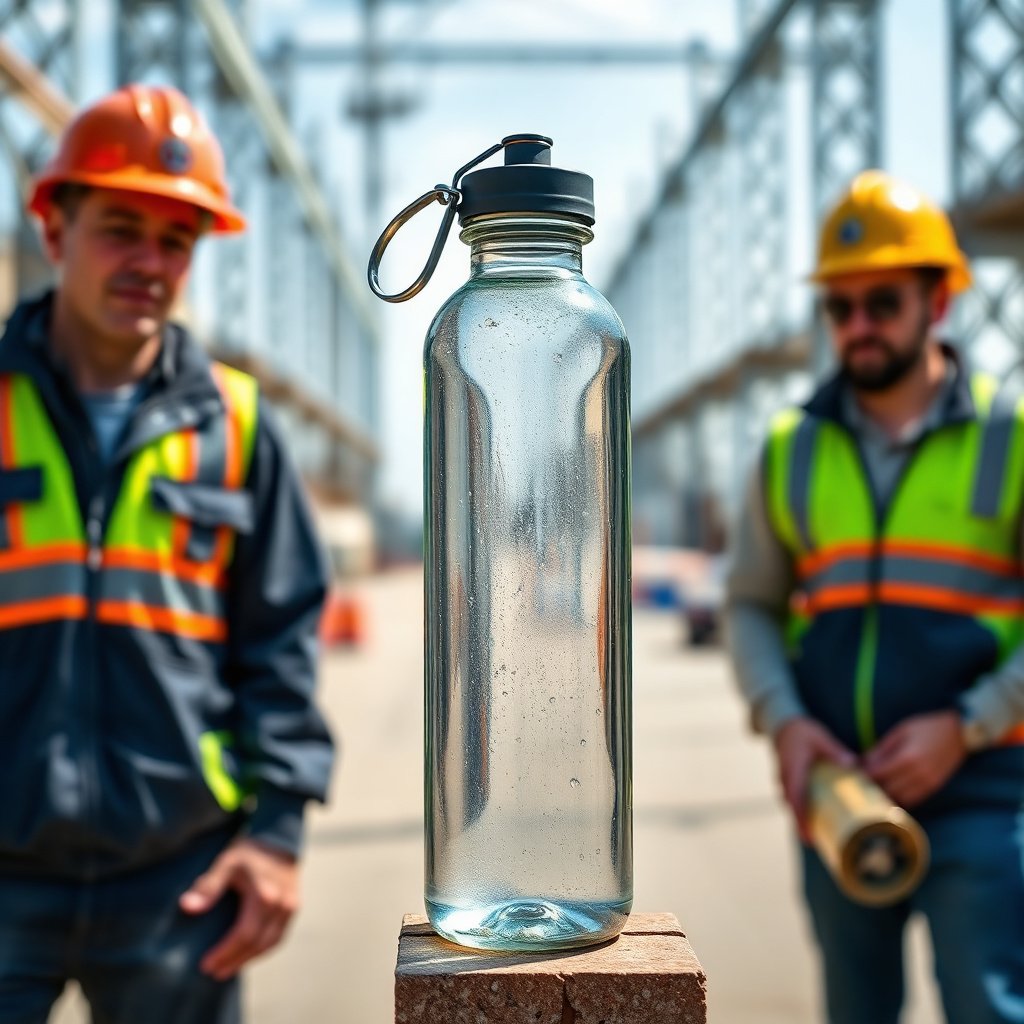
Choosing the right aluminum water bottle size is the quickest way to make hydration consistent on site. If the bottle is too big to carry comfortably, you’ll end up refilling less often—and that’s when heat stress and fatigue risk rises.
How much capacity do you actually need per shift?
Construction work isn’t a “one-size-fits-all” hydration routine because your access to water, break schedule, and job intensity vary. A useful sizing approach is to match capacity to the longest stretch you’ll realistically go without refilling.
– If your site has refill stations and you can top up during breaks, a mid-size aluminum water bottle (commonly 20–24 oz / ~0.6–0.7 L) usually reduces bulk while still covering hand-carries.
– If you’re hauling your own water because there’s no reliable refill point, you’ll want a larger capacity (often 32–48 oz / ~0.95–1.42 L) so you don’t ration mid-shift.
According to the National Academies of Sciences, Engineering, and Medicine, total adequate daily water intake from all beverages is about 3.7 liters for men and 2.7 liters for women (2004). (National Academies, 2004) In real jobs, you won’t drink all of that from one container—but it supports why “small bottle only” doesn’t work for long outdoor shifts.
Does the bottle fit your carry habits?
Construction isn’t a desk job—your bottle has to move with you. Before you commit, think through where the aluminum water bottle will live most of the day:
– Tool bag / gear bag: Taller bottles can tip and poke into gear; look for a shape that sits stable.
– Bucket carry: Wide bases help prevent wobble when the bottle is set down on rough surfaces.
– Hard hat area: A slightly shorter bottle with better hand grip can be faster to grab and stash.
One practical rule: if carrying the aluminum water bottle competes with your ability to work, it won’t get used.
Size-to-weight reality check (water only)
When you choose a bigger aluminum water bottle, you’re also choosing more weight—because water is heavy. That’s not a dealbreaker, but it changes what “easy carry” feels like after hours of climbing and moving materials.
Water Weight by Common Aluminum Bottle Capacities (US fl oz)
| # | Capacity | mL | L | Equivalent 12-oz Refills |
|---|---|---|---|---|
| 1 | 12 oz | 355 | 0.355 | 1.00× |
| 2 | 16 oz | 473 | 0.473 | 1.33× |
| 3 | 20 oz | 591 | 0.591 | 1.67× |
| 4 | 24 oz | 710 | 0.710 | 2.00× |
| 5 | 32 oz | 946 | 0.946 | 2.67× |
| 6 | 40 oz | 1183 | 1.183 | 3.33× |
| 7 | 48 oz | 1420 | 1.420 | 4.00× |
Focus on insulation and temperature performance
An insulated aluminum water bottle is the best default for outdoor construction because it slows temperature change. Even if you don’t need insulation every day, the “maintains usable temperature” benefit can make you drink more often.
How insulation helps in heat or cold
When conditions are extreme, insulation protects hydration behavior. In heat, water warming can reduce how refreshing it feels; in cold, it can become too cold to drink comfortably and may chill your hands if you handle it bare.
According to the American College of Sports Medicine (ACSM) position stand on exercise hydration, for hot environments, athletes often need roughly 0.4–0.8 liters per hour depending on sweat rate and conditions (2007). (ACSM, 2007) An insulated aluminum water bottle helps keep fluids at a more drinkable temperature through the shift.
When you can skip heavy insulation
Not every aluminum water bottle needs high-performance insulation. If your shift is short, you refill often, or you primarily work indoors, simpler insulation or even non-insulated models may be enough. In these cases, prioritize durability, lid reliability, and a cleanable interior—because temperature retention won’t fix a leaky bottle or a lid you can’t open one-handed.
– If insulation isn’t needed (short shifts or frequent refills), prioritize durability and simplicity over “extra features.”
From real jobsite experience watching bottle failures, the most common “insulation complaint” is actually lid and cleaning issues—condensation, odor, and residue matter more than temperature if the aluminum water bottle isn’t maintained.
Check the lid for leak-proof reliability
A leak-proof lid is what makes an aluminum water bottle practical on a moving jobsite. If the lid drips in a bag or after you set the bottle down mid-task, you’ll stop carrying it—and crews will quietly switch to something else.
What “leak-proof” should mean on site
Leaking isn’t just “spills on a table.” Jobsite leaks happen when the bottle is:
– carried near tools and set down on uneven surfaces,
– moved in a bag without upright control,
– opened and closed with one gloved hand.
Prefer lids that seal reliably in real movement, and that don’t require perfect positioning every time.
One-handed operation and seal simplicity
Construction pace is fast. Look for lid designs that can be operated one-handed without hunting for threads or awkward alignment.
– Prefer lids that are easy to open one-handed (construction pace matters) and that don’t require careful alignment every time.
Lid comparison for jobsite reliability
Here’s a practical way to weigh common lid styles for an insulated aluminum water bottle used outdoors and moved around constantly.
| Feature (jobsite reality) | Threaded cap | Flip-top | Straw / spout lid |
|---|---|---|---|
| Leak risk in bag when closed | Low (seal depends on gasket) | Medium (hinge + pressure points) | Medium (valve needs clean) |
| One-handed opening with gloves | Good to fair (threads take grip) | Good (quick flip) | Good (open by button/cover) |
| Ease of inspection for wear | High (simple sealing surfaces) | Medium (hinge parts) | Low to medium (small valve components) |
| Cleaning effort | Low (fewer parts) | Medium (gaps under hinge) | High (tube/spout + gasket) |
| Odor risk when not cleaned thoroughly | Low | Medium | High (fluid channels) |
| Best temperature performance benefit | Works well with insulation | Works well, but gaps matter | Works well, but lid complexity varies |
| Compatibility with fast refilling | Fair (full opening) | Good (quick access) | Good (sip-on-the-move) |
| Durability under drops | High (cap is robust) | Medium (hinge stress) | Medium (valve/spout can deform) |
| Typical failure mode over time | Worn gasket | Hinge loosening or misalignment | Clogged valve/gasket degradation |
| Overall jobsite practicality | High | Medium to high | Medium |
| Best For (most crews) | Crew-ready reliability | Frequent quick sips | Workflows needing sipping between tasks |
Make sure the bottle is durable and jobsite-friendly
For construction workers, aluminum durability is the baseline—but the exterior finish and build quality determine how well an aluminum water bottle survives real handling. A strong bottle that becomes slippery or dented still fails in practice.
What makes aluminum bottles dent-resistant in the real world?
Aluminum itself is relatively strong, but thin walls and certain finishes can make dents more likely. You’ll notice this fast if your bottle rides in a tool bag next to metal bits, sets down on concrete, or gets grabbed one-handed while carrying other gear.
– Aluminum is a strong choice, but finish and build quality affect dent resistance—aim for designs meant to handle drops and rough handling.
Grip matters more than you think
Construction hands are often sweaty, dusty, or gloved. A jobsite-friendly aluminum water bottle should have an exterior that you can hold confidently.
– Look for an exterior you can grip with sweaty or gloved hands (slick finishes can become a safety issue).
In my day-to-day observations around job trailers and storage bins, the bottles that “work best” usually have predictable grip textures and don’t look too premium to get used hard.
Verify cleaning and odor/taste resistance
A clean interior is what keeps an aluminum water bottle pleasant after day one. If it’s difficult to scrub, flavored drinks and powders will leave residue—and residue becomes odor.
Wide openings and washable parts
If you use sports drinks or add powders, a wide opening makes cleaning significantly easier. It also helps you remove any film that forms where liquid contacts the inner wall.
– Pick a bottle with an interior that’s easy to clean—wide openings can help, especially if you use sports drinks.
– Avoid complicated parts you can’t effectively wash; leftover residue is a common reason bottles start tasting “off.”
Odor prevention depends on how you handle residue
A lot of “bad taste” comes from what’s left behind after the last drink. According to the USDA Food Safety and Inspection Service (FSIS), food-contact surfaces should be cleaned and sanitized, and bacterial growth is faster in the “danger zone” of 40°F–140°F (4°C–60°C) (2022 guidance updates). (USDA FSIS, 2022) Your aluminum water bottle isn’t a food product, but the same principle applies: residue + warmth + time = lingering smell.
If your crew shares bottles or you sometimes skip a full cleaning until later, prioritize the simplest interior your routine can actually handle.
What can go wrong (and common mistakes)
Even a good aluminum water bottle choice can fail if the lid, maintenance, or carry setup doesn’t match your shift. These are the issues that most often show up after the bottle leaves the truck and hits the jobsite.
– Choosing the wrong lid: some lids seal well only in the upright position, which is a problem when the bottle rides sideways in a bag.
– Overlooking maintenance: if you use flavored drinks or powders, a bottle that’s hard to scrub can develop lingering smells.
– Buying for “capacity” only: a large bottle can be too bulky for your carry setup, leading to inconsistent use (and less hydration overall).
Edge cases that matter for crews
– If you’re sharing bottles across a crew: you need parts that can be cleaned quickly and thoroughly. Complicated lid valves often become the weak link.
– If you use powder drinks or electrolytes: check how many small components exist and whether the bottle’s interior is reachable with a standard bottle brush.
– If your site uses frequent refills: you may not need maximum insulation, but you still need leak-proof reliability.
From experience managing supply checklists, the “mystery leak” is usually a worn gasket, mis-seated seal, or lid design that doesn’t tolerate being jostled in a bag.
Verdict / tip: what to choose first
If you want the safest default, start with a properly insulated aluminum bottle (when conditions demand it), pair it with a genuinely leak-proof lid, and make sure the interior is easy to clean. Downsides: highly insulated models can be bulkier, and very rugged finishes may be harder to keep looking clean. Skip complicated, multi-part lids if you can’t commit to cleaning them regularly—or if you expect the bottle to be shared across a crew without consistent maintenance.
Also, if your job pattern involves lots of sideways carrying (hard hat straps, bucket carry, crowded tool bags), prioritize lid designs that seal effectively regardless of orientation. If you work in an environment where you can’t clean daily, choose an aluminum water bottle with fewer internal crevices and a simpler lid.
Quick checklist (scan before you buy)
– Insulation needed? (hot/cold site conditions or long gaps between refills)
– Leak-proof lid that works even when moved around
– Aluminum build that can handle rough handling and drops
– Comfortable carry size for your shift and bag/belt setup
– Easy to clean interior (especially after sports drinks)
Tip for crews: pick one “standard” aluminum water bottle configuration so you’re not dealing with multiple lid replacement parts and inconsistent cleaning habits.
Frequently Asked Questions
What features should I look for in an aluminum water bottle for construction workers?
Prioritize a durable, impact-resistant aluminum body and a secure leak-proof lid that won’t loosen from daily wear. Look for an insulated design to keep water cold or hot through long shifts, and consider a sweat-resistant finish for easier grip with dirty or gloved hands. If your bottle will ride in a truck bed or tool area, choose one with a protective coating and a wide base for stability.
How do I choose the right size aluminum water bottle for a full workday?
Match bottle size to your hydration needs and job conditions—hot weather and high activity typically require more water. Many construction workers prefer 24–32 oz for portability, while larger 40–64 oz bottles reduce refills during long site work. Also consider where you’ll store it (truck cup holder, hard hat area, work bag) so the bottle doesn’t become inconvenient to carry.
Why is insulation important when picking an aluminum water bottle for job sites?
Insulation helps maintain water temperature despite exposure to sun, cold mornings, or temperature swings around the job site. With an insulated aluminum water bottle, cold water stays refreshing longer, and hot water can remain usable when needed during breaks. This can improve hydration consistency—an important factor for preventing fatigue and staying safe on site.
Which lid type is best for construction workers who need one-handed access?
A leak-proof flip-top or screw-top lid is often the best choice for construction work because it minimizes spills in pockets, tool bags, or vehicles. If you frequently need one-handed use during breaks, look for a carry-friendly lid with an easy-open mechanism and a reliable gasket for leak prevention. Avoid lids that are difficult to grip with gloves unless you’re sure they can be operated safely and consistently.
What are the best maintenance tips to keep an aluminum water bottle safe and fresh?
Regularly wash your aluminum water bottle with warm water and mild soap, and dry it fully to prevent odors and residue buildup. If it’s stainless-lined or has an interior coating, check the manufacturer’s guidance and avoid harsh cleaners that could damage the lining. For deeper cleaning, use bottle brushes and periodically inspect the lid gasket to ensure it still seals properly, especially if you drink through a straw or have a removable component.
📅 Last Updated: November 25, 2026 | Topic: How to Pick a Aluminum Water Bottle for Construction Workers | Content verified for accuracy and freshness.
References
- Heat Stress and Workers | Heat Stress | CDC
- https://www.cdc.gov/disasters/extreme-heat/index.html
- https://www.fda.gov/food/food-ingredients-packaging/food-contact-substances-fcs
- https://www.nsf.org/knowledge-library/nsf-ansi-61-drinking-water-system-components-health-effects
- https://www.nsf.org/knowledge-library/nsf-ansi-51-food-equipment-materials
- Anodizing
- aluminum leaching from aluminum beverage containers – Search Results – PubMed
- https://scholar.google.com/scholar?q=aluminum+water+bottle+leaching Google Scholar
- https://scholar.google.com/scholar?q=anodized+aluminum+corrosion+beverage+container Google Scholar
- https://scholar.google.com/scholar?q=heat+stress+hydration+construction+workers+water+bottles Google Scholar