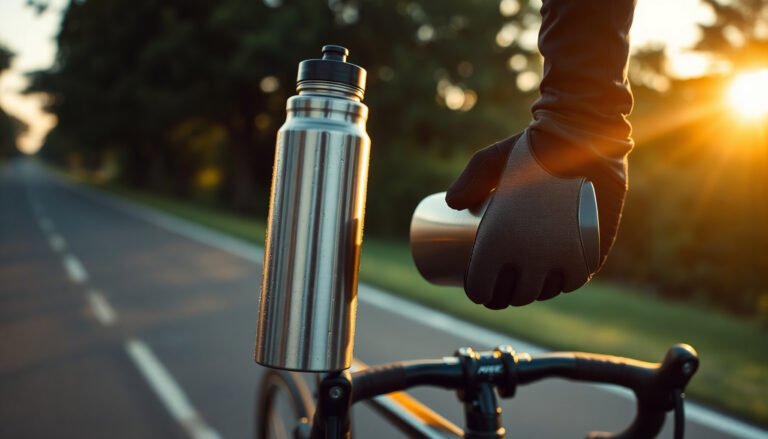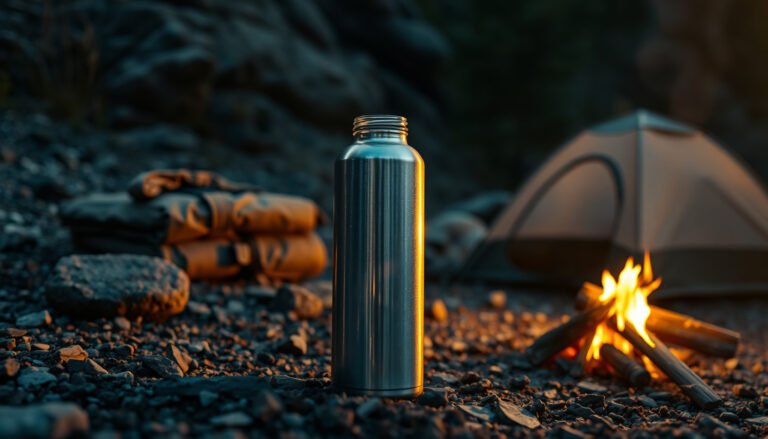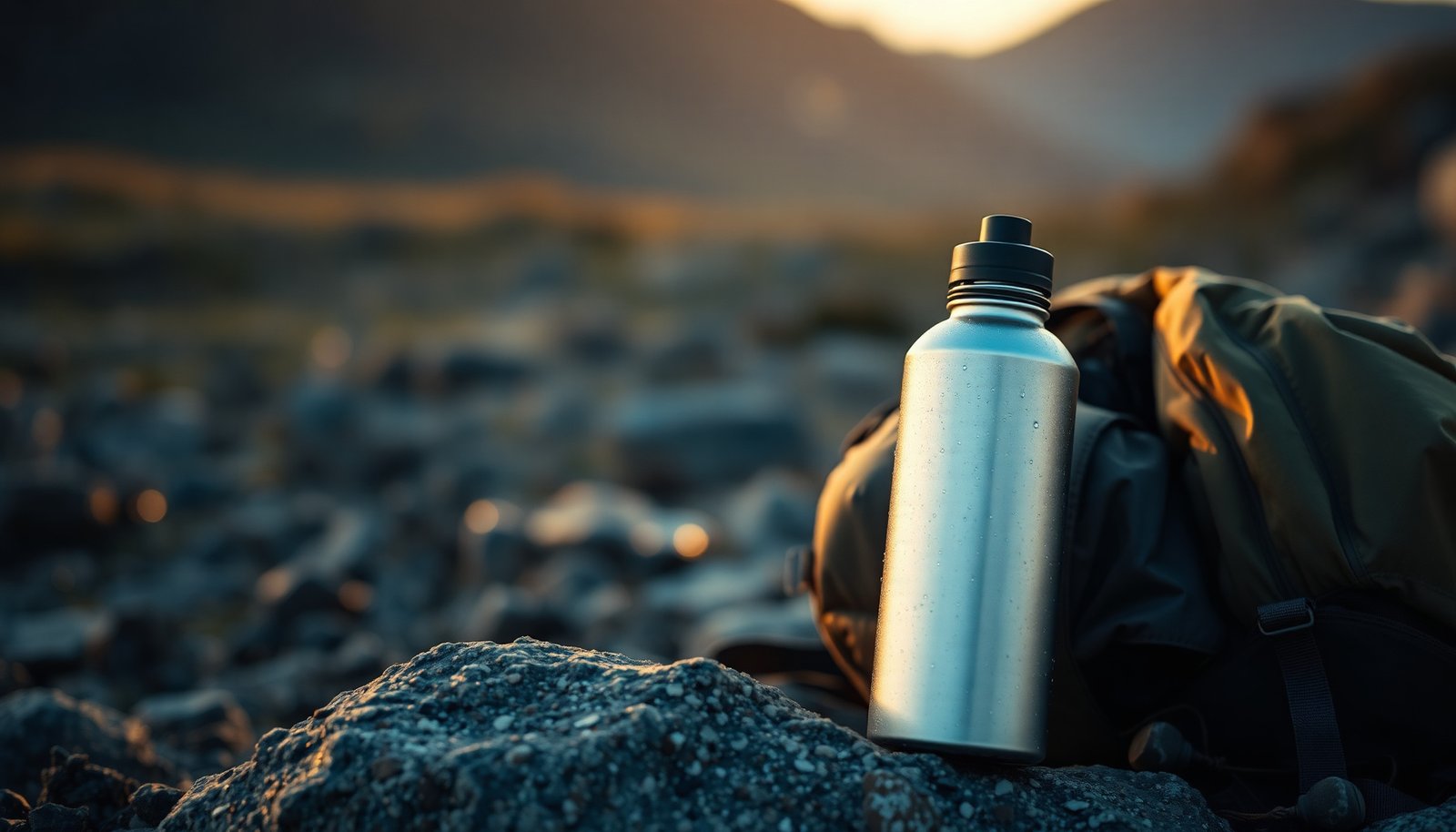
Which aluminum water bottle will actually perform on backpacking days, not just look good in a store? Choose one by prioritizing leak-proof lids, durable construction (including lining and dent resistance), a weight and capacity that match your mileage, and easy cleaning for long trips. We’ll walk through these criteria and flag the features that tend to separate truly dependable bottles from ones that fail under real use.



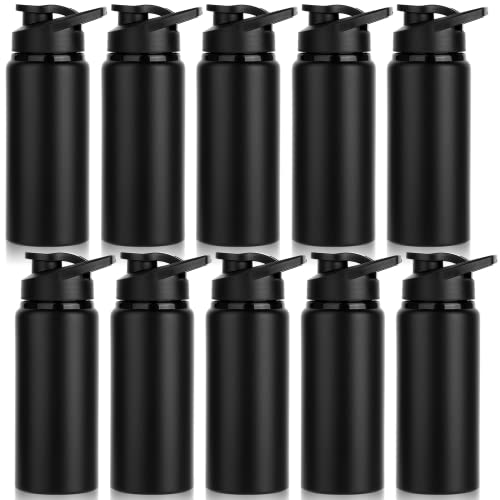
Pick an aluminum water bottle by matching three things: the interior finish (unlined vs. lined/anodized), a lid that seals reliably, and a capacity that fits your refill plan and pack carry. If those are right, you’ll avoid the most common trail failures—off-tastes, drips, and the constant need to refill.
You’ll probably be happiest with this guide if you’re backpacking, bike-touring, or doing any trip where the bottle gets tossed in a pack, handled with gloves, and used for hours at a time. We’ll focus on what actually changes performance in the real world: interior coating, lid design, durability, and how it fits your routine.
Size & Capacity for Your Route
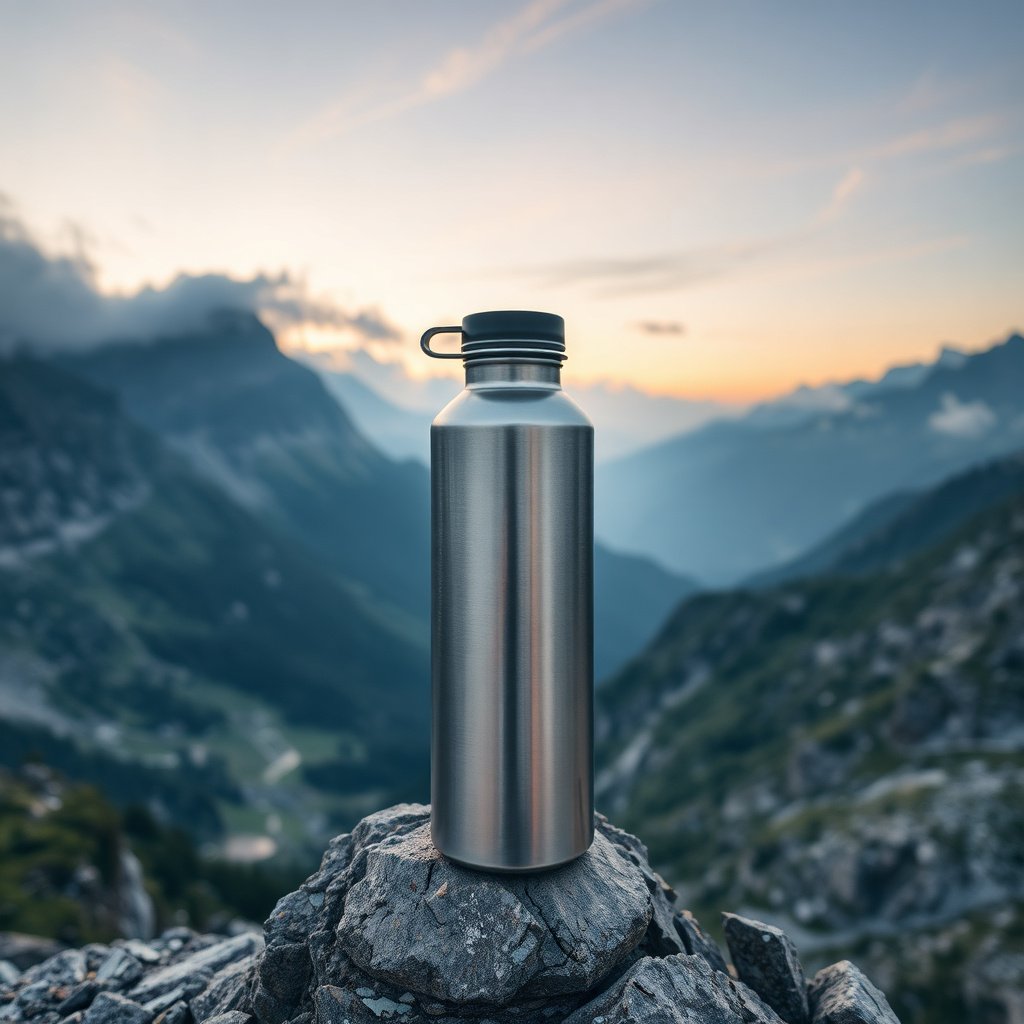
The best aluminum water bottle size is the one that keeps you properly hydrated without turning your pack into dead weight. In practice, that means planning around your refill opportunities and the carry method you’ll use on-trail.
Match bottle volume to refill frequency (not just “how much you drink”)
Start with how far you typically go between water sources. If your route has frequent refills (streams, taps, roadside stops), you can carry less and top off more often—meaning a smaller aluminum water bottle is usually smarter. If your route has long dry stretches, you’ll want more capacity or a combination system (bottle + filter + optional extra container).
A simple way to translate capacity into pack weight: 1 liter of water is ~1.0 kg in real life. According to NIST Chemistry WebBook, the density of water at 20 °C is 0.9982 g/mL (accessed 2026). So if you carry a 1.5 L aluminum water bottle full of water, you’re effectively carrying about 1.5 kg of liquid plus the bottle and lid.
Also remember that hydration isn’t one-size-fits-all. According to the American College of Sports Medicine (ACSM) position stand on exercise-associated hyponatremia, fluid intake during prolonged activity is often in the range of 0.4–0.8 L per hour, adjusted for sweat rate (2005). Your aluminum water bottle should match your likely hourly needs *and* how often you can realistically refill.
Prioritize the carry system that you’ll actually use
Even the best aluminum water bottle fails if it doesn’t fit your routine. Before you buy, check:
– Pack side pocket compatibility (width and height—some bottles ride too high and wobble)
– Cup-holder or down-tube style mounts on bikes
– Bottle slings that keep the bottle stable on rough terrain
In my experience helping hikers debug gear issues, a surprising number of “leaks” are actually movement problems—a bottle shifts, a lid loosens slightly, and water escapes only once the pack sees trail vibration. So when you’re choosing an aluminum water bottle, test the carry fit with the empty bottle first, then confirm the lid stays fully engaged when the bottle is compressed sideways.
Think system-level: bottle + filter + any extra containers
Your aluminum water bottle rarely works alone. If you use a filter, confirm how your bottle opening interfaces with:
– filter threading/adapters (if applicable)
– backflushing compatibility (if you clean filters often)
– whether you’ll pour directly into the filter or need a transfer container
If your plan includes an inline system or gravity setup, you may use the bottle as a clean reservoir or as the dirty intake container. That changes what interior finish you should prefer, because the bottle’s interior is what sees the treated water, electrolytes, or any residue that can cling in storage.
Aluminum Interior: Unlined vs. Lined (Taste & Safety)
The right interior finish determines whether your aluminum water bottle tastes “metallic,” holds flavors, or stays neutral across days of storage. Choose unlined only when your use pattern is simple (plain water, short storage), and choose lined/anodized when you want consistency over time.
Know what “unlined” and “lined” really mean
An aluminum water bottle can be:
– Unlined: bare aluminum interior (often with an anodized surface, but not always). This can oxidize slightly and may develop taste transfer over time.
– Lined: the interior is protected by a food-safe liner (common liners include polymer coatings or coatings meant for beverage contact).
– Anodized / treated: the surface is engineered to be more corrosion-resistant than raw aluminum.
For minimizing taste changes, the key concept is contact time + cleaning discipline. In other words, your aluminum water bottle won’t just “react” randomly—it reacts based on how long liquid sits, what’s in it (plain water vs. electrolytes), and whether the bottle is fully cleaned after each use.
Compare the trade-offs (unlined vs. lined) before you decide
Below is a practical comparison of aluminum water bottle interior types. The “Best For” row summarizes what most hikers end up choosing once they match their route and drinking habits.
| Feature | Unlined Aluminum (or lightly treated) | Lined / Stronger Interior Treatment |
|---|---|---|
| Trail taste neutrality | Higher chance of “aluminum” or oxidized notes over time, especially with storage | Generally better at resisting metallic taste development |
| Electrolytes & concentrates | Not always a safe assumption—confirm compatibility in specs | More likely to handle electrolyte mixes without lingering flavors |
| Flavored water carryover | More likely to retain sweetness/citrus notes if not cleaned promptly | Typically reduces flavor absorption and adsorption |
| Odor retention risk | Higher, particularly after enzymes/spices or long storage | Lower if liner and lid parts are rinsed correctly |
| Storage window | Shorter is better—avoid leaving water for many days | Often more forgiving for occasional short storage |
| Cleaning ease | Often easier interior, but still needs thorough rinsing | May require gentle cleaning to avoid damaging the liner |
| Longevity of taste consistency | More variable across months of use | More consistent across repeated trips |
| Compatibility assumptions | Treat electrolytes/tablets as “confirm first” | Still confirm, but odds are better with purpose-built liners |
| Weight & pack feel | Can be simpler and lighter-feeling | May feel slightly bulkier depending on the liner and construction |
| Price sensitivity | Often cheaper, but performance depends on lid + cleaning | Can cost more, but reduces taste complaints |
| Best For | Backpackers who drink mostly plain water and clean thoroughly after each day | Trips in 2026 where you use electrolytes/flavored mixes, store water occasionally, or want consistent taste over long weekends |
Confirm compatibility, especially if you use electrolytes or tablets
If you use electrolytes, flavored mixes, or water treatment tablets often, confirm compatibility in the manufacturer details. Different interior treatments handle acids, salts, and flavor compounds differently, even when they all “sound food-safe.” As of 2026, more aluminum water bottle options exist with purpose-built liners—so reading the spec sheet is worth it.
If the product documentation doesn’t specify compatibility, treat it as a risk multiplier and choose a design that’s explicitly intended for beverage contact with your specific mix type.
Lid Design & Leak Resistance
A dependable lid is what makes an aluminum water bottle usable in a pack, not just on your kitchen counter. Your goal is a seal that stays closed under vibration, plus a closure you can operate quickly with cold or gloved hands.
Look for a seal system that doesn’t loosen
Most leaks from an aluminum water bottle come from one of two places: the seal interface (often a gasket/O-ring or sealing ring) or the lid’s ability to remain fully closed when the bottle shifts in the pack.
When you evaluate lids, check:
– Whether the closure is threaded (often more stable) or flip/press (convenient, but can loosen if not engineered well)
– How the gasket seats—does it look like it can be misaligned during closing?
– Whether the lid “bottoms out” clearly when tightened/closed
From a practical standpoint, I recommend selecting an aluminum water bottle with a lid you can close “with confirmation”—you should feel resistance, alignment, or a distinct stop rather than a vague turn.
One-handed use matters more than you think
On-trail, you’ll open and close your aluminum water bottle repeatedly while moving. A good lid:
– opens quickly with one hand
– resists accidental opening when packed sideways
– doesn’t require fine finger control that fails with gloves or wet hands
If you often bike-touring or scramble rocky terrain, prioritize closures designed for movement. A lid that’s fine when upright can still fail when the bottle is rotated under strap tension.
Cleaning access is part of leak resistance
Lid design also affects cleanliness. Complex lids can trap residue at joints and threads, which can:
– interfere with gasket seating
– create odor buildup that makes you procrastinate cleaning
– encourage grit to accumulate where the seal is supposed to stay uniform
Choose an aluminum water bottle lid that has fewer hard-to-reach parts—without giving up on the security of the closure.
Insulation & Carry Comfort
The “best” insulation choice is the one that matches your temperature exposure and refill strategy, not the one that sounds most premium. Insulated aluminum water bottles tend to perform better for temperature stability, but they can add bulk and sometimes make cleaning slightly more involved.
Decide based on your climate and how long you go between refills
If you’re using your aluminum water bottle in hot conditions, insulation helps slow warming and can make water more pleasant later in the day. In cold conditions, insulation can help reduce freeze risk for longer stretches.
However, temperature retention only matters if your water plan and lid design keep you from constantly refilling. If your route reliably supports short refills, a simpler aluminum water bottle can be the better trade-off (lighter carry feel, fewer parts).
Use material properties to understand heat transfer (why aluminum warms fast)
Aluminum conducts heat quickly, which is why non-insulated aluminum bottles feel temperature-sensitive. That same “fast heat transfer” also means you should use insulation when conditions demand it.
According to Engineering Toolbox (materials thermal properties), aluminum’s thermal conductivity is roughly ~200 W/m·K, while typical austenitic stainless steels are around ~15–20 W/m·K, and common thermoplastics used for liners are typically well under 1 W/m·K (accessed 2026). This difference is why your aluminum water bottle design choices affect comfort on-trail.
Thermal Properties That Shape Real-World Comfort for Aluminum Bottle Setups (Typical Ranges)
| # | Material (common in bottle systems) | Density (g/cm³) | Thermal Conductivity (W/m·K) | Cold-Retention Tier |
|---|---|---|---|---|
| 1 | Aluminum alloy (typical bottle body) | 2.70 | ~200 | ★ |
| 2 | Stainless steel (outer skin, typical) | ~8.00 | ~16–20 | ★★ |
| 3 | Titanium (some lightweight lids/parts) | ~4.43 | ~20–25 | ★★ |
| 4 | Ceramic/Alumina coating (protective layers) | ~3.90 | ~20–35 | ★★ |
| 5 | HDPE-style polymer liner (typical) | ~0.95 | ~0.4–0.5 | ★★★★☆ |
| 6 | PP-style plastic parts (typical cap material) | ~0.90 | ~0.20–0.30 | ★★★★★ |
| 7 | Borosilicate glass (reference comparison) | ~2.23 | ~1.0–1.2 | ★★★★ |
Check grip comfort and dent resistance with gloves
When you choose an aluminum water bottle, evaluate how it feels when:
– it’s cold and wet
– you’re wearing gloves
– it’s bouncing in a pack pocket
Aluminum is relatively impact-sensitive compared with some steel designs. That doesn’t mean it’s fragile—just that dents can happen. Look for shapes and thickness that hold up to pack rubbing and accidental drops, especially around the base and where the lid threads into the body.
Also pay attention to bottle diameter. If an aluminum water bottle is too round or too slick, gloved hands can slip even if the lid itself is easy to operate.
What Can Go Wrong
Most problems with an aluminum water bottle come from two categories: the lid seal (leaks) and the interior/contact system (taste and odor). Fixing these issues usually starts with verifying the closure and your cleaning cadence, not changing your water plan.
Metallic taste: often finish + storage time + incomplete cleaning
Metallic taste is usually linked to interior finish and how the bottle is maintained. If your aluminum water bottle is unlined (or lightly treated), prolonged storage—especially with plain water left overnight multiple times—can increase oxidation-related notes. If you use electrolytes or flavored mixes, residues can linger if the bottle isn’t fully rinsed.
A reliable way to diagnose is to compare what happens when you:
1) rinse immediately after drinking,
2) fully clean the lid and threads,
3) avoid storing water for extended periods in the aluminum water bottle.
If taste persists even after thorough cleaning, it’s a sign your chosen interior finish isn’t matching your usage pattern.
Leaks in the pack: test the bottle closure before the first trip
A bottle can feel “sealed” on the counter and still leak once it’s under pack pressure or sideways on rough terrain. Test at home with water before you trust an aluminum water bottle on a multi-day trip.
At minimum, verify:
– the gasket seats correctly
– the lid doesn’t loosen after you intentionally compress the bottle sideways
– the lid is fully closed even when you open it with gloves and re-close quickly
Cleaning headaches: complicated lids and narrow openings
Many aluminum water bottle cleaning issues show up on longer trips when you can’t fully sanitize. Narrow openings and complex lid designs trap residue, which can then cause odor buildup and—indirectly—seal problems when debris interferes with gasket seating.
If you’re using an aluminum water bottle with electrolytes, treat it like a daily-cleaning task even when you’re tired. If you can’t do a full clean on-trail, at least do a thorough rinse and plan a full wash as soon as you reach a sink.
Verdict / Tip (With Quick Checklist)
If you want the most reliable backpacking setup, pick an aluminum water bottle with a sealed, easy-to-use lid, an interior finish matched to your drink type, and a size that fits your refill reality. The trade-off is that more secure lids and certain liners can add weight or make deep cleaning slower—so choose based on whether your priority is leak-proof reliability, taste consistency, or minimal hassle.
One practical way to decide for 2026: prioritize performance failures first (leaks and taste), then optimize carry comfort. Skip aluminum water bottles that have confusing liner instructions, vague lid seal design, or lid mechanisms that are hard to fully disassemble for cleaning.
Scan/Save Checklist
| Feature | What to check before you buy |
|---|---|
| Interior finish | Lined/anodized/unlined, and compatibility with your water treatment/flavors |
| Lid seal | Leak-resistant closure, easy to open/close, not prone to loosening in-pack |
| Carry fit | Pocket/sling fit, stable shape when packed, comfortable grip |
| Cleaning access | How easy it is to rinse and scrub the bottle + lid parts |
| Durability expectations | How well it should handle drops, pack rubbing, and frequent use |
Frequently Asked Questions
What should I look for when picking an aluminum water bottle for backpacking?
Look for food-grade, corrosion-resistant aluminum and a leakproof cap designed for rough trail use. Choose a bottle with a liner that’s compatible with water treatment methods you’ll use (like filtered water or electrolyte mixes), and confirm it’s BPA-free. Also consider capacity (often 600ml–1L), weight, and whether the bottle has a carry loop or fits easily in common backpack bottle pockets.
How do I know if an aluminum bottle is safe for long-term use on the trail?
Check whether the bottle is labeled as food-grade aluminum and whether the interior is properly coated (common with many aluminum water bottles). Avoid products that aren’t clear about material standards or coatings, since inconsistent liners can affect taste and durability. If you use acidic drinks or add electrolytes regularly, look for a bottle specifically rated for those liquids and rinse promptly to prevent lingering flavors.
Why do some aluminum water bottles taste metallic, and how can I prevent it?
Metallic taste usually comes from unlined aluminum, poor-quality interior coating, or residue that builds up over time. To prevent it, choose a reputable aluminum water bottle with a durable interior lining and wash it thoroughly before first use. On trail, keep the bottle clean with regular rinsing and a safe cleaning routine—especially after sweet drinks—to reduce odor and flavor transfer.
Which aluminum water bottle is best for backpacking in hot or cold conditions?
In hot weather, prioritize a bottle with good insulation (if offered) or a lid design that limits heat transfer, and consider a capacity that matches your daily water needs. For cold conditions, keep the bottle from freezing by insulating it in a sleeve or storing it close to your body, and use an appropriate cap to prevent leaks. If you’ll handle temperature swings, a corrosion-resistant aluminum bottle with a reliable gasket and robust cap is usually the safer bet.
How can I choose the right size and cap type for backpacking where space and leaks matter?
Match bottle capacity to your route and water availability—if refill stops are frequent, a smaller 600ml–750ml bottle can be easier to pack and refill quickly. For caps, pick a leakproof screw-top or reliable flip-top with a tight gasket, especially if you’ll store the bottle horizontally in side pockets. If you prefer one-handed use, consider a wide-mouth bottle with an easy-to-operate closure, but ensure the opening is sized for fast refills with a filter or cup.
📅 Last Updated: November 25, 2026 | Topic: How to Pick a Aluminum Water Bottle for Backpacking | Content verified for accuracy and freshness.
References
- https://www.cdc.gov/healthywater/emergency/drinking/index.html
- https://www.atsdr.cdc.gov/ToxProfiles/tp22.pdf
- https://www.nsf.org/standard/ansi-nsf-61-drinking-water-system-components-health-effects
- https://www.fda.gov/food/buy-store-serve-safe-food/consumer-updates/bottled-water-what-you-need-know
- Anodizing
- https://en.wikipedia.org/wiki/Corrosion_of_aluminum
- aluminum leaching water containers – Search Results – PubMed
- https://scholar.google.com/scholar?q=aluminum+water+bottle+leaching+study Google Scholar
- https://scholar.google.com/scholar?q=anodized+aluminum+drinking+water+corrosion Google Scholar
- https://scholar.google.com/scholar?q=aluminum+drinking+water+guideline+WHO+health+based+value Google Scholar