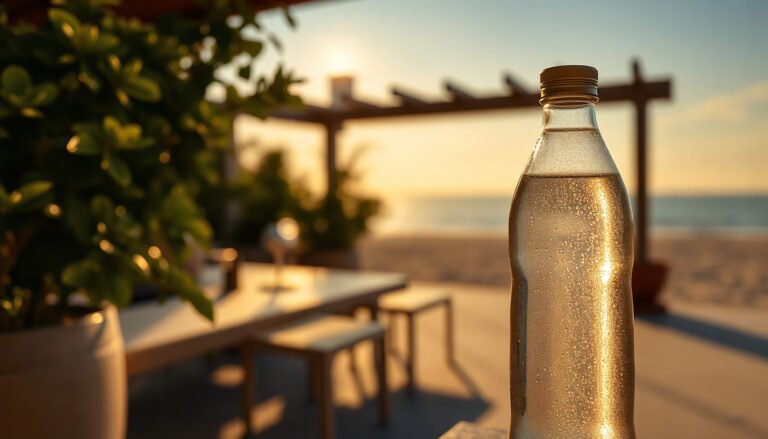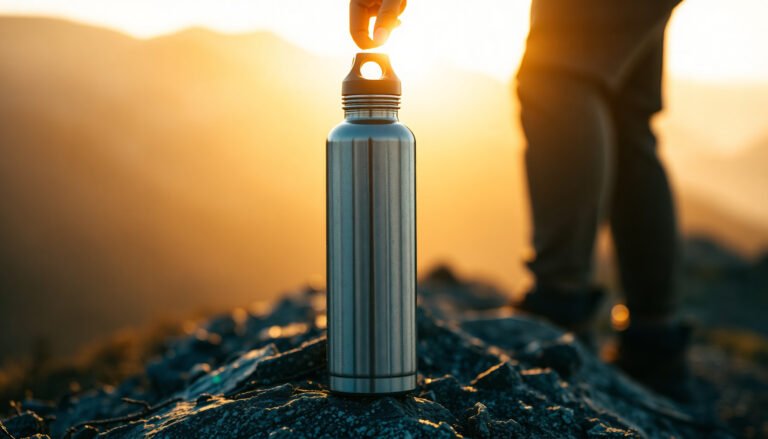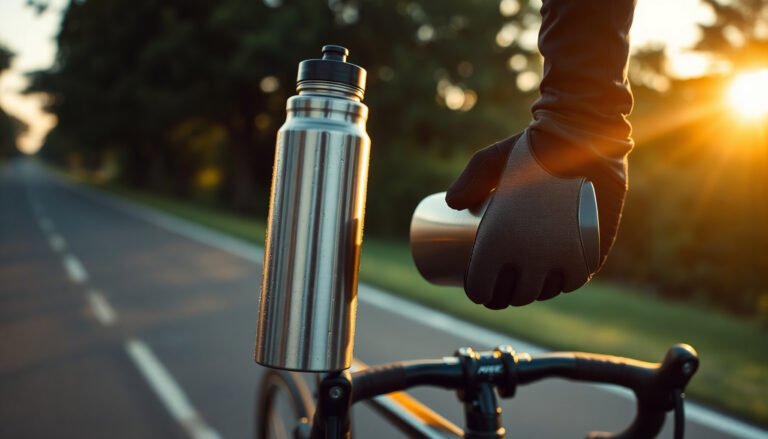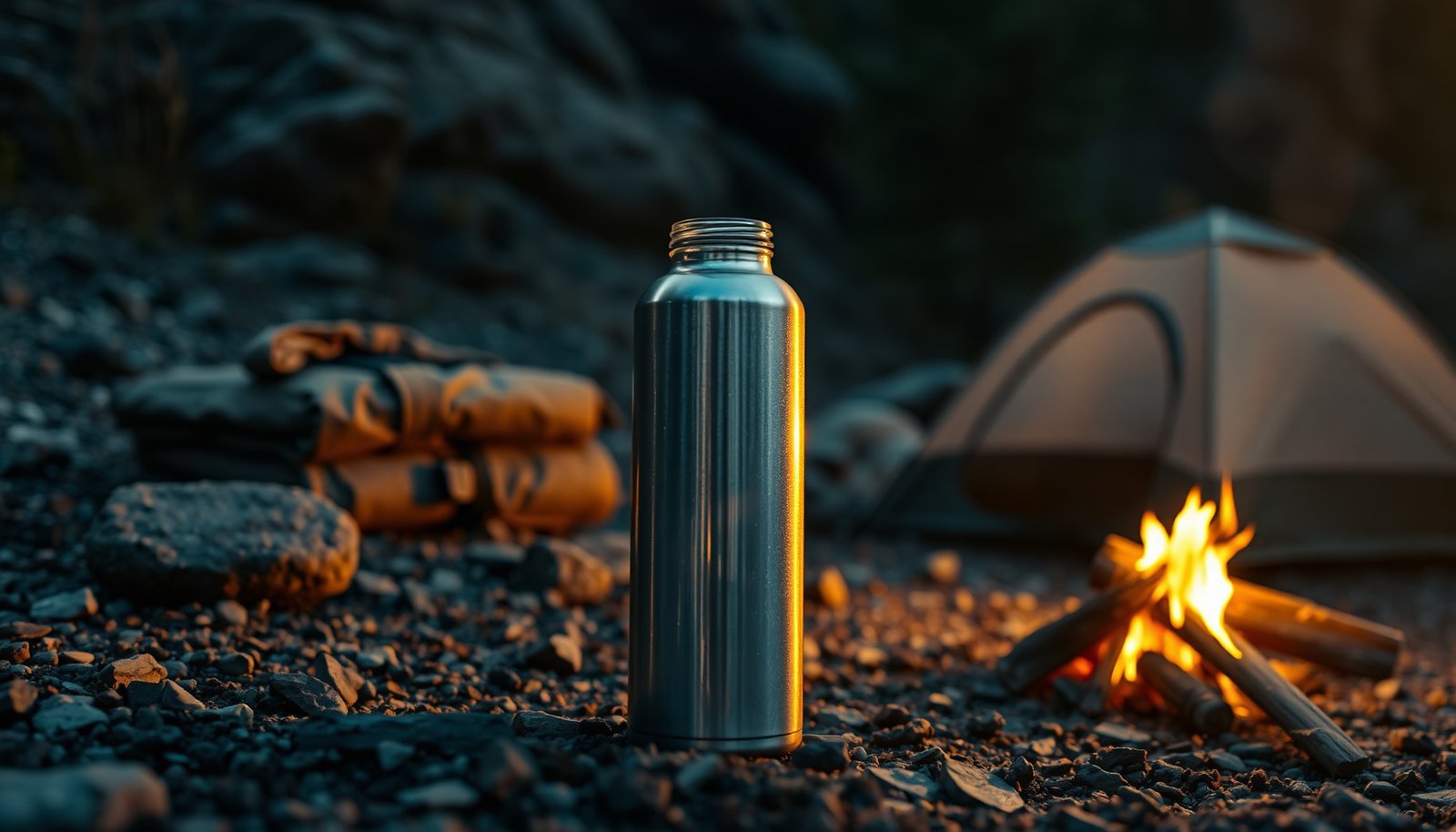
Choosing an aluminum water bottle for camping is easy to get wrong if you focus only on looks. Most people think thicker metal automatically stays colder longer, but performance usually comes down to insulation style, lid design, and whether the interior liner is food-safe and won’t affect taste. We’ll recommend the models that earn the top marks for leak resistance, packability, and rugged dent resistance, so you can pick with confidence.




If you want a camping aluminum water bottle that just works, prioritize the three things that affect your day most: the right capacity, insulation that matches the weather, and a truly leak-proof lid. Match those specs to how you’ll refill (streams, taps, or campgrounds) and you’ll avoid the most common problems—warm water, dents, and spills in your pack—without overbuying features you don’t need.
If you’re packing for hikes, car camping, or multi-day trips, you’ll likely want a bottle that’s easy to carry, comfortable to drink from, and simple to clean. If your camp routine involves refilling at streams, taps, or campgrounds, lid type and cleaning matter just as much as the bottle itself.
Match capacity to your days (and how often you’ll refill)
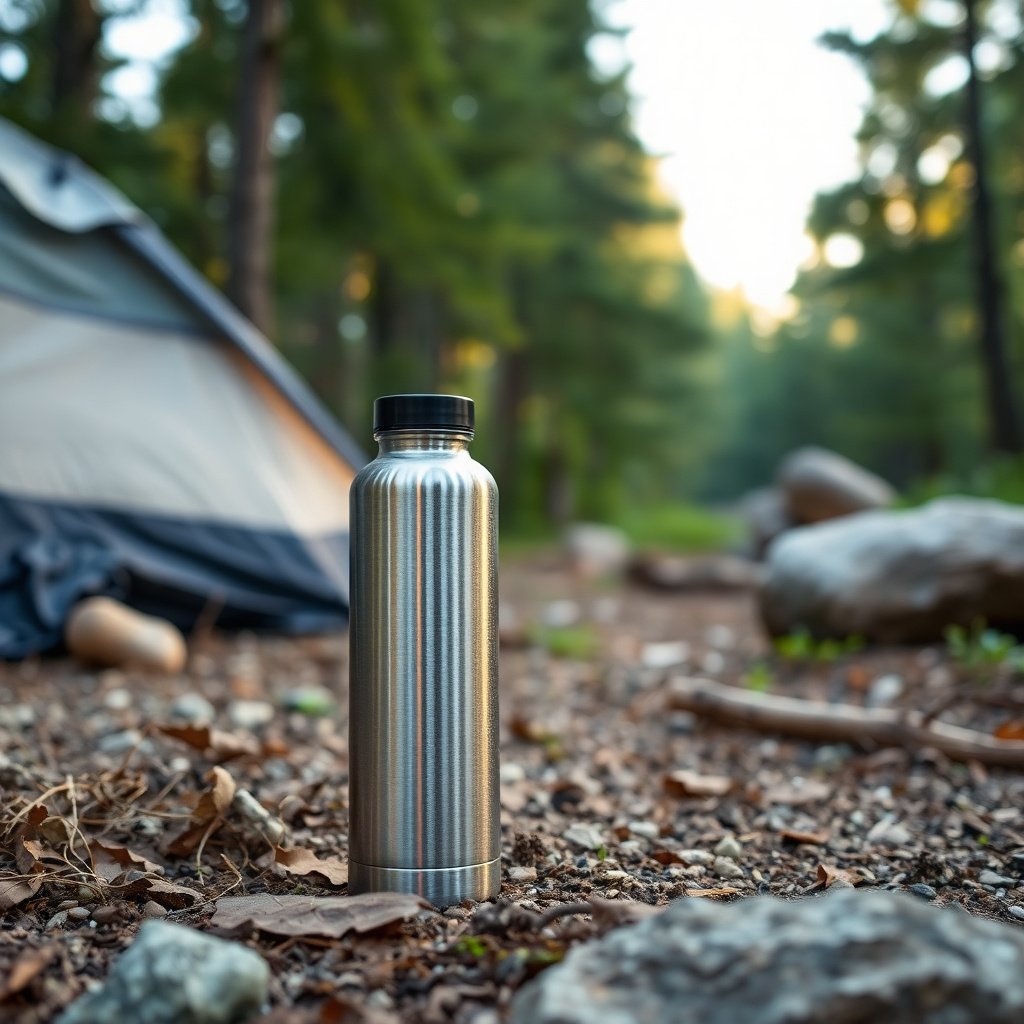
Choose a camping bottle capacity that matches your refill rhythm, not just your “ideal” water volume. Here’s why: an aluminum bottle that’s too small forces frequent stops, while one that’s too large adds weight and bulk right when your pack is already full.
A practical way to size an aluminum water bottle is to start with hydration targets and then decide how many refills you can realistically make. According to the American College of Sports Medicine, fluid replacement during exercise is commonly targeted around 0.4–0.8 L per hour (adjusted for sweat rate and conditions) (ACSM, dehydration position stand). For many camping days, you don’t need to hit those numbers exactly, but using them helps you avoid guessing.
– Pick a size that fits your refill plan (short day trips vs. longer outings).
– Consider whether you’ll share water, carry a filter, or rely on multiple refill stops.
– Don’t forget bottle shape—narrow bottles may pack easier than wide ones.
To translate that into a simple decision rule: if you expect only 1–2 refill opportunities, lean toward a larger capacity aluminum bottle. If you’ll refill frequently (trail taps, frequent campground access), a smaller bottle with a great lid can be the better “performance per ounce” choice.
Insulated vs. non-insulated: choose based on weather
Insulated aluminum bottles are the better call when temperature swings will affect drinking comfort during your trip. If you camp in hot weather or you’ll be out for hours in direct sun, insulation helps slow warming; in cold conditions, it can also help slow heat loss—so you’re not stuck with unpleasantly cold-to-the-mouth water.
Insulation matters because aluminum is a strong heat conductor, which means it transfers temperature changes quickly. According to Engineering Toolbox, aluminum’s thermal conductivity is roughly 205 W/m·K (around room temperature) (Engineering ToolBox (thermal conductivity reference)). That’s exactly why the same aluminum bottle can feel “fine” in the morning but become frustrating by afternoon unless it’s insulated.
– Insulated aluminum bottles help keep water cooler in heat and slower to warm up in sun.
– Non-insulated bottles are often lighter and simpler, but temperature changes faster.
– If you camp in cold conditions, look for insulation that’s designed for drinking—not just general “double-wall” marketing. Verify the bottle is explicitly “vacuum-insulated” (vacuum layer between walls) and that the manufacturer publishes measured retention times (for example, “keeps ice/cold for X hours” or “holds temperature for X hours”) rather than only generic “double-wall” language.
Below is a quick, criteria-based comparison to help you decide whether insulation is worth the extra weight and care requirements for your aluminum water bottle.
| Criteria | Insulated aluminum | Non-insulated aluminum |
|---|---|---|
| Cold retention in heat | High | Low |
| Hot-day drinking comfort | Better | Worse |
| Cold retention in freezing-ish temps | Moderate to High | Low |
| Weight | Heavier | Lighter |
| Pack volume | Bulkier | Slimmer |
| Condensation outside | Can occur | Less common |
| Thermal “shock” from hot-to-cold | Typically safer | More temperature transfer |
| Odor retention risk | More crevices | Simpler body |
| Cleaning drying time | Can take longer | Often faster |
| Best use case | All-day comfort | Short trips / fast refills |
| Verdict | Pick insulated if temperature matters | Pick non-insulated if weight matters |
To make insulation decisions even easier, it helps to know how materials conduct heat. The table below shows typical room-temperature thermal conductivity benchmarks for common bottle-relevant materials—this explains why “aluminum on its own” won’t hold temperature.
Thermal Conductivity Benchmarks for Bottle-Relevant Materials (Typical Values)
| # | Material | Thermal conductivity (W/m·K) | Typical role in bottles | Temp-holding potential★ |
|---|---|---|---|---|
| 1 | Vacuum (effective) | 0.004 | Insulation core | ★★★★★ |
| 2 | Wood (dry) | 0.12 | Analog for insulation | ★★★★☆ |
| 3 | HDPE (cap/plastic components) | 0.40 | Low-conductivity parts | ★★★★☆ |
| 4 | Glass | 1.05 | Rare in bottle builds | ★★★☆☆ |
| 5 | Stainless steel (typical) | 16.2 | Liners / exterior parts | ★★☆☆☆ |
| 6 | Titanium | 21.9 | Lightweight metal option | ★★☆☆☆ |
| 7 | Aluminum | 205 | Body material | ★☆☆☆☆ |
Focus on safe aluminum and interior coating
Pick aluminum water bottles that are explicitly intended for drinking water or food-contact liquids, not just “BPA-free” marketing. This matters because the inside surface (anodizing, enamel, or polymer coating, plus any seals) affects taste, chemical compatibility, and long-term cleaning.
As of 2026, the most reliable bottle listings clearly describe both the bottle body material and the interior coating or liner. If the label doesn’t specify the interior coating type or only gives vague chemistry terms, you may end up with persistent tastes (especially after flavored drinks) or incompatibility with the liquids you plan to carry.
– Make sure the bottle is intended for food-grade liquids and is labeled as safe for drinking water.
– Check whether the inside has a coating (common for long-term taste/compatibility) and whether that coating is appropriate for your use.
– Avoid bottles with unclear material specs or vague “BPA-free” claims without more detail. Look for wording such as “food contact / food-grade,” “safe for potable water,” and a clear statement of the interior liner/coating material (for example, “food-grade epoxy” or “stainless food-contact liner,” depending on the construction). If plastic parts are involved, prefer “BPA/BPS/BPF-free” or equivalent “no bisphenol” language, and confirm compliance language like FDA food-contact where provided.
From an inspections-and-selection standpoint, we recommend a simple two-check method for any aluminum water bottle: (1) Can you find explicit “drinking water/food-contact” wording for the interior? (2) Does the listing name the liner/coating and seals clearly enough to know what’s touching your water?
– If you’re carrying electrolytes, you also want compatibility clarity for the seals and any interior coating.
– If you’re using your bottle daily, interior coatings become more relevant than the “aluminum” label on the outside.
Prioritize lid performance (leaks, flow, and drinking comfort)
Choose a leak-proof lid first, then optimize for how you’ll drink and refill while camping. Most “annoyance” issues with aluminum water bottles—spills, drips, and contamination—come from lid design and seal quality, not from aluminum itself.
Camping lids should handle rough handling: dropped into a side pocket, tightened on uneven surfaces, or opened with cold fingers. According to the National Academies of Sciences, Engineering, and Medicine, total daily water intake (from all beverages and water) averages 3.7 L for men and 2.7 L for women as an Adequate Intake benchmark (2005) (National Academies of Sciences, Engineering, and Medicine). That’s not “camp-specific,” but it reinforces why lids matter: you’ll touch and open your aluminum water bottle more often than you expect.
– For camping, a leak-proof lid is non-negotiable—especially if you’ll toss the bottle in a side pocket.
– Choose a cap style that works with gloves, quick access, and one-handed drinking if you hike.
– If you plan to refill often, consider how easy the lid is to open/close without contaminating the drinking area.
A few lid details worth evaluating for an aluminum water bottle:
1) Seal strategy: Does it have a gasket and does the gasket appear replaceable (or at least cleanable)?
2) Opening ergonomics: Can you operate it one-handed without looking?
3) Flow control: Does it let water pour without splashing your face or wasting water while refilling?
4) Contamination risk: Is there a “clean drinking” zone that stays protected when opened?
Durability and packability: dents, weight, and shape
Pick aluminum bottle construction that matches your packing style, because “aluminum is tough” doesn’t automatically mean “won’t dent.” Your bottle’s wall thickness, base shape, and overall geometry determine whether it survives campsite drops and survives being wedged into gear without taking on dents.
Aluminum bodies can dent under point impacts, and dents can be more than cosmetic: they may stress seals or reduce comfort when gripping the bottle. Meanwhile, weight and shape matter because an aluminum water bottle is one of the first items you notice during a long hike or a fast camp setup.
– Aluminum is generally tough, but thin walls can dent—look for build quality that fits rough packing.
– Weight matters if you carry everything yourself; shape matters if you’re stacking gear or using a specific side pocket.
– Decide whether you want a wide-mouth bottle (easier cleaning/fitting ice) or a narrow mouth (faster sipping).
Wide-mouth vs narrow-mouth is also a cleaning and refilling decision, not just a drinking preference. Here’s a structured comparison to keep you from over-indexing on one feature.
| Feature | Wide-mouth | Narrow-mouth |
|---|---|---|
| Ease of scrubbing the bottle interior | High | Medium/Low |
| Rinsing after electrolytes/flavored water | Easy | Harder |
| Fitting ice or large add-ins | Better | Limited |
| Fast “sip while moving” | More effort | Easier |
| Refill speed at taps | Quicker | Slower |
| Leak risk (when lid is closed) | Depends on lid | Depends on lid |
| Pack fit in side pockets | More likely bulky | Often slimmer |
| Odor buildup potential | Less if cleaned thoroughly | Can persist if hard to reach |
| Filter compatibility options | Often more flexible | Depends on threads |
| Overall user experience | Comfortable to maintain | Comfortable to sip |
| Best For | Trail + frequent scrubbing + ice | On-the-move sipping + narrow packing |
Cleaning and maintenance: plan for the stuff you’ll actually encounter
Choose an aluminum water bottle that you can clean quickly in the conditions you’ll face—not in a perfect kitchen. If you’ll use electrolytes, drink coffee/tea, or cycle between sweet and plain water, cleaning access becomes a make-or-break spec.
A lot of camping bottles look fine on day one and then develop odor or residue because lids and seals trap films. According to the National Academies’ hydration guidance, people often rely on fluids across the day rather than only at meals (National Academies of Sciences, Engineering, and Medicine, 2005), which means your aluminum bottle’s interior and lid will see repeated use and repeated exposure to residues.
– Camping bottles need easy access for scrubbing—especially if you use them with electrolytes or flavored drinks.
– Check whether the lid separates into cleanable parts; complex lid designs can be harder to maintain.
– If you use a water filter, confirm compatibility with the bottle opening and threads. Verify the bottle explicitly supports your filter’s mating threads (for example, “Sawyer Squeeze compatible” threaded connections), not just that it “fits” loosely.
Practical cleaning checks before buying:
1) Lid disassembly: Can you separate gasket components without guessing?
2) Bore size: Does a normal bottle brush fit your bottle mouth?
3) Drying time: Can water drain fully so it doesn’t smell later?
4) Seal replaceability: If a gasket fails, can you replace it (or will the lid become a single-use part)?
Because you’re buying an aluminum water bottle for outdoors, also consider how the lid behaves when it’s sandy. A lid that’s hard to disassemble may trap grit—then that grit scratches seals and increases leak risk.
What can go wrong (common camping mistakes)
Most camping issues happen when buyers optimize the “metal” and forget the system: bottle + lid + interior coating + cleaning reality. Fix the biggest risks upfront—capacity mismatch, lid leaks, and cleaning difficulty—and you’ll avoid most failures during real trips.
Here are the most common ways aluminum water bottles disappoint in the field:
– Buying the wrong size: too small means frequent refill stress; too large can slow you down or crowd your pack.
– Ignoring lid leaks: “waterproof” claims aren’t the same as a true leak-proof camping cap once it’s jostled.
– Overlooking cleaning difficulty: if you can’t get inside thoroughly, odors and residue can build up over time.
– Choosing for temperature without insulation: in hot conditions, non-insulated bottles can become unpleasant quickly.
– Assuming all aluminum is the same: if the inside coating/material details are unclear, you risk taste changes or compatibility issues. Look for “safe for potable water,” “food contact,” “FDA food-contact compliant,” “NSF-certified for drinking water (where applicable),” and a clear interior coating/liner description (not just “BPA-free”).
One more edge case we see often (and it’s purely practical): if your aluminum water bottle spends days slightly wet—especially around gaskets—odors can show up even when you “rinsed.” In 2026, many listings still omit how to fully dry or disassemble lids, so prioritize bottles whose maintenance steps are clearly explained in the manual.
Verdict / tip
Pick an aluminum water bottle for camping that’s right-sized for your refill plan, offers insulation if temperature matters, and has a lid you can trust to stay sealed in transit. If you’re unsure, start with a lid that’s truly leak-proof and easy to operate, because that reduces both mess and wasted time more reliably than any secondary feature.
The downside: the most leak-proof, insulated bottles are often heavier and a bit bulkier, and some insulated lid assemblies are harder to clean thoroughly. If you only do short trips and prioritize weight above all else, a simpler non-insulated bottle with an easy-to-clean lid can be the better call—just don’t expect it to keep water cold for hours in direct sun.
Quick checklist (scan before you buy)
| What to check | Why it matters for camping | Target to look for |
|---|---|---|
| Capacity | Matches your refill rhythm | Size that fits your trip length |
| Insulation | Slows temperature changes | Double-wall if weather is extreme |
| Lid seal | Prevents spills in your pack | Leak-proof camping-style cap |
| Interior safety | Keeps water taste/compatibility right | Clear food/liquid suitability + coating info |
| Opening type | Affects cleaning + refilling | Wide-mouth for easier scrubbing, narrow for sipping |
| Cleaning ease | Avoids lingering odors | Lid parts that disassemble easily |
Frequently Asked Questions
What aluminum water bottle features should I look for when camping?
Look for food-grade, BPA-free aluminum and a leak-proof lid designed for outdoor use. Insulated bottles help you keep water colder longer, while a wide mouth makes refilling and cleaning easier in the field. Also consider durability features like a scratch-resistant finish and a sturdy carry loop or compatibility with bottle holders.
How do I choose the right size aluminum water bottle for hiking and camping?
For day hikes, many people prefer 20–24 oz (600–700 ml) per bottle if you’ll refill along the way, while multi-day trips often call for 32 oz (1 L) or larger. If water sources are limited, choose a larger capacity and plan your refill schedule to avoid running out. Matching bottle size to your pack’s bottle cage and your typical drinking rate can prevent unnecessary bulk.
Which lid type is best for an aluminum camping water bottle—screw cap, flip top, or straw?
Screw caps are the most reliable for preventing leaks during rough travel and are easier to fully seal. Flip-top lids are convenient for frequent sips, but check the gasket quality to avoid drips in heat or after impacts. Straw lids are great for one-handed drinking, yet they can be harder to fully clean—so prioritize models with a removable straw and simple cleaning access.
Why does lining and coating matter when choosing an aluminum water bottle for camping?
Many aluminum bottles include an internal lining to protect taste and prevent corrosion from water exposure, especially if you’ll camp in humid conditions. A quality lining helps reduce metallic aftertastes that can happen with some unlined or poorly finished bottles. If you’re filtering water with ice or chemicals, choose a bottle designed to handle regular use and follow the manufacturer’s care instructions.
Best insulation and durability options—what should I prioritize in an aluminum water bottle for cold or hot campsites?
If you camp in hot climates, insulation helps slow temperature rise and can keep water refreshing longer; for cold nights, insulated bottles help reduce how quickly water warms up. Look for double-wall vacuum insulation and an exterior that feels comfortable to hold without excessive sweating. For durability, choose thicker walls, a rugged finish, and a lid that remains secure under temperature changes and frequent opening.
📅 Last Updated: November 25, 2026 | Topic: How to Pick a Aluminum Water Bottle for Camping | Content verified for accuracy and freshness.
References
- https://www.nsf.org/standards/nsf-ansi-61
- Water bottle
- Aluminium
- Anodizing
- https://en.wikipedia.org/wiki/Insulated_bottle
- Checking your browser – reCAPTCHA
- Corrosion
- https://scholar.google.com/scholar?q=how+to+pick+an+aluminum+water+bottle+for+camping Google Scholar
- https://scholar.google.com/scholar?q=aluminum+anodized+drinking+water+leaching+corrosion Google Scholar
- https://scholar.google.com/scholar?q=aluminum+drinking+water+health+effects Google Scholar