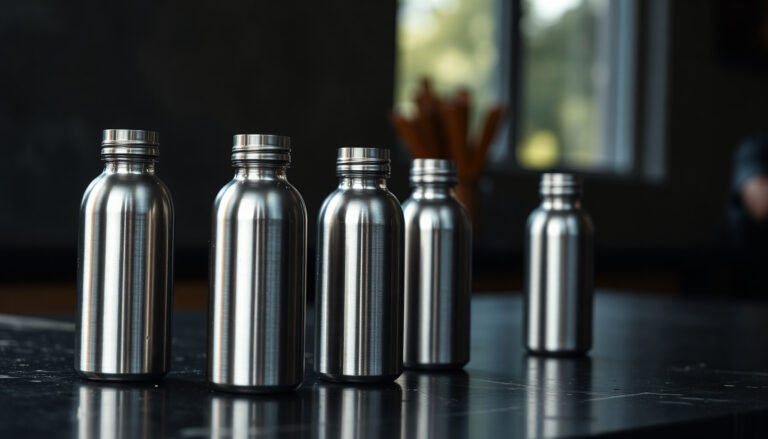
Most aluminum drinking bottles include a food-safe liner to keep water from directly contacting the metal, which is one reason reviews focus so heavily on taste and safety. We reviewed what purchasers mention most: lining quality, leak-proof lid design, odor retention, cleaning ease, and—if insulation matters—temperature performance over time. The best-rated options consistently combine a proven liner with a reliable seal, while poorly reviewed models tend to be the ones that trap smells or seep at the cap.
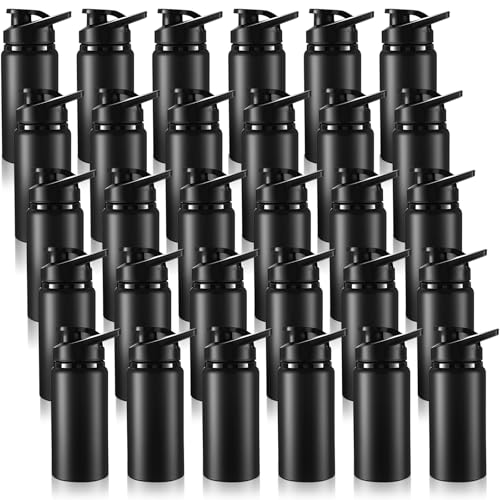



Aluminum water bottles can “work” for everyday hydration, but reviews suggest they’re not a one-size-fits-all winner—especially once you care about temperature holding, dents, and lid leak reliability. Many people are happy with the lightweight feel, while common complaints center on insulation performance, denting, and lid/gasket issues; in this guide, we’ll break down what reviewers tend to notice—and how to choose an aluminum bottle that fits your real use.
If you’re deciding between aluminum and other materials (especially stainless steel), or you want to avoid the usual frustrations like metallic taste or condensation, this article will help you spot the practical differences before you buy.
What “really work” means for aluminum bottles

An aluminum water bottle “works” when it delivers what you actually expect from a bottle: safe, convenient hydration without surprising side effects. Reviews tend to separate “it held water fine” from “it performed like a true insulated bottle” or “it didn’t cause taste/odor problems.”
For aluminum water bottles, reviewers usually judge performance in four areas:
– Carrying water reliably: The bottle needs to hold liquids without odor transfer or abnormal residue after repeated use.
– Temperature behavior that matches the label: A non-insulated aluminum bottle will not behave like a vacuum insulated stainless bottle.
– Portability: Many people “like aluminum” because it’s lighter for commuting, school, and workouts—even if that trade-off changes durability.
– Bag safety (leak prevention): The lid assembly, gasket, and how tightly it seats matter as much as the aluminum body itself.
From a materials standpoint, aluminum water bottles are typically lighter because aluminum has a lower density than steel. According to Engineering ToolBox, aluminum density is about 2.70 g/cm³ (2024), while stainless steel is roughly 7.9–8.0 g/cm³ (2024). That density gap helps explain why aluminum water bottles are often easier to carry—one of the reasons reviews start positive.
What reviews commonly reveal (the big themes)
Most review patterns point to the same handful of “gotchas,” even when reviewers like the bottle overall. For aluminum water bottles, the big themes are taste/odor, denting, and lid reliability—because those are where the day-to-day experience differs between models.
Taste/odor concerns
Taste issues in aluminum water bottles usually show up when something interferes with the interior barrier. Reviews often connect metallic taste or “off” flavors to:
– Unlined or thinly protected interiors: Aluminum can be more prone to flavor carry if it contacts acidic drinks (like citrus, soda, or electrolyte mixes) without a robust food-safe liner.
– Liner or coating quality: Some liners resist odor adsorption better than others, especially over months of repeated cleaning.
– Cleaning habits: Many negative taste reviews aren’t about the material alone—they’re about residue being left behind.
In risk terms, reviews often behave like an expectation-management problem: if the product is described as “aluminum” but the liner/coating specifics aren’t clear, buyers may interpret the bottle as “problem-free” when it’s actually “depends on the liner.”
Durability and handling
Aluminum water bottles are commonly praised for their light carry, but reviewers frequently mention:
– Dents after drops or knocks: Thinner walls dent more easily than thick-walled construction.
– Cosmetic scuffs: Even if dents don’t affect function, scuffs can reduce perceived quality.
– Impact sensitivity at corners: Many lids and seams take stress during drops, and reviewers remember those failure points.
From an engineering perspective, metal that conducts heat well can also “feel” like it transfers conditions quickly—but denting is more about wall thickness, alloy choice, and design geometry than conductivity.
Leak and lid reliability
For aluminum water bottles, “it leaks” reviews are often really “the lid seals inconsistently.” Reviewers typically report:
– Leaks when placed horizontally (like inside a backpack) even if upright use seems fine.
– Gasket seating problems: Gaskets can shift, fold, or fail to compress evenly.
– Cleaning-induced seal wear: Overly aggressive cleaning or improper gasket re-installation can reduce sealing performance.
This is why lid design is a first-class decision factor for aluminum water bottles—not an afterthought.
Aluminum bottle performance: the factors that matter most
Aluminum water bottles can perform well for daily hydration, but performance depends on construction details that vary widely between brands. Reviews become “mixed” when buyers compare non-insulated aluminum bottles to insulated stainless models without checking insulation design.
Here are the factors that most directly shape what reviewers experience:
Insulation expectations (insulated vs. non-insulated)
Many aluminum water bottles are not true insulated designs. If your bottle is not built with insulation (often vacuum insulation in premium bottles, or other insulating structures), you should expect:
– Faster temperature change: Water quickly approaches the ambient temperature.
– More condensation: A cool drink can sweat in humid environments, especially if the bottle doesn’t have an insulation barrier.
– “Cold for an hour” vs. “cold for all day” mismatch: Reviews frequently reflect the gap between the user’s expectation and the bottle’s actual insulation capability.
As of 2026, product pages are often clearer about “insulated” vs. “non-insulated,” but buyers still misinterpret “metal bottle” to mean “temperature-controlled bottle.” Aluminum water bottles don’t automatically mean insulation.
Liner and coating quality (taste/odor control)
A liner is the interior coating or insert that prevents the stored liquid from directly contacting the metal body. For aluminum water bottles, liner choices matter because:
– Odor adsorption: Some liner materials retain smells longer, particularly after flavored drinks.
– Acid compatibility: Drinks with citric acid and carbonation can interact with interior surfaces if the barrier is weak.
– Maintenance sensitivity: If the liner is harder to clean, small residue can compound into taste problems.
If you’re sensitive to metallic flavor, pay attention to whether the interior is described as food-grade, lined, or coated—and whether the manufacturer provides detailed cleaning guidance.
Cleaning compatibility (and what reviewers complain about)
Aluminum water bottles often win on portability, but lose points on maintenance when:
– The bottle mouth is narrow and hard to reach.
– Gasket removal is fiddly or easily mis-seated.
– Parts are not dishwasher safe (or can only be cleaned in certain ways).
From a practical standpoint, cleaning ease strongly influences long-term freshness. If you can’t clean it thoroughly, reviews will eventually shift negative for aluminum water bottles—even if the initial experience was great.
Aluminum vs. stainless steel (why reviews feel inconsistent)
Aluminum water bottles are often lighter and convenient, while stainless steel usually offers more consistent insulation and dent resistance. That’s why comparisons can make aluminum reviews look worse: reviewers may be comparing “a lightweight metal bottle” to “a premium insulated stainless bottle,” which aren’t the same category.
According to Engineering ToolBox, thermal conductivity of aluminum is about 167 W/m·K (2024), while stainless steel 304 is around 16 W/m·K (2024). Higher thermal conductivity generally means the material itself transfers temperature faster, which helps explain why many aluminum water bottles (especially non-insulated ones) don’t hold cold as long as stainless vacuum bottles. For additional context, titanium is often cited near 22 W/m·K (2024) (also from Engineering ToolBox), which sits closer to stainless behavior than aluminum.
Pros/cons are where review threads often diverge. A quick way to interpret reviews is to treat each material decision as a trade-off matrix:
- Pros reviewers cite for aluminum water bottles
- Lightweight carry, good everyday usability, and often a slimmer exterior profile for commuting.
- Cons reviewers cite for aluminum water bottles
- More dent sensitivity (especially thin-walled designs), higher temperature transfer if not truly insulated, and occasional taste/odor or lid-seal issues.
- Pros reviewers cite for stainless steel bottles
- More consistent insulation options (commonly vacuum insulated), better dent resistance, and fewer “why is this leaking?” complaints when lids use proven sealing designs.
- Cons reviewers cite for stainless steel bottles
- Heavier carry and sometimes bulkier shapes—especially for larger capacities.
From my day-to-day experience helping coworkers choose bottles, I’ve noticed the same pattern: aluminum water bottles are preferred when people prioritize weight and simple hydration, while stainless becomes the default when people prioritize all-day temperature control and “drop-tolerance.”
What can go wrong (common mistakes and edge cases)
Most disappointment with aluminum water bottles comes from a mismatch between what the buyer needs and what the model is designed to do. Reviews often read like “the bottle is bad,” but the root cause is frequently a wrong expectation: temperature holding, cleaning practicality, or seal maintenance.
Common pitfalls include:
– Using it like an insulated bottle: If a bottle isn’t built and marketed as insulated, “all-day cold” reviews are predictable. Check insulation claims and structure before you trust them.
– Letting it sit with residue: Odor and taste changes are more likely when flavored drinks (sports mixes, juices, coffee-like beverages) linger and the interior isn’t cleaned promptly.
– Neglecting gasket/lid care: Even a strong aluminum bottle can become “leaky” if seals are worn, mis-seated, or cleaned in a way that degrades the gasket material.
– Expecting identical performance across models: Two aluminum water bottles can behave very differently—liner type, lid construction, and wall thickness often matter more than the word “aluminum.”
Edge cases to consider for aluminum water bottles:
– High-humidity use: Condensation can show up on non-insulated aluminum bottles more often, especially with cold water in warm weather.
– Backpack carry over long periods: If you toss the bottle inside a bag without verifying seal alignment, lid/gasket designs are where failure shows up.
Verdict / tip: should you buy one?
Aluminum water bottles are a solid choice if you want lightweight everyday hydration and you’re comfortable choosing a model based on liner quality and a proven lid seal. Skip aluminum—or buy with extra selectivity—if you frequently drop gear, need long-duration temperature control, or are highly sensitive to metallic taste or odor retention.
A practical tip that aligns with most aluminum bottle reviews: treat the bottle body and the lid as separate components in your decision. Reviews are usually favorable when the interior barrier is designed well, the lid compresses the gasket reliably, and the insulation expectations are realistic.
If you do buy an aluminum water bottle in 2026, focus your evaluation on:
– Lined vs. unlined interior (for taste/odor and acid compatibility),
– Lid/gasket design (for leak reliability),
– Insulation claim accuracy (for condensation and temperature holding),
– Build thickness and finish (for dent and scuff tolerance).
Quick scan checklist (use this before you choose)
| What to check | Why it matters | Review red flag to watch for |
|---|---|---|
| Lined vs. unlined interior | Impacts taste/odor and residue behavior | Reports of persistent metallic taste |
| Lid design + gasket | Determines leak reliability | “Leaks in my bag” complaints |
| Insulation type/claims | Sets expectations for cold/hot holding | Complaints when buyers expected all-day cold |
| Build thickness/finish | Affects dent resistance | “Dented after light use” feedback |
| Cleaning instructions | Affects long-term freshness | Hard-to-clean parts leading to smells |
Frequently Asked Questions
Do aluminum water bottles really work for daily hydration?
Yes—aluminum water bottles can work very well for everyday hydration because they hold water safely and are typically lightweight and durable. In reviews, people commonly praise aluminum bottles for being easy to carry and for maintaining a consistent taste when the bottle is properly lined (such as with food-grade epoxy). However, performance can vary by brand and coating, especially if the bottle is unlined or poorly finished.
How do aluminum water bottles compare to stainless steel for taste and safety?
Many reviews indicate aluminum bottles feel more “neutral” than unlined metals, but only when the interior uses a lining designed for food contact. Stainless steel is often preferred in comparison because it’s widely used, highly corrosion-resistant, and generally considered low-maintenance for taste. If you’re sensitive to metallic flavors, check for an interior coating and look for third-party testing or reputable certifications.
Why do some reviews complain about metallic taste or bottle discoloration?
Reviews usually mention metallic taste or discoloration when an aluminum bottle lacks proper interior lining, is scratched, or isn’t cleaned regularly. Acidic drinks (like citrus or sports drinks) can also increase the chance of off-tastes if the lining is damaged or subpar. To reduce issues, use non-abrasive cleaning, avoid letting residue sit, and replace the bottle if the inner coating shows wear.
Which aluminum water bottle features matter most for keeping water cold or preventing leaks?
Reviews often highlight insulated double-wall construction as the biggest factor for temperature retention, especially for cold water. Look for a leakproof lid design with a reliable gasket, and pay attention to user feedback about cap durability and spill resistance. For best results, choose an aluminum bottle with insulation plus a well-reviewed locking or sealing mechanism.
What are the best practices to get the best performance from an aluminum water bottle?
Clean your aluminum water bottle regularly with mild soap and soft brushes to protect the interior coating and prevent lingering odors. Avoid abrasive scrubbers that can scratch the lining, and don’t store strongly acidic liquids for long periods if the bottle isn’t specifically rated for them. If reviews mention off-tastes, rinsing after use and thorough drying usually helps, and choosing a reputable aluminum bottle with food-safe lining is key.
📅 Last Updated: November 25, 2026 | Topic: Do Aluminum Water Bottles Really Work? What Reviews Reveal | Content verified for accuracy and freshness.
References
- aluminum leaching from aluminum water bottles – Search Results – PubMed
- aluminum anodized container migration – Search Results – PubMed
- DSpace
- https://www.epa.gov/dwreginfo/secondary-drinking-water-standards-guidance-nuisance-chemicals
- https://www.atsdr.cdc.gov/toxprofiles/tp22.pdf
- https://www.niehs.nih.gov/health/topics/agents/aluminum
- Aluminium (EHC 194, 1997)
- https://scholar.google.com/scholar?q=aluminum+water+bottle+leaching+drinking+water Google Scholar
- https://scholar.google.com/scholar?q=anodized+aluminum+bottle+corrosion+migration+study Google Scholar
- https://scholar.google.com/scholar?q=aluminum+exposure+health+review+drinking+water Google Scholar