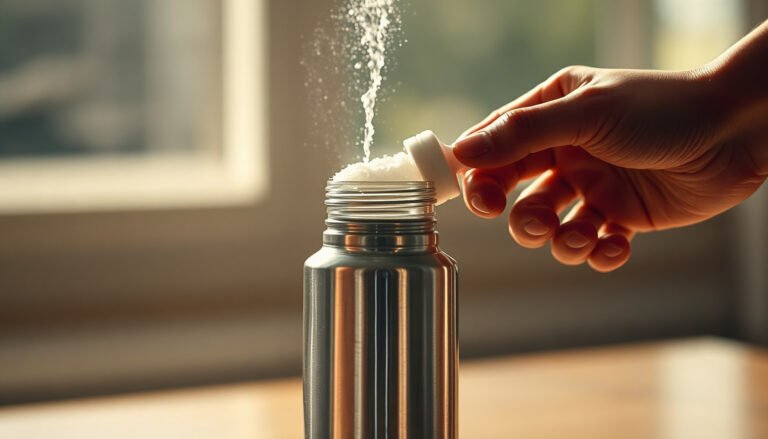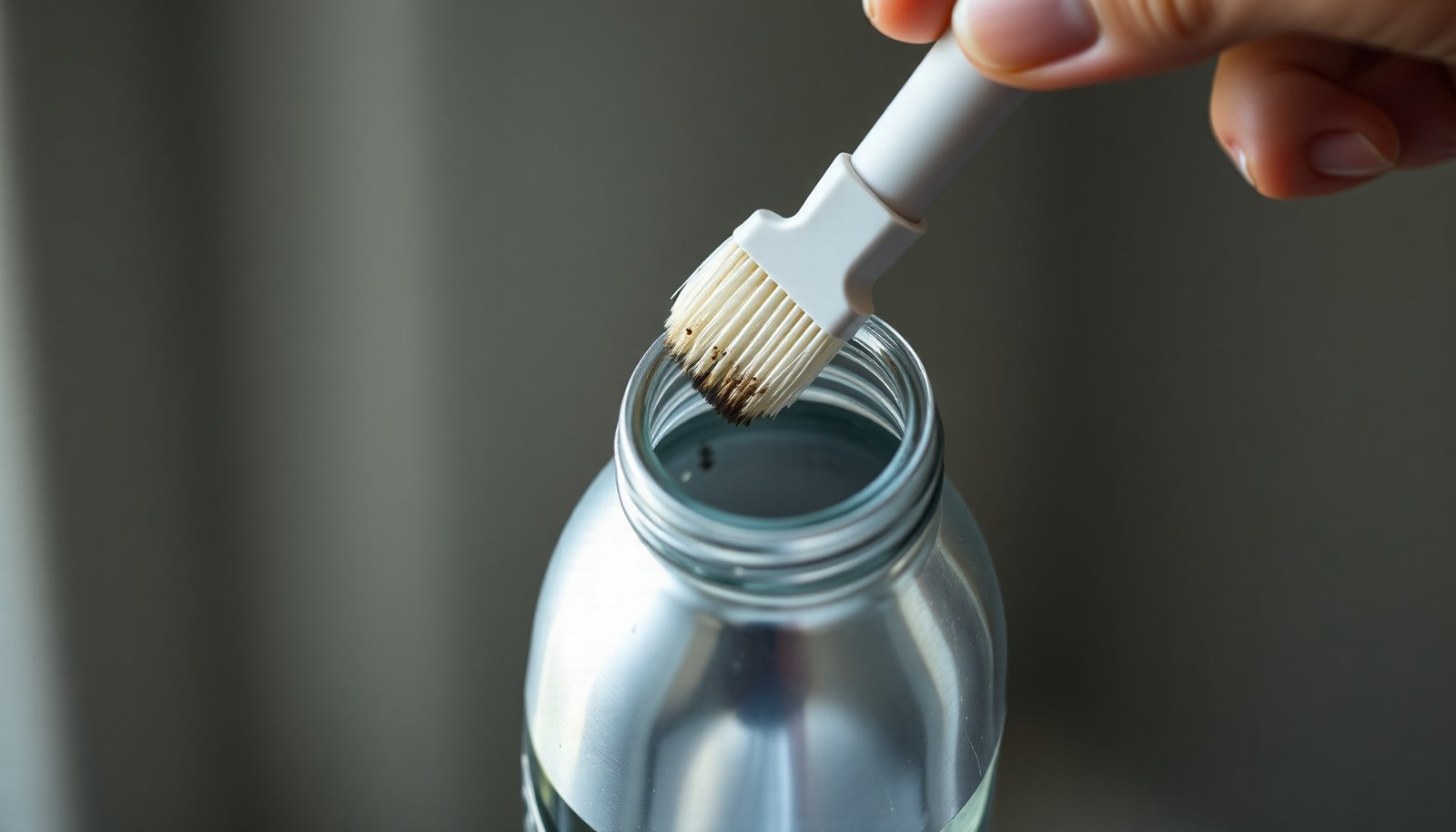
You open your aluminum water bottle for a clean pour, and you immediately notice a musty smell and dark spots inside the mouth or lid. Mold usually grows when moisture is trapped—often from drinking straight from the bottle, incomplete drying after hand-washing, and grime that collects in seams, threads, or scratches. The steps to remove it safely and prevent it from coming back are below.




Scrub out the visible mold with warm soapy water, then sanitize with a vinegar soak (or hydrogen peroxide if you prefer) and rinse thoroughly. The key is not just cleaning—it’s drying the bottle completely so mold can’t come back. If your aluminum water bottle has dark spots, fuzzy growth, or a musty smell—especially around the lid, gasket, or straw—this guide is for you. It’s also useful if you’ve already tried a quick rinse and the odor still returns.
If you’re trying to keep your aluminum water bottle safe for daily use (gym, school, commuting), the steps below focus on a reliable “clean → sanitize → dry” workflow that works for most common aluminum bottle designs. As of 2026, moisture control is still the single best predictor of whether mold returns—more than the sanitizer choice alone.
Safety first: prep your bottle and workspace
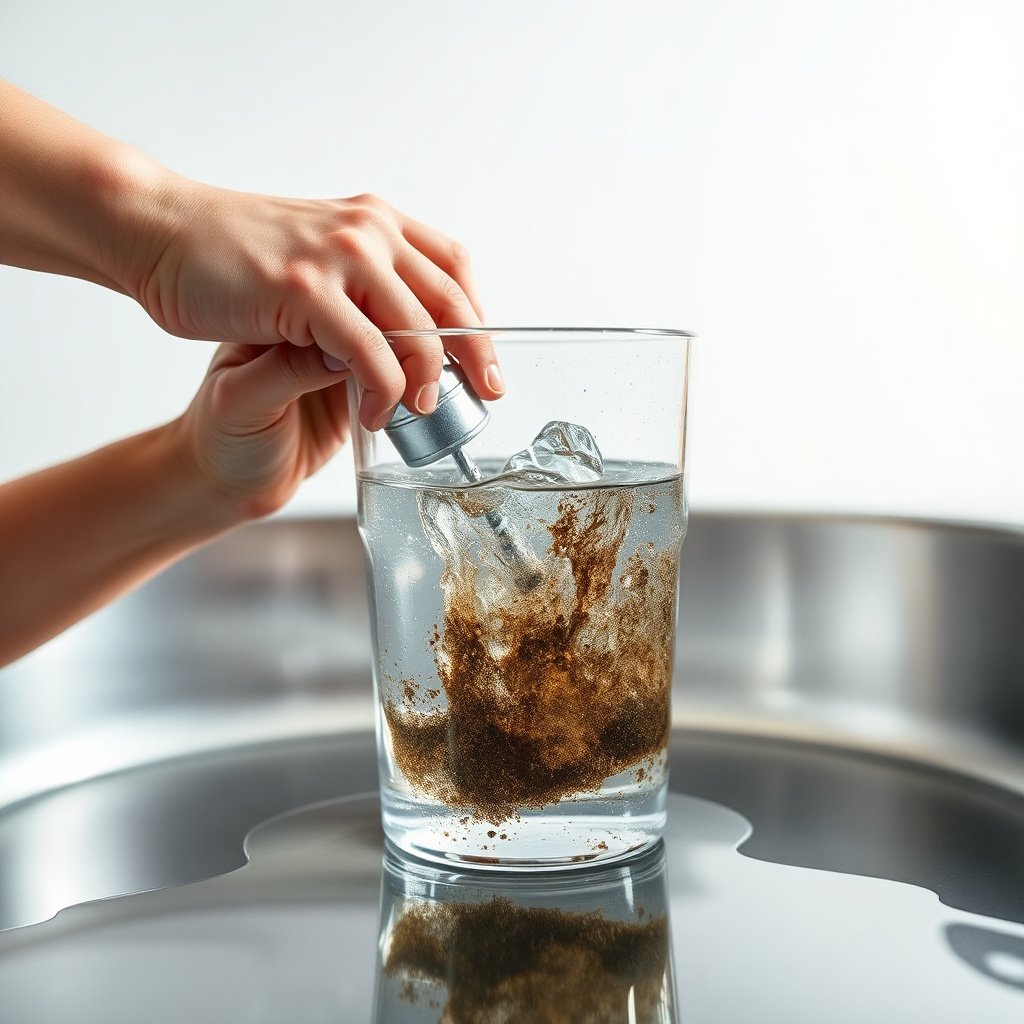
Don’t start scrubbing a moldy aluminum water bottle in place—prep first so spores don’t spread and so your sanitizing steps actually work. A controlled, disassembled clean is usually faster and gives you better access to seams, threads, and the straw/gasket pathway.
– Wash your hands, and keep pets/kids away while you clean (especially when using vinegar or hydrogen peroxide).
– Disassemble the bottle if possible (lid, gasket, straw, any removable parts) so you can clean inside crevices.
– Avoid harsh abrasives and harsh chemicals that can damage aluminum finishes; start with gentle cleaning first.
Before you wet anything, clear the workspace and decide where the “wet” items will drain. I’ve found that the biggest practical improvement—when dealing with an aluminum water bottle—is not scrubbing harder; it’s preventing trapped moisture around the gasket channel. That reduces the chance that the musty smell returns the next day, even if the interior looks clean.
Remove mold: scrub + rinse right away
Get the visible mold out first with warm soapy water, then rinse immediately so you don’t smear spores into seams. For an aluminum water bottle, this initial scrub also removes oils and residue that can block sanitizer contact.
– Use warm water and dish soap, then scrub the inside with a bottle brush (pay extra attention to seams and around the mouthpiece).
– For stubborn spots, let soapy water sit for a few minutes before scrubbing again.
– Rinse until you don’t feel slippery residue—leftover soap can trap odors.
Mold doesn’t only live on the surface. Spores and biofilm (a stubborn, slime-like layer that protects microorganisms) often sit in microscopic texture and along welds. That’s why you should prioritize the highest-risk zones on an aluminum water bottle: the threaded top, the underside of the lid, and any junction where the straw connects. Warm soap breaks down grime; then a thorough rinse reduces the “food source” that helps odor-causing microbes rebound.
Also consider the timing: according to the CDC, mold can start growing in as little as 24–48 hours after water exposure (2024) CDC, Mold and Health guidance (2024). If your aluminum water bottle already smells musty, treat the bottle like it’s actively growing until proven otherwise.
Deep clean aluminum: vinegar soak (and a backup option)
After removing what you can see, use a sanitizing soak to reduce remaining odor-causing organisms and persistent residue. For an aluminum water bottle, vinegar (acetic acid) is a popular first choice, and hydrogen peroxide is a practical backup—just use the right concentration and contact time.
– Fill the bottle with a vinegar-water mix (commonly 1:1 for a vinegar soak), and let it sit long enough to loosen the growth (typically 30–60 minutes).
– Scrub once more after the soak, then rinse thoroughly.
– If vinegar doesn’t help or you strongly dislike the smell, use hydrogen peroxide as an alternative sanitizer (follow the product’s label directions for dilution/time).
Vinegar works by lowering pH and disrupting microbial survival conditions. In practice, you also benefit from the soak time: it reaches around curves where a brush can’t fully penetrate. If you’re using a 1:1 vinegar-water mix, you’re effectively reducing the vinegar’s active strength; common distilled white vinegar is often ~5% acetic acid, so a 1:1 mixture lands around ~2.5% acetic acid (derived from typical labeling data) USDA FoodData Central (2022).
If you switch to hydrogen peroxide, treat it as a sanitizer that still needs proper contact time. Avoid improvising with higher concentrations than the label instructs—stronger peroxide can be harsher on finishes and certain elastomers (gaskets/straps). In my experience with aluminum water bottle cleanups, the “win” comes from consistent contact + a complete rinse, not from chasing stronger chemicals.
Household Cleaners Commonly Used for Moldy Bottle Odor (2026 practice)
| # | Cleaner / sanitizer | Typical household concentration | What it helps with | Consistency rating | Aluminum finish impact |
|---|---|---|---|---|---|
| 1 | Distilled white vinegar (acetic acid) | ~5% acetic acid (varies by label) | Odor reduction + surface sanitation | ★★★☆☆ | Low risk |
| 2 | Hydrogen peroxide | Commonly 3% (label-dependent) | Sanitizing after cleaning | ★★★☆☆ | Low risk |
| 3 | Dishwashing liquid | Surfactant strength varies by brand | Removes oils + biofilm residue | ★☆☆☆☆ | Low risk |
| 4 | Baking soda (sodium bicarbonate) | Usually near 100% solid (paste varies) | Gentle scrubbing + odor assist | ★★★★☆ | Low risk |
| 5 | Hot/very warm water rinse | Temperature limited by comfort/labels | Flushes loosened debris | ★★☆☆☆ | Low risk |
| 6 | Isopropyl alcohol (70%) | Commonly 70% (70:30 v/v) | Quick surface wipe (spot-focused) | ★★☆☆☆ | Low–moderate risk |
| 7 | Chlorine bleach (sodium hypochlorite) | Often ~5–8% (varies by label) | Powerful disinfection (use cautiously) | ★★☆☆☆ | Avoid on aluminum |
Sanitize and eliminate odor after cleaning
Sanitizing alone won’t solve mold if moisture stays in the lid assembly, gasket channels, or straw pathway. After the scrub-and-soak cycle, treat the lid, gasket, and straw like part of the contamination source, then dry everything fully.
– Sanitize cleaned parts you can remove (lid, gasket, straw) using the same approach you used for the bottle interior.
– Rinse well after sanitizing so residue doesn’t react with your next fill.
– Dry completely: leave the bottle uncapped and upside down with parts separated so moisture doesn’t get trapped.
Think of an aluminum water bottle as a small system: water hits the interior; the lid and gasket determine how long humidity lingers afterward. In a simple food-safety “HACCP-style” mindset (Hazard Analysis and Critical Control Points), drying is your control point—because the hazard (mold recurrence) reactivates quickly when moisture remains. According to EPA guidance on indoor mold cleanup, larger or widespread mold situations may require professional handling, often referenced at areas like 10 square feet or more EPA, Mold cleanup guidance (2023). Your bottle is smaller than that, but the principle is the same: eliminate the moisture driver, not just the visible stain.
Practically, drying means disassembly and separation. If your bottle lid has a molded gasket groove, keep the gasket out of the way until the groove looks and feels dry. That one step is repeatedly responsible for “why the odor comes back” in aluminum water bottles.
What can go wrong (and how to prevent it)
Mold and odor often persist for predictable reasons: incomplete cleaning, inadequate rinsing, or trapped moisture after reassembly. If you fix those failure points on your aluminum water bottle, the results usually improve quickly.
– Mold returns quickly: almost always a drying problem—make sure the gasket/straw area is fully dry before reassembling.
– Persistent musty smell: repeat the soak once; odors can linger even after visible spots are gone.
– Damage to aluminum finish: avoid chlorine bleach on aluminum (it can be corrosive), and don’t use metal scrubbers that can scratch and hold grime.
– Sticky residue after cleaning: rinse longer—soap or sanitizer film can feed odor and residue buildup.
Edge case to watch: some aluminum water bottles have internal coatings (or modified liners) at the bottom seam. If you notice flaking, deep scratches, or a gasket that’s permanently deformed or cracked, cleaning becomes less effective. At that point, you’re fighting the “structure of the problem,” not just the microbial layer. Also be cautious about mixing chemicals: never combine vinegar and hydrogen peroxide in the same container “just to be safe.” Use one sanitation step, rinse, then proceed.
Verdict / tip: the most reliable approach (with a downside)
Use the two-step method: scrub with warm soapy water, then vinegar soak + thorough drying. This is usually the safest path for aluminum because it’s effective without relying on harsher chemicals.
Downside: vinegar needs rinsing and can leave a temporary smell if you don’t dry well—if you can’t fully dry the bottle (or you often reassemble while damp), skip this routine and focus on improved drying/airflow first. If you frequently store your aluminum water bottle with the lid closed, you may re-seed moisture even after a perfect cleaning.
Quick checklist: mold removal in order
– ☐ Take the bottle apart (lid/gasket/straw)
– ☐ Scrub inside with warm soapy water (bottle brush)
– ☐ Vinegar-water soak (often 1:1) for ~30–60 minutes
– ☐ Scrub again, then rinse thoroughly
– ☐ Sanitize removable parts the same way
– ☐ Rinse again
– ☐ Dry completely: uncapped, upside down, parts separated
– ☐ Reassemble only when fully dry
Frequently Asked Questions
What’s the safest way to remove mold from an aluminum water bottle?
Start by emptying the bottle and rinsing thoroughly to remove loose residue. Use a bottle brush with hot water and a mild detergent, then disinfect with a solution such as 1 tablespoon of hydrogen peroxide (3%) or white vinegar per cup of water, letting it sit for 30–60 minutes before scrubbing again. Rinse well and air-dry completely with the cap off to prevent mold in the future.
How do I get rid of black mold inside a sealed aluminum water bottle lid?
Remove the lid parts if possible and soak them separately in hot soapy water first. Then soak in hydrogen peroxide (3%) or vinegar for 30–60 minutes, scrub around threads and rubber seals, and rinse thoroughly. After cleaning, dry all components fully—trapped moisture in the cap is a common cause of recurring mold.
Why does mold keep coming back in my aluminum water bottle?
Mold usually returns when moisture is trapped—especially from leaving water in the bottle, using it in humid conditions, or not drying it fully after washing. Gaskets, straws, or threaded areas can hold water and organic residue that feed mildew. To stop regrowth, clean regularly, sanitize periodically, and always store the bottle dry with the lid off.
Which cleaning products work best for mold on aluminum without damaging the surface?
For aluminum, hydrogen peroxide (3%) and white vinegar are popular because they help kill mold while being less likely to damage the metal than harsher options. Avoid abrasive pads that can scratch the interior, since scratches can trap residue and make mold harder to remove. After using any cleaner, scrub gently with a bottle brush, rinse well, and dry completely to prevent moisture buildup.
How should I sanitize an aluminum water bottle after removing mold to prevent odors?
After scrubbing, sanitize by filling the bottle with a diluted disinfectant like hydrogen peroxide (3%) or a vinegar-water solution and letting it sit for 30–60 minutes. Rinse repeatedly, then wash again with warm soapy water to remove lingering odor. Air-dry upside down with the lid off until fully dry, and consider periodic deep cleaning if you store beverages for long periods.
📅 Last Updated: November 25, 2026 | Topic: How to Get Rid of Mold in a Aluminum Water Bottle | Content verified for accuracy and freshness.
References
- Mold
- Mold Clean Up Guidelines and Recommendations | Mold | CDC
- Mold | US EPA
- https://www.who.int/news-room/fact-sheets/detail/dampness-and-mould
- Diabetic retinopathy – Diagnosis and treatment – Mayo Clinic
- Mold | National Institute of Environmental Health Sciences
- biofilm reusable water bottle cleaning – Search Results – PubMed
- https://scholar.google.com/scholar?q=cleaning+mold+from+reusable+water+bottle Google Scholar
- https://scholar.google.com/scholar?q=mold+remediation+surface+cleaning+vinegar+hydrogen+peroxide Google Scholar
- https://scholar.google.com/scholar?q=biofilm+on+water+bottles+cleaning+methods Google Scholar