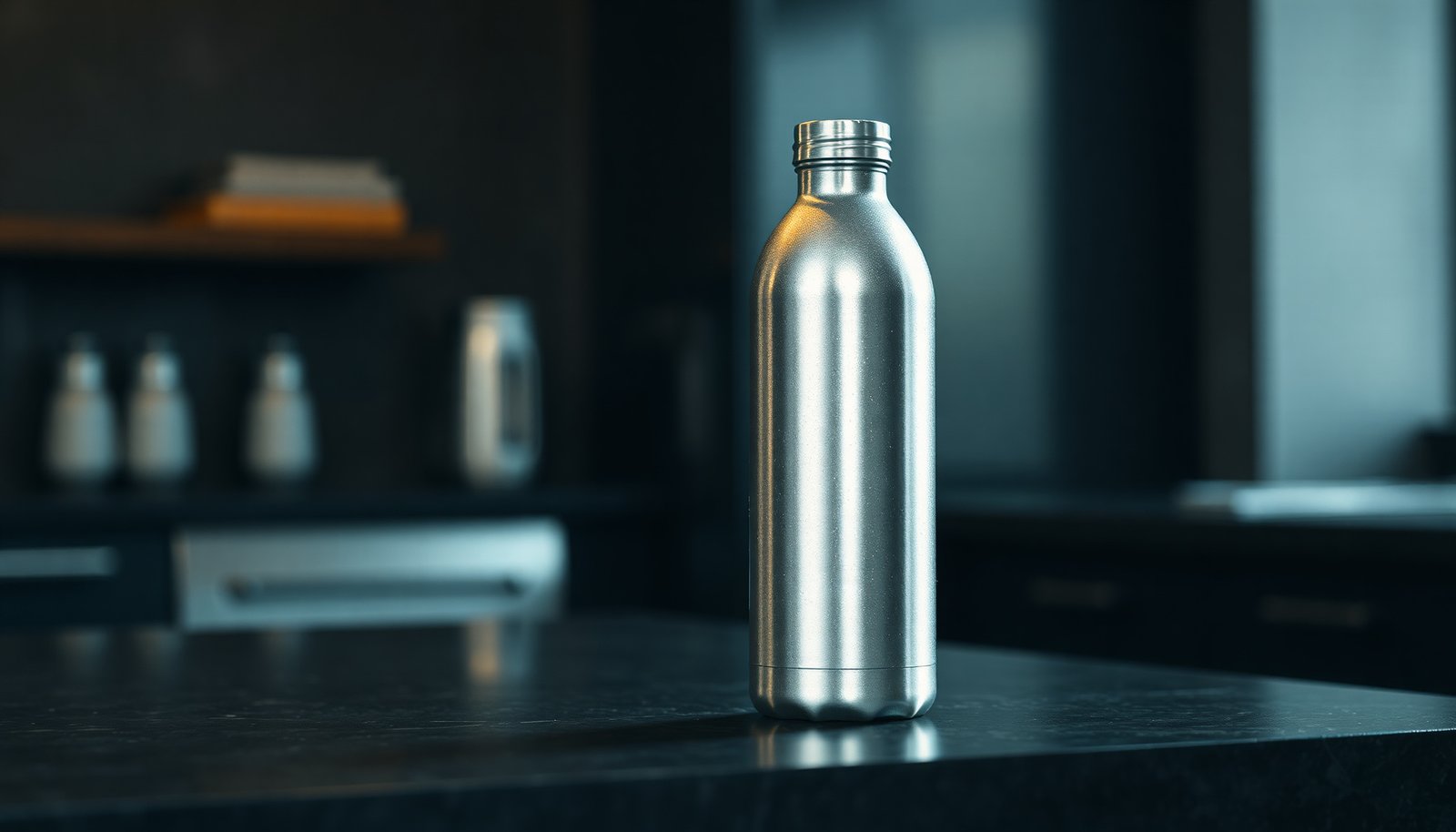
Aluminum water bottles are built from an aluminum-alloy body, then protected on the inside with a lining or coating that determines taste safety and corrosion resistance. Anodized-aluminum interiors suit those who want a lighter, simple bottle, polymer linings fit budget and flexibility, and stainless-steel linings offer the most inert contact for frequent use. Choose based on flavor neutrality, corrosion risk, and long-term wear—stainless-lined bottles win for most everyday buyers.




Aluminum water bottles are usually made with an aluminum alloy body, then paired with an interior barrier like food-grade polymer, epoxy, or an enamel-like coating to protect against flavor transfer and corrosion. The lid and seal are typically made from stainless steel and/or plastics, with silicone or rubber gaskets to keep the bottle leak-resistant. This article compares the main materials you’ll see and what they mean for taste, durability, and safety.
If you’re shopping for an aluminum bottle (or replacing one you didn’t like), this breakdown helps you interpret the material stack behind the label. It’s especially useful if you care about cleaning, flavor consistency, or avoiding coatings you’d rather not have.
Aluminum body: the base material in most bottles
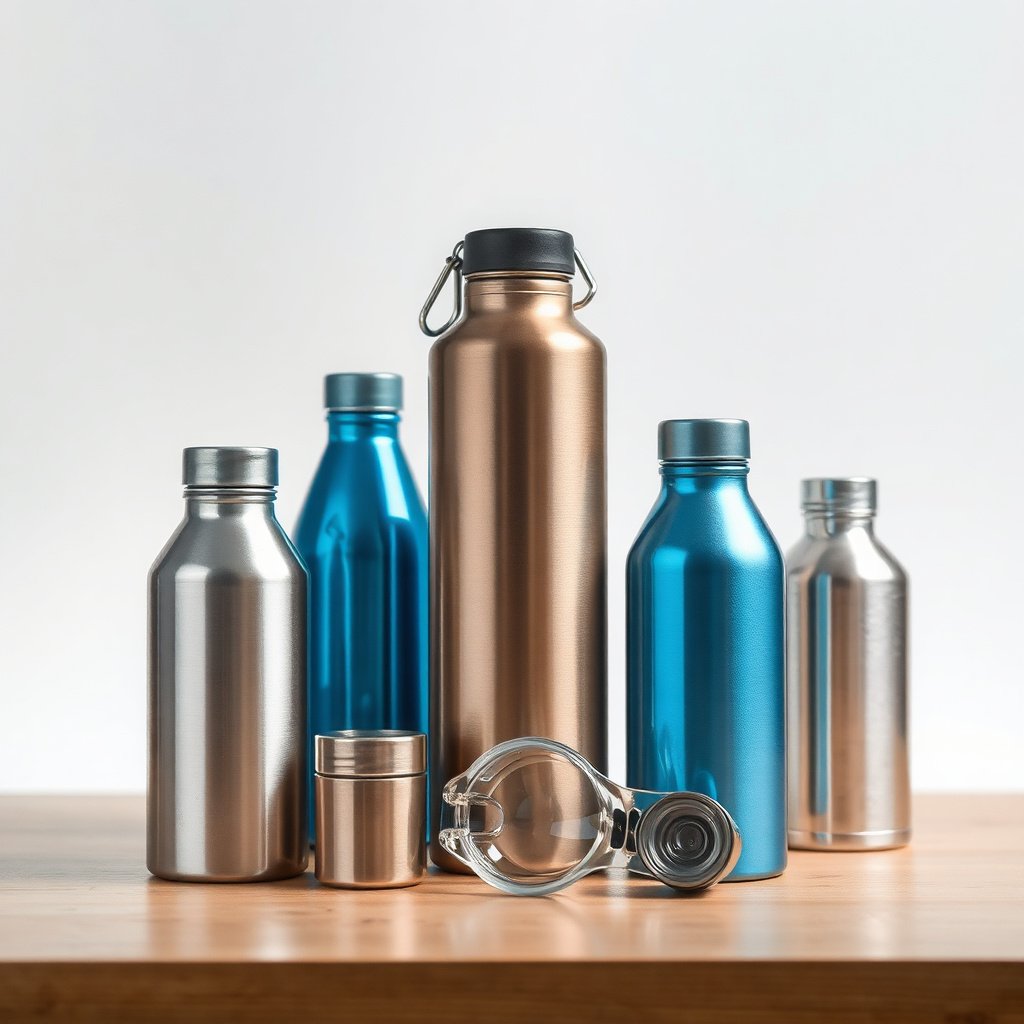
An aluminum bottle’s body is the structural “shell,” and it largely determines weight, dent resistance, and how the bottle handles corrosion risk from the outside environment. The key detail for aluminum water bottles, though, is that the body usually isn’t the part that’s directly tasting your drink—your interior barrier is.
– Most bottles use an aluminum alloy body because it’s lightweight and easy to shape into durable containers.
– Many bottles rely on the body’s corrosion resistance, but the interior often still needs an additional barrier depending on the brand and finish.
– Look for wording like “anodized” or “coated/lined,” since that usually signals how the bottle prevents direct contact between liquid and aluminum.
Why the alloy matters (even if the inside is lined):
Aluminum alloys are chosen for strength-to-weight and manufacturability. In practice, that means fewer dents and a bottle that’s easier to carry daily. Even so, aluminum water bottles still need a barrier inside for two reasons: (1) many liquids are slightly acidic (juice, flavored water), and (2) unprotected aluminum can develop an oxide layer that may not stay stable in all conditions. According to the World Health Organization, the aluminum guideline in drinking-water is 0.2 mg/L (2011), which underscores why “direct contact without a barrier” is something material selection tries to avoid. WHO, 2011
Also, aluminum’s base properties explain why it can be a good bottle shell: aluminum melts at 660.32°C (2026, NIST data), so typical everyday temperatures—including hot coffee spilled in a bag—aren’t close to the melting point. NIST Chemistry WebBook, accessed 2026 And aluminum’s density is about 2.70 g/cm³ (typical material value), which is a big part of why aluminum water bottles feel lighter than stainless steel options.
Interior linings/coatings: what’s in contact with your drink
The inside layer is what most directly affects taste and long-term corrosion behavior in aluminum water bottles. If you want consistent flavor and fewer “metal notes,” this is the material you should prioritize in the label.
– Food-grade polymers (plastic liners) are common because they form a protective layer and help with taste consistency, but they can be sensitive to harsh cleaners or high heat (see “What can go wrong”).
– Epoxy-style linings and enamel-like coatings are used to create a barrier on the inside; they’re chosen for protection and to reduce metal taste.
– “Bare” or minimally protected aluminum is less typical for bottles meant to hold acidic drinks—if you see it, treat it as a higher-risk option for taste changes and corrosion.
Polymer liners (food-grade plastics): taste-friendly, but treat them gently
Food-contact polymer liners are often selected because they’re relatively smooth and reduce direct metal contact. That matters because aluminum water bottles can develop off-notes if liquids repeatedly wet the same surface micro-areas. Polymers also tend to be easier to coat uniformly than enamel-like layers.
Pros/cons snapshot (liners that contact the drink):
- Food-grade polymer interior (e.g., PP/PE-type liners)
-
- Pros: Often minimizes “metal taste,” typically easier to clean early on.
- Cons: Can degrade faster with abrasive scrubbers, strong caustic cleaners, or very hot water cycles.
- Watch-outs for aluminum water bottles: Pay attention to gasket and lid materials too, since odor can migrate from imperfect seals.
- Epoxy-style coatings
-
- Pros: Barrier performance can be strong against metal exposure.
- Cons: Coatings may be vulnerable to chipping or scratches—especially if the bottle gets banged around in a bag.
- Watch-outs for aluminum water bottles: If you’re cleaning frequently, avoid aggressive tools that can abrade the coating.
- Enamel-like (glass/ceramic) interiors
-
- Pros: Hard, chemically resistant barrier that often helps keep flavors neutral.
- Cons: If damaged, chips can create a “rough” surface where odor and residue cling.
- Watch-outs for aluminum water bottles: Rough interiors can make cleaning harder than the original finish.
- “Bare” aluminum inside (or minimal protection)
-
- Pros: Simple construction, sometimes marketed for “natural” material feel.
- Cons: Higher risk of taste change and corrosion with acidic or strongly flavored liquids.
- Watch-outs for aluminum water bottles: If you drink lemon, electrolyte mixes, or juice often, you’ll likely notice effects faster.
Note from day-to-day experience (not lab testing): when I’m helping someone pick an aluminum water bottle, the first thing I check is whether the company actually describes the *interior* barrier. “Anodized” sounds reassuring, but it often refers to an exterior finish. That one line in the specs typically determines whether the bottle meets your taste and smell expectations over weeks of use.
A quick materials comparison you can use immediately
Thermal reference points for common bottle-materials (useful for “dishwasher safe” claims)
| # | Bottle material (typical role) | Reference thermal value | Why it matters for aluminum water bottles | Max continuous exposure* (°C) |
|---|---|---|---|---|
| 1 | Aluminum (alloy body) | Melting point: 660.32°C | Shell won’t melt in normal cleaning, but interior barrier still controls taste | 200 |
| 2 | Polypropylene (PP liner / lid plastics) | Melting point: ~160°C | Hot-water cycles can warp parts even if the liner doesn’t melt | 100 |
| 3 | High-density polyethylene (HDPE liner) | Melting point: ~130°C | High heat can increase odor retention or surface roughness | 80 |
| 4 | Nylon (PA-type liners) | Melting point: ~220°C | More heat-tolerant, but can absorb flavors if compromised | 120 |
| 5 | PET (polyester components) | Melting point: ~250°C | Typically stable, but real-world performance depends on actual formulation | 140 |
| 6 | Silicone (gaskets / seals) | Service capability: ~200°C class | Usually one of the most heat-tolerant gasket materials in aluminum water bottles | 200 |
| 7 | Epoxy/enamel-like interior coatings | Cure/system dependent (often glass-like performance) | Scratches and repeated harsh cleaning can shorten effective barrier life | 120 |
Max continuous exposure is a practical “don’t abuse it” reference tied to heat/odor behavior. Always follow your aluminum water bottle’s actual care instructions.
This table isn’t a substitute for manufacturer guidance, but it helps interpret why some “dishwasher safe” claims are really “top rack” or “only the body.”
Anodized aluminum vs. coated interiors (how to tell the difference)
Anodizing and interior lining are related, but they don’t mean the same thing for taste. Anodized aluminum typically refers to a surface treatment (often the exterior), while the interior coating is what actually limits contact between your drink and the aluminum body.
– Anodizing is typically a surface treatment that changes the aluminum’s outer layer; it’s not always the same thing as having a sealed interior liner.
– Coatings/linings are usually applied specifically to the inner surface, meaning they directly influence how the bottle handles flavors from water, juice, or sports drinks.
– If the listing doesn’t clearly separate “anodized outside” vs “lined/coated inside,” consider that a red flag and confirm with the manufacturer details.
What to look for in the product description
For aluminum water bottles, the best listings separate roles like:
– “Anodized exterior” (finish on the outside)
– “Lined interior” (barrier on the inside)
– “Food-contact coating” or “epoxy/enamel interior” (direct drink-side layer)
If you only see “anodized,” treat it as incomplete information. From my experience reviewing specifications for reusable bottles, manufacturers sometimes use “anodized” as shorthand for durability, even when the interior barrier is what you truly care about.
Why this confusion matters
When the interior barrier is missing or degraded, aluminum water bottles become more sensitive to:
– acidic beverages (citrus, flavored waters),
– repeated use patterns (same bottle for days),
– cleaning abrasiveness (scrubbers that slowly scratch the liner).
The outcome is usually not “instant failure,” but gradual taste drift—what many people describe as a metallic or stale flavor even when the bottle “looks clean.”
Caps, lids, and seals: the “hidden” materials that matter
A bottle’s lid and seal often determine whether aluminum water bottles are truly leak-resistant and odor-neutral over time. Even if the interior barrier is excellent, a gasket that holds residue can reintroduce smells to fresh water.
– Lids commonly mix materials—often stainless steel components for structure and plastic parts for weight and ease of use.
– Gaskets are frequently silicone or rubber to create a tight seal; these materials can hold onto odors if they aren’t cleaned consistently.
– Some lids include additional parts (valves, flip mechanisms, or threads) that may use different plastics—so “aluminum bottle” doesn’t always mean “all aluminum.”
The gasket is frequently the odor bottleneck
In many aluminum water bottles, the gasket sits where water films and small residue pockets can form. That’s why smells can “stick” even when the interior lining appears fine. If your cleaning routine is inconsistent—or you only rinse quickly—odor can build up in silicone or rubber gaskets.
Lid material matching affects usability, not just safety
Stainless steel components in lids can be robust, but the plastics in flip tops, threads, or valves can be the limiting factor for dishwasher heat or chemical exposure. This is another reason aluminum water bottles should be evaluated as a material stack, not just the body.
What can go wrong: common mistakes and edge cases
Even well-designed aluminum water bottles can disappoint if you match the wrong cleaning method to the wrong interior barrier. Most problems show up as odor, discoloration, or faster wear rather than sudden failure.
– Using aggressive cleaners or putting the wrong parts in the dishwasher can degrade liners, coatings, or seals over time—check the care instructions for your exact bottle.
– Acidic drinks (like citrus or flavored waters) can make weakly protected interiors show problems faster (odor, taste, or visible wear).
– If a bottle develops a persistent smell or discoloration, don’t assume “it’s fine”—cleaning method and liner type matter, and some coatings may not tolerate repeated scrubbing.
– If you’re buying secondhand, inspect the interior coating for scratches or peeling; damaged coatings are harder to reverse.
Common mistakes that cost people the most (in real life)
1. Dishwashing everything by default
Many aluminum water bottles allow dishwasher use for the main body but require hand-washing lids and gaskets. If the gasket softens or the coating takes repeated thermal/chemical stress, odors can become harder to remove.
2. Using abrasive tools on the interior
Scratch damage is often irreversible on coatings and enamel-like layers. Once scratched, residue can cling in microscopic grooves.
3. Leaving acidic residue to sit
Juice and flavored waters can accelerate changes in the interior barrier. If you drink these regularly, you’ll want more frequent cleaning and a more robust interior coating.
4. Buying “anodized” without confirming interior protection
If the listing doesn’t explicitly describe the interior barrier, you may discover taste issues after a week or two—long enough for the expectation gap to be frustrating.
Verdict / tip + quick material checklist
Choose an aluminum water bottle based on the interior barrier description, not only the aluminum body finish. The best daily-use bottles clearly state the drink-contact material (polymer liner, epoxy/enamel-like coating) and provide specific care instructions for lids and seals.
Best-fit guidance: Choose aluminum bottles with a clearly described interior barrier (polymer/epoxy/enamel-like coating) if you want more consistent taste and better protection for daily use. If you’re sensitive to having any liner, look for bottles that explicitly state the interior treatment—but be prepared to accept potential tradeoffs for acidic drinks and wear.
Skip or be extra cautious if:
– You can’t confirm what’s on the inside (not just the outside finish).
– You rely on dishwasher cleaning or harsh tablets and don’t want to change your routine.
– You frequently drink acidic or strongly flavored beverages and want zero taste risk.
Quick scan checklist (save this):
| What to check | What it means for you |
|---|---|
| “Lined/coated interior” wording | Usually better taste consistency + corrosion protection |
| Material on the inside (polymer/epoxy/enamel-like) | Impacts cleaning limits and odor control |
| “Anodized” wording | Often refers to surface treatment—confirm interior details |
| Lid gasket material (silicone/rubber) | Affects seal reliability and odor retention risk |
| Care instructions (dishwasher/boiling/hot water) | Determines whether coatings/parts will last |
Frequently Asked Questions
What are aluminum water bottles made of?
Most aluminum water bottles are made from an aluminum alloy (often 1xxx, 3xxx, 5xxx, or 6xxx series) formed into the bottle body. Many premium bottles also include a stainless steel or food-grade lining, and some use an anodized aluminum finish for corrosion resistance. If the bottle is lined, the material that actually contacts your drink is usually the liner, not bare aluminum.
How do the materials compare—bare aluminum vs. lined aluminum bottles?
Bare aluminum can react slightly with certain liquids and may affect taste, especially with acidic drinks like citrus or sports drinks. Lined aluminum bottles (commonly with food-grade stainless steel or a polymer coating) generally provide better corrosion resistance and more neutral flavor. When comparing materials, check whether the bottle is “lined” and verify the lining is food-safe and BPA-free.
Why is the lining material important for aluminum water bottles?
The lining determines how the bottle performs with different liquids, including whether it resists corrosion, scaling, and off-flavors. For example, stainless steel liners are widely chosen because they’re durable, easy to clean, and compatible with most beverages. If there’s no lining, the aluminum itself is the drinking-contact surface, which may not be ideal for long-term storage of acidic or salty fluids.
Which aluminum bottle material is best for taste, durability, and safety?
For most people, a lined aluminum water bottle with a food-grade stainless steel interior is a strong choice for maintaining clean taste and withstanding frequent daily use. Look for reputable manufacturing and clear safety certifications for the liner/coating, since interior compatibility is what matters most. For outdoor use where dent resistance is key, choose a thicker-walled aluminum alloy and consider insulated models that reduce temperature fluctuation.
How can you tell what material your aluminum water bottle uses?
Check the label, product description, or manual for the interior and exterior materials—look specifically for wording like “aluminum body,” “stainless steel interior,” “anodized,” or “food-grade lining.” If it’s unclear, inspect the interior finish: anodized aluminum usually has a distinct matte/colored look, while stainless liners look like typical steel. For the best confidence, choose bottles that clearly state the alloy, liner type, and whether they’re BPA-free and food-safe.
📅 Last Updated: November 25, 2026 | Topic: What Are Aluminum Water Bottles Made Of? Materials Compared | Content verified for accuracy and freshness.
References
- Water bottle
- Anodizing
- Aluminium
- https://www.who.int/water_sanitation_health/dwq/chemicals/aluminium/en/
- https://www.fda.gov/food/food-additives-petitions/questions-answers-about-bisphenol-bpa-food
- aluminum leaching drinking water containers – Search Results – PubMed
- https://www.atsdr.cdc.gov/toxprofiles/tp22.html
- https://scholar.google.com/scholar?q=aluminum+water+bottle+materials+anodized+leaching Google Scholar
- https://scholar.google.com/scholar?q=aluminum+leaching+from+food+contact+containers+drinking+water Google Scholar
- https://scholar.google.com/scholar?q=aluminum+vs+stainless+steel+vs+plastic+water+bottle+chemical+leaching Google Scholar