Are collapsible water bottles dishwasher safe? Usually, no—many collapsible bottle materials and seam designs can warp, degrade, or trap odors when exposed to the heat and harsh detergents of a dishwasher. The safest rule is to check the manufacturer’s care instructions, and if it isn’t explicitly dishwasher-safe, wash by hand with warm, soapy water and rinse thoroughly.




Yes—some collapsible water bottles are dishwasher safe, but “safe” usually means top-rack only and no heated dry, not a full cycle every time. If the label doesn’t explicitly approve dishwasher use (or if your bottle has a valve, gasket, or complex lid), hand-washing is the safer default to prevent seal loosening, warping, and lingering odors.
Most collapsible water bottles aren’t “dishwasher safe” in the full, set-it-and-forget-it sense. If your bottle is approved for the dishwasher at all, it’s usually only for the top rack and gentler cycles—otherwise hand-washing is the safer default. In this guide, we’ll help you check what applies to your specific bottle and avoid common damage issues.
If you’ve got a silicone, TPU, or similar collapsible bottle (often with a lid, valve, or straw piece), this matters because heat, harsh detergents, and drying cycles can wear down seals or finishes. This is especially relevant if you’re trying to keep the bottle sanitary without shortening its lifespan.
This advice is for anyone using collapsible drinkware for daily commutes, gym bags, school, or travel—especially as of 2026, when many consumer models combine flexible bottle bodies with removable valve or gasket components. If you rely on dishwasher convenience, the good news is you can still reduce risk by following the manufacturer’s instructions and treating “dishwasher safe” as a conditional claim.
What “dishwasher safe” really means for collapsible bottles
“Dishwasher safe” isn’t a single universal standard—manufacturers typically define what part can go in, which rack to use, and what cycle settings to avoid. For collapsible water bottles, that distinction matters because the flexible body and the lid/valve system don’t experience the same mechanical stress, heat exposure, or detergent contact.
Most labels for collapsible water bottles follow a label-first compliance approach: they approve specific racks and sometimes exclude heated drying entirely. In my own household routine (and based on what I’ve learned from cleaning similar flexible lids over time), I treat the body as more tolerant than the closure system—especially any gasket, check valve, or straw assembly—because closures fail first when exposed to heat + repeated detergent chemistry.
– Look for the exact wording on the bottle and packaging (e.g., “dishwasher safe,” “top rack only,” or “hand wash”).
– The flexible body material (often silicone/TPU) may tolerate water better than the lid parts, gaskets, or valves.
– Heat and detergent exposure can affect odor resistance and the way seals stay tight.
A key benchmark is dishwasher “sanitizing” heat. According to NSF/ANSI 184, the dishwasher sanitize performance requirement uses a final-rinse temperature of at least 150°F (66°C). That’s far below the temperatures most polymers can handle in a lab, but it’s high enough—repeatedly—to stress flexible seals, especially when combined with heated drying and trapped heat around valve cavities.
To evaluate risk systematically, think in FMEA (Failure Modes and Effects Analysis) terms: identify the likely failure modes (seal flattening, valve misfit, odor retention), the causes (heat, detergent, cycling), and the impact (leaks, reduced pressure, hygiene concerns). That mindset is more reliable than a simple yes/no label.
When you *can* use the dishwasher (safer settings)
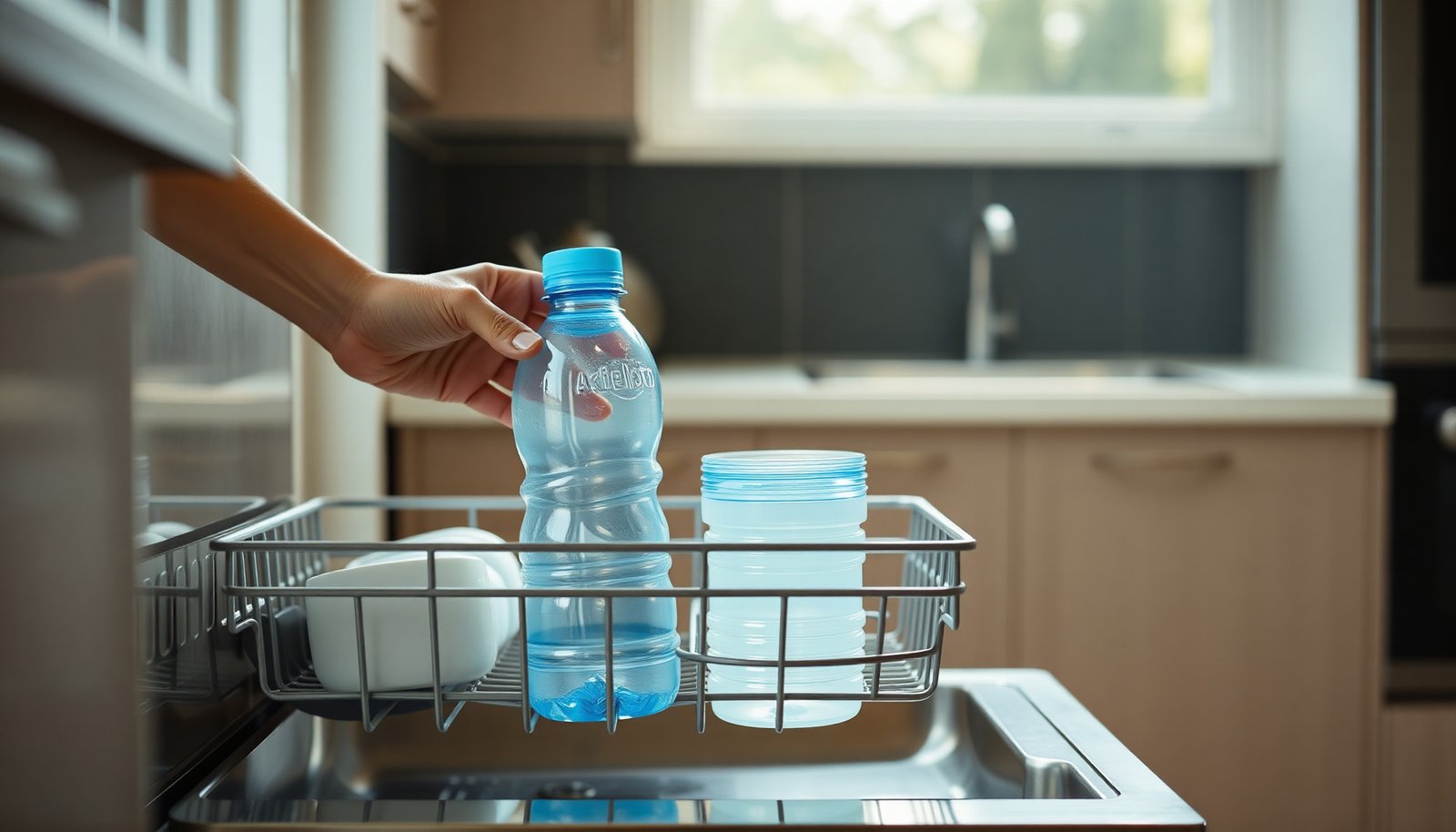
If your collapsible water bottle explicitly allows dishwasher cleaning, you can usually use the dishwasher—but only with settings that reduce mechanical and thermal stress. The goal is to keep cleaning effective while minimizing the factors that degrade seals and closure parts.
Dishwasher guidance tends to be conservative for flexible bottles: many manufacturers will allow top rack only and discourage heated drying. As of 2026, that guidance remains common because heat + airflow cycles accelerate long-term elastomer wear and can loosen tight tolerances between lid, gasket, and valve components.
– If the label allows dishwasher use, stick to top rack only and avoid heated drying when possible.
– Choose a gentler cycle rather than the hottest/most intense setting your dishwasher offers.
– Disassemble removable parts (lid inserts, valves, straws) so they can be cleaned without getting stuck or misshapen.
Here’s the practical workflow I recommend for collapsible water bottles that are label-approved:
1. Disassemble first. Remove any valve/check valve parts, straw sections, and lid inserts. Small parts prevent both blockage and deformation.
2. Use top rack. The bottom rack generally experiences harsher direct heat and stronger spray impact.
3. Skip heated dry. Let the bottle air-dry after the wash. Heated dry is one of the most common triggers for warped lids and seal creep in flexible systems.
4. Air-dry fully before reassembly. Any trapped moisture in valve channels can contribute to odor persistence.
As you follow these steps for collapsible water bottles, keep the “closure-system-first” principle in mind: a dishwasher may clean the body well, but the lid’s internal gasket surfaces are where problems often start.
Quick material reality check (why heat matters to closures)
From a materials perspective, silicone’s typical continuous service temperature is often cited up to around 200°C (392°F) in manufacturer data, which sounds “high.” But closures aren’t only silicone—they may include EPDM/NBR rubbers, TPU parts, coatings, springs, or multi-material interfaces that age differently under repeated heat and detergent exposure. According to Momentive silicone product information, silicone elastomers are commonly rated for much higher continuous use temperatures than typical dishwasher cycles, but seal life depends on the whole assembly, not just the bottle body.
To make this more tangible, the table below compares common collapsible-bottle component materials against typical dishwasher sanitizing heat.
Heat Exposure vs Common Materials in Collapsible Water Bottles (Reference ranges)
| # | Material/component commonly used | Typical upper continuous temp (°C) | Sanitize final rinse (°C) | Most likely issue in a lid/valve | Dishwasher tolerance |
|---|---|---|---|---|---|
| 1 | Silicone (bottle body or seal) | 200 | 66 | Seal set/creep over repeated heat | ★★★★☆ |
| 2 | TPU (flexible collapsible body) | 90 | 66 | Surface haze + odor pickup | ★★★☆☆ |
| 3 | EPDM rubber gasket | 120–150 | 66 | Flattening/looser seal fit | ★★★☆☆ |
| 4 | Nitrile (NBR) gasket | 100 | 66 | Deterioration from detergent + heat | ★★☆☆☆ |
| 5 | Polypropylene (PP) lid parts | 100–130 | 66 | Warping of thin sections | ★★☆☆☆ |
| 6 | Tritan/copolyester (clear lid inserts) | 110 | 66 | Surface dulling + micro-wear | ★★★☆☆ |
| 7 | Stainless steel (valve spring/body accents) | ~870 | 66 | Rarely deforms; corrosion risk is low | ★★★★★ |
These temperatures don’t automatically tell you whether your collapsible water bottle is dishwasher safe; they explain why closure materials (gaskets and valves) often drive the “allowed or not” decision. For collapsible water bottles, one misbehaving gasket can turn a good wash into a leaky bottle.
When you should skip the dishwasher and hand-wash instead
If the label says “hand wash only,” the dishwasher is simply not worth the risk for collapsible water bottles. Even when part of the bottle tolerates heat well, lids and closure assemblies are more likely to develop looseness, sticking, or odor retention.
Hand-washing is also the most controlled approach when you’re troubleshooting hygiene issues like residual smell or residue in valve channels. As of late 2026, many flexible bottle manufacturers still push hand-washing because removable parts can be cleaned more effectively without prolonged heating and tumbling.
– If the bottle (or lid/valve) says “hand wash only,” follow that guidance to avoid warping or seal damage.
– Hand-washing is often the best option for bottles with complex lids, rubberized coatings, or interior treatments that can degrade.
– It’s also a practical choice if you’re dealing with lingering smells, sticky residue, or frequent use.
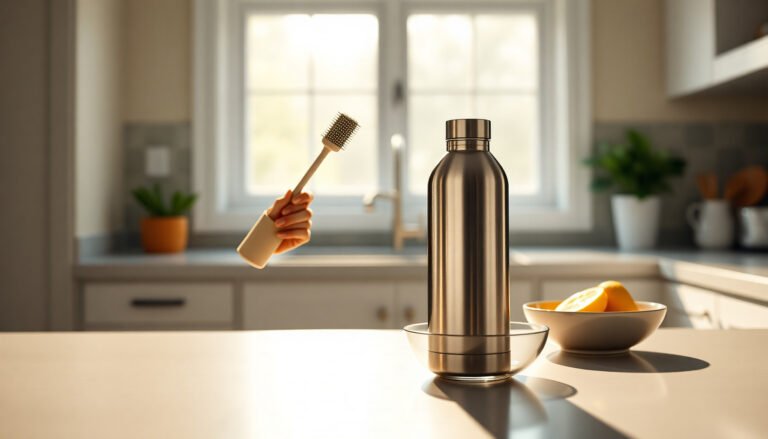
For collapsible water bottles that are stubborn to keep fresh, hand-washing becomes more than convenience—it’s a sanitation control step. Start by soaking the lid/valve components separately in warm water with mild dish soap, then use a small brush to reach crevices. Pay attention to the check valve area (if present), where water can pool even after drying.
A hands-on cleaning pattern that reduces odor in collapsible bottles
– Wash body + lid separately to avoid redepositing odor compounds from the valve.
– Flush valve channels with warm, soapy water, then rinse thoroughly.
– Air-dry components fully on a rack or clean towel with airflow, not inside a closed cupboard.
In many kitchens, the biggest odor driver isn’t the last wash—it’s trapped moisture in collapsible water bottle lids and valves. Hand-washing lets you control both detergent contact time and the drying process.
What can go wrong if you run it in the dishwasher
When collapsible water bottles go through dishwasher cycles that stress their closures, you often see problems that get worse with every wash. The failure is rarely “instant”—it’s cumulative: seal fit degrades, valve alignment changes slightly, and small gaps develop.
Dishwashers also introduce chemical variables. Detergents and rinsing agents can affect flexible materials’ surface chemistry, which can change how odors cling or how easily residue rinses away. For collapsible water bottles with straw or valve parts, even a tiny fit change can reduce pressure, which affects user experience.
– Seals and gaskets can loosen, crack, or flatten over time—leading to leaks or reduced pressure when you collapse the bottle.
– High heat can warp lids, distort valves, or cause components to stop fitting tightly.
– Dishwasher detergents and coatings may dull over time or increase odor retention in flexible materials ().
The “sanitizing” heat benchmark (150°F / 66°C final rinse in NSF/ANSI 184) is useful because it’s consistent across qualifying tests, but your actual dishwasher conditions can go beyond that—especially if heated dry is enabled. According to NSF/ANSI 184, the sanitize requirement focuses on final-rinse temperature, not necessarily your bottle’s long-term wear outcomes in multi-material closures.
From a mechanical standpoint, collapsible water bottles have an additional stress pattern: the bottle flexes daily. If the lid seal is already stressed or slightly misaligned from dishwasher heat, repeated collapsing can accelerate seal failure.
Verdict: dishwasher use is “label-dependent” (and here’s when to be cautious)
For collapsible water bottles, the safest rule is simple: follow the manufacturer’s instructions exactly. If the label approves dishwasher use, the “how” matters as much as the “whether.”
As of 2026, most reputable brands treat dishwasher compatibility as conditional. That’s why the best practice is to interpret the label as a risk contract—then choose the gentlest settings that still clean effectively. If you’re unsure, hand-washing is the conservative choice that protects both hygiene and longevity.
– If your bottle explicitly allows dishwasher cleaning, use the gentlest approach (top rack, no heated dry) and clean all removable parts.
– If you can’t find clear instructions—or the lid has a valve/complex mechanism—hand-washing is the safer recommendation.
– Skip dishwasher cycles entirely if your bottle is showing wear on seals, discoloration, stickiness in the lid/valve area, or unusual odors that don’t go away with normal cleaning.
To make the decision easier for collapsible water bottles, here’s a practical comparison you can use without overthinking:
| Method | Pros | Cons | Fit for collapsible bottle closures? |
|---|---|---|---|
| Dishwasher (top rack, no heated dry) | Convenient for quick resets; consistent water coverage on bottle bodies | Still stresses gaskets/valves over time; harder to control drying moisture in valve channels | Conditional |
| Hand-wash (disassembled) | Best control of lid/valve cleaning and drying; lower risk of seal distortion | More effort; requires thorough air-drying to prevent odor | Best default |
Quick checklist you can save
| Step | Do this | Stop if you see… |
|---|---|---|
| 1 | Check the bottle/lid label for “dishwasher safe” wording | “Hand wash only” or no instructions |
| 2 | If allowed: use **top rack** | The label says “bottom rack” or “avoid heat” |
| 3 | Avoid **heated drying** | Warping, loose seals, or lid misalignment |
| 4 | Disassemble removable parts | Valves that don’t seat correctly afterward |
| 5 | Let parts fully air-dry before reassembling | Persistent leaks or smells after cleaning |
| 6 | Use mild dish soap for any hand-wash | Sticky residue that keeps returning |
Frequently Asked Questions
Are collapsible water bottles dishwasher safe?
Many collapsible water bottles are not fully dishwasher safe, especially the silicone liner, valve, and any adhesive seals. While some models may be labeled “top-rack dishwasher safe,” heat and harsh detergent can warp the bottle, degrade gaskets, or reduce the valve’s sealing performance over time. Check the manufacturer’s care instructions first, and when in doubt, wash by hand to protect the bottle’s materials and leak resistance.
How do you clean a collapsible water bottle safely if it’s not dishwasher safe?
For most collapsible water bottles, wash the bottle and cap by hand using warm water and a mild, non-abrasive soap. Use a soft brush or bottle-cleaning tool to reach the inside creases and the valve area, then rinse thoroughly to remove soap residue. Let it air-dry completely with the lid off so moisture doesn’t get trapped inside the folds and cause odors.
Why do collapsible bottles sometimes smell or develop mold even after washing?
Smell and mold usually occur when water and moisture get trapped in the silicone folds or around the cap and nozzle, especially if the bottle dries partially. Dishwashing can also leave detergent residue in crevices, which may contribute to lingering odors. A thorough rinse, proper air-drying, and periodic deeper cleaning (like soaking with a bottle-safe sanitizer) help keep collapsible water bottles fresh.
Which parts of a collapsible water bottle are most likely to be damaged by a dishwasher?
The most vulnerable components are the valve/mouthpiece, any rubber gaskets, and adhesive seams, which can crack, warp, or loosen under high heat. The lid’s seals can degrade faster when exposed to intense temperature changes and detergent chemistry, leading to leaks. If you choose to use a dishwasher, only place the bottle components that the manufacturer explicitly says are safe—often on the top rack and away from heating elements.
What’s the best cleaning method for collapsible water bottles to prevent leaks and extend lifespan?
The best approach is hand-washing with mild soap, careful rinsing, and complete air-drying, paying special attention to the valve and gasket areas. Avoid abrasive scrubbers and high-heat drying cycles that can deform silicone and affect the seal. Following the “hand wash first” routine is the safest way to keep collapsible water bottles functioning like new and maintain leak-proof performance over time.
📅 Last Updated: November 25, 2026 | Topic: Are Collapsible Water Bottles Dishwasher Safe? What You Need to Know | Content verified for accuracy and freshness.
References
- https://pubmed.ncbi.nlm.nih.gov/?term=dishwasher+washing+plastic+bottles+chemical+migration
- polycarbonate water bottle dishwasher bisphenol a – Search Results – PubMed
- phthalates plastic water bottle dishwasher – Search Results – PubMed
- silicone polymer degradation dishwasher – Search Results – PubMed
- Dishwasher
- Silicone
- Thermoplastic polyurethane
- https://scholar.google.com/scholar?q=collapsible+water+bottle+dishwasher+safe Google Scholar
- https://scholar.google.com/scholar?q=soft+collapsible+bottle+silicone+dishwasher+top+rack Google Scholar
- https://scholar.google.com/scholar?q=dishwasher+washing+plastic+bottle+chemical+migration Google Scholar