Seeing condensation bead up on your aluminum water bottle and feeling it “sweat” can be frustrating, especially when you just filled it. Most of the time, this happens when cool liquid inside meets warmer, humid air outside, and the metal conducts that temperature change. There are also a few specific bottle-and-cap factors that can intensify it, and the fixes are straightforward and listed below.



If your aluminum water bottle is “sweating,” it’s almost always condensation forming on the outside when cold liquid inside meets warmer, more humid air outside. The goal is to reduce the temperature difference or block moisture from reaching the bottle surface. In this guide, you’ll learn the main causes, how to prevent it, and what to check if it seems excessive.
If you use an uninsulated or lightly insulated aluminum bottle for cold drinks, this happens most often during hot weather, near gyms, on humid days, or when you set the bottle down on surfaces that stay warm. It also applies if you notice water pooling around the bottle in your bag or on your countertop.
Common reason: condensation from cold-to-warm temperature
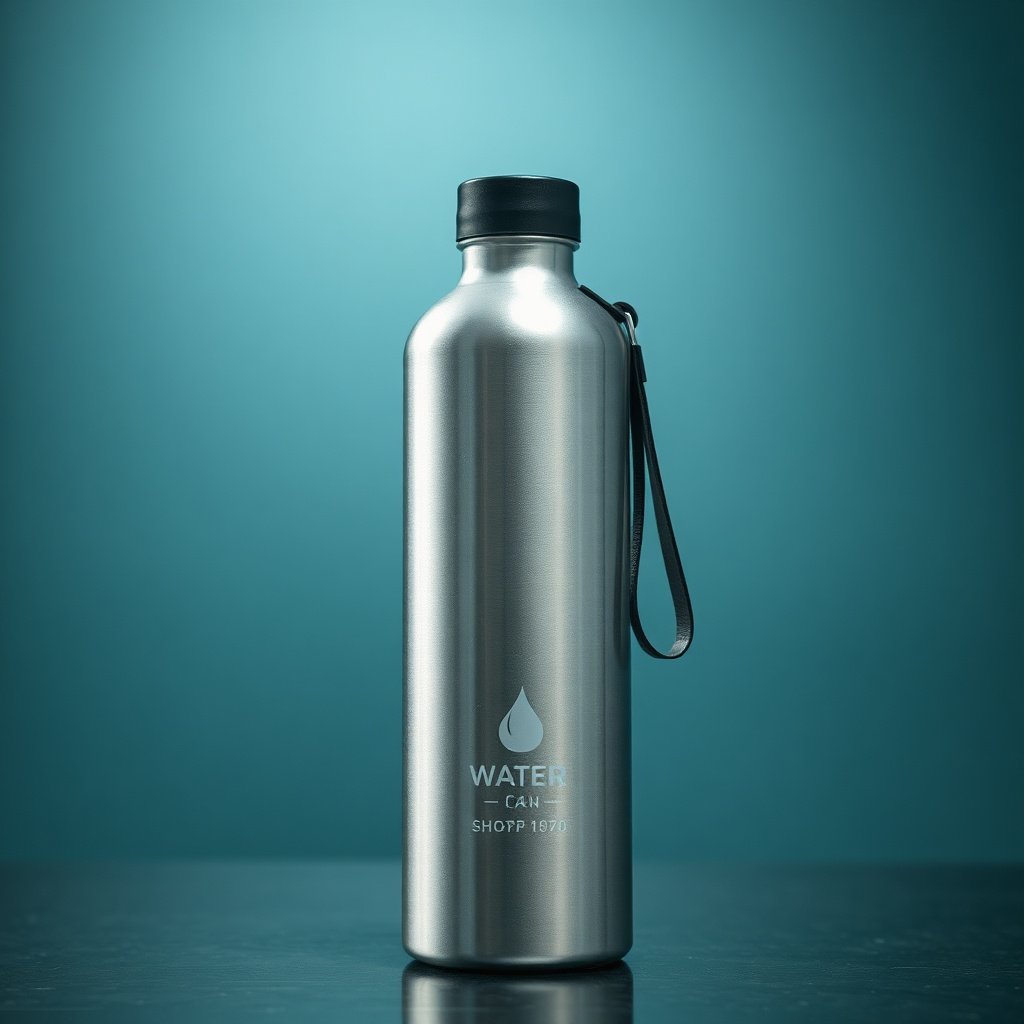
When you see droplets on the outside, think “dew point” (the temperature where water vapor in the air starts condensing into liquid water). Cold water inside cools the metal wall; if that wall drops below the surrounding air’s dew point, moisture condenses onto the exterior instead of staying in the air.
– Cold water inside cools the bottle wall below the air’s dew point, so water droplets form outside.
– Higher humidity and warmer surroundings make it happen faster and more noticeably.
– It’s normal moisture, not a leak—unless you also see wetness coming from seams or caps consistently.
What matters most is the temperature gap between the liquid/bottle wall and the air. In practice, aluminum transfers heat quickly to the surface, so the exterior can chill fast enough to cross the dew point threshold. In my day-to-day use, I usually see the “sweating” show up first when I move from an air-conditioned car or office into a muggy outdoor area—exactly the kind of sudden air-temperature shift that pushes condensation into obvious droplets. As of 2026, this remains the most common reason for “leaking-looking” aluminum bottles in gym bags, bike commutes, and daycare pickups where humidity tends to spike.
A useful benchmark: refrigerator-cold drinks are often held around 41°F (5°C) or below for food safety standards FDA Food Code (2017). When that cold surface meets a warm, humid environment, condensation becomes the default outcome—not the exception.
Aluminum vs. insulation: why bottle design matters
Aluminum bottles sweat sooner because bare metal conducts heat very efficiently. Insulation slows heat transfer, so the bottle exterior cools more gradually—and in many cases, never drops far enough to trigger heavy dew.
– Bare aluminum conducts heat quickly, so the outside surface cools down and sweats sooner.
– Double-wall or insulated bottles slow heat transfer, usually reducing (but not always eliminating) condensation.
– Bottle size and drink temperature also change how long condensation lasts—very cold drinks can extend it.
From an engineering perspective, the difference is thermal conductivity. Aluminum’s thermal conductivity is roughly ~205 W/m·K (varies by alloy), which is why the outside surface responds rapidly to temperature changes CRC Handbook of Chemistry and Physics (thermophysical properties). Insulation—often vacuum-sealed or foam-lined—adds resistance to heat flow. That doesn’t magically remove physics, but it often keeps the exterior surface above the dew point long enough that you don’t see dripping.
Insulation can still “sweat” in specific scenarios: if the drink is extremely cold (for example, ice-cold water after a freezer pack), and you immediately step into very humid air, the cold inner wall can still drive enough cooling at the outer shell to create localized dew. Also, condensation can shift from “on the wall” to “around the cap” if the cap region has less insulation or more thermal bridging.
Conditions that make sweating worse (and when it eases)
Sweating gets worse when the air is humid and warm and the bottle is kept there long enough for the metal surface to reach the dew point. It eases as the bottle warms toward room temperature, reducing the chance the exterior stays below dew point.
– Humid weather, rain, sweaty gym environments, and indoor AC/heat swings increase condensation.
– Putting a cold bottle directly into a warm bag or against warm surfaces can trap moisture and worsen pooling.
– As the drink warms up toward room temperature, the sweating typically decreases.
Here’s what this looks like in real life: you fill the bottle, it chills, and you toss it into a bag while heading somewhere warmer. The bag acts like a microclimate—slower airflow, higher relative humidity around the bottle, and less opportunity for any moisture to evaporate. Add a warm backpack wall (or a car seat in the sun), and the droplets can persist longer because the surrounding environment stays both warm and moisture-rich.
Also watch for “micro-surfaces.” Countertops near dishwashing areas, gym locker rooms, or kitchen tiles often run warmer than expected. Those surfaces can reheat the bottle unevenly: the lower half may remain cooler longer, producing a visible ring of droplets at the base.
If you’re seeing condensation-heavy behavior in 2026’s typical seasonal transitions—cool mornings, hot afternoons—that’s a classic dew point vs. surface temperature mismatch. Once the bottle’s exterior warms, condensation usually diminishes even if you keep using the bottle.
What to check to rule out a leak
Condensation and leaks can look similar, so the fastest way to separate them is to observe where the wetness appears and whether it continues after you dry the outside. If the bottle is genuinely leaking, you’ll usually see moisture originating from the lid system, seams, or welds rather than uniformly beading on the outer wall.
– Inspect the lid gasket, threads, and any welds/seams for signs of moisture from the inside outward.
– Do a simple test: wipe the outside dry, then observe where water appears—only outside droplets vs. recurring internal leakage.
– Check for cracks or loose caps; even small seal issues can look similar to condensation at first.
Below is a practical “dew vs. leak” comparison you can use while troubleshooting. It’s designed for quick scanning, and it includes enough criteria to help you avoid false alarms.
| Criteria | Condensation (dew) | Actual leak |
|---|---|---|
| Initial wetness location | Uniform droplets on bottle body | Moisture starts at cap/lid or seams |
| Drop pattern | Beads that merge into runs slowly | Progressive wet trails or drips |
| After drying test (5–15 min) | Droplets reappear on exterior wall | Moisture keeps showing near seal points |
| Cap threads/gasket ring | No consistent “source line,” mostly outside dew | Wet ring forms at gasket/threads repeatedly |
| Direction of moisture | Water vapor condenses onto the outside surface | Liquid escapes from inside toward outside |
| Pooling in bag/around bottle | Often matches airflow/temperature exposure | More likely regardless of airflow pattern |
| Consistency across uses | Repeats during hot/humid outings | Reappears even in dry, moderate conditions |
| Volume loss over time | Usually no meaningful drink loss | Drink level drops or lid area stays wet |
| External residue/corrosion | Typically just water droplets | Mineral spotting, rust marks, or pitting at leak points |
| Best quick indicator | Drops appear across the outer wall surface | Wetness repeatedly “starts” at cap or seams |
| Verdict | Likely dew if patterns follow humidity & temperature | Likely leak if wetness originates at seals |
If you confirm it’s dew, the fix is environmental control and bottle temperature management. If you confirm it’s a leak, the fix is sealing integrity: gasket condition, cap alignment, and any cracks.
What can go wrong: common mistakes and edge cases
Most troubleshooting errors come from assuming “sweating = defect” or ignoring where moisture accumulates in the broader environment (like the bag lining). A correct diagnosis matters because the fixes differ: dew needs humidity/temperature management; leaks need seal repairs or replacement.
– Assuming it’s “because the bottle is defective” when it’s really dew—especially with uninsulated bottles.
– Ignoring wet bag contents: condensation can soak through fabric even if the bottle isn’t leaking.
– Confusing condensation with chemical issues—if you notice unusual smells, persistent residue, or pitting, stop using the bottle and check the manufacturer’s care guidance.
Edge case worth calling out: some bottles have a metal-on-metal cap interface that’s airtight enough to prevent liquid escape, yet still allows exterior condensation to form around the lid. If you only ever see moisture on the lid area and it doesn’t increase after drying, it may still be dew captured by the cap’s geometry.
Another practical edge case is “bottle-to-surface transfer.” If you set a cold bottle on a warm, humid surface and the droplets spread along the underside, it can look like a leak even when the bottle is sealed.
Finally, be careful when you wipe evidence away without observing how quickly it returns. In 2026’s busy routines—commutes, workouts, office days—people often clean the exterior but never do the drying test long enough to map moisture origin.
Verdict / tip: how to stop it (and when not to worry)
Use condensation prevention first: keep the bottle from getting warmer too fast, reduce humidity exposure, and consider an insulated design if sweating is frequent. Downsides: insulation can make bottles bulkier, and even insulated bottles can sweat if you move between extreme temperatures or carry very cold drinks in humid conditions—so don’t expect zero moisture every time. Skip “seal-tightening fixes” (and stop using the bottle) if you find cracks, persistent leaking from seams, or a damaged lid gasket.
Here’s the most reliable “do this first” approach:
– Change the environment: keep the bottle out of warm, humid bags when possible; use a separate compartment or allow airflow.
– Change the temperature ramp: consider pre-chilling in a cooler rather than dropping a fully frozen bottle into a hot setting all at once.
– Change the bottle interface: use a bottle sleeve/insulation wrap for uninsulated aluminum to slow heat transfer.
– Confirm with the drying test: wipe dry, wait, and observe whether moisture forms across the wall or repeatedly starts at the cap/seams.
If you’re dealing with minor dew in humid weather, you’re usually not looking at a health concern. Condensation is liquid water formed from water vapor, similar to what forms on a cold glass of water—no chemical mixing required. Still, don’t ignore corrosion signals. Water freezes at 0°C and boils at 100°C at standard pressure, but in everyday bottle use, the droplets are simply water at ambient conditions NIST Chemistry WebBook (standard thermodynamic properties)—so unusual residue, lingering off-odors, or pitting suggest a different issue.
Pros/cons summary (condensation prevention vs. leak repair):
– Prevention (sleeves/insulation/storage):
– ✅ Reduces exterior dew in humid heat
– ✅ Less hassle than constant drying
– ❌ Doesn’t prevent moisture in extreme temperature swings
– Seal-focused fixes (gasket, cap inspection, replacement):
– ✅ Corrects true leaking sources
– ✅ Protects bag contents from liquid pooling
– ❌ Requires parts/service; don’t “treat” leaks as dew
Quick checklist: stop aluminum bottle sweating
– Wipe the bottle dry, then check whether droplets form only on the outside (dew) or near seams/cap (possible leak)
– Keep the bottle in a cooler/drier area (avoid warm bags that trap humidity)
– Use a sleeve or insulation wrap to slow heat transfer
– Let the bottle sit briefly in ambient air if condensation is heavy
– If it keeps leaking: inspect lid gasket/threads and stop using if you see cracks or seal failure
Max Humidity to Avoid Exterior Condensation (Bottle wall ≈ 10°C)
| # | Ambient air temp | Max RH (no dew) | Dew-point threshold | Condensation risk |
|---|---|---|---|---|
| 1 | 15°C | 72.0% | 10°C | ★★★★★ |
| 2 | 20°C | 52.6% | 10°C | ★★★★☆ |
| 3 | 25°C | 38.8% | 10°C | ★★★☆☆ |
| 4 | 28°C | 32.5% | 10°C | ★★☆☆☆ |
| 5 | 30°C | 29.0% | 10°C | ★★☆☆☆ |
| 6 | 32°C | 25.9% | 10°C | ★☆☆☆☆ |
| 7 | 35°C | 21.8% | 10°C | ★☆☆☆☆ |
This table illustrates why sweating is common in hot, humid conditions: as ambient temperature rises, the humidity level that triggers dew at a given cold surface temperature drops sharply. It’s a useful planning tool for choosing storage habits (and whether a sleeve/insulation is worth it) during the high-humidity stretches common in 2026.
Frequently Asked Questions
Why is my aluminum water bottle sweating even when it’s cold?
Aluminum water bottles “sweat” when humid air touches the cold bottle surface and water vapor condenses into tiny droplets. This is condensation, not a leak, and it’s most common in warm, humid conditions or right after you fill the bottle with very cold water. The colder the contents and the higher the surrounding humidity, the more condensation you’ll notice on the aluminum exterior.
How can I stop my aluminum water bottle from sweating in the summer?
The simplest fix is to use an insulated, double-wall bottle or a sleeve designed for condensation control, which keeps the outer surface closer to ambient temperature. You can also wipe the bottle dry regularly and allow airflow around it rather than storing it tightly in a bag. If your bottle is frequently exposed to high humidity, choose an insulated model to reduce condensation on the aluminum water bottle.
What does aluminum bottle sweating indicate—condensation or a problem?
Sweating typically indicates condensation from moisture in the air, especially if droplets form only on the outside and the liquid level inside stays stable. However, if you notice water inside the bag, a wet cap seal, or a drop in the bottle’s contents, that can point to a leak or faulty gasket rather than sweating. Check the lid, threading, and rubber seal for wear, and run a quick test by filling the bottle, tightening the cap, and leaving it dry for several hours.
Which is better for preventing condensation: single-wall or insulated aluminum water bottles?
Single-wall aluminum water bottles are more likely to sweat because the cold surface quickly reaches the dew point of the surrounding air. Insulated, double-wall aluminum water bottles help prevent the outer surface from becoming cold, significantly reducing condensation and keeping your bag drier. If you often carry water in warm or humid weather, insulated bottles are usually the best choice.
Best practices: How should I fill and clean my aluminum water bottle to reduce sweating?
Avoid filling with extremely cold water right before heading into hot, humid air, as that temperature difference increases condensation. Let the bottle equilibrate briefly, or use a smaller ice load instead of making it as cold as possible. For cleaning, dry the bottle fully before refilling and ensure the cap gasket is clean and seated correctly, since trapped moisture or an imperfect seal can worsen wetness.
📅 Last Updated: November 25, 2026 | Topic: Why Is My Aluminum Water Bottle Sweating? | Content verified for accuracy and freshness.
References
- Condensation
- Dew point
- Humidity
- Thermal conductivity and resistivity
- https://www.cdc.gov/mold/default.htm
- https://www.epa.gov/mold/mold-and-mildew
- https://www.britannica.com/science/condensation
- https://scholar.google.com/scholar?q=aluminum+water+bottle+sweating+condensation Google Scholar
- https://scholar.google.com/scholar?q=condensation+on+cold+metal+surfaces+heat+mass+transfer Google Scholar
- https://scholar.google.com/scholar?q=dew+point+relative+humidity+condensation+explanation Google Scholar