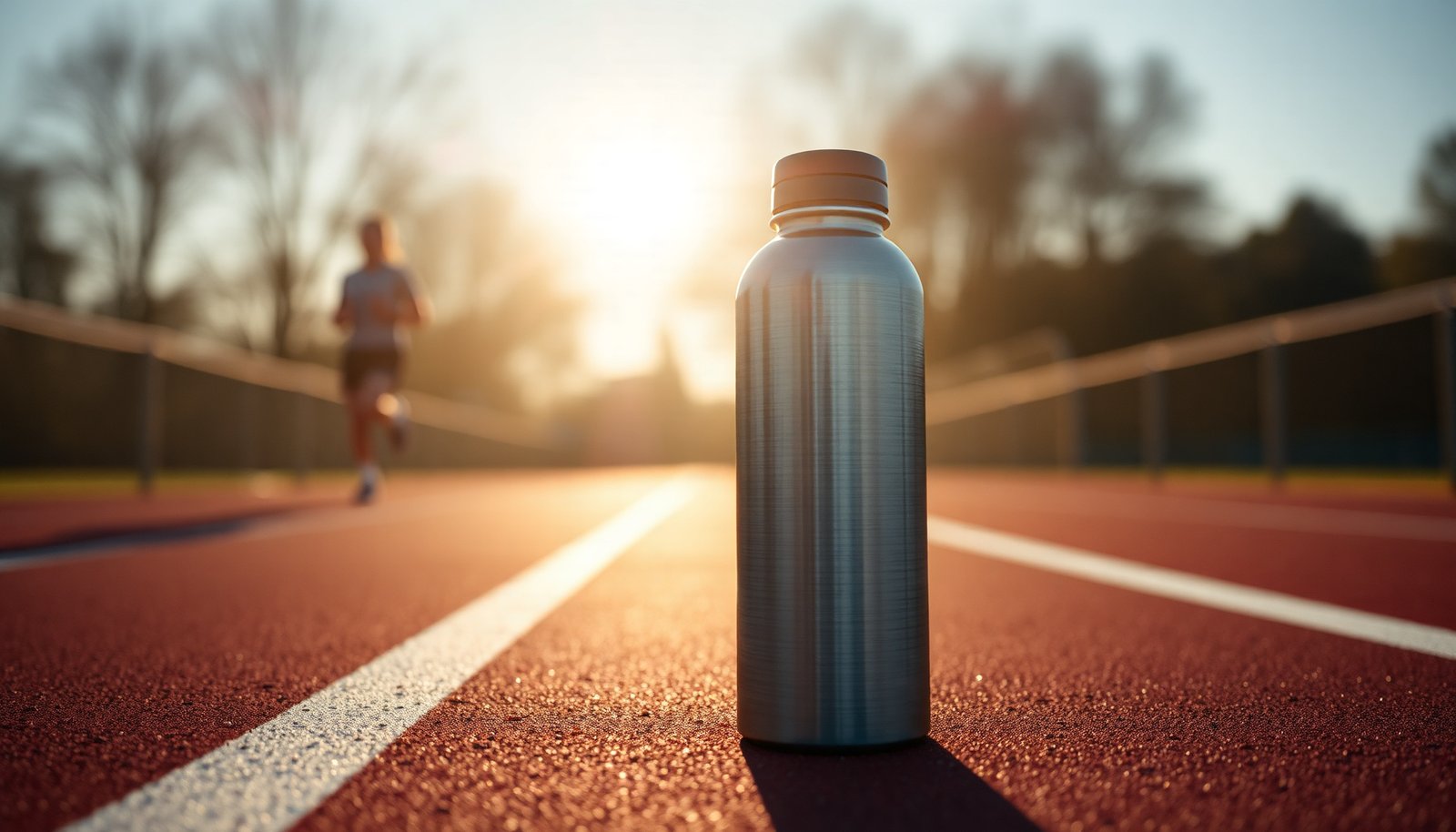
What’s the best aluminum water bottle for running when you need a steady sip and zero leaks? The options below are judged by leak-proof lid design, insulation that fits your temperatures, easy one-hand opening, and corrosion-resistant materials that preserve taste. Expect our top pick to stand out for a secure hold and a runner-friendly opening you can use without breaking stride.




The best aluminum water bottles for running are the ones that fit your typical route (size), sip easily while moving (opening/lid), and won’t leak in your pack (seal). If you choose based on insulation needs and lid style—not just looks—you’ll end up with a bottle that’s actually pleasant to use mid-run. In this guide, we’ll cover what to look for and the common ways aluminum bottle setups fail.
If you’re logging road miles, tackling trail climbs, or using gym treadmills with your usual hydration routine, this is for you—especially if you’ve ever dealt with leaking caps, lids that are hard to clean, or bottles that feel awkward to drink from while moving. Aluminum running bottles can be lighter than many stainless options while still being durable, but only when the lid and seal system match your carry method.
What to look for in an aluminum running bottle
The best aluminum running bottle starts with the lid system and the way the seal is designed, because those two details usually determine whether you’ll enjoy the bottle or constantly wipe your pack. Once the leak problem is solved, you can focus on taste, comfort, and how easy the bottle is to clean between runs.
– Cap/lid security matters most: Look for a reliable threaded cap or a runner-friendly flip/sport lid that seals tightly when closed. A “tight” seal is not the same as a cap that stops reliably every time—look for consistent closure action (clear thread engagement or a firm, positive latch).
– Coatings and taste transfer: If you dislike “metal taste,” prioritize bottles designed for beverage use and follow the cleaning guidance closely. With aluminum, the interior finish and how quickly you rinse after flavored drinks can matter as much as the metal itself.
– Comfort during carries: A grippy finish and a shape that sits well in a hand or pack cup holder can make a big difference on longer runs. For running, stability is the goal: a bottle that shifts inside a vest or pack increases the odds of lid loosening.
When deciding between aluminum bottle models in 2026, think like you’re performing a lightweight failure-modes review: identify the most likely failure (leaks, residue buildup, or awkward drinking), then choose the design that prevents that failure first.
Best size and drinking style for your pace
The right aluminum bottle size is the one that covers your typical effort without forcing you into “panic sips” at the worst moment. In practice, that means aligning capacity with how much you drink per hour and how often you can reliably access water.
– Match capacity to your run length: Use smaller bottles for quick sessions and longer capacity if your route won’t have easy refills.
– Choose an opening you can drink from on the move: Wider mouths can be easier to drink quickly, while narrower openings may sip more controllably. If you’re drinking one-handed, lid geometry becomes just as important as the opening size.
– Think about your routine: If you prefer drinking at set intervals, a bottle that’s easy to open with one hand is worth prioritizing.
A useful way to size a running aluminum bottle is to start from fluid rate, not “favorite bottle size.” According to the American College of Sports Medicine position stand on exercise and fluid replacement, athletes commonly need about 0.4–0.8 L of fluid per hour during endurance exercise (American College of Sports Medicine, 2007). That range helps you estimate how long a given bottle will last on a run when water access is limited.
If you’re planning around total daily hydration, the National Academies also publishes intake targets that can help you think about the bigger picture—even if your running bottle is only covering part of the day. According to the National Academies’ Dietary Reference Intakes, adequate total water intake is about 3.7 L/day for men and 2.7 L/day for women (National Academies of Sciences, Engineering, and Medicine, 2004). For runners, your bottle choice still depends on workout duration and conditions, but these numbers help anchor “why” capacity matters.
Aluminum Bottle Capacity Coverage for Typical Running (mid-rate: 0.6 L/hr)
| # | Capacity (oz) | Volume (mL) | Coverage @ 0.6 L/hr | Fit Rating (★) |
|---|---|---|---|---|
| 1 | 8 oz | 236 mL | ~24 min | ★ |
| 2 | 12 oz | 355 mL | ~36 min | ★★ |
| 3 | 14 oz | 414 mL | ~41 min | ★★ |
| 4 | 16 oz | 473 mL | ~47 min | ★★★ |
| 5 | 18 oz | 532 mL | ~53 min | ★★★ |
| 6 | 24 oz | 710 mL | ~71 min | ★★★★ |
| 7 | 32 oz | 946 mL | ~95 min | ★★★★★ |
That table uses 0.6 L/hr as a mid-point for the ACSM range so you can compare capacities at a glance; your personal drinking rate will vary with heat, effort, and how often you stop to sip.
Insulated vs. non-insulated aluminum: the real tradeoffs
The best choice depends on your climate and how quickly you expect the drink temperature to change, not on whether insulation “sounds premium.” As of 2025–2026, runners are increasingly comfortable carrying insulated bottles for heat management, but non-insulated aluminum still wins for weight and simplicity on cool-weather routes.
– Insulated helps in heat: If you run in hot weather, insulated aluminum can slow temperature change, which may help you stay comfortable. That can reduce the “warm-water effect” that makes mid-run hydration feel unappealing.
– Non-insulated is usually lighter/simpler: For cool mornings or short runs, non-insulated models can be the straightforward pick. If you’re only carrying water for 30–60 minutes, temperature stability may matter less than lid reliability and easy cleaning.
– Cleaning and maintenance can differ: Some lids and insulation designs can be fussier—confirm you can fully access key parts for cleaning. If your aluminum bottle uses a removable gasket, insulation shouldn’t matter as much—but complicated lid internals often do.
A quick decision approach: rank your biggest pain point first—warmth, leak anxiety, or cleaning frustration—and buy the insulation type that best reduces that pain point. This is essentially a “risk-first” decision matrix: insulation is a benefit only if it doesn’t introduce new failure risks.
| Feature | Insulated aluminum bottle | Non-insulated aluminum bottle |
|---|---|---|
| Heat comfort | Often better for warm weather runs | Drink warms faster in sun |
| Weight + pack bulk | Typically a bit bulkier/heavier | Usually simpler and lighter |
| Lid complexity | Can be comparable, varies by model | Often fewer parts overall |
| Cleaning access | Check lid/gasket reach and dry time | Usually easier for quick rinses |
| Odor retention risk | Higher if you trap moisture in gasket areas | Still possible, but often easier to dry |
| Use case fit | Best for hotter seasons and longer routes | Best for cool weather and short sessions |
Lids and carrying options (so it won’t leak)
The most leak-resistant aluminum running bottle is the one that’s closed the way it was designed to close—then carried in a way that doesn’t create side-loading on the lid. In my own routine with aluminum bottles (and watching how they behave in packs), I’ve found that “perfect lid design” still fails if the bottle shifts constantly or the gasket is slightly mis-seated.
– Check the gasket and seal design: A removable gasket can be a plus for cleaning, but make sure it seats properly every time. A gasket that looks aligned “enough” is still capable of weeping under pressure or vibration.
– Consider how you’ll carry it: Hand carry, waist belt, vest pocket, or backpack bottle sleeve all change what “stable” feels like. Bottle sleeves that allow lateral movement can encourage micro-loosening over time.
– Dry it the right way: After washing, ensure lids and any gasket areas are fully dry to avoid lingering odors or residue buildup. Moisture trapped around a gasket can also increase grime adhesion, which later affects taste and seal performance.
If you’re deciding between lid styles, compare them based on running realities (one-hand use, vibration, and cleaning frequency), not just seal claims.
| Running Lid Style Feature | Flip/Sport Lid (one-handed) | Threaded Cap (screw-on) |
|---|---|---|
| 1) Closure feel | Usually latch-based; expect a clear click | Thread engagement is usually definitive |
| 2) One-hand opening | Often easier for mid-stride sips | Can be slower if you’re multitasking |
| 3) Leak resistance under vibration | Depends heavily on gasket seating | Often very reliable if threads close cleanly |
| 4) Cross-thread risk | Lower (no threads) | Higher if you don’t start straight |
| 5) Sip control | Often more “flowy” than you expect | Typically more controlled pour/sip |
| 6) Cleaning complexity | May involve lid internals + gasket | Usually fewer moving parts |
| 7) Drying time | Can be longer if hinges trap moisture | Often dries faster with simple gasket access |
| 8) Pack pocket fit | Works well if lid stays fully latched | Works well with tight bottle sleeves |
| 9) Gloved-hand usability | Often better for colder conditions | Can be challenging with gloves |
| 10) Noise while running | Latches may click against fabric | Usually quieter in motion |
| Best For | Runners who prioritize quick, repeatable sips | Runners who prioritize maximum leak security and simple cleaning |
Even in 2026, lid choice is the biggest determinant of whether your aluminum running bottle feels “effortless” at mile 6.
What can go wrong with aluminum bottles
The most common problems with aluminum running bottles are leaks from imperfect closure, taste/odor residue, and denting that affects how the seal sits. These issues aren’t always about the aluminum itself—they’re usually about how the lid system interacts with vibration, cleaning habits, and carry fit.
– Leaks from imperfect closure: Even a good cap can leak if cross-threaded, not fully tightened, or if the gasket is out of position. A bottle can feel “closed” but still be off by a millimeter, which is enough for weeping under motion.
– Flavor issues from residue: Improper rinsing (especially after flavored drinks) can lead to lingering tastes—clean thoroughly and follow manufacturer guidance. If you switch between plain water and electrolyte mixes, assume residue will build unless you keep up with lid cleaning.
– Impact denting (especially with thin-walled designs): Aluminum bottles can dent if dropped. That usually affects fit/seating rather than “safety,” but it can still cause leaks—inspect the seal area.
If you want a simple comparison lens, think flip/sport lids versus threaded caps as a “speed vs. certainty” tradeoff. Here’s a structured view you can use as a quick decision aid.
| Criterion | Flip/Sport Lid | Threaded Cap |
|---|---|---|
| Seal under motion | Strong when latch fully closes; depends on gasket alignment | Often very strong if cap threads start straight |
| One-hand operation | Usually better for mid-run sipping | May require both hands for consistent closure |
| Sip flow rate | Can be faster, so you may need control | Often more controllable sip dynamics |
| Cross-thread risk | No threading, so risk is lower | Possible if you catch a thread at an angle |
| Venting / pressure behavior | Design varies; can feel smoother for quick sips | Typically straightforward if gasket seats correctly |
| Cleaning access | May have more internal parts and more gasket nuance | Often simpler to disassemble and scrub |
| Drying time management | Hinges can trap moisture; dry fully to avoid odors | Generally easier to dry if gasket removal is accessible |
| Noise in vest/backpack | Can click against fabric if not packed snugly | Usually quieter in practice |
| Leak recovery | You can often re-latch quickly mid-routine | Re-tightening is simple but takes a moment |
| Best carry scenarios | Hand carry, vest pockets, running belts | Backpack sleeves and intervals where you can stop briefly |
| Verdict | Pick for convenience and repeat sipping—if you’re meticulous about gasket seating. | Pick for maximum leak security—if you’re okay with a slightly slower routine. |
Our verdict: which aluminum bottle to choose for running
If you want the simplest “best overall” choice, pick an aluminum bottle with a secure leak-proof lid, a capacity suited to your typical run, and an opening you can use comfortably while moving. The downside: the most runner-friendly lids and best-sealing designs can be a bit more complex to clean, so you’ll want a model where the lid/gasket comes apart easily.
If you’re choosing in late 2026, prioritize whichever failure mode you’ve experienced most: leaks, taste, or awkward sipping. That’s the fastest path to a bottle you’ll actually keep using.
Skip this approach (or be be extra picky) if: you strongly prefer ultra-wide straw sipping, you hate cleaning small gasket parts, or you need a bottle that’s specifically certified for a very sensitive use case beyond normal beverages.
Quick scan checklist (save this):
| Feature | Why it matters for running | What to look for |
|---|---|---|
| Lid/seal | Prevents leaks in a pack/hand | Tight closure + gasket in the right spot |
| Capacity | Matches your route | Sized for your usual distance/refill plan |
| Opening | Easy drinking mid-motion | Comfortable to sip quickly without fuss |
| Insulation (if needed) | Slows temperature change | Insulated option for hot conditions |
| Cleanability | Avoids taste/odor buildup | Lid parts that are accessible and washable |
Frequently Asked Questions
What are the best aluminum water bottles for running in terms of durability and leakproof performance?
Look for anodized aluminum or heavy-wall aluminum designs with a secure, leakproof lid that can handle sweat, drops, and vibration from your stride. Bottles with a gasketed cap and a tight threading system tend to prevent leaks in a running belt or backpack. If you often run in different weather, prioritize impact-resistant aluminum and a cap you can open quickly with wet hands.
How do I choose the right size aluminum water bottle for running—500ml, 600ml, or 1 liter?
For most runners, 500–600ml is a practical balance between hydration and carry comfort, especially for shorter runs where you can refill later. If you’re doing longer routes or trails with limited water access, a 750ml–1L bottle can reduce the need to refill mid-run, but it may feel heavier. Consider how you’ll carry it (handheld, belt, or bottle holder) because the best running hydration solution depends on fit and accessibility.
Why do aluminum water bottles remain a popular choice for runners compared with plastic or stainless steel?
Aluminum bottles are lightweight, which helps reduce the “drag” you feel during runs, while still offering strong durability when the lid is well designed. Many aluminum bottles also dissipate temperature changes faster than plastic, which can be helpful if you prefer water that stays closer to ambient temperature. With proper care and quality lining options, aluminum can be a reliable, performance-focused choice for active hydration.
Which aluminum running water bottle lids are best for easy one-handed use while on the move?
The best lids for running typically include a flip-top, chug-style opening, or a secure screw cap designed for quick access. If you want one-handed usability, choose a cap with a grippy texture or a simple opening mechanism that you can operate without tools. Also check whether the lid seals tightly—some quick-access lids leak if the gasket is worn or if the cap isn’t tightened properly.
What features should I look for to keep my aluminum water bottle from affecting taste or staying too warm on runs?
For the best-tasting hydration, choose an aluminum bottle with a quality lining (when applicable) or one known for low odor and easy cleaning. If you run in hot weather, consider a bottle designed to better manage temperature—while aluminum won’t fully insulate like a vacuum bottle, some finishes and material thickness can help. Regardless of features, rinse promptly after use and avoid prolonged storage of salty or sugary liquids to keep your water tasting fresh.
📅 Last Updated: November 25, 2026 | Topic: Best Aluminum Water Bottles for Running | Content verified for accuracy and freshness.
References
- aluminum leaching drinking container – Search Results – PubMed
- https://www.atsdr.cdc.gov/toxprofiles/tp22.pdf
- https://www.epa.gov/ground-water-and-drinking-water/basic-information-about-aluminum-drinking-water
- Guidelines for drinking-water quality, 4th edition
- https://www.mayoclinic.org/healthy-lifestyle/fitness/in-depth/hydration/art-20044349
- Water bottle
- Aluminium
- https://scholar.google.com/scholar?q=aluminum+water+bottle+leaching Google Scholar
- https://scholar.google.com/scholar?q=aluminum+drinking+containers+corrosion+study Google Scholar
- https://scholar.google.com/scholar?q=running+hydration+water+intake+guidelines Google Scholar