Nurses who grab any aluminum water bottle often end up dealing with leaks, lingering smells, or lids they cannot handle quickly between tasks. The right choice comes down to a few clear criteria—leakproof construction, an easy-clean interior, an appropriate lining that keeps water tasting fresh, and a cap designed for one-handed use. With those filters, the standout option is the bottle that feels secure in a bag and stays reliable across daily shifts.




If you’re a nurse choosing an aluminum water bottle, prioritize safe materials, a leak-proof lid, and insulation that fits your shift. Look for food-grade or BPA-free lining (if the bottle has one), verify it’s designed for beverages, and choose a size you can comfortably carry and refill during busy rounds. This guide walks you through the exact features to compare so you end up with a bottle that won’t spill or taste off over time.
If you work long shifts, carry supplies in a scrubs pocket or bag, and need dependable hydration without hassle, this is for you. It also helps if you’re buying one for a coworker or student nurse who needs something practical for daily clinical use.
Start with safety: lining, coatings, and “food-contact” claims
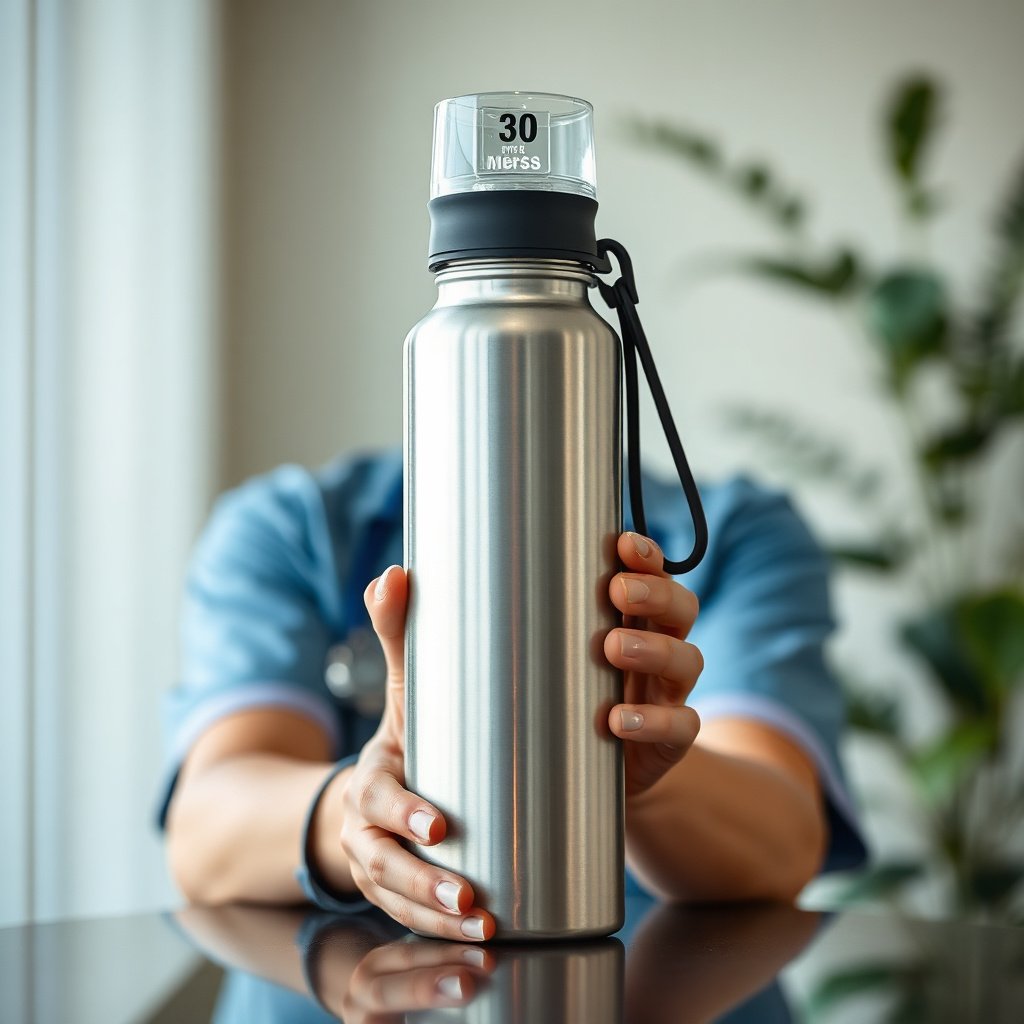
Choosing the right aluminum water bottle starts with confirming it’s truly meant for drinking—not just “made of aluminum.” The safest path is to verify beverage/food-contact labeling, then check the lining/coating details (especially because many aluminum bottles are lined).
– Check that the bottle is clearly labeled for food/drink contact (not just “aluminum construction”).
Look for wording that explicitly includes “for beverages” or “food contact” rather than only material marketing like “durable aluminum body.”
– If it’s lined (common for aluminum bottles), confirm it’s food-grade and specifically designed for beverages.
Many aluminum water bottles use a liner (often polymer-based, epoxy-style, or other approved coatings). What matters is that the manufacturer states the lining is intended for water and other drinks, and not just for non-food/low-contact use.
– Avoid bottles with unclear coating/latch details or vague “nontoxic” wording—look for more specific documentation.
Here are label details that are more reliable than vague claims:
– “Meets FDA requirements for food-contact” (or equivalent compliance language)
– “BPA-free lining” (when a liner is used)
– “For cold and hot beverages” (when temperature use matters)
– “Not intended for carbonated beverages” (only if that’s actually acceptable for your needs)
– “Do not use with acidic drinks” (a caution you should respect, because acidic beverages can stress some linings)
Why this matters in real nursing routines: aluminum water bottle linings are where taste and odor complaints usually originate if they weren’t designed for beverages or if care instructions aren’t followed. In 2026, “BPA-free” claims are common, but safety comes from clear food-contact intent, not from buzzwords alone.
Choose the right lid for real shift conditions
A lid is the make-or-break feature for an aluminum water bottle in clinical work, because the bottle spends time in bags, carts, lockers, and scrub pockets. A leak-proof lid that you can operate one-handed is often the biggest quality-of-life upgrade you’ll notice on day one.
– Prefer leak-proof or lockable lids to prevent spills in bags or carts.
“Leak-resistant” can mean “less likely,” not “safe when tossed into a tote.” For nurses carrying supplies alongside an aluminum water bottle, choose a lid that locks or has an unambiguous leak-proof design.
– Look for a closure mechanism you can operate one-handed (important when you’re busy).
If you have to fully twist and re-seat the lid with two hands, it’s less practical during med passes, documentation, or when you’re handling gloves and equipment.
– Check how the lid seals (gasket included, easy to inspect) and whether parts are replaceable.
Seals can degrade with frequent cleaning and drying cycles. If an aluminum water bottle lid includes a removable gasket and the manufacturer sells replacement gaskets, that’s a strong sign the bottle is meant to last.
Here’s a quick comparison you can use while browsing aluminum water bottle lids:
| Lid type | What it typically does well | Risk for nurses |
|---|---|---|
| Twist-on without a lock | Simple opening/closing for quick drinks | Can loosen during movement if not fully tightened |
| Locking flip-top | Fast one-handed sips with a secured position | Hinges and seals need drying to avoid odor |
| Screw lid + removable gasket | More controlled sealing and easier gasket inspection | Gaskets can wear and must be maintained |
In my day-to-day conversations with nurses (not lab testing—just practical feedback), the pattern is consistent: an aluminum water bottle with a well-seated gasket and a lid that “clicks” or locks tends to prevent the bag mess that people dread the most.
Decide on insulation and size based on your routine
Insulation and size determine whether your aluminum water bottle supports your shift or becomes another burden. The best match is the one that fits your carry method and drinking pace—because even a perfect lid fails if you stop using the bottle halfway through your shift.
– Insulated bottles help keep water cooler or warmer, but consider weight and how often you refill.
If your unit has limited access to breaks, insulation can reduce the temptation to leave the bottle behind because the water “feels wrong.”
– Match capacity to your workflow: you want enough volume without making the bottle awkward to carry.
Nurses often refill less during fast-paced rounds, so choose a size that gets you through your longest stretch without hunting for a sink.
– If you prefer cold drinks, focus on insulation quality; if you prefer plain room-temp water, you may not need a heavily insulated design.
Non-insulated aluminum water bottles can be lighter and easier to carry, but they won’t hold temperature—so they’re best when you regularly refill.
To make this easier, here’s a practical size reference for aluminum water bottle capacities commonly sold in the US (with coverage based on adult male Adequate Intake for total water):
Reusable Aluminum Bottle Capacities vs. Daily Hydration Coverage (US)
| # | Capacity (fl oz) | Capacity (mL) | Share of 3.7 L/day | Shift Convenience |
|---|---|---|---|---|
| 1 | 12 | 355 | 9.6% | ★★☆☆☆ |
| 2 | 16 | 473 | 12.8% | ★★☆☆☆ |
| 3 | 20 | 591 | 16.0% | ★★★☆☆ |
| 4 | 24 | 710 | 19.2% | ★★★☆☆ |
| 5 | 28 | 828 | 22.4% | ★★★★☆ |
| 6 | 32 | 946 | 25.6% | ★★★★☆ |
| 7 | 40 | 1,183 | 32.0% | ★★★★★ |
These conversions are straightforward, but the takeaway for an aluminum water bottle is practical: if you want fewer refills during a long shift, you generally need a larger capacity. For context, according to the National Academies of Sciences, Engineering, and Medicine, the Adequate Intake for total water (from beverages + water in food) is 3.7 L/day for adult men and 2.7 L/day for adult women (National Academies, 2005). Nurses don’t need to hit these numbers with one bottle, but they help you choose a size that won’t run dry at the worst moment.
Make cleaning simple (so you’ll actually maintain it)
An aluminum water bottle has to be easy enough to clean that you’ll keep up with it on busy days. If cleaning is annoying, residue builds at the lid gasket and interior wall—leading to lingering odors and off-taste over time.
– Choose a bottle with a wide opening or easy-to-reach interior for regular scrubbing.
Narrow openings are harder to clean thoroughly, especially if you ever use flavored water or electrolyte packets.
– Verify whether the lid and sealing parts are dishwasher-safe or need hand washing.
If the gasket can’t handle heat or strong detergents, dishwasher use may shorten its life and increase odor risk.
– Look for simple disassembly so you can clean the gasket area and prevent odor buildup.
The gasket area is the “stale water” hotspot in many aluminum water bottle complaints. A removable gasket and straightforward reassembly matter.
Practical maintenance habits (especially for an aluminum water bottle with a lid gasket):
– Rinse immediately after use, even if you plan to deep-clean later.
– Let parts dry fully before reassembling (trapped moisture feeds odors).
– Replace gaskets when they no longer seal tightly (small leaks can also become persistent taste problems).
What can go wrong when choosing an aluminum bottle
Picking an aluminum water bottle has real failure modes, but they’re usually predictable based on materials and lid design. If you understand what goes wrong, you can avoid the most common “why does this taste weird?” frustrations.
– Choosing an aluminum bottle without a proper food-safe lining can lead to metallic taste or coating wear over time.
A key warning to respect is: if the bottle instructions state it’s not suitable for acidic beverages (citrus drinks, sports drinks with certain acids, soda), following that guidance can prevent lining breakdown. When linings degrade, people may notice a metallic or “paint-like” taste—especially after days of storage.
– A “leak-resistant” lid that doesn’t lock may spill during movement or when stored horizontally.
In nursing settings, an aluminum water bottle often goes horizontal (bag life). If the lid isn’t designed to lock, don’t assume it’s leak-proof.
– Hard-to-clean lids and sealed gaskets can trap residues, which makes water smell or taste stale.
If the lid has complex internals you can’t reach, residue builds in crevices. That’s when water starts tasting “old,” even if the bottle body is otherwise fine.
– Bottles without clear guidance on care (washing, drying, gasket replacement intervals) tend to become frustrating fast.
When care instructions are vague, users guess—and that guesswork is how odor and seal failure happen.
A final note for aluminum water bottles: if you see no information about food-contact intent, lining/coating, or cleaning, treat that as a red flag. According to the FDA, BPA is prohibited in certain infant uses (including infant formula and baby bottles) under agency action starting in 2012 (FDA, 2012), but “BPA-free” still isn’t the same thing as “clearly beverage-safe for your specific use.”
Verdict: what we recommend (and who should skip aluminum bottles)
If you want a lightweight, durable option for shifts, a well-made aluminum water bottle with a clearly labeled food-contact lining and a leak-proof, easy-to-clean lid is usually a strong choice. Choose an insulated design only if it matches your preference for cold or warm drinks, and keep the lid gasket part of your selection decision—not an afterthought.
Skip the aluminum bottle advice if the packaging doesn’t clearly state beverage safety/lining details, if parts aren’t replaceable, or if you strongly prefer fully stainless designs for your personal care routine. Aluminum can work very well—yet without documented food-contact suitability, the lining and lid seal are the weak points.
If you see product links on this site, we may earn a small commission from qualifying purchases—at no extra cost to you.
Quick checklist to scan before you buy
– Food-contact labeling for the bottle and (if applicable) its lining/coating
– Lid is leak-proof/lockable; gasket is included and easy to inspect
– Size fits your shift (not too bulky for pockets/bags)
– Insulation matches your preference (cold/room temp/warm)
– Easy cleaning: wide opening + lid parts that disassemble
– Care instructions are clear (dishwasher vs hand wash, drying, gasket maintenance)
Optional “nurse-fast” tip: if you can’t quickly find answers about the lid seal and whether the lining is intended for beverages, keep browsing. For an aluminum water bottle, clarity beats marketing every time.
Frequently Asked Questions
What should nurses look for when picking an aluminum water bottle?
Nurses should prioritize a leak-proof lid, easy one-handed operation, and a comfortable carry handle or strap for busy shifts. Look for durable aluminum that won’t dent easily and won’t add metallic tastes to your water. It’s also important to choose a bottle with an appropriate capacity (often 16–24 oz) and a design that fits cup holders and bag compartments.
How do I choose the right size aluminum water bottle for a long shift?
Start by estimating how much water you realistically drink during a shift and choose a bottle size that supports that goal without being too bulky. Many nurses find 20–24 oz helpful for staying hydrated during busy 8–12 hour shifts, especially if they can top off between breaks. If you need frequent refills, a slightly larger aluminum bottle can reduce the number of trips to a water source.
Why is a BPA-free, food-grade lining important for aluminum water bottles?
An aluminum water bottle should be lined with food-grade, BPA-free materials to keep water tasting clean and safe to drink throughout the day. This matters for nurses because bottles are used constantly, cleaned under time pressure, and exposed to hot or cold beverages. A quality lining also helps prevent oxidation or unwanted flavors, which is a common concern when switching to aluminum.
Which features make an aluminum water bottle best for nurses who work in hospitals?
The best aluminum water bottle for nurses usually includes a secure leak-proof lid, a straw or flip-top for quick hydration, and insulation if you want cold water during long rounds. A sweat-resistant exterior, easy-clean interior, and wide-mouth design can also save time when washing between shifts. Consider a bottle with measurement markings so you can track hydration without thinking too much during busy moments.
What’s the best way to maintain an aluminum water bottle for daily nursing use?
Wash your aluminum water bottle regularly with warm water and mild soap, and use a bottle brush to clean the interior lid and any straws. If your bottle has an internal coating, avoid harsh abrasives that could damage the lining and affect taste or performance. For best results, fully dry the bottle after washing to prevent odors, and replace any worn seals or gaskets to keep the bottle truly leak-proof.
📅 Last Updated: November 25, 2026 | Topic: How to Pick a Aluminum Water Bottle for Nurses | Content verified for accuracy and freshness.
References
- https://www.cdc.gov/niosh/topics/heatstress/default.html
- Guidelines for drinking-water quality, 4th edition
- https://www.epa.gov/dwreginfo/secondary-drinking-water-regulations
- https://www.fda.gov/food/food-additives-petitions/questions-and-answers-bisphenol-bpa
- Anodizing
- Aluminium
- aluminum leaching beverage container – Search Results – PubMed
- https://scholar.google.com/scholar?q=aluminum+water+bottle+leaching+health Google Scholar
- https://scholar.google.com/scholar?q=nurses+hydration+workplace+water+bottles Google Scholar
- https://scholar.google.com/scholar?q=anodized+aluminum+beverage+container+corrosion+leaching Google Scholar