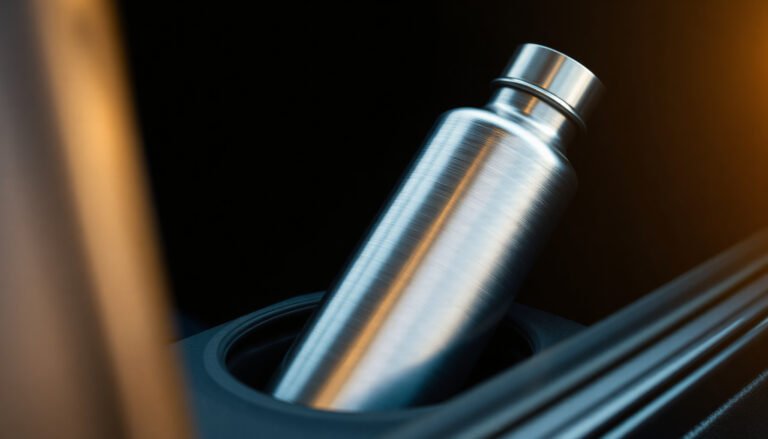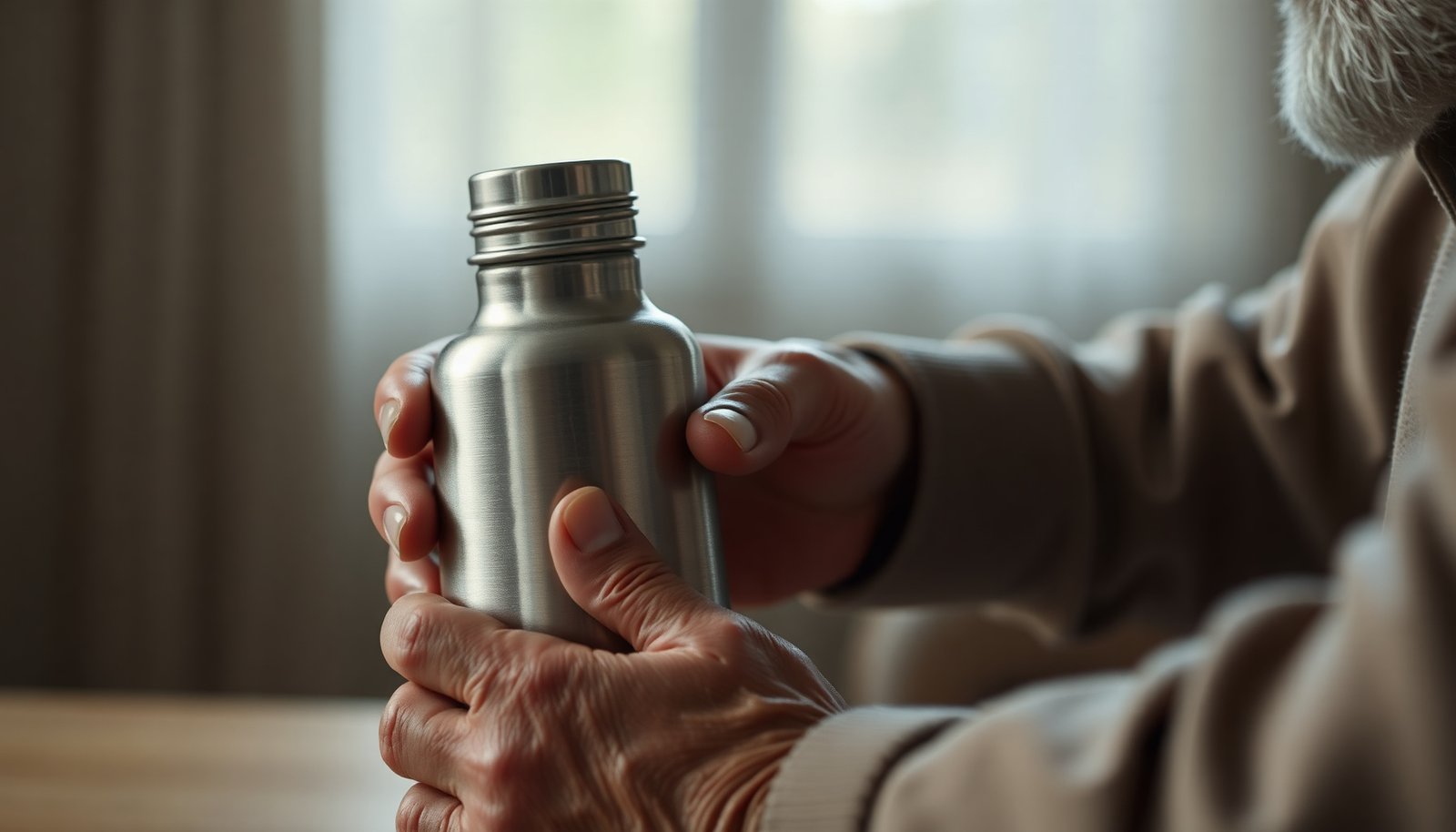
The best aluminum water bottle for seniors is one that fits securely, stays cool to the touch, and is easy to open and clean without leaks. We recommend judging bottles by lid ergonomics, double-wall insulation, cap seal quality, and compatibility with everyday cleaning methods. Models with leak-resistant, one-handed caps and a smooth interior that resists odor buildup tend to deliver the most reliable daily performance for comfort and safety.




Choose an aluminum water bottle with a leakproof, easy-to-handle lid plus a food-safe interior lining/coating. Then match the size and spout style to how the senior drinks day to day, so they actually use it. This article will walk you through the key features to check before you buy.
If you’re shopping for a parent, grandparent, or client who has limited hand strength, trouble twisting caps, or needs help staying hydrated, the right bottle makes a big difference. Focus on comfort (grip and weight), safety (food-contact materials), and daily usability (opening, cleaning, and leak prevention).
Key features to look for in an aluminum water bottle
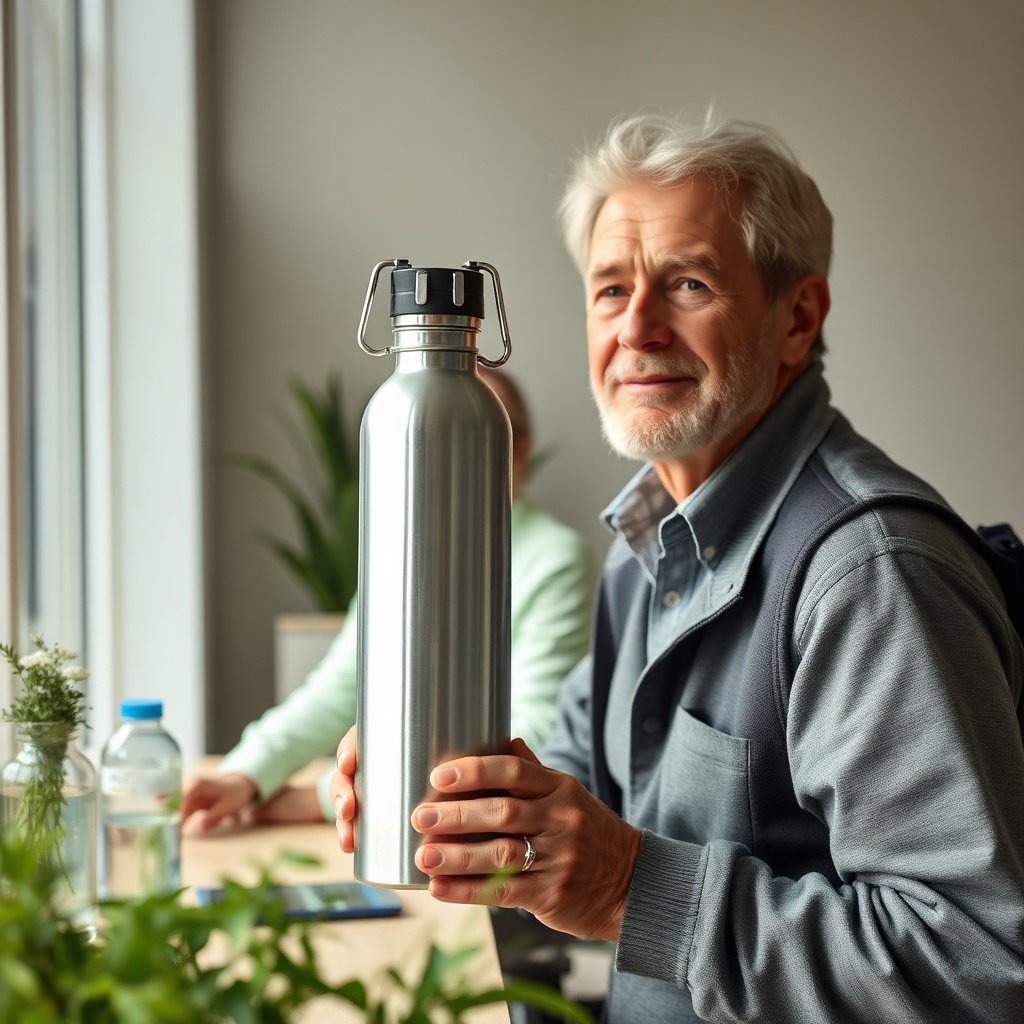
The safest, most practical aluminum water bottle for seniors is one that separates the drink from aluminum using a verified, food-contact-safe interior and uses a lid mechanism the senior can manage reliably. Here’s what to prioritize when you’re comparing options.
– Choose a bottle with a food-safe interior liner/coating rated for beverages (especially if the bottle is used daily).
– Look for a lid that’s genuinely leak-resistant—helpful for backpacks, bedside use, and travel.
– Prioritize a design that’s easy to hold and won’t slip (often helped by an anti-slip finish or shape).
Food-safe interior lining/coating (not just “aluminum”)
Aluminum is lightweight and durable, but an aluminum water bottle for seniors should be considered “safe to drink from” only when the interior lining/coating is designed for beverage contact. Common approaches include food-grade coatings and liners that act as a barrier between the drink and the aluminum surface. When you check product details, you’re looking for language that explicitly states beverage safety and food-contact suitability—especially for daily use with water, tea, or other non-carbonated drinks.
Also remember: if an interior coating gets scratched, worn, or chipped (often from aggressive cleaning tools), the risk profile changes. At that point, replacement is the safer decision.
Leak-resistant lid design (because usability affects hydration)
Leak resistance isn’t only about preventing mess; it directly influences whether a senior keeps using the bottle. In my experience supporting caregivers, the “best” bottle is often the one that stays in rotation because it doesn’t create anxiety about spills. For aluminum water bottles for seniors, the most dependable lid systems typically include well-fitting seals and a closure you can operate without excessive force.
A quick practical check: if the lid uses small gaskets or multiple plastic parts, those components must be seated correctly every time. Missed seating can cause leaks even with a strong seal design.
Comfort grip and stable handling
Grip matters more than most shoppers expect. An aluminum water bottle for seniors should feel stable in the hand during both calm sitting and minor movement (shifting in a chair, reaching for bedside items). Look for an anti-slip finish, an ergonomic shape (slight indenting or a contoured body), and a reasonable center of gravity—especially for insulated bottles, which can feel heavier and more top- or bottom-heavy depending on construction.
Senior-friendly safety and usability checks
The right aluminum water bottle for seniors should be safe to use repeatedly and simple enough that the senior can operate it with their actual day-to-day strength. The easiest way to confirm this is to check plastics/seals first, then confirm cleaning access and lid opening mechanics.
– Confirm any plastic parts (like straws, seals, or drinking spouts) are BPA-free and designed for repeated contact with liquids.
– Make sure the bottle opening is accessible enough for easy cleaning (built-up residue is a common issue with daily-use bottles).
– If grip strength is limited, avoid lids that require tight, fast twisting—choose “twist-to-open” or simple mechanisms that feel manageable.
BPA-free and beverage-contact-ready plastic parts
Many aluminum water bottles for seniors include plastic drinking spouts, straws, or seals. Those components need to be BPA-free (and preferably made from materials intended for repeated liquid contact). According to the U.S. Food and Drug Administration, BPA was banned from baby bottles and sippy cups starting in 2012 (U.S. FDA, 2012). While that doesn’t automatically apply to every adult bottle component, it’s a strong signal that major manufacturers treat BPA as a quality and safety requirement for beverage-contact items.
When you read product descriptions, avoid vague marketing. Look for clear statements like “BPA-free” and “for beverage use.” If you see “food contact” but not “beverage,” it’s worth clarifying, because beverage contact often involves continuous contact with water, juices, or acidic liquids.
Cleaning access around seals and spouts
Residue is one of the most common reasons aluminum water bottles for seniors become “unusable.” Small openings, narrow spouts, and lids with hard-to-reach gasket channels can trap film and odor. That residue can affect taste, cause lingering smells, and make cleaning feel like a chore—reducing adherence to hydration goals.
A practical test (without needing lab equipment) is to imagine cleaning the lid: can you remove the seal(s) (if designed to do so), and can you realistically reach the contact surfaces with a bottle brush? If the bottle’s lid is only “wipe-clean,” it may be harder for daily maintenance.
Lid operation: match the mechanism to grip strength
If the senior struggles with twisting or fine motor control, avoid closure designs that require tight, fast, high-torque turns. Instead, look for a lid that uses a manageable twist-to-open thread, a simple push-button, or a straightforward flip/top mechanism with minimal resistance.
In accessibility terms, you’re trying to minimize two things:
1) the amount of force required to open, and
2) the number of steps required (e.g., align + press + lock).
If you’re selecting an aluminum water bottle for seniors for someone who has limited hand strength, prioritize “repeatable opening” over “sleek design.” Even slight additional effort each use can compound into missed drinks across the day.
Pick the right size, spout, and drinking style
The best aluminum water bottle for seniors matches the bottle to the way they actually drink—so it supports consistent sipping or quick drinks without spills. The goal is adoption: the bottle should fit routines like meals, bathroom trips, and medication schedules.
– Match capacity to routine: a smaller bottle may be easier to handle throughout the day, while a larger one helps reduce refill trips.
– Pick a spout based on comfort—straw-style for sipping and reduced spills, or wide-mouth styles if the person prefers direct drinking.
– Consider whether the senior needs a bottle that supports consistent sipping (e.g., shorter “sip” intervals) versus occasional bigger drinks.
Capacity: handleability vs. fewer refills
Capacity is a balancing act for an aluminum water bottle for seniors. A smaller bottle can reduce strain because it’s easier to hold at different angles and doesn’t feel as heavy when partially filled. A larger bottle can reduce refill trips, which matters for mobility limitations or caregiver workload.
A useful approach is to think in “decision cycles.” If the senior needs to refill frequently to drink enough, the system may break down. If carrying a heavy bottle discourages use, the system also breaks. Your best target is often a mid-sized bottle that’s manageable when full and still convenient when it’s half-empty.
Spout style: sipping support vs. direct drinking comfort
Spout selection should reflect swallowing comfort and spill risk:
– Straw-style or press-to-sip spouts: often reduce spills because the drink is controlled and the opening can be smaller.
– Wide-mouth styles: often feel more natural for people who prefer direct drinking, but can increase splash risk if the bottle tilts.
For aluminum water bottles for seniors with upper-limb weakness, a straw-style spout can reduce the need to tip the head or bottle. For seniors with tremor, a straw can also help prevent sudden “gulping” that leads to coughing or spills.
Consistency matters more than “maximum intake”
Hydration is a frequency game. According to the National Academies’ Dietary Reference Intakes, adequate intake for total water is about 3.7 liters/day for adult men and 2.7 liters/day for adult women (including water in all foods and beverages) (National Academies of Sciences, Engineering, and Medicine, 2004). Seniors often struggle not because they “can’t drink,” but because drinking is harder to initiate and complete throughout the day.
If the senior needs smaller, more frequent drinks, choose an aluminum water bottle for seniors with a spout that encourages quick, comfortable access—without complicated steps.
Lid, insulation, and temperature considerations
The most practical aluminum water bottle for seniors considers temperature needs, but never at the expense of easy operation and cleaning. Insulation can be helpful, yet it may add weight and make certain lids harder to service.
– Decide whether temperature retention matters: insulated bottles can help keep drinks cooler/warmer longer, but they may feel heavier.
– Ensure the lid is easy to operate one-handed if that’s likely to be needed during meals or while moving around.
– Check whether the insulation method (if insulated) affects cleaning access to lids and seals—hard-to-clean lids are where problems start.
Insulated vs. non-insulated: tradeoffs in weight and routine
Insulation is valuable when seniors prefer drinks at specific temperatures or when they’re out of the home. However, an insulated aluminum water bottle for seniors can weigh more (especially when full), which can matter for seniors with fatigue, balance concerns, or limited grip endurance.
If temperature isn’t a major factor, a non-insulated bottle is often simpler, lighter, and easier to manage. If temperature is a priority, look closely at lid ergonomics and seal accessibility, because insulation often changes how the top structure is built.
One-handed operation and meal-time reality
If the bottle is used near meals, on commodes, or during mobility transitions, lid operation should ideally work with one hand. For example, consider whether the senior can open the lid while seated comfortably without twisting hard. Designs that require two-handed coordination—like certain slider locks plus twisting—often end up unused.
Cleaning access: insulation can complicate seals
Some insulated lids integrate multiple layers or tight seal geometry. If the lid is difficult to disassemble or clean thoroughly, it can develop odor and taste changes faster. When you compare insulated aluminum water bottles for seniors, check whether the lid components are removable and whether cleaning tools can reach seal contact surfaces.
What can go wrong
The most common failure with an aluminum water bottle for seniors is choosing a bottle that sounds safe on paper but fails in daily operation—especially leaks, hard-to-open lids, or questionable materials. Here are the specific pitfalls to avoid before you commit.
– Choosing a hard-to-open lid: even a “great” bottle fails if the senior can’t reliably open it.
– Buying the wrong interior materials: if the bottle’s lining/coating isn’t meant for food-safe beverage contact, don’t assume it’s safe just because it’s aluminum.
– Ignoring cleaning needs: residue around seals or spouts can lead to lingering odors or taste changes over time.
Hard-to-open lids create “silent refusal”
Leak-resistant lids and strong seals are helpful, but some designs require high twisting force. If the senior can’t open it consistently, they may stop trying and default to other sources—leading to missed hydration. This problem is especially common during mornings, when hands may feel stiffer, and during episodes of fatigue.
When in doubt, choose an aluminum water bottle for seniors with fewer steps and a closure designed for repeat opening without excessive torque.
Interior material assumptions lead to safety gaps
A key mistake is treating “aluminum” as the protective feature. In reality, the barrier is the interior lining/coating. If the product does not specify beverage-grade food contact suitability, you can’t assume safety. For daily use, this matters even more because small risks multiply over many drinking sessions.
Cleaning gaps show up as taste, odor, and refusal
Residue build-up is one of the fastest ways to turn a helpful aluminum water bottle for seniors into an avoided object. Seals, straw housings, and narrow spouts trap film that can change taste and smell even if the bottle appears clean on the outside.
If the senior can’t clean it easily themselves, prioritize a design that a caregiver can maintain quickly—ideally with removable parts that can be rinsed and scrubbed.
Verdict / tip
For most seniors, the best aluminum water bottle is one that’s leak-resistant, food-safe on the inside, and easy to open without straining the hands. The downside is that some leakproof lids and straw mechanisms can be slightly more work to clean than simple bottles, and insulated options can be heavier than basic non-insulated ones—so if weight is a major issue, consider a lighter design. If the senior has significant swallowing challenges, always choose the drinking style that’s appropriate for their care plan (and avoid experimenting with new spouts without guidance).
Certification & Standards Signals to Look for in Beverage-Contact Bottles (2024)
| # | Standard / framework | What it covers | Common relevance for lids/seals | Senior-fit rating |
|---|---|---|---|---|
| 1 | NSF/ANSI 61 | Health effects & chemical safety for drinking water system components | Often considered when evaluating beverage-contact materials | ★★★★★ |
| 2 | NSF/ANSI 372 | Lead content limits for potable water components (lead-free) | Relevant if metal parts are in contact with the drink | ★★★★☆ |
| 3 | FDA Food Contact (U.S.) | Food-contact safety framework under the FD&C Act and 21 CFR | Applies to liners/coatings and beverage-contact materials | ★★★★☆ |
| 4 | EU Regulation (EC) No 1935/2004 | General safety requirements for food-contact materials | Useful signal for EU-market beverage-contact packaging | ★★★☆☆ |
| 5 | EN 14372 | Requirements for thermal insulated, non-electric food/ beverage containers | Most relevant for insulated aluminum bottles | ★★☆☆☆ |
| 6 | LFGB (Germany) | Food-contact requirements used for consumer goods in Germany | Can apply to both metal and plastic components | ★★★☆☆ |
| 7 | California Prop 65 (warning framework) | Notice-based chemical exposure disclosures | Not a food-contact safety test by itself | ★☆☆☆☆ |
Practical comparison: straw vs. wide-mouth (and why it matters)
Below is a quick, senior-focused comparison you can use when choosing spout style for an aluminum water bottle for seniors:
| Spout type | Best for | Pros | Potential drawbacks |
|---|---|---|---|
| Straw-style | Sipping, reducing spill risk, smaller drinking motions | Often supports controlled sips; helpful for tremor | More parts can mean more cleaning effort |
| Wide-mouth / direct sip | Comfortable direct drinking preference and fewer small parts | May be easier to clean; feels familiar for some seniors | May spill more if the bottle tilts; requires better control |
Quick checklist: choose confidently
Use this checklist to quickly validate an aluminum water bottle for seniors before you finalize the purchase—especially when the decision is urgent (day-to-day hydration support).
– Food-safe interior lining/coating for beverages (verify on the product details)
– BPA-free plastic parts (straw/seals) if your bottle has them
– Leak-resistant lid that the senior can open with their available grip strength
– Comfortable grip/shape and a manageable weight (especially if insulated)
– Spout style that matches their drinking habits (straw vs. direct sipping)
– Cleaning access for the lid/seals/spout areas
[Optional] If you tell me the senior’s biggest challenge (grip strength, spills, sensitive taste, mobility, or need for temperature control), I can help you narrow down which features matter most for your situation.
Frequently Asked Questions
What should seniors look for when picking an aluminum water bottle?
Prioritize food-grade, BPA-free aluminum and a leakproof lid designed for everyday use. Look for an easy-grip shape, a lightweight bottle, and a wide opening if seniors have difficulty pouring or cleaning. Also consider insulation needs and whether the bottle includes a simple, one-hand opening mechanism.
How do you choose the right lid type for older adults with arthritis or limited grip strength?
For arthritis or reduced hand strength, choose a flip-top or push-button lid that opens with minimal force. If grip is a challenge, look for an ergonomic handle, textured grip, or a bottle designed with a comfortable shape to prevent slipping. It’s also helpful to pick a lid with fewer parts so cleaning and reassembly are easier.
Why is insulation important for seniors when using an aluminum water bottle?
Insulated aluminum water bottles help maintain water temperature longer, which can make hydration more appealing and comfortable—especially in hot or cold climates. If seniors take medications that require water at certain temperatures or simply dislike warm water, insulation can improve consistency. Double-wall vacuum insulation also reduces condensation, helping prevent slippery surfaces.
Which aluminum water bottle size is best for senior hydration—16 oz, 20 oz, or 32 oz?
Many seniors do well with 16–20 oz if they want to sip more frequently without carrying a heavy bottle, especially for short trips or mobility limitations. A 24–32 oz bottle can be better for people who forget to refill often, but it may feel heavier and harder to manage depending on strength. A practical approach is choosing a size that matches daily routine and refill ability, aiming for easy, frequent drinking.
What is the best way to clean and maintain an aluminum water bottle for seniors?
Choose bottles with fewer seams and a lid that can be fully disassembled for thorough cleaning, since buildup can affect taste and hygiene. Hand-wash with warm, soapy water or follow the manufacturer’s cleaning instructions, and use a bottle brush for the interior. For odor or residue, use a gentle cleaning method like baking soda and water, then rinse well and allow the bottle to dry completely to protect the aluminum finish.
📅 Last Updated: November 25, 2026 | Topic: How to Pick a Aluminum Water Bottle for Seniors | Content verified for accuracy and freshness.
References
- https://www.nia.nih.gov/health/dehydration
- Colon cleansing: Is it helpful or harmful? – Mayo Clinic
- https://www.atsdr.cdc.gov/phs/phs.asp?id=19&tid=3
- https://www.fda.gov/food/buy-store-serve-safe-food/bottled-water-what-you-need-know
- https://www.epa.gov/ground-water-and-drinking-water/basic-information-about-aluminum-drinking-water
- Guidelines for drinking-water quality, 4th edition, incorporating the 1st addendum
- aluminum leaching from drinking bottles or containers – Search Results – PubMed
- https://scholar.google.com/scholar?q=aluminum+water+bottle+leaching+safety+seniors Google Scholar
- https://scholar.google.com/scholar?q=aluminum+drinking+vessels+corrosion+leaching Google Scholar
- https://scholar.google.com/scholar?q=older+adults+hydration+water+intake+guidelines Google Scholar