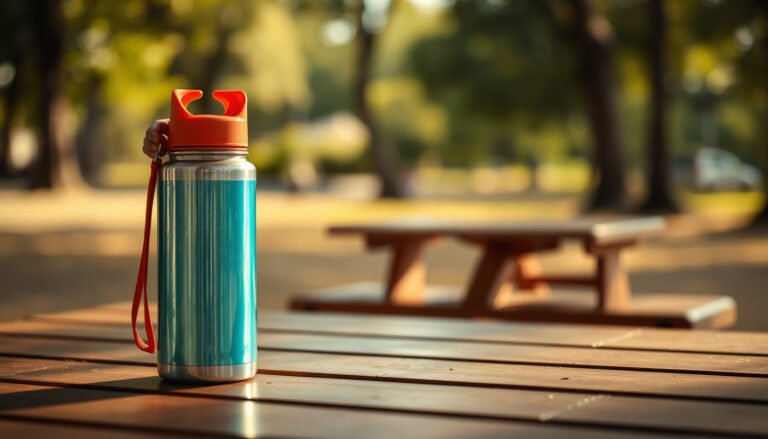
Will an aluminum water bottle keep your drink cool through a hot commute? Yes—if you prioritize double-wall vacuum insulation, a leakproof lid, and a safe interior coating that resists corrosion and odors. Use these criteria to separate thin, single-wall bottles that warm quickly from the reliable insulated options built for summer heat.



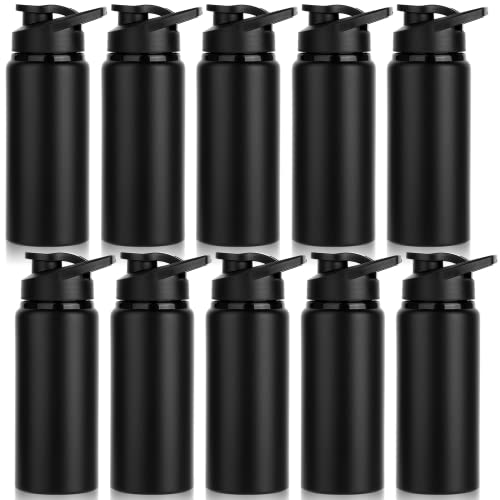
If you’re choosing an aluminum water bottle for hot weather, prioritize insulation (or double-wall construction) and a leak-proof cap that you’ll actually enjoy using in the heat. Also make sure the inside lining is safe for drinks and won’t pick up metallic tastes as temperatures rise—because the “wrong” bottle is what turns hydration into a hassle. In this guide, we’ll walk through what to check—so you can stay hydrated without fighting leaks, condensation, or strange flavors.
If you sweat a lot, commute, hike, or keep a bottle in a hot car or backpack, your bottle choice matters more than usual. This is for anyone comparing styles (insulated vs. non-insulated, lined vs. unlined) and wants practical criteria that translate to everyday use.
Start with the right insulation for heat
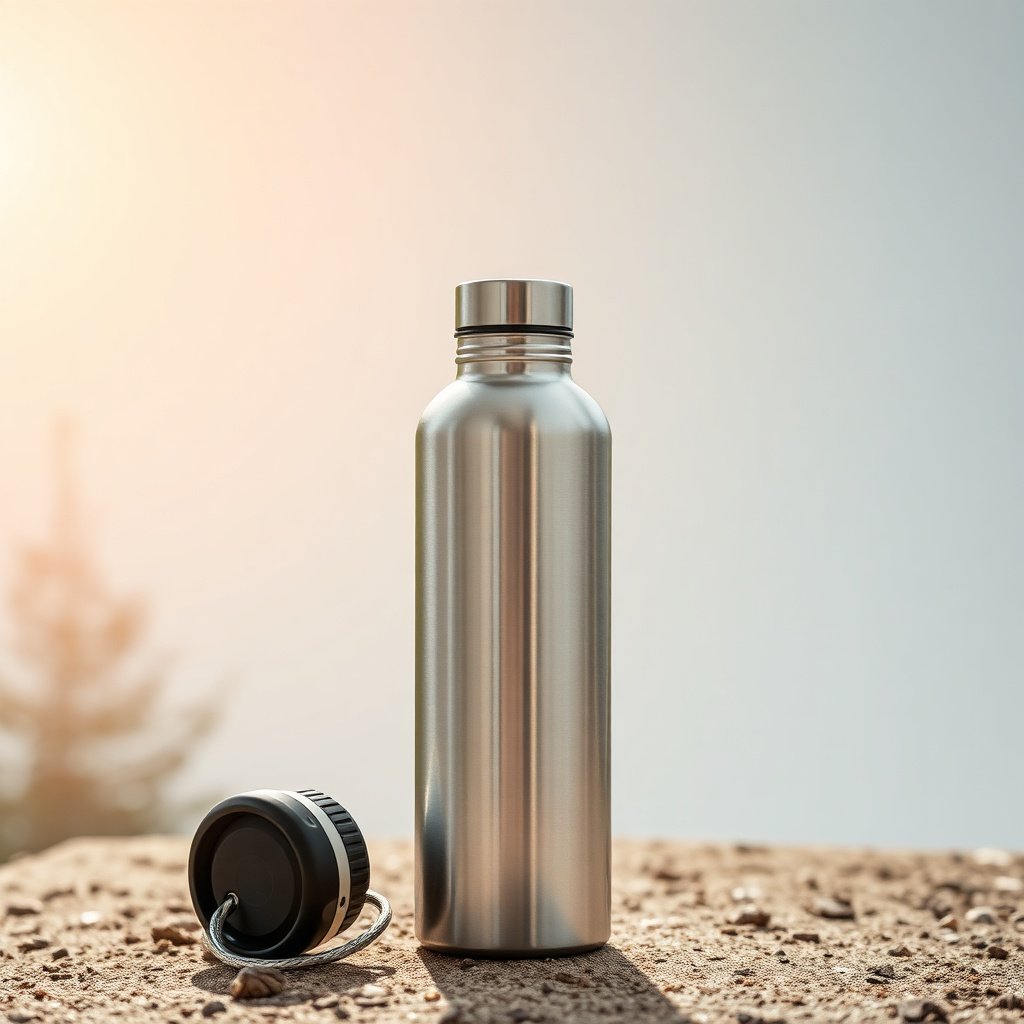
Insulated aluminum water bottles handle hot weather better because they slow heat transfer and reduce the “warm water fast” problem. In practice, that means less discomfort in the mouth and less exterior condensation when your bottle moves between hot and cool environments.
– Look for double-wall or insulated designs if you want slower temperature changes and less “warm water fast.”
– If condensation is an issue (bag, desk, gym locker), insulation helps reduce exterior sweating—especially in humid weather.
– For scorching days, consider whether you need to keep water cool for hours versus simply staying safe to drink.
Insulation choice isn’t just about comfort—it’s also about physics and material behavior. Aluminum conducts heat quickly because its thermal conductivity is high (about 205 W/m·K at room temperature, according to NIST). That means an uninsulated aluminum bottle will rapidly take on the temperature around it. By contrast, a double-wall bottle reduces heat flow using an air space and/or foam layer, and in many designs, a vacuum-like insulation layer (often marketed as “vacuum insulated”) further lowers heat transfer.
To frame it simply: water itself has a relatively high specific heat capacity (about 4.186 J/g·°C, according to NIST), so it takes meaningful energy to raise its temperature. Good insulation limits how much energy reaches the water over time—while a bare aluminum wall lets energy move into your drink fast.
Insulated vs. non-insulated: what you’ll actually notice
Here’s the quick trade-off comparison for an aluminum water bottle in hot weather:
| Feature | Insulated / double-wall aluminum bottle | Non-insulated aluminum bottle |
|---|---|---|
| Water temperature over time | Slower warming (better for long outings) | Warms quickly in sun, car, or backpack |
| Exterior condensation risk | Lower (especially in humid conditions) | Higher—may sweat in cooling environments |
| Weight | Typically heavier | Lighter and easier to carry short-term |
| Price | Usually higher | Usually more budget-friendly |
From a practical standpoint, an insulated aluminum water bottle is the better choice if your commute includes walking in sun, storage in a hot trunk, or stopping at temperature-challenging places like offices with strong AC.
Choose a safe interior (lining vs. unlined aluminum)
A lined interior is the safest, most consistent choice for hot weather because it reduces metallic taste risk and improves compatibility with common drinks. When an aluminum water bottle is unlined, taste changes are more likely over time—especially after cleaning cycles or repeated exposure to acidic beverages.
– If the bottle is lined (common with stainless liners or food-grade coatings), check that it’s described as food-safe and intended for beverages.
– Unlined aluminum can work for some people, but it’s more likely to affect taste over time depending on the bottle and how you clean it.
– If you plan to use flavored drinks, sports drinks, or acidic beverages, verify compatibility on the manufacturer’s guidance.
Lining compatibility: think in terms of “food contact” and “cleaning risk”
The inside of an aluminum water bottle should be treated as a food-contact surface. That’s where regulatory “food-safe” claims matter, and where you should look for explicit instructions from the manufacturer. If the bottle uses coatings or liners, the manufacturer’s guidance usually exists because certain coatings are more tolerant of acids, salts, and sugars than others.
To make this easier to evaluate, use this quick comparison:
- Lined aluminum water bottle (stainless liner or food-grade coating)
- Pros: Lower risk of metallic taste; generally better at handling varied drinks when compatible with the liner/coating. Cons: Some liners can retain odors if you don’t clean thoroughly, especially after flavored or electrolyte mixes.
- Unlined aluminum water bottle
- Pros: Often simpler design, lighter feel, and fewer parts. Cons: Greater potential for taste transfer over time; cleaning and storage habits matter more in hot weather.
What to watch for with hot-weather drinks
Hot weather often pushes people toward electrolytes, lemon, or flavored powders. Many of these contain acids (like citric acid) or high mineral content (sports drinks), which can be harder on unlined aluminum and some coatings. If your aluminum water bottle will hold acidic beverages—even occasionally—prioritize a lining that explicitly states suitability for those drink types.
Also, remember that “safe” isn’t only chemical—it’s practical. If the bottle’s interior is hard to reach with a brush (narrow opening, complex seams), residue can build up. In hot weather, that residue can create odors faster and make flavor transfer more noticeable.
Pick capacity based on how you’ll carry it
A correctly sized aluminum water bottle reduces the two most common hot-weather issues: running out of water and leaving the bottle behind. The goal is a capacity that matches your day while still being easy to stash securely in a bag, cup holder, or side pocket.
– Match volume to your day: short outings often need less, while all-day use benefits from a larger capacity.
– Think about packability—bigger bottles can be harder to fit in cup holders or side pockets.
– If you refill often (office/gym/water station), a medium size can reduce weight while keeping you flexible.
A useful way to choose capacity is to start with how long you’ll be away from refills. If you won’t have consistent access to water, bigger helps. If you can refill, medium capacity usually reduces fatigue and increases the odds you’ll actually carry the aluminum water bottle daily.
To ground expectations, consider general hydration benchmarks. According to the U.S. National Academies (Institute of Medicine), adequate total daily water intake is about 3.7 liters/day for men and 2.7 liters/day for women (from all beverages and water) (2004, National Academies). That’s not a “bottle size” instruction, but it helps you sanity-check whether you’re planning for a half-day or a full day in hot conditions.
Focus on the lid: leak-proof, easy to drink, easy to clean
The lid is usually the difference between an aluminum water bottle you’ll use and one you’ll avoid in hot weather. You want a cap that seals reliably when tossed into a bag and a drinking mechanism that you can operate without struggling when you’re sweaty.
– For hot weather, choose a cap style that won’t spill when tossed into a bag and that seals securely.
– Prioritize a lid you can operate one-handed if you’ll be walking, driving, or cycling.
– Make sure disassembly is straightforward, because hot-weather bottle maintenance is what prevents lingering odors.
What “leak-proof” should mean in real use
Look beyond marketing words and check how the lid seals. Many leak complaints come from loose cap threads, worn gaskets, or lids with multiple parts that aren’t cleaned regularly. For an aluminum water bottle used in heat, lingering residue also matters because warmer temperatures can intensify smells and make any trapped drink film more noticeable.
Try a simple “closure test” at home (or immediately after purchase if you’re allowed to inspect): close the aluminum water bottle fully, then tip it and shake it gently with the cap facing down. If you see moisture at the seam, treat it as a red flag—especially if the cap has a complex latch mechanism.
Cleaning access prevents odor buildup
In hot weather, your cleaning routine becomes part of taste quality. A lid with hard-to-reach crevices can trap flavored drink residue (electrolytes and syrups are common culprits). When that residue sits warm, it can create an off smell even if the bottle interior itself is lined.
For any aluminum water bottle, prioritize:
– simple-to-disassemble lids (fewer pieces is not automatically better, but accessible pieces usually help)
– gaskets or seals that can be cleaned without damage
– caps that reassemble cleanly without “guessing” alignment
Check for durability and real-world comfort
A durable aluminum water bottle is the one you’ll keep using through summer drops, bag friction, and constant handling. Comfort matters too—hot weather increases sweat, and slippery bottles are easier to drop.
– Verify the bottle’s build (impact resistance, sturdy construction) since bottles get dropped, bumped, and stuffed in bags.
– Look for a shape that’s comfortable in hand and doesn’t slide around easily when you’re sweaty.
– If you’ll carry it outdoors, consider how it performs when it’s hot outside—some finishes can become uncomfortable to hold.
Durability factors that matter in heat
Even if an aluminum water bottle is “tough,” heat can change how it feels. A bare metal finish can become unpleasant to hold in direct sun. If your aluminum water bottle has a smooth, reflective surface, it may heat up quickly on the outside. Some insulated bottles reduce this sensation by keeping the outer wall cooler—but you still want a comfortable finish.
Also consider practical durability:
– does the lid have a sturdy hinge or robust latch?
– are there seams that snag on fabric or straps?
– does the bottle base stand securely, especially on wet surfaces?
From a materials standpoint, aluminum’s heat conductivity means that exterior comfort depends heavily on whether your aluminum water bottle is insulated and how its lid is designed. If you’re choosing between two similar bottles, an insulated option often wins for day-to-day comfort even if it costs more.
Insert a simple data table to compare insulating effectiveness
The fastest way to understand why insulation matters is to compare thermal conductivity—the higher the conductivity, the faster heat moves through that material. Below are common materials relevant to aluminum water bottles (bottle bodies, liners, and lid insulation layers) and how their heat-transfer characteristics translate to hot-weather performance.
Thermal Conductivity vs. Hot-Weather Retention (Key Bottle Materials)
| # | Material (relevant to aluminum bottles) | Typical role | Thermal conductivity (W/m·K) | Hot-weather insulation (stars) | Retention index vs. bare aluminum body (×) |
|---|---|---|---|---|---|
| 1 | Copper | Heat-conducting reference | 401 | ★ | 0.51× |
| 2 | Aluminum (bare bottle wall) | Bottle body | 205 | ★ | 1.00× |
| 3 | Stainless steel (e.g., 304) | Liner or inner wall | 16.2 | ★★ | 12.65× |
| 4 | Silicone rubber | Gasket / seal | 0.20 | ★★★★ | 1025× |
| 5 | Polypropylene (PP) | Lid components / inner parts | 0.22 | ★★★★ | 931.8× |
| 6 | Still air (sealed gap) | Insulation layer | 0.026 | ★★★★★ | 7884.6× |
| 7 | Polyurethane foam | Insulation fill | 0.024 | ★★★★★ | 8541.7× |
Notes: Retention index is calculated as 205 / k (comparing each material’s thermal conductivity *k* to a bare aluminum body). Thermal conductivity values are consistent with commonly published room-temperature reference data (see NIST for aluminum, water, and material property references).
What can go wrong (and how to avoid it)
Even the “right” aluminum water bottle can disappoint if your habits or the bottle design don’t match your hot-weather reality. The good news is that most failures fall into a few predictable categories—condensation, taste issues, leaks, and drink compatibility.
– Condensation and “wet bottle syndrome”: Using a non-insulated bottle in humid conditions can cause exterior sweating; insulation helps, but not every design fully eliminates it.
– Metallic taste or lingering flavors: This can happen with unlined or difficult-to-clean bottles—flush and clean regularly, and avoid leaving strong-flavor liquids in for long periods. A practical default routine is: rinse immediately after use, wash the bottle and lid with mild unscented dish soap and a bottle brush (if compatible with the materials), then dry completely with the lid off; if odors persist, do a deeper clean every 1–2 weeks using a baking-soda solution (only if the manufacturer indicates the lining/coating can tolerate it) and re-check flavor after a full dry.
– Leaks from a cap you don’t fully trust: Even “spill-proof” claims vary. If the cap doesn’t feel secure when closed, treat it as a red flag.
– Acidic or mixed drinks: Some linings/coatings are more tolerant than others. If you use lemon, electrolyte powders, or sports drinks, confirm compatibility rather than guessing.
The prevention framework (simple, risk-based)
If you want a more business-like way to prevent taste and odor issues in an aluminum water bottle, use a risk-based cleaning approach similar to HACCP (Hazard Analysis and Critical Control Points). In plain terms: identify the “hazard” (residue and odor retention), control it (consistent cleaning schedule and thorough drying), and verify it (smell/taste check after cleaning). This matters more in 2025–2026 because many people are carrying electrolyte mixes and flavored powders daily, not just plain water.
Hot-weather edge cases to keep in mind
– A hot bottle in a cold office: Temperature swings increase condensation risk. Insulated aluminum bottles usually reduce it, but the lid area can still sweat if your environment is much cooler.
– Bag storage without full drying: After a sweaty commute, leaving the aluminum water bottle closed can trap moisture. That’s how “stale smell” forms—even with a food-safe lining.
– Partial disassembly: Some lids require separating parts to clean effectively. If you can’t disassemble it quickly, you may skip it, and flavor transfer will follow.
Verdict: the easiest “safe bet” for hot weather
For most people, the best choice is an insulated, leak-proof aluminum bottle with a clearly stated food-safe interior and a lid you can clean thoroughly. Downsides: insulated bottles tend to cost more and are heavier than basic aluminum, and some lined interiors require careful maintenance to prevent lingering smells.
Skip this “safe bet” and choose simpler designs only if you’re using the aluminum water bottle for short periods, you refill frequently enough that taste won’t build up, and you’re comfortable with the possibility of minor taste changes over time.
Quick checklist (save this)
– Insulated/double-wall design for hot weather temperature control
– Food-safe interior (lined/coated) and drink-compatibility noted
– Leak-proof cap that fully seals when closed
– Capacity that matches your carry/refill habits
– Easy-to-clean lid parts (especially important in heat)
– Comfortable shape/finish for sweaty hands
Frequently Asked Questions
What features should I look for in an aluminum water bottle for hot weather?
Choose an aluminum water bottle with double-wall insulation to keep drinks cold longer and reduce condensation on the outside. Look for a leakproof lid and a wide mouth for easy filling with ice or fruit, since hot weather often means frequent rehydration. Also check for a sweat-free or powder-coated exterior and an interior coating that’s BPA-free and food-safe for safe, long-lasting use.
How do I choose the right size aluminum water bottle for staying hydrated in heat?
For hot weather, consider how often you can refill and whether you’ll carry the bottle all day—common sizes range from 12 to 24 ounces (350–700 ml). If you’re commuting or doing outdoor activities, a larger insulated bottle (around 20–24 oz) helps reduce how many times you need to stop to refill. If you’re indoors or traveling short distances, a smaller bottle can be lighter and easier to carry while still supporting regular sips.
Why is insulated aluminum better than standard aluminum in hot weather?
Insulated aluminum helps maintain a cooler drink temperature by slowing heat transfer from the environment, which can make a big difference during summer. It also helps prevent the “warm water” problem that happens quickly with single-wall bottles in direct sun. In addition, a well-designed insulated bottle often reduces condensation, keeping your bag and hands drier.
Which lid type is best for drinking on the go in hot weather?
If you need one-handed access while walking or commuting, a flip-top or straw lid can make frequent sipping easier and reduce how often you open the bottle. For hot outdoor activities, a secure screw cap or sport cap can provide better leak protection, especially if the bottle is tossed into a backpack. Whichever you choose, prioritize a tight seal and an easy-to-clean design to avoid odors or residue from frequent use.
What’s the best way to keep an aluminum water bottle cold all day in high heat?
Start with cold water, and pre-chill the bottle if possible—then add ice or a reusable ice pack to extend cooling without diluting too quickly. Keep the bottle out of direct sunlight when you can, and use a bottle sleeve if your aluminum water bottle isn’t already well insulated. Regularly cleaning the interior also helps maintain fresh taste and ensures your hot-weather aluminum bottle performs consistently over time.
📅 Last Updated: November 25, 2026 | Topic: How to Pick a Aluminum Water Bottle for Hot Weather | Content verified for accuracy and freshness.
References
- https://www.cdc.gov/disasters/extreme-heat/index.html
- https://www.who.int/publications/i/item/9241548158
- https://www.fda.gov/food/food-ingredients-packaging/food-contact-substances-fcs-program
- https://eur-lex.europa.eu/legal-content/EN/TXT/?uri=CELEX:32004R1935
- aluminum leaching beverage container – Search Results – PubMed
- Anodizing
- Heat exhaustion – Symptoms and causes – Mayo Clinic
- https://scholar.google.com/scholar?q=aluminum+water+bottle+hot+weather+leaching+study Google Scholar
- https://scholar.google.com/scholar?q=aluminum+anodized+coating+food+contact+migration Google Scholar
- https://scholar.google.com/scholar?q=hot+weather+water+storage+household+drinking-water+container+contamination Google Scholar