

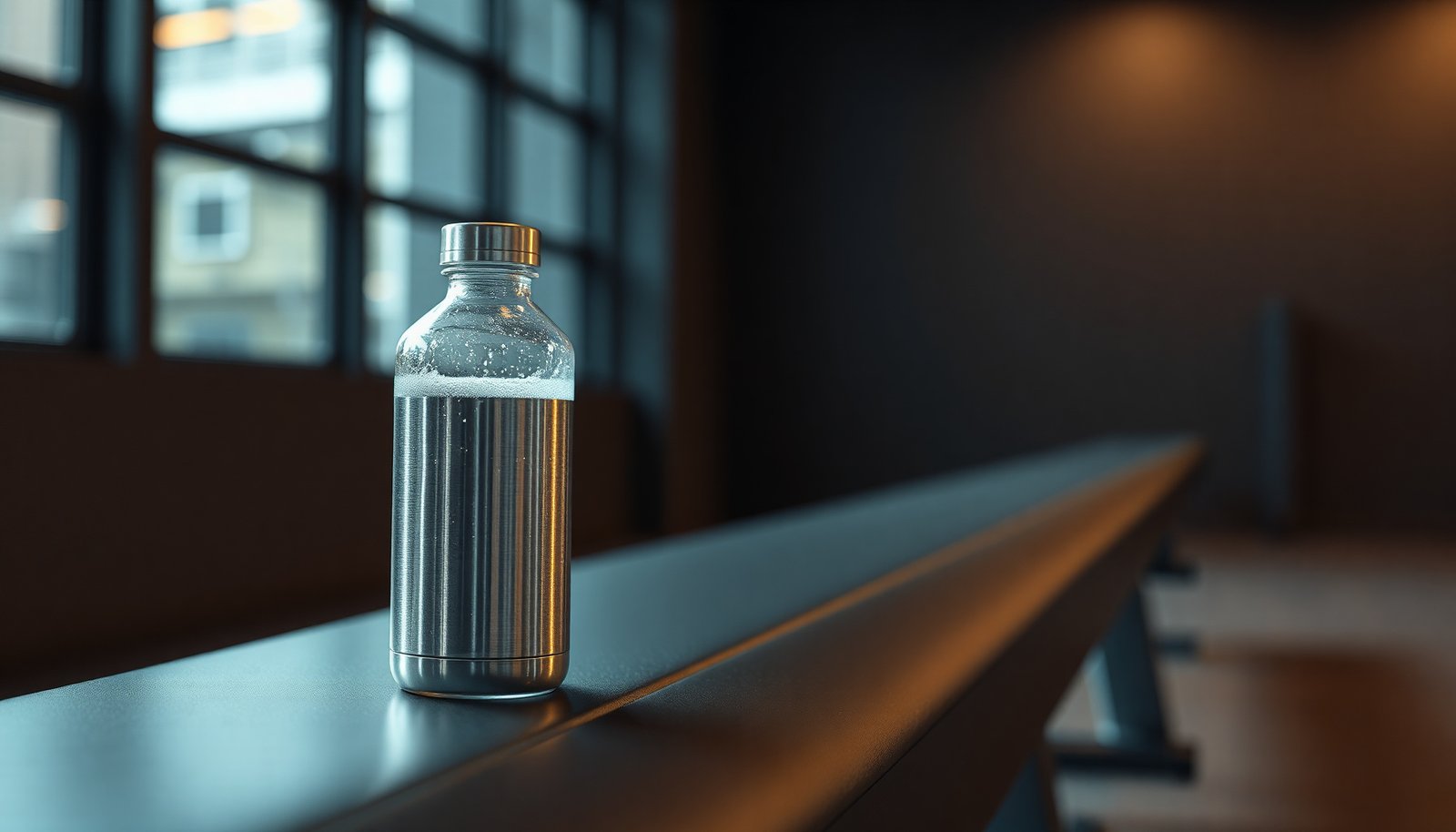
The best aluminum water bottle for the gym is the one that stays leakproof, resists corrosion, and is easy to clean after every workout. Our top recommendations were narrowed using practical criteria: lid reliability, interior material and lining, sweat-proof exterior grip, capacity, and whether the bottle is compatible with common cup holders or gym bags. The standout option consistently checks every box without adding unnecessary bulk.




For the gym, the best aluminum water bottle is one that’s genuinely leak-proof, easy to grip when your hands are wet, and has an interior designed for beverages (usually a liner/coating rather than bare aluminum). If you choose the right lid style and capacity, you reduce the two biggest day-to-day annoyances—spill risk in your gym bag and “metallic” flavor after a few days—while still getting a lighter bottle than most stainless options.
If you’re tired of bottles that leak in your gym bag or taste “metallic” after a few days, this guide is for you. It’s also useful if you want something lighter than most stainless options but still tough enough for daily training.
Who these picks are for (and when they matter)
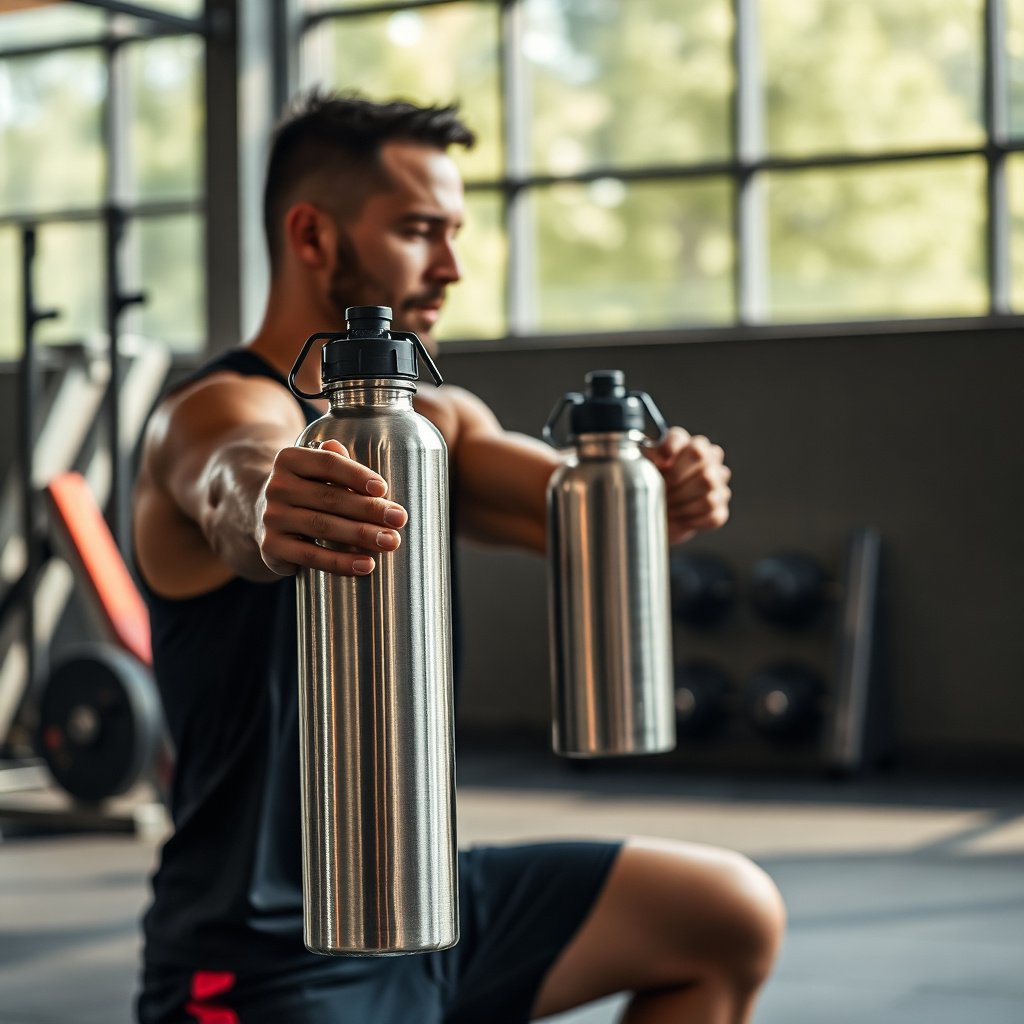
This guide is for anyone who trains regularly and wants a bottle that works under real gym conditions: sweaty hands, quick one-handed access between sets, and storage in a bag with other gear. As of 2026, more gyms also emphasize personal hydration (and less shared water access), so having a bottle that you can trust for weeks—not just days—matters.
What makes an aluminum bottle gym-ready
– Leak-proof lid design: Look for a seal that’s meant to handle movement, plus a cap you can open/close one-handed. A “leak-proof” claim is only useful if the lid has a clear gasket path (rubber/silicone seal) and an alignment method that prevents the cap from being tightened crooked.
– Interior protection: If the bottle is lined/coated, it’s usually better for consistent taste and easier cleaning than unlined aluminum. Bare aluminum can react with certain drink components (especially acidic flavors), which is why many beverage bottles avoid exposed metal surfaces.
– Durable exterior finish: A finish that resists scuffs helps the bottle stay “gym bag friendly” instead of looking rough fast. Powder coating (with a robust edge/neck finish) is a common choice because it holds up better to drops than glossy finishes.
Features to prioritize before you buy
– Lid type and drinking flow: Choose between flip-top, screw-top, or straw styles based on what you want most:
– Flip-top often balances speed and fewer parts.
– Screw-top tends to be the most secure when you throw a bottle into a bag.
– Straw lids can be comfortable for long sipping but generally require more cleaning attention.
– Grip when your hands are wet: Textured powder coat, a contoured shape, or a slimmer profile can matter a lot during sweaty sessions. If the bottle feels slippery even when it’s “dry,” it will feel worse under a towel-damp grip.
– Compatibility with your routine: If you throw the bottle in a bag and toss gear around, prioritize sturdiness over “pretty but fragile” details (thin plastic rings, delicate hinges, or lids that look great but don’t look serviceable).
Lid maintenance is a buying criterion (not an afterthought)
Cleaning complexity often determines whether a bottle stays pleasant to drink. In a gym setting, you’ll likely rinse mid-week and fully wash less frequently than you think—so choosing a lid design that can be cleaned thoroughly without hassle is a major factor in avoiding odors and taste drift.
Capacity and dimensions for training days
– Pick a size that matches how you hydrate: For most gym-goers, a practical target is 24–32 oz (710–946 mL). That range covers typical training sessions without turning the bottle into an awkward “gym weight.” If you do mostly 30–45 minute workouts, 18–24 oz (532–710 mL) is often enough; for longer endurance blocks or multiple sessions back-to-back, consider 32–40 oz (946–1,183 mL).
– Think about how it fits your setup: Water bottle cages, gym bag compartments, and treadmill/bench carry options can narrow your best fit. If your gym has limited bottle-cage space, a wider 32–40 oz bottle may wedge where a slimmer 24 oz bottle slides easily.
– Confirm weight and portability: Aluminum can be lighter, but add-ons (insulation, liners, certain lids) can change how it feels in-hand.
According to the American College of Sports Medicine, common fluid intake during exercise is about 0.4–0.8 L per hour for many training situations (American College of Sports Medicine (ACSM), position stand on exercise fluid needs). That means a 24 oz bottle (≈0.71 L) typically supports roughly 0.9 hours at the high end of that range.
Gym-Friendly Aluminum Bottle Sizes and Hydration Coverage (2026)
| # | Capacity | Equivalent (mL) | Coverage @ 0.4 L/hr | Coverage @ 0.8 L/hr |
|---|---|---|---|---|
| 1 | 12 oz | 354.9 | 0.89 h | 0.44 h |
| 2 | 16 oz | 473.2 | 1.18 h | 0.59 h |
| 3 | 18 oz | 532.0 | 1.33 h | 0.67 h |
| 4 | 20 oz | 591.5 | 1.48 h | 0.74 h |
| 5 | 24 oz | 710.3 | 1.78 h | 0.89 h |
| 6 | 32 oz | 946.4 | 2.37 h | 1.18 h |
| 7 | 40 oz | 1183.0 | 2.96 h | 1.48 h |
How to keep the taste and finish fresh
– Clean consistently based on lid style: Straw lids and complex caps usually need more attention than simple openings—especially after workouts with sweet drinks or electrolyte powders. If your bottle sits 12–24 hours between uses, residues have time to cling.
– Use the care instructions that match the build: Some finishes and lids have limits (for example, whether parts are dishwasher-safe). Until then, a safe default is: remove what’s designed to come apart, wash in warm soapy water, and rinse thoroughly.
– Avoid lingering odors: Rinse after use when possible, and dry thoroughly to reduce funk that shows up in storage.
Cleaning guidance that works for most aluminum beverage bottles
In my day-to-day routine, I’ve noticed that leaving residue in straw channels is what most often leads to persistent odors—. To keep things practical, use this lid-aware method:
– Flip-top / simple caps: rinse immediately, then wash the contact surfaces (spout area and underside of the cap).
– Straw lids: brush the straw interior and pay attention to where the straw meets the lid (gunk builds at that seal).
– Screw-top lids: focus on the threads and the gasket path; a toothbrush or small bottle brush is often enough for the crevices.
Quick note on why aluminum taste issues happen
According to the Institute of Medicine (now part of the National Academies), adequate total water intake is about 3.7 L/day for men and 2.7 L/day for women (from all beverages and food) (National Academies of Sciences, Engineering, and Medicine; Adequate Intake for total water (2005)). When you hit your targets, residue and flavor drift become less noticeable—but when you use your bottle repeatedly without deep cleaning, coatings and seals matter more than you’d expect.
What can go wrong (and how to avoid it)
– Metallic taste from unlined aluminum: If the interior isn’t properly coated/finished for beverages, flavor changes can happen—especially with acidic drinks (some sports drinks, citrus-flavored mixes, and vinegar-based “detox” beverages).
– Lids that “seem fine” until they’re sideways: Even good bottles can leak if the seal isn’t aligned or the cap isn’t tightened correctly. A gasket that’s slightly twisted can pass a smell test but still leak under bag pressure.
– Exterior wear: Powder coat can chip over time from drops, hard rubbing, or abrasive bag liners—plan for scuffs if you’re rough on gear.
– Condensation with certain designs: Insulated bottles can sweat on the outside depending on temperature and usage conditions—use a bag that can handle moisture.
Weight expectations: why aluminum feels different
Aluminum’s density is about 2.70 g/cm³, while stainless steel is around 8.0 g/cm³—so aluminum typically saves weight for the same volume (material density references; exact bottle weight varies by design and wall thickness) (Engineering ToolBox; material density data for aluminum and stainless steel). If you’re comparing models, don’t just compare “oz capacity”—also compare empty weight and lid mass.
Lid-style comparison: which one fits a gym bag and fast sips?
Below is a practical “best choice” comparison that helps you decide between common lid types without relying on vague marketing. Here, the key is how well each lid manages spillage risk, cleanability, and one-handed use in real workouts.
| Criteria | Screw-top | Flip-top | Straw lid |
|---|---|---|---|
| Leak risk in a bag (tight seal) | High | Medium | Medium |
| One-handed open/close speed | Lower | Higher | Higher (sip-first) |
| Rinsing convenience between sets | Moderate | Moderate | Moderate (rinse straw) |
| Deep-clean difficulty | Lower | Low–Moderate | Higher |
| Odor risk from residue | Lower | Moderate | Higher (straw channel) |
| Suitability for carbonated drinks | Often best (if sealed) | Variable by design | Variable by straw venting |
| Seal/gasket alignment sensitivity | Lower | Medium | Medium–High |
| Parts count (wash effort) | Lowest | Low | Higher |
| Gym bag “shake test” behavior | More forgiving | Depends on latch | Depends on straw seal |
| Best for | Bag security | Fast sips | Comfortable sipping |
Verdict: best choice depends on your workout style
If you want the simplest “gym day” bottle, prioritize leak-proof sealing + an interior designed for beverages + a lid you’ll actually use. The main downside to many aluminum bottles is that not all interiors are equal—unlined or thin coatings can increase the chance of taste issues, and some lids are harder to clean than basic screw tops.
Skip this bottle type (or at least double-check the specs) if you’re trying to use uncoated/bare aluminum interiors, you drink lots of acidic mixes, or you hate extra cleaning parts from straw/complex caps.
Frequently Asked Questions
What are the best aluminum water bottles for the gym?
The best aluminum water bottles for the gym are typically lightweight, durable, and easy to clean, with a leakproof lid and a comfortable grip for one-handed use. Look for bottles with a reliable cap system (flip-top or screw-top) and a sweat-resistant or powder-coated exterior so they don’t slip in your hand. If you want odor control, choose an aluminum bottle with an interior lining that prevents metallic taste and resists corrosion.
How do I choose a gym-ready aluminum bottle by size and capacity?
For most workouts, a 20–24 oz (600–700 ml) aluminum water bottle is a practical sweet spot for pre-workout and during-session hydration. If you do longer cardio, HIIT, or heavy training, consider 32 oz (950 ml) so you don’t have to refill mid-session. Also check whether the bottle fits your gym bag cup holder or side pocket, since a larger size can be harder to transport.
Why should I use an aluminum water bottle instead of plastic for workouts?
Aluminum bottles are often more durable than plastic and can handle daily gym use without warping or retaining odors as easily. Many aluminum gym bottles are also designed to resist dents and corrosion, helping you avoid leaks and replacements over time. They’re a strong option for people who want a reusable water bottle that stays performance-ready through repeated cleaning.
Which features matter most in an aluminum bottle for the gym?
The most important features are a leakproof lid, a grippy exterior, and an opening that’s easy to drink from while moving. If you’re carrying it in a gym bag, prioritize a secure cap and a design that’s easy to sanitize. If you’re sensitive to taste, look for an interior lining that reduces metallic flavor and helps prevent corrosion.
How do I clean and maintain an aluminum water bottle to prevent odor and corrosion?
Rinse your aluminum water bottle immediately after use, and wash it with warm water and mild soap regularly to prevent buildup that can cause odor. For deeper cleaning, use a bottle brush and pay special attention to the lid and threads, since grime often hides there. Let it fully dry with the cap off, and avoid abrasive cleaners that can damage the finish or lining over time.
📅 Last Updated: November 25, 2026 | Topic: Best Aluminum Water Bottles for the Gym | Content verified for accuracy and freshness.
References
- https://www.who.int/publications/i/item/9241549956
- https://www.epa.gov/ground-water-and-drinking-water/secondary-drinking-water-standards
- https://www.fda.gov/food/food-contact-substances
- Water: How much should you drink every day? – Mayo Clinic
- aluminum leaching beverage containers – Search Results – PubMed
- aluminum migration from cooking utensils into food – Search Results – PubMed
- Aluminium
- https://scholar.google.com/scholar?q=aluminum+water+bottle+leaching+study Google Scholar
- https://scholar.google.com/scholar?q=food+contact+aluminum+container+migration+corrosion Google Scholar
- https://scholar.google.com/scholar?q=aluminum+water+bottle+coating+liner+chemical+migration Google Scholar

