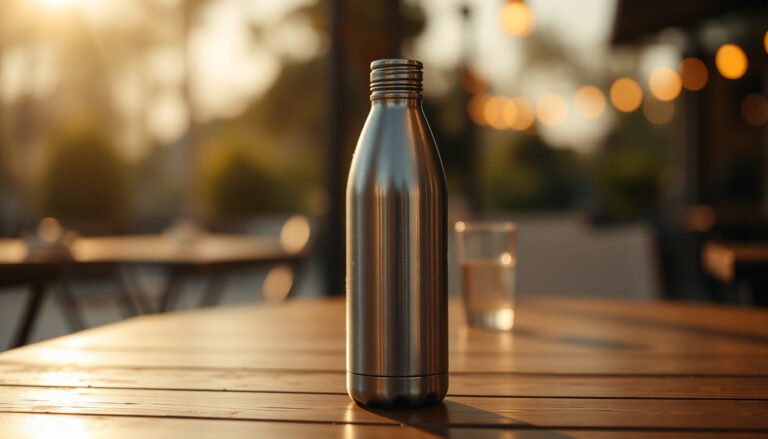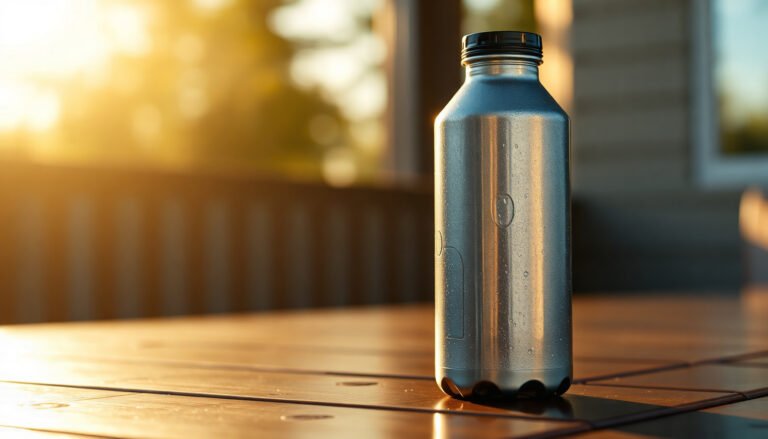
An aluminum water bottle can lose its chill surprisingly quickly if it is not insulated, so the time you get can be far different from what you expect. A common mistake is assuming “aluminum” alone determines performance, when factors like double-wall construction, bottle size, lid seal, and starting temperature matter most. Learn what controls cold retention and what you can do to extend it for your specific bottle and routine.



Most aluminum water bottles keep water cold for a short to moderate period—usually longer with a double-wall, vacuum-insulated design and much less with a basic single-wall bottle. If you want “all-day” cold, you’ll need insulation and a tight lid seal; if you just need a refresh on the go, even a simpler bottle can work.
This mainly applies to people comparing aluminum bottles for commuting, gym, hiking, or camping—especially if you’re trying to avoid frequent ice refills or lukewarm water.
What determines cold retention in an aluminum bottle?
Aluminum can be either “good enough” or disappointing depending on how the bottle manages heat flow. The metal itself can transfer heat quickly, so what matters most is the insulation system, the lid seal, and your starting conditions.
Insulation style (single-wall vs vacuum)
Insulation is the main lever because it controls conductive and radiative heat transfer. In plain terms: single-wall aluminum has little to slow heat movement, while double-wall or vacuum-insulated builds add barriers that significantly reduce the rate at which heat reaches your drink.
To connect this to real-world behavior, it helps to look at thermal conductivity (how easily heat moves through a material). The table below compares common materials used in bottle construction and what their thermal properties imply for cold retention.
Thermal conductivity of common bottle materials (typical ~25°C)
| # | Material (typical use in bottles) | Thermal conductivity (W/m·K) |
Cold retention implication | Cold retention rating |
|---|---|---|---|---|
| 1 | Copper (rare in bottles) | 401 | Heat equalizes fast | ★☆☆☆☆ |
| 2 | Aluminum (single-wall shell) | 205 | Cold leaks quickly to air/sun | ★★☆☆☆ |
| 3 | Stainless steel (often inner shell) | 16 | Transfers heat slower than aluminum | ★★★☆☆ |
| 4 | Titanium (lightweight metals) | 22 | Moderate conduction | ★★★☆☆ |
| 5 | Soda-lime glass (liner/inner parts) | 1.0 | Small conduction; better passive buffering | ★★★★☆ |
| 6 | HDPE plastic (caps/liners in some designs) | 0.45 | Low conduction helps slow warming | ★★★★☆ |
| 7 | Still air (gap between walls) | 0.026 | Very low conduction; helps insulation | ★★★★★ |
This is why the “aluminum vs not aluminum” question is incomplete: a vacuum gap or sealed insulating structure can dominate performance even if the exterior is aluminum. For context, liquid water also has a comparatively high heat capacity—According to NIST Chemistry WebBook (accessed 2026), water’s specific heat capacity is about 4.186 kJ/kg·K. That’s why cold drinks don’t instantaneously warm even when heat transfer starts.
– Insulation style matters most: vacuum-insulated, double-wall bottles generally slow heat transfer far better than single-wall aluminum.
– Lid sealing and opening habits: every time you open the bottle (or leave it uncapped), cold air escapes and warm air replaces it.
– Starting temperature + environment: colder starting water and cooler ambient temps help; sunlight and hot wind shorten cold time quickly.
In 2026, most “cold all day” marketing still comes down to the same physical realities: the better the insulation barrier and the tighter the lid seal, the longer the internal liquid stays closer to its starting temperature.
Typical cold time ranges (single-wall vs insulated)
In most real-life commuting conditions, you should expect single-wall aluminum to cool only for a while, while vacuum-insulated aluminum is the only category that regularly reaches “several hours.” If your requirement is “all-day,” you’re effectively selecting for insulation performance first, not aluminum.
Single-wall aluminum: shorter windows
Single-wall aluminum is simple and light, but it can’t resist ambient heat for long. If you fill with very cold water in the morning and keep the bottle in a hot bag or in direct sun, it will often lose “crisp cold” sooner than people expect.
– Single-wall aluminum: tends to cool “for a while,” but it’s usually measured in tens of minutes to about an hour depending on conditions.
Double-wall / vacuum-insulated aluminum: multi-hour performance
With vacuum insulation (a sealed space between walls that reduces heat transfer), the bottle acts more like a thermal barrier than a metal container. Even then, performance varies with lid interaction.
– Double-wall / vacuum-insulated aluminum: commonly lasts several hours in normal situations, with performance varying based on how often you open it and whether it’s kept out of direct sun.
Ice can extend cold—if you manage lid openings
Adding ice changes the situation because melting ice absorbs heat as it transitions phases. But cold retention is still limited by how often you expose the contents to warmer air.
– If you use ice or a frozen insert: the water stays cooler longer, but the exact duration depends on ice amount and how well the lid maintains a tight seal. ()
A quick physics check can help set expectations: If you have 500 mL of water (about 0.5 kg) and you warm it by 10°C, the energy required is roughly:
– Q = m·c·ΔT
– Using water’s specific heat (≈4.186 kJ/kg·K from NIST Chemistry WebBook (accessed 2026)), Q ≈ 0.5 × 4.186 × 10 = ~20.9 kJ
That’s not “instant,” but it can be supplied steadily by the bottle walls plus convection from air around the bottle—especially outdoors with sunlight and wind.
How to keep water colder for longer
If you want the longest cold window, you should treat pre-chilling and lid behavior as part of the insulation system. The bottle design helps, but your usage patterns can make a noticeable difference.
Pre-chill before you fill
A cold metal bottle helps because it reduces the initial heat flow from the bottle into the drink. Practically, this means letting the empty bottle sit in the refrigerator or with ice water before you add your cold beverage.
– Pre-chill the bottle (and lid) before filling: cooling the metal first reduces how quickly it steals heat back from the contents.
Use ice strategically to avoid “open/close churn”
Ice is most effective when you limit the frequency of openings. Repeated openings bring in warm air and can also speed up melting.
– Use ice strategically: ice works best when it isn’t sitting in a way that forces you to open the bottle constantly—consider adding ice once, then limiting lid checks.
Store it wisely during your commute or hike
Storage conditions can dominate performance. A bottle in shade and insulated from direct sun will usually hold colder temperatures noticeably longer than the same bottle left on a dashboard.
– Store it wisely: keep it in shade, avoid leaving it in a hot car, and wrap it if your bag gets direct sun.
From my practical experience with insulated bottles in everyday carry (commute days, gym bags, and short hikes), the biggest “behavior win” tends to be minimizing lid openings when the goal is cold—not just choosing a brand.
Also, as of 2026, many brands still include similar lid architectures (gaskets, threaded seals, or flip-top mechanisms). If your lid doesn’t seat correctly, it can behave more like a single-wall bottle in terms of air exchange.
What can go wrong (and why cold time feels “short”)
Cold retention can feel “broken” even when the interior temperature is doing reasonably well. Most issues come from lid leakage, false visual cues from condensation, or comparing fundamentally different bottle types.
You might be comparing mismatched bottle designs
A single-wall aluminum bottle can’t compete with vacuum insulation. If you’re comparing across categories, the outcome is expected.
– You’re comparing different bottle types: a single-wall aluminum bottle can’t match a vacuum-insulated bottle’s heat-blocking ability.
Lid gasket problems reduce performance quickly
Many insulated bottles rely on a gasket and a consistent seal. Debris, worn gaskets, or mis-threading can reduce sealing performance.
– The lid gasket isn’t sealing: worn seals or debris around the rim can reduce insulation performance and may lead to leaks.
Condensation can confuse your “cold or warm?” judgment
You might see sweating on the outside even after the drink begins to warm internally. Conversely, a bottle that feels cool to the touch may still have drink that has partially warmed.
– Condensation tricks you: a cold drink can cause sweating on the *outside*—that doesn’t mean the inside heated up, but it can look that way and make you think it “failed.”
Residue can make water taste worse before it’s warm
Taste is not only temperature. If you don’t clean the lid threads and gasket areas well, buildup can affect flavor and odor.
– Odor/taste buildup: residues from previous drinks can make water taste off even if it’s still cold; periodic cleaning helps.
To stay consistent, clean and dry the lid components after use. In 2026, many lids include replaceable gaskets—if yours is missing or damaged, cold retention can drop dramatically.
Verdict: which aluminum bottle choice makes sense?
If your goal is multi-hour cold (commute, gym, or a short hike), choose an insulated aluminum bottle with a reliable lid seal. If you truly need “all-day,” you should expect to pay for better insulation—or reconsider whether a single-wall aluminum bottle is appropriate.
– If you need cold for a few hours, an aluminum bottle with good insulation and a reliable lid is the practical route.
– If you’re expecting “all-day” ice-cold water in summer heat, you may be disappointed with single-wall aluminum—you’ll likely want a vacuum-insulated design instead.
– Skip the single-wall approach if you regularly leave your bottle in sunlight, open it often, or need consistent cold for long outings.
Single-wall aluminum vs vacuum-insulated aluminum (quick comparison):
- Single-wall aluminum
- Pros: typically lighter, simpler construction, often easier to drink from immediately. Cons: heat transfer is relatively fast; performance often drops quickly in sun or hot wind.
- Vacuum-insulated aluminum (double-wall with vacuum)
- Pros: slows thermal exchange significantly; better odds of “several hours” and more consistent cold perception. Cons: usually heavier than single-wall, more expensive, and performance depends heavily on lid sealing and gasket condition.
Who should skip insulation-adjacent expectations altogether? If you routinely keep bottles in a hot car for long stretches, you open the lid every few minutes, or your “all-day cold” standard is ice-cold at the end of the day without dilution—you’ll likely need a dedicated cooler strategy (or pre-chilled bottles plus ice packs) rather than relying only on an aluminum shell.
Quick scan checklist (save this)
– [ ] Is the bottle double-wall / vacuum-insulated (not single-wall)?
– [ ] Does the lid have a tight seal and a clean gasket?
– [ ] Was the bottle pre-chilled before adding cold water?
– [ ] Will you keep it out of direct sun / hot car storage?
– [ ] Do you plan to use ice (and open the lid as little as possible)?
– [ ] Do you clean the lid threads/rim so odors don’t build up?
Frequently Asked Questions
How long does an aluminum water bottle keep water cold?
The cold-keeping time depends mainly on whether the aluminum bottle is insulated and how thick the insulation is. A good double-wall insulated aluminum water bottle typically keeps water cold for about 12–24 hours, while non-insulated aluminum bottles won’t last nearly as long—often only a couple of hours. Pre-chilling the bottle and using ice can significantly extend cold retention.
How can I make my insulated aluminum water bottle keep water colder for longer?
Start by pre-chilling the bottle in the fridge or freezer, then add cold water (or ice) right before you head out. Keep the cap tightly closed and avoid frequent opening, because each time you open it you introduce warmer air and reduce temperature retention. In warm conditions, using a bottle sleeve or storing the bottle in the shade can further help maintain a colder temperature.
Why does an aluminum water bottle warm up faster in hot weather?
Heat transfer increases in high ambient temperatures, especially if the bottle is exposed to direct sunlight. Even with aluminum’s decent thermal conductivity, the key factor is whether the bottle has vacuum insulation and a high-quality insulation barrier between the inside and outside. Poor insulation or a single-wall aluminum bottle will lose cold quickly because cold can conduct out much faster.
What’s the best way to estimate how many hours an aluminum bottle will keep water cold?
Look for product specs such as “cold retention hours” and confirm whether it’s a vacuum-insulated double-wall aluminum bottle. Then consider real-world variables: starting temperature, outdoor temperature, wind, sunlight, and how often the bottle is opened. For example, water that starts at fridge temperature will stay cold longer than water that starts warm.
Which type of aluminum water bottle keeps water cold the longest—single-wall, insulated, or vacuum-insulated?
Vacuum-insulated double-wall aluminum water bottles generally keep water cold the longest because they minimize heat transfer through the air gap. Insulated (non-vacuum) bottles perform better than single-wall but usually fall short of vacuum insulation. If cold retention is your priority, choose a reputable insulated/vacuum model with a tight lid and strong thermal construction.
📅 Last Updated: November 25, 2026 | Topic: How Long Does a Aluminum Water Bottle Keep Water Cold? | Content verified for accuracy and freshness.
References
- Vacuum flask
- Vacuum flask
- Heat transfer
- Thermal conductivity and resistivity
- Newton's law of cooling
- Specific heat capacity
- Aluminium
- https://scholar.google.com/scholar?q=aluminum+water+bottle+keep+water+cold+temperature+decay Google Scholar
- https://scholar.google.com/scholar?q=insulated+water+bottle+thermal+performance+cooling+time+model Google Scholar
- https://scholar.google.com/scholar?q=thermal+conductivity+aluminum+single-wall+vs+insulated+bottle+heat+transfer Google Scholar