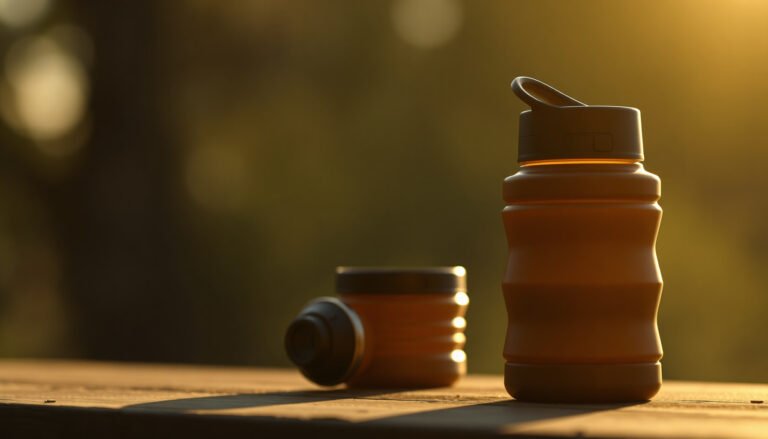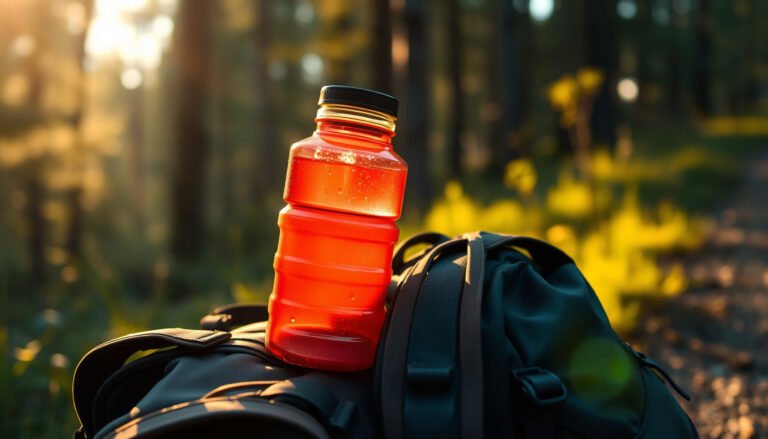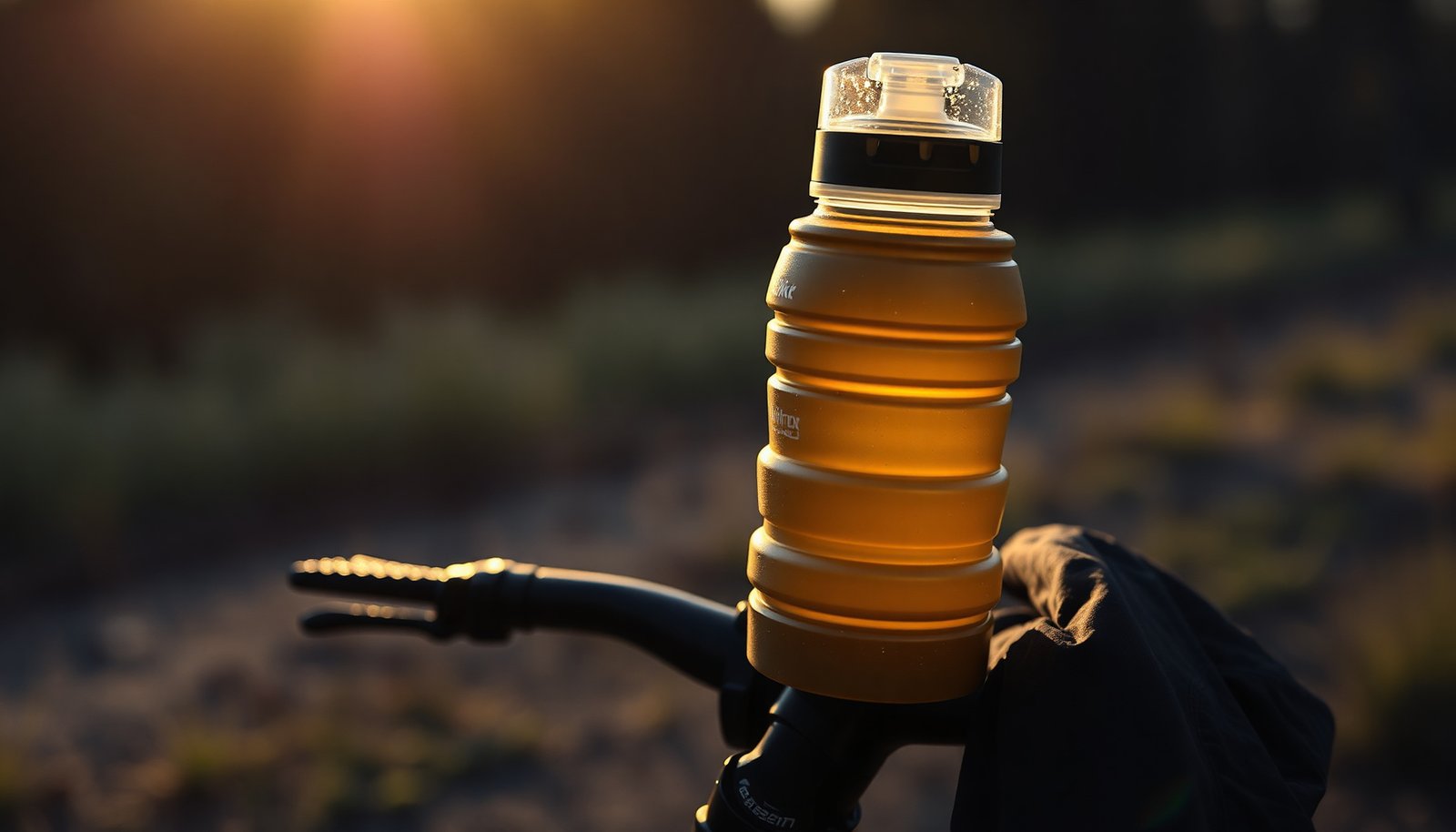
Most cyclists assume a collapsible bottle is only useful for emergencies, but the right design can stay easy to use on every ride and still stow compactly in your pack or bottle cage. Our recommendations are judged by real-world priorities—leak-proof sealing, one-handed refill and sip flow, durable materials, quick collapse, and cleaning simplicity. You’ll also see which model stands out for smooth operation when space and speed matter most.




The best collapsible water bottle for cycling is the one that packs flat and seals reliably so you don’t end up with a wet frame bag or handlebars. Use this guide to match the bottle size, closure type, and material to your ride (road, gravel, or MTB) and your cleaning routine. If you’re choosing between squeeze-style flasks and foldable soft bottles, you’ll learn what actually matters—capacity, anti-leak design, ease of filling, and whether it’s practical to clean after long days.
If you ride on vibration-heavy terrain—fast road descents, washboard gravel, or chunky MTB tracks—your bottle’s closure and spout design matter more than the “collapsible” gimmick. This article focuses on practical, repeatable buying decisions so your collapsible bottle behaves like a bike tool: consistent when you reach for it one-handed, and predictable when you stow it.
What to look for in a collapsible bottle for cycling
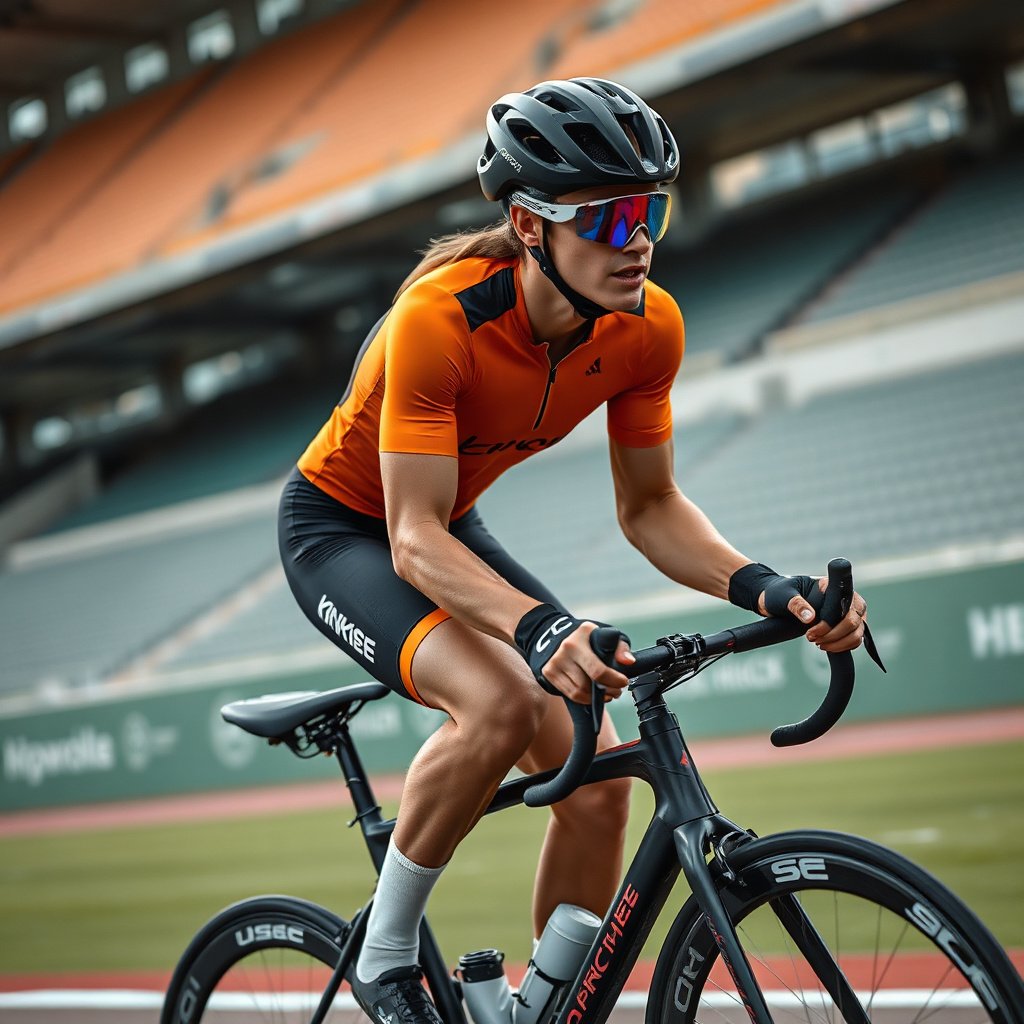
A collapsible bottle’s performance comes down to whether it seals under motion and whether you can use it quickly while you’re still exerting effort. For cycling, those two factors (anti-leak + usability) usually outweigh small differences in material feel.
Leak-proof closure you can trust
A collapsible water bottle for cycling is only as good as its closure during vibration, cornering, and shifting inside a frame bag or hydration pocket. Look for a closure that creates a true seal: threaded caps, lock-style mechanisms, or gaskets designed to compress rather than simply “sit” in place.
Also test the closure conceptually: if the cap relies on friction alone, it may loosen slightly after temperature changes or repeated handling. Cycling adds side-loads (from grabbing and stowing) that many “camping” closures are not designed for. If you’ve ever opened a pocket and found a damp jersey hem, you already know why closure design is the top requirement for a collapsible bottle.
Easy filling + drinking on the move
A collapsible water bottle for cycling should be easy to fill without turning your ride into a maintenance task. Prioritize one-handed operation: a spout that doesn’t require constant repositioning, and a cap that opens with minimal grip adjustments.
When you’re deciding between squeeze-style flasks and foldable soft bottles, consider how the outlet behaves at speed. If the drinking tip drips when you stop pressing, you’ll lose time and risk drops near your bars. In 2026, many cyclists also want compatibility with common bottle bibs, mini funnels, and hydration-bag routing—so an “easy fill” opening matters just as much as anti-leak performance.
Size, packability, and how to carry it
The best collapsible bottle is the one that matches your refuel habits and your storage space. Size is not just capacity in milliliters—it’s whether the bottle becomes easy to store when empty, without making your next refill slower.
Pick capacity based on ride duration (and refuel strategy)
Fluid needs vary by intensity and heat, but planning works better than guessing. According to the American College of Sports Medicine (ACSM), general cycling/endurance fluid intake targets are roughly 0.4–0.8 L per hour depending on conditions (ACSM Position Stand: fluid replacement guidelines (2007)). If you routinely do long pulls or ride in hot weather, you’ll commonly fall toward the higher end.
Use your ride pattern: if you carry one bottle and stop for refills, you can choose a smaller collapsible bottle and rely on planned water sources. If you carry one bottle and do out-and-back routes with limited opportunities, you’ll want a larger capacity so your collapsible bottle becomes the actual hydration plan—not the backup plan.
Consider how it collapses when empty
For many cyclists, “packs flat” is the deciding factor—especially for compact frame bags, under-top-tube straps, and jersey-pocket carry when the bottle is staged for quick access.
However, different collapsible bottles collapse differently: some fold into a very thin profile, while others retain thickness because of internal folds, reinforcement rings, or thicker silicone walls. That remaining profile can affect whether the bottle fits in a frame bag without bending the spout or twisting the cap seal. In 2026, riders increasingly use tighter bag systems, so pack profile has become a practical requirement, not a nice-to-have.
Recommended Single-Bottle Capacity by Ride Time (based on 0.4–0.8 L/h)
| # | Ride duration | Fluid range (L) | Midpoint (L) | Bottle size target |
|---|---|---|---|---|
| 1 | 30 minutes | 0.2–0.4 | 0.3 | 300 mL |
| 2 | 45 minutes | 0.3–0.6 | 0.45 | 450 mL |
| 3 | 60 minutes | 0.4–0.8 | 0.6 | 600 mL |
| 4 | 90 minutes | 0.6–1.2 | 0.9 | 900 mL |
| 5 | 120 minutes | 0.8–1.6 | 1.2 | 1,200 mL |
| 6 | 150 minutes | 1.0–2.0 | 1.5 | 1,500 mL |
| 7 | 180 minutes | 1.2–2.4 | 1.8 | 1,800 mL |
Note: range and midpoint are computed from 0.4–0.8 L/h using standard time conversions, with the midpoint at 0.6 L/h. ACSM Position Stand (2007) fluid replacement targets
Materials & caps: what affects taste and durability
A collapsible bottle for cycling should preserve taste, resist odor retention, and hold up to repeated squeezing. Material and cap construction are the two biggest drivers of how “fresh” your drinks taste after several rides.
Food-grade material matters
Food-grade silicone-style bottles tend to flex more than rigid plastics, which can make them more packable when empty. At the same time, the exact wall thickness and spout geometry influence how easily you can rinse and dry the inside.
If you frequently ride with plain water, the material choice is more about durability. If you mix electrolyte drinks, syrups, or carb solutions, the material’s cleaning friendliness becomes critical because residue can cling to folds and internal seams. In 2026, many cyclists also prioritize BPA-free and food-contact safe plastics—so you should verify that the materials are rated for food and repeated use rather than being “single-use” style polymers.
Closure + spout type changes usability
Squeeze outlets are often fast and intuitive, but they can be harder to fully rinse if the spout restricts water flow. Wide openings (or spouts that offer full access) make cleaning more reliable after sweet sports drinks or electrolyte mixes.
Durability is also about how the cap interfaces with the bottle body. A cap that clamps evenly prevents micro-leaks when you stow the bottle and when the bottle compresses in a bag. If your collapsible water bottle for cycling includes an external collar or ring, check whether that hardware traps water during drying—trapped water is where odor and residue start.
Cleaning and maintenance (this is where many choices fail)
The easiest collapsible bottle to love is the one you’ll actually clean. After long rides, cleaning isn’t optional—especially if you use electrolytes, carbs, or flavored mixes that leave sugars behind.
Choose a bottle you can fully rinse
A collapsible water bottle for cycling needs a cleaning pathway that actually reaches the parts that hold residue: the spout, the inner walls, and any fold points. Narrow openings can trap residue, and residues harden into a film that makes the bottle taste “off” on your next ride.
If you mix electrolytes or carbs, plan for better rinsing. For endurance nutrition, fluid + carbohydrate strategies commonly target 30–60 g of carbohydrate per hour in appropriate cases (ACSM sports nutrition guidance (2009)). That means your bottle can carry a meaningful amount of sweet solution—so cleaning needs to be thorough, not just a quick rinse.
Plan your post-ride routine
If you don’t want to clean immediately after every ride, look for bottle designs that are easier to scrub and dry thoroughly. A bottle that dries slowly increases odor risk and can develop stubborn smells that are hard to remove later.
From a practical standpoint, your routine should take minutes, not hours. In my own day-to-day bike packing, the cleaning step that consistently fails is “washing later” when I’m tired—. The product choice that solves that problem is usually the one with a wider mouth and simpler spout geometry.
What can go wrong
Collapsible bottles fail most often when their seals are only “nearly” sealed or when residue builds and changes taste. The good news: most failure modes are preventable with the right closure design and a realistic maintenance plan.
Wet gear from “almost sealed” caps
Even a well-designed collapsible water bottle for cycling can leak if the cap isn’t aligned correctly. After filling, take 10 seconds to check that the cap is fully seated and not cross-threaded (for threaded designs) or partially latched (for lock designs).
Stow changes matter too. When the bottle shifts inside a frame bag, the cap can momentarily rotate and break the seal. This is especially common with soft foldable bottles that compress unevenly. A reliable closure is the difference between a bottle that’s “almost leak-free” and one that doesn’t ruin your ride.
Hard-to-clean buildup
If you use flavored drinks, an easy-clean bottle becomes non-negotiable. Sweet liquids can leave sticky residue in soft folds, and residue can build up faster than you expect—particularly with electrolyte mixes that include thickeners or sugar alcohols.
If you don’t want this maintenance load, consider using plain water in your collapsible bottle and reserve flavored mixes for a bottle system you can clean immediately. As a nutrition anchor, endurance guidance often recommends sodium intake in the ~300–600 mg/h range depending on sweat rate and duration (ACSM endurance nutrition/sodium considerations (2007)). That sodium-heavy mix can amplify taste and cleanliness issues when left behind.
Collapse that isn’t actually convenient
A collapsible water bottle for cycling should compress easily, but it also has to be refillable without wrestling. Some bottles collapse into a thin profile yet become awkward to grip when you’re trying to refill quickly at a stop.
Test the refill workflow mentally: can you open the cap while the bottle is in your hand, not while it’s pinned in a bag? Can you squeeze without accidentally shifting the cap? In my view, you should avoid “great in theory” collapsibility if it makes real-world refilling frustrating— to confirm the sequence.
Verdict: the best collapsible bottle depends on your riding style
The best collapsible water bottle for cycling is the one that fits your terrain demands, your refill cadence, and your cleaning habits. If you want a single recommendation that works for most riders, prioritize a secure cap and a spout that stays cleanable after electrolyte use.
Best overall pick (most riders)
A collapsible bottle with a secure threaded or lock-style cap, a simple drinking outlet, and a wide-enough opening for cleaning is the safest “default” choice. This setup reduces the two most common problems—leaks during vibration and persistent taste after long rides.
Downsides to know upfront
Collapsible bottles can be bulkier when full than rigid bottles, and if the material holds odor it may require more frequent cleaning. Soft materials can also show wear around seams after repeated compression.
Skip a collapsible bottle if:
you need maximum flow speed, you hate cleaning soft plastics, or you regularly ride with gooey mixes you can’t rinse soon after. In those cases, a rigid bottle with straightforward cleaning access can outperform a collapsible bottle in both usability and ride-day confidence.
Quick checklist / scan-and-save
| What to check | Why it matters for cycling |
|---|---|
| Cap type (threaded/lock vs simple friction fit) | Prevents leaks during vibration and shifting |
| Opening size | Determines how easy it is to clean/dry |
| Collapse profile when empty | Impacts whether it fits your frame bag or jersey pocket |
| Drinking/spout design | Affects whether you can use it one-handed |
| Material + odor retention | Influences taste after a few rides |
Squeeze-style flasks vs foldable soft bottles (what actually changes day to day)
Squeeze-style flasks and foldable soft bottles both collapse, but their day-to-day tradeoffs are different. If you keep cycling with electrolytes and carbs, cleaning and seal reliability typically matter more than “how compact” the bottle looks empty.
| Feature | Squeeze-style flask | Foldable soft bottle |
|---|---|---|
| Primary use case | Quick hand squeeze + controlled sip | Compress with folding to reduce volume |
| One-handed access | Usually simpler grip + spout | Often depends on spout placement |
| Leak risk under vibration | Depends heavily on cap + spout junction | Can be higher if folds distort the seal |
| Cleaning reach | Often more accessible at the top opening | Folds may trap residue in creases |
| Drying time | Typically faster if fully rinseable | Can dry slower due to complex folds |
| Taste carryover (odors) | Lower if spout cleans well | Higher if residue settles in seams |
| Refilling at stops | Generally straightforward | Can be awkward if bottle needs re-positioning |
| Pack profile (empty) | Collapses but may keep a “tube” thickness | Often flattens more aggressively |
| Grip comfort when full | Squeeze grip can fatigue some hands | Soft body can be harder to control |
| Seal engineering | Cap design is the make-or-break | Seal depends on fold compression behavior |
| **Best for** | Road and gravel riders who refill often and want quick sipping | MTB/gravel riders who prioritize maximum empty pack reduction |
Threaded/lock caps vs friction-only caps (leak-proof reality check)
Cap type is the fastest predictor of whether a collapsible bottle ruins gear—or simply becomes background equipment. If you ride in 2026 with tighter bags and more vibration, choose the cap style that stays aligned under motion.
| Criteria | Threaded/lock cap | Friction-only cap |
|---|---|---|
| Seal reliability under vibration | High | Variable |
| Resistance to rotation while stowed | Better | Worse |
| Cross-threading risk | Moderate (fixable with careful closing) | Low (but alignment can still drift) |
| Cleaning consistency (cap interface) | Stable | Can trap residue at the edge |
| Ease of cap check | Clear “fully tightened” feel | Hard to tell if it’s seated |
| Cap durability | Usually robust | Can loosen over repeated cycles |
| Risk with temperature swings | Lower | Higher |
| Leak consequence for cycling | Usually minimal | Can spot-leak into bags/jerseys |
| Best fit for electrolytes | Yes (if spout is cleanable) | Often risky |
| Best fit for MTB vibration | Yes | Usually no |
| **Verdict** | Prefer threaded or lock-style caps when you want dependable anti-leak performance | Avoid friction-only designs for cycling carry unless you’re willing to verify every ride |
Frequently Asked Questions
What are the best collapsible water bottles for cycling in hot weather?
Look for collapsible water bottles for cycling that are BPA-free, food-grade, and designed to handle higher temperatures without odors. A wide-mouth option can make it easier to clean after sweaty rides, which helps prevent lingering tastes. Many cyclists also prefer bottles with a leakproof cap and a roll-up or fold design that fits securely in a bottle cage or jersey pocket.
How do you choose a collapsible water bottle that won’t leak on a bike?
Prioritize leakproof cycling water bottles with a tight screw or locking cap, a reliable seal, and a spout designed to prevent drips during movement. Check for an integrated O-ring or gasket and make sure the bottle sits flat when collapsed so it doesn’t shift in your pack. It’s also smart to test the bottle at home by filling it and turning it upside down before trusting it on a ride.
Which collapsible bottle size is best for cycling—350ml, 500ml, or 750ml?
For most short rides, a 350–500ml collapsible bottle is usually enough, especially if you carry a second water source. For longer training sessions or routes with limited refills, 600–750ml gives better hydration coverage without forcing you into a bulky setup. If you often ride with a hydration bladder or additional bottles, choose a size that complements your existing capacity and is easy to collapse between segments.
Why do cyclists use collapsible water bottles instead of rigid bottles?
Collapsible water bottles reduce bulk when empty, making them ideal for pack rides, bikepacking, and multi-day cycling where storage space is limited. They can also be easier to store in a jersey pocket or behind the seat when your water needs change mid-ride. When you pick a high-quality folding water bottle with durable materials and a reliable cap, you still get practical on-bike performance with the advantage of compact storage.
How should you clean and maintain a collapsible water bottle for cycling to prevent odors?
Clean your collapsible cycling water bottle right after use with warm water and mild soap, then rinse thoroughly to remove any residue. If your bottle has a small opening, use a bottle brush and dry it completely with the cap off to prevent trapped moisture. For stubborn smells, a safe soak with a water-and-baking-soda solution can help, but avoid harsh chemicals that may degrade the material over time.
📅 Last Updated: November 25, 2026 | Topic: Best Collapsible Water Bottles for Cycling | Content verified for accuracy and freshness.
References
- Water bottle
- Heat Stress and Workers | Heat Stress | CDC
- Dehydration – Symptoms and causes – Mayo Clinic
- Bisphenol A (BPA) | FDA
- https://eur-lex.europa.eu/eli/reg/2011/10/oj
- hydration endurance exercise review – Search Results – PubMed
- reusable water bottle microbial contamination – Search Results – PubMed
- https://scholar.google.com/scholar?q=best+collapsible+water+bottle+cycling Google Scholar
- https://scholar.google.com/scholar?q=collapsible+water+bottle+safety+silicone+food+contact Google Scholar
- https://scholar.google.com/scholar?q=hydration+strategies+endurance+exercise+cycling+water+intake Google Scholar