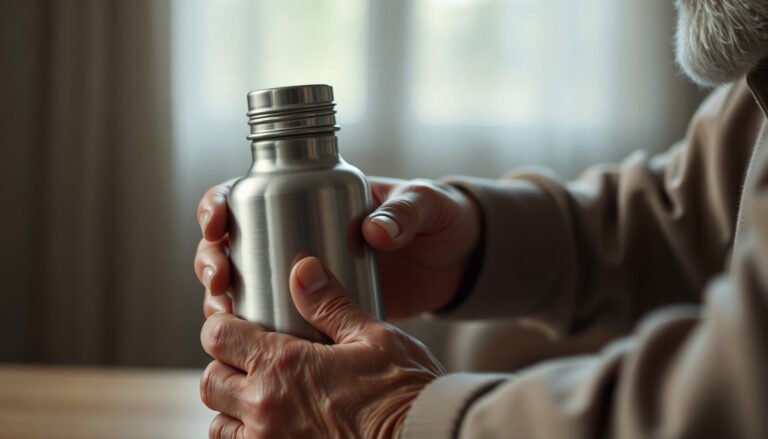
For pregnancy-safe hydration, pick an aluminum bottle that’s certified BPA-free and uses a food-grade interior liner (or no liner) designed for beverages. The right choice comes down to material and safety certifications, lid and seal performance to prevent spills, and how easily it can be cleaned to reduce residue. Among options, insulated, leakproof bottles with simple parts and no reactive coatings tend to be the most dependable day-to-day.




Pick an aluminum water bottle that’s safe to use during pregnancy by choosing food-grade, BPA-free materials and a properly lined interior, then using a size and lid style that makes hydration easy. In this guide, we’ll cover what to look for in construction, coatings/lining, and everyday care—so you can avoid common “it should be fine” mistakes.
If you’re pregnant (or buying for someone who is), this matters because hydration habits often change and you’ll want a bottle that’s comfortable, durable, and compatible with frequent use. We’ll focus on how aluminum bottles should be evaluated for safety and performance, not on hype.
Check the lining: look for “food-grade” and a safe interior

The safest aluminum bottle choice in pregnancy is one where the interior is designed for direct liquid contact, not “bare aluminum.” The interior liner is what separates your water from the metal, so label clarity matters as much as the aluminum itself.
What “food-grade” should mean for bottle interiors
The interior should be described as food-grade and lined (many aluminum bottles are made for outside-only contact unless a liner is present). When a bottle says the inside is safe, it should specify that the liner/coating is intended for beverage contact, not just for corrosion resistance. If the brand only talks about the outside finish, assume the interior needs more scrutiny.
– Confirm the bottle’s interior is food-grade and typically lined (many aluminum bottles are not meant to contact liquid directly without a coating/liner).
– Choose products that state BPA-free and clearly describe the interior material/liner (often a coating designed for liquids).
Why lining details matter during pregnancy
Pregnancy doesn’t automatically make aluminum “unsafe,” but it can change your risk tolerance: if you’re nauseated, tired, or drinking more frequently, you’re more likely to use the bottle every day and store water for longer periods. A well-designed liner should reduce the chance of taste/odor transfer and help prevent coating degradation from repeated exposure.
Verify material safety details (BPA-free, compatible coatings)
A pregnancy-appropriate aluminum bottle is one that’s transparent about what touches your water—especially the BPA status and the exact type of coating/liner. “BPA-free” is a starting point, but compatibility with hot/cold liquids and cleaning methods is what determines whether the bottle stays safe over time.
Use regulatory and labeling cues, not marketing language
In the U.S., FDA actions around BPA in food-contact products are a useful reference point: the FDA finalized the ban on BPA in baby bottles and certain infant sippy cups in 2012. FDA (2012) While your bottle isn’t for infants, the same principle applies—your safest path is a bottle whose manufacturer has made clear, measurable safety choices about what’s in contact with food or drink.
– Look for BPA-free and other packaging/material disclosures in the product description or label.
– Avoid bottles that are unclear about what touches the water—if the manufacturer doesn’t specify the interior/liner, treat that as a red flag.
Be cautious with “coating” claims that don’t explain compatibility
Some bottles say “coated” or “non-reactive” but don’t explain the coating’s purpose or limitations. During pregnancy, you’ll often have weeks where you’re drinking cold water, warm tea, or occasionally water you’ve let sit in the bottle. If the liner isn’t designed for liquids in those conditions, it may degrade, and any degradation increases the importance of label clarity and maintenance.
Also, if you’re trying to avoid certain chemical exposures, remember that “BPA-free” does not automatically mean “free from every bisphenol analog.” The safest approach is to choose bottles that clearly state the interior material/liner and follow care instructions consistently.
Pick the right size and lid for pregnancy comfort
The best aluminum bottle size and lid during pregnancy are the ones you’ll use consistently without spills or effort. In practice, lid style affects whether you can drink one-handed, quickly, and without leaks—an outcome that matters when nausea, fatigue, or dizziness show up.
Match bottle volume to your daily drinking pattern
A size that’s “bigger” isn’t always better. If a bottle feels heavy, hard to carry, or annoying to open, it may reduce how much you actually drink. To make this practical, consider pregnancy hydration targets. The Institute of Medicine/National Academies lists an adequate intake for total water during pregnancy of 2.3 liters/day (about 9.2 cups/day), which includes water from beverages and food. National Academies/Institute of Medicine (2005)
Below is a simple way to translate that number into “how many times you’d refill” for common bottle sizes.
Pregnancy Total Water (2.3 L/day) Coverage by Bottle Size
| # | Bottle capacity (US oz) | Approx. liters | Full fills to reach 2.3 L | Refill convenience |
|---|---|---|---|---|
| 1 | 12 oz | 0.35 L | 6.5× | ★★ |
| 2 | 16 oz | 0.47 L | 4.9× | ★★★ |
| 3 | 20 oz | 0.59 L | 3.9× | ★★★ |
| 4 | 24 oz | 0.71 L | 3.2× | ★★★★ |
| 5 | 28 oz | 0.83 L | 2.8× | ★★★★ |
| 6 | 32 oz | 0.95 L | 2.4× | ★★★★★ |
| 7 | 40 oz | 1.18 L | 1.9× | ★★★★★ |
Lid choices that reduce friction (and spills)
The right lid for pregnancy is usually the one that’s easy to open with fatigue or nausea. Look for a leakproof design, an easy-open flip, or a straw style that lets you sip without repeatedly unscrewing a cap. If you frequently toss your bottle into a bag, leakproof matters more than insulation features.
– Choose a size you’ll actually drink from daily (bigger isn’t always better if it’s heavy or inconvenient).
– Prioritize a lid you can operate one-handed (leakproof cap, easy-open flip, or straw style), especially if you’re dealing with fatigue or nausea.
Consider daily use and cleaning (what can shorten bottle life)
A pregnancy-friendly aluminum bottle should be easy to clean in a way that protects the interior liner. The fastest way to reduce safety and performance is to damage or degrade the coating through unsupported cleaning methods or neglecting hard-to-reach parts.
Cleaning actions that protect the interior liner/coating
Coated liners can be tough, but they are not indestructible. Harsh abrasives, metal scrubbers, and repeated soaking in strong cleaning solutions can wear down coatings over time. Instead, use the manufacturer’s instructions, and treat the interior like a part of a food-contact system, not like a heavy-duty pan.
– Follow the manufacturer’s cleaning instructions to protect the lining/coating over time.
– If you use a straw or gasket, plan for regular cleaning of those parts—residue and odor buildup can be harder to manage later.
Hot water, dishwasher use, and “quick fixes”
When you’re pregnant, it’s tempting to “make cleaning faster,” especially in 2025 and 2026 when many people rely on dishwashers and sanitizer sprays. But if the bottle’s label says a component is not dishwasher-safe or not rated for boiling liquids, treat that as a hard limit. Many lining failures start at the time people exceed the care guidance, not at the time of purchase.
How often you should inspect the bottle
Every few weeks, check for internal scratches, chips, or any peeling. A damaged liner doesn’t automatically mean the bottle is “toxic,” but it does mean it’s no longer performing as intended for direct liquid contact. In pregnancy, it’s reasonable to switch bottles rather than keep using a visibly compromised interior.
What can go wrong: common mistakes to avoid
The biggest problems with aluminum bottles during pregnancy are usually predictable: unclear interior materials, damaged liners, and cleaning practices that unintentionally degrade coatings. If you avoid those patterns, you reduce risk and improve the day-to-day experience.
Common “it should be fine” mistakes
– Unclear interior safety: buying an aluminum bottle without clear BPA-free and liner/coating details.
– Harsh cleaning or overheating: using methods that damage coatings (example: aggressive abrasive tools or heating where the label says not to).
– Wear-and-tear surprises: chips, scratches, or peeling interior coatings can mean the bottle is no longer a safe choice for direct contact.
Practical edge cases to watch for
If you use the bottle for more than plain water—such as adding citrus, sports drinks, or concentrated tea—your bottle experiences different pH (acidity) and chemical load. Some liners are designed for water-only use even if they can handle occasional beverages. Also, if you store water for long periods, taste changes can signal liner degradation even before you see visible damage.
Finally, some bottles market “aluminum” while the most important part—the internal coating—gets less attention in the description. In 2024 and 2025, that inconsistency remains common across product pages, so you have to read the interior claims closely.
Verdict: a practical recommendation (and who should skip it)
A well-made, BPA-free aluminum bottle with a clearly described, food-safe interior liner is usually a sensible choice for pregnancy hydration—especially if you want something sturdy and easy to carry. Here’s why: the aluminum becomes a structural material, while the liner is the part engineered to safely separate liquid from metal.
When lined aluminum is a good fit
Consider a lined aluminum water bottle if you want:
– Durability for daily carry
– Leakproof lid performance you can manage when you’re tired
– A clear interior description (food-grade lining + intended liquid contact)
Also, research on BPA has shaped safer product design over time. EFSA’s risk assessment included the idea of tolerable daily intake benchmarks for BPA exposure EFSA (2015), and modern “BPA-free” claims generally reflect that regulatory and scientific pressure—even though you still need liner transparency for aluminum bottles.
Who should skip lined aluminum bottles
Skip this type of bottle if:
– The brand doesn’t clearly explain the interior coating/liner
– You notice chipping/peeling inside
– You prefer to avoid lined/coated options altogether (for example, if you don’t want to manage liner wear)
If you want a different material pathway, consider glass or stainless steel options where the liquid-contact surface is inherently compatible (still verify manufacturer claims, but you’re dealing with fewer “mystery liner” variables).
- Lined aluminum bottles (Best when…)
- you get clear label detail about the liner, you follow care instructions, and you inspect the interior for damage.
- Lined aluminum bottles (Avoid when…)
- the interior materials are vague, dishwasher/heat compatibility isn’t stated, or the bottle shows internal coating wear.
- Practical alternative materials (Best when…)
- you prefer a simpler liquid-contact surface or you want to minimize liner management.
Quick checklist before you buy
– [ ] Interior is food-grade and described clearly by the manufacturer
– [ ] BPA-free is explicitly stated
– [ ] Lining/coating is intended for liquid contact (not just “for the outside”)
– [ ] Lid is leakproof and easy for you to use comfortably
– [ ] Cleaning instructions are clear, and you can follow them
Frequently Asked Questions
What should I look for when picking an aluminum water bottle during pregnancy?
Look for a pregnancy-safe aluminum water bottle that is fully BPA-free and ideally food-grade, with a protective interior lining that prevents metallic taste and reduces risk of leaching. Choose a bottle with a leak-proof lid and an easy-to-clean design so you can maintain good hygiene throughout the day. If you prefer the taste of water, consider whether you want a lined vs. unlined interior, and check for any certifications or manufacturer testing details.
How can I tell if an aluminum water bottle is safe for drinking while pregnant?
First, confirm the bottle is BPA-free and made for food contact, and search for any explicit safety statements about the lining or coating used inside the bottle. Avoid bottles with dents, chips, or scratches inside the drinking surface because damage can expose more of the aluminum. If you use the bottle daily, clean it regularly with non-abrasive methods to help protect the interior coating.
Why might an aluminum water bottle be a good choice in pregnancy?
Staying hydrated is important during pregnancy, and an aluminum water bottle is lightweight, durable, and typically more temperature-friendly than some other materials. A reusable option also makes it easier to carry water for frequent sips, which can support comfort and help reduce the temptation to rely on less healthy drinks. Many pregnant people also like the portability of aluminum bottles for commuting, prenatal appointments, and everyday hydration.
Which aluminum bottle features are best for pregnant women—lid type, size, or insulation?
For convenience, choose a leak-proof lid that’s easy to open with one hand, since you may be juggling tasks frequently. Consider size based on your routine: a smaller bottle is great for carrying in a bag, while a larger one helps you reach daily hydration goals without refills. If you struggle with drinking warm or plain water, an insulated or thermos-style aluminum bottle can keep water cool for longer, which may improve how often you drink.
What is the best way to use and maintain an aluminum water bottle during pregnancy?
Rinse your bottle after each use and wash it regularly with mild soap; avoid harsh scrubbers that can scratch the interior lining. If the bottle has a coated or lined interior, follow the manufacturer’s cleaning instructions and avoid soaking for long periods unless recommended. Replace the bottle if you notice persistent odors, taste changes, or any damage to the drinking surface, since maintaining a protective interior matters for pregnancy hydration safety.
📅 Last Updated: November 25, 2026 | Topic: How to Pick a Aluminum Water Bottle for Pregnancy | Content verified for accuracy and freshness.
References
- Guidelines for drinking-water quality, 4th edition, incorporating the 1st addendum
- https://www.atsdr.cdc.gov/toxprofiles/tp22.pdf
- https://www.epa.gov/sdwa/national-secondary-drinking-water-regulations
- https://www.fda.gov/food/buy-store-serve-safe-food/bottled-water
- Bisphenol A (BPA) | FDA
- aluminum leaching drinking vessels – Search Results – PubMed
- aluminum exposure pregnancy reproductive – Search Results – PubMed
- https://scholar.google.com/scholar?q=aluminum+water+bottle+pregnancy Google Scholar
- https://scholar.google.com/scholar?q=aluminum+leaching+beverage+containers+ph+temperature Google Scholar
- https://scholar.google.com/scholar?q=pregnancy+drinking+water+metals+aluminum Google Scholar