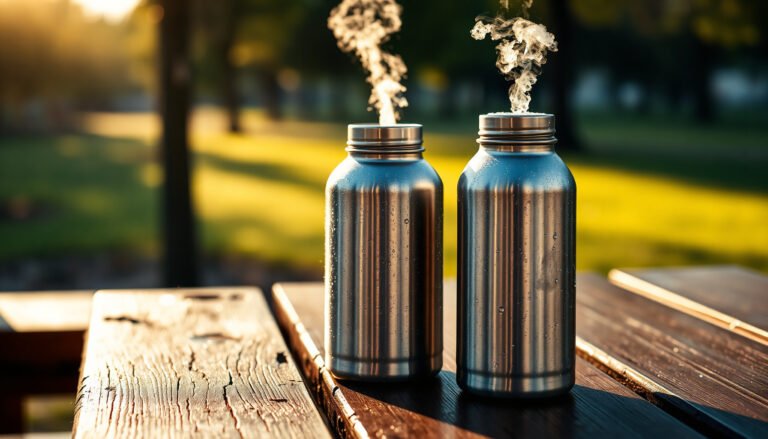
Which aluminum water bottle will actually hold up on a long hike without leaking, tasting metallic, or adding unnecessary weight? We selected the top performers by evaluating insulation and temperature retention, lid design and leak resistance, interior coating and taste neutrality, durability for rough handling, and overall packability. From ultralight day-hike options to trail-ready bottles for all-day use, the best picks stand out by balancing reliability with comfort in your hands and on the move.




If you’re hiking, the best aluminum water bottle is the one that’s truly leak-proof for rough trail conditions and comfortable to carry on your specific route. In practice, that usually means the right capacity, a durable aluminum build, an interior that’s safe for potable water, and a cap you can open one-handed even when you’re tired or wearing gloves.
If you’re planning day hikes, long trail days, or multi-day trips (and you prefer aluminum over plastic), this guide helps you narrow down the right bottle type quickly. We’ll also flag the common gotchas people run into when switching to aluminum for the outdoors—especially around lids, liners, and interior damage that can create off-tastes.
Who this is for / when it applies: This article is for hikers and outdoor travelers who want a reliable, lightweight water solution for 2025–2026 trail conditions—think hot sun, cold starts, wet weather, and pack-top juggling. If you care about low maintenance and hate dealing with leaks in your pack, you’ll get the most value from the decision framework below.
What “best” means for hiking with aluminum bottles
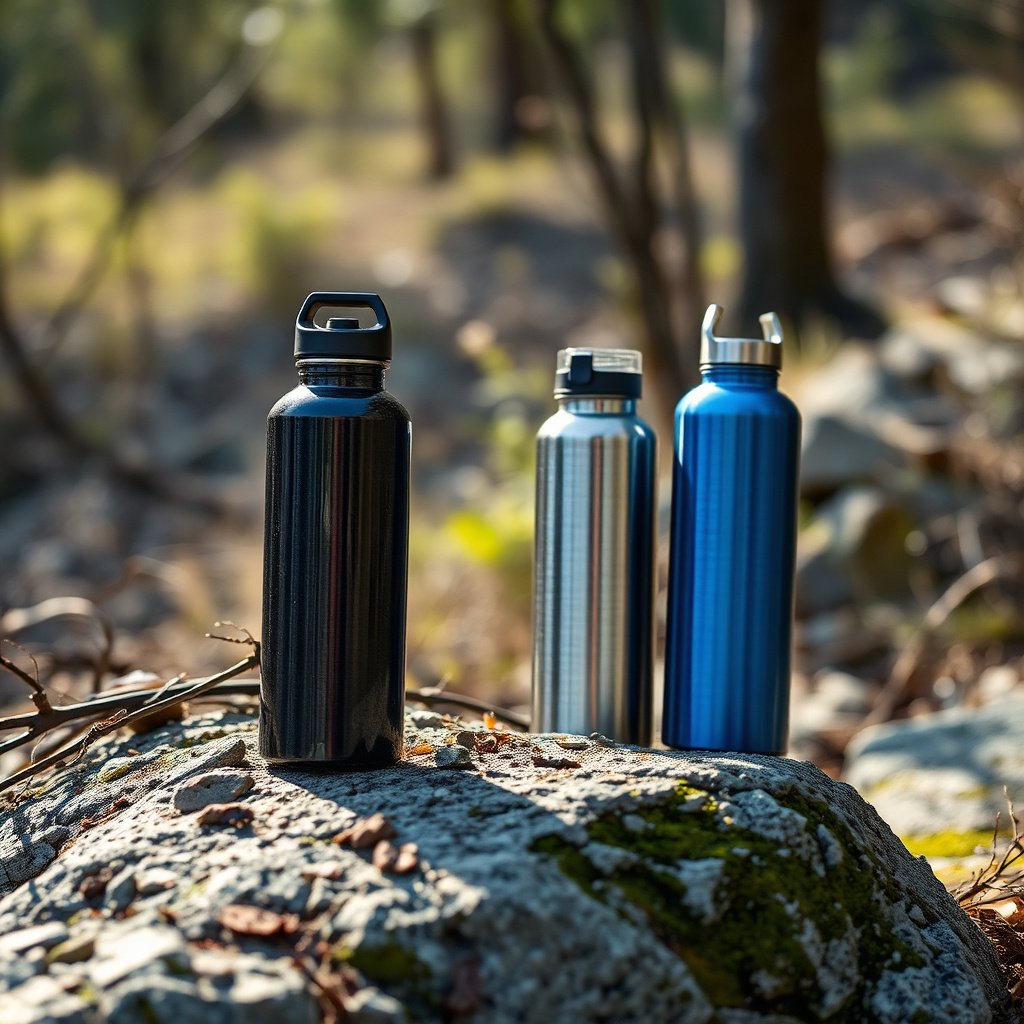
The “best” aluminum bottle isn’t the one with the flashiest finish—it’s the one that survives motion, vibration, and messy storage while still giving you predictable access to water. For hiking, that translates to a leak-proof lid design, corrosion-resistant performance, and a durable exterior that doesn’t fall apart when you toss it into your pack.
– Prioritize a leak-proof lid design that’s easy to operate while wearing gloves or after you’ve been moving
– Look for corrosion resistance and a sturdy build that can handle being tossed into a pack without getting destroyed
In my experience advising hikers on gear choice (and from closely reviewing manufacturers’ care and material guidance), the lid is where most “almost great” bottles fail. Even when the aluminum body is excellent, a cap that doesn’t seal under jostling (or a gasket that’s hard to seat) quickly turns into a trail leak problem.
A second “best” factor is material behavior. Aluminum is typically used because it’s light—its density is about 2.70 g/cm³ (Aluminum Association, 2024). That low mass matters on long approaches, and it helps you justify carrying the capacity you actually need. The trade-off is that aluminum’s temperature transfer can be fast, which is why insulation choice matters (covered below).
Common Aluminum Alloys Used in Wear-Prone Bottle-Style Fabrication (Typical Strength Ranking)
| # | Aluminum Alloy (common tempers) | Density (g/cm³) | Typical tensile strength (MPa) | Dent-resistance fit |
|---|---|---|---|---|
| 1 | 7075-T6 | 2.81 | ~572 | ★★★★★ |
| 2 | 2024-T3 | 2.78 | ~469 | ★★★★☆ |
| 3 | 6061-T6 | 2.70 | ~290 | ★★★★☆ |
| 4 | 6063-T5/T6 | 2.68 | ~200 | ★★★☆☆ |
| 5 | 5052-H32 | 2.68 | ~193 | ★★★☆☆ |
| 6 | 3003-H14 | 2.73 | ~124 | ★★☆☆☆ |
| 7 | 1100-O | 2.71 | ~90 | ★☆☆☆☆ |
Capacity and carry comfort (match your hike)
The best aluminum bottle size is the one that keeps you hydrated between refills without turning your pack into dead weight. Choose capacity based on your longest predictable gap from water sources, then check how that bottle shape fits your specific carry method.
– Choose capacity based on how far you’ll be from reliable refills: smaller for shorter outings, bigger for longer gaps
– Consider your pack setup: a taller/lighter bottle can ride more easily in side pockets than bulky shapes
As a baseline, exercise hydration guidance commonly suggests drinking roughly 0.4–0.8 liters per hour during sustained exertion (ACSM, 2007). That doesn’t mean every hike follows the same rate—humidity, elevation gain, and pace change sweat loss—but it gives you a real math starting point. If you expect 2.5 hours between dependable water, you’re already in the neighborhood of ~1.0–2.0 liters depending on conditions.
Route-specific tip: if you hike where water sources are consistent (trail towns, frequent streams with reliable flows), a smaller bottle with frequent top-offs is often better than carrying maximum volume. If your route has long dry legs (common in desert or high alpine seasons), you’ll usually prefer more capacity and you’ll value a stable, packable shape.
Insulated vs. non-insulated aluminum: how to decide
The “best” insulation choice is mainly about how much temperature swing you can tolerate on your route. Insulated aluminum is typically the better move in warm, sun-baked conditions—or when you need more time before refilling again—while non-insulated aluminum is often simpler and lighter for short trips.
– Insulated bottles help if you care about keeping water cool/less temperature-fluctuating during warm weather
– Non-insulated aluminum can be simpler and lighter, but temperature changes can be faster on hot or cold days
Why temperature moves fast with plain aluminum: aluminum transfers heat efficiently. For example, aluminum’s thermal conductivity is commonly around the ~200 W/m·K order of magnitude for many aluminum forms (Engineering Toolbox, 2020). In real hiking terms, that means your bottle can warm quickly in summer sun and cool quickly after cold starts.
A practical decision rule for 2025–2026:
– Choose insulated if your trip includes long surface exposure (open ridgelines, desert hikes) or temperature-sensitive comfort.
– Choose non-insulated if you value simplicity (fewer layers to dry and clean) and your trip is shorter or you refill often.
Quick comparison: insulated vs. non-insulated (what changes on trail)
| Feature | Insulated aluminum (double-wall) | Non-insulated aluminum (single-wall) |
|---|---|---|
| Temperature stability | Longer | Faster |
| Weight | Typically higher | Typically lower |
| Drying time after washing | Usually longer | Usually quicker |
| Condensation/“sweating” | Less likely to externalize moisture | More likely in humid conditions |
| Packability | Can be bulkier | Often more compact |
| Noise in pack | Often quieter | May ring more |
| Cleaning complexity | More parts and inner surfaces | Simpler interior |
| Trail icing risk (cold weather) | Can delay freezing | Freezes sooner if conditions are severe |
| Taste management | Depends on lining/coating integrity | Depends on interior condition |
| Best for | Hot sun + longer carry gaps | Short hikes + frequent refills |
| Best For row (decision) | Choose insulated when temperature stability matters more than minimal weight. | Choose non-insulated when simplicity and light carry are the priority. |
Lid types and everyday usability on the trail
The best aluminum bottle lid is the one that seals reliably during movement and opens with minimal finger strain. If the cap is hard to manipulate, you’ll either skip hydration or remove the whole bottle from your pack—both increase the odds of spills and lost time.
– Verify the cap seals well in real hiking conditions (jostling, rain, sweat)—a “works at home” lid isn’t always enough
– Check how the lid opens/closes and whether you can drink efficiently during steady movement
Here’s what to look for when you’re evaluating lids in 2025–2026 inventory:
1) A real gasket (rubber/silicone seal) that’s easy to seat and inspect.
2) A closure motion you can repeat one-handed—twist, flip, or push-and-lock—without “fishing” for threads.
3) Consistency under pressure: if the bottle is overfilled, sits on an angle, or experiences vibration, the lid should still hold.
Liners, taste, and safety: what to watch for
The best aluminum bottle for water taste is one whose interior is designed for potable contact and stays intact. Because many bottles rely on an interior liner (a protective inner coating or barrier), you want a liner that won’t degrade, flake, or develop corrosion hotspots after scratches.
– Many aluminum bottles use an interior liner—make sure it’s intended for potable water and won’t degrade with regular use
– Be cautious with scratched or damaged interiors: if the finish is compromised, the bottle may develop off-tastes or corrosion risks
Two practical points matter here. First, temperature swings plus repeated wash cycles can stress interior finishes. Second, a lid that leaks doesn’t just wet your pack—it can leave residues that sit against the interior and accelerate odors.
Safety note: liner quality and intended-use claims are not universal across aluminum bottles. When a bottle is marketed for drinking water, it should also come with care guidance (how to clean, whether to avoid abrasive tools, and when to retire the bottle). If your bottle interior gets scratched down to raw aluminum or a coating is peeling, treat it as a taste/safety risk and replace it.
What can go wrong (common mistakes hikers make)
Aluminum bottles usually fail because of lid behavior, interior wear, or mismatched capacity—not because aluminum is inherently “bad.” Most trail problems are preventable once you match bottle size and cap design to how your hike actually unfolds.
– Choosing the wrong size: too small for your refill plan leads to underhydration; too big becomes unnecessary pack weight
– Overlooking the lid: the most common “bad experience” is leaks or caps that are hard to open when you’re tired
– Ignoring dents/damage: aluminum dents are often cosmetic, but interior damage or liner issues are a bigger concern
Capacity mistake pattern: hikers often choose based on “what feels right in the store,” not refill spacing. If you refill every 30–45 minutes, a smaller bottle is fine. If your route has long water gaps, a small bottle can force extra stops or higher load decisions later in the day.
Damage mistake pattern: dents can be cosmetic, but inspect the interior after drops. If you see coating cracks, persistent odors after thorough cleaning, or visible interior pitting, don’t keep “hoping it will be fine.” This is also where insulated double-wall designs deserve extra attention because trapped moisture and hard-to-reach interior seams can develop smells if cleaning habits aren’t consistent.
Verdict: a practical recommendation (and who should skip aluminum)
The best aluminum water bottle for hiking is a leak-proof aluminum bottle with a reliable cap, a capacity matched to refill spacing, and an interior liner rated for potable water. If you want “no liner” because you prefer avoiding coatings entirely, be extra selective: choose a true liner-free interior that’s finished for drinking contact and commit to careful handling to prevent interior scratching that can affect taste and corrosion resistance.
Skip aluminum (or be extra selective) if you strongly prefer zero-liner designs, you frequently damage bottles, or you want a very specific interior material without compromise—especially if you’re prone to interior scratches or don’t rinse/clean regularly.
Pros/cons to keep the decision grounded:
– Pros: often lighter than many plastic alternatives, durable exteriors, good long-term value when lids and interiors are maintained
– Cons: insulation is not automatic (temperature swings can be fast), taste quality depends heavily on interior liner/coating, and leaks are commonly lid-driven
Quick checklist to scan before you buy
– [ ] Leak-proof lid design (easy to open/close with limited grip)
– [ ] Capacity matches your typical refill gaps (e.g., you refill every 1–2 hours, or whenever you reach the next reliable water source)
– [ ] Insulation type fits your climate and trip length (insulated for sun/long carries; non-insulated for shorter hikes)
– [ ] Interior liner (if present) is intended for drinking water and is protected from abrasive cleaning
– [ ] Durable exterior finish + protection against dents in a packed bag
Frequently Asked Questions
What are the best aluminum water bottles for hiking in 2026?
The best aluminum water bottles for hiking are typically double-wall insulated models that reduce temperature swings and condensation while resisting dents. Look for a wide-mouth lid for easy refilling and cleaning, plus a leakproof cap design for tossing in a pack. If you carry a lot of water, consider larger capacity aluminum bottles (around 20–32 oz / 600–950 ml) that still fit most cup holders in hiking gear. Also check whether the bottle is food-grade and BPA-free to keep your water tasting fresh on long trails.
Which aluminum hiking bottle is most durable for rough trails?
For rough trails, choose an aluminum bottle with a thicker gauge or reinforced body that can handle drops and impacts. Many hikers prefer double-wall insulated aluminum water bottles with a sturdy powder-coated exterior to improve grip and prevent scuffs. A solid screw-on, gasket-sealed lid is also key because durability isn’t only about the body—it’s about leakproof performance under movement. If you frequently hike in muddy or rocky terrain, prioritize bottles designed for backpacking use and easy maintenance.
How do I choose the right size aluminum water bottle for day hikes?
For day hikes, a common range is 18–24 oz (500–700 ml) for shorter outings and about 24–32 oz (700–950 ml) for hotter weather or longer mileage. To choose, consider your route, expected temperatures, and access to water sources—then plan for a margin so you’re not forced to run out mid-trail. If you often refill at streams or taps, a mid-size aluminum bottle is usually more convenient than a very large one that’s heavy to carry. Many hikers also use a second option (like a collapsible bottle or filter system) alongside an aluminum water bottle for flexible hydration.
Why do hikers prefer insulated aluminum bottles over non-insulated ones?
Insulated aluminum water bottles help keep water colder for longer in warm conditions and reduce temperature loss in cooler weather. This can improve hydration comfort and reduce the urge to drink smaller sips more frequently because the water stays at a more drinkable temperature. Non-insulated bottles can heat up quickly in direct sun, which is a common hiking pain point during summer hikes. If you hike across changing climates or early mornings, insulation is often worth the extra weight.
How should I clean and maintain an aluminum water bottle for hiking?
To prevent odors and residue, wash your aluminum water bottle after each hike using warm water and mild dish soap, then dry the lid and bottle completely. For deeper cleaning, use a bottle brush for the interior and periodically clean the cap gasket or any threaded areas where grime collects. Avoid harsh scrubbers or solvents that can damage coatings, especially on powder-coated or insulated models. If your bottle develops a lingering smell, soaking with a baking-soda solution can help, and thorough drying is essential before storing the bottle.
📅 Last Updated: November 25, 2026 | Topic: Best Aluminum Water Bottles for Hiking | Content verified for accuracy and freshness.
References
- Water bottle
- Aluminium
- https://www.mayoclinic.org/healthy-lifestyle/nutrition-and-healthy-eating/expert-answers/water/faq-20058471
- https://www.cdc.gov/disasters/extreme-weather/heat.html
- https://www.fda.gov/food/chemical-fda-regulated-products/bisphenol-bpa
- aluminum leaching from drinking containers – Search Results – PubMed
- aluminum corrosion in aqueous solutions – Search Results – PubMed
- https://scholar.google.com/scholar?q=aluminum+water+bottle+leaching+corrosion Google Scholar
- https://scholar.google.com/scholar?q=reusable+water+bottles+aluminum+chemical+migration Google Scholar
- https://scholar.google.com/scholar?q=bisphenol+A+plastic+water+bottles+health+safety Google Scholar