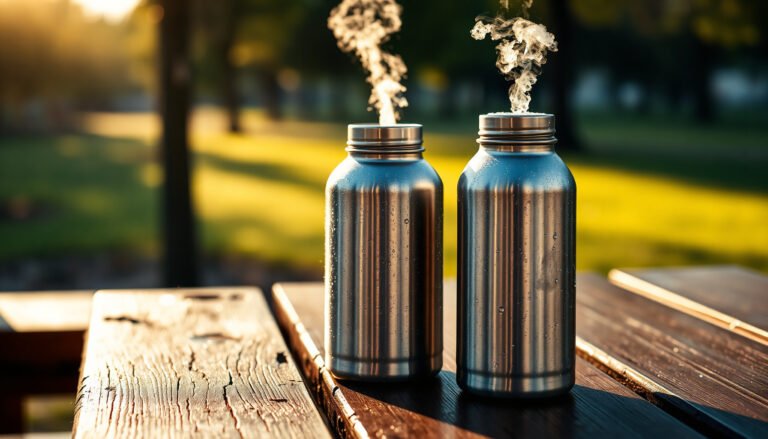
The top aluminum water bottle for nurses is a leakproof, easy-to-clean model with insulation that keeps drinks cold between shifts. Our picks were chosen for reliable sealing, comfortable grip during long hours, and broad mouth access that simplifies filling and brushing. We also prioritized scratch-resistant finishes and storage-friendly sizes, so you can choose the right fit for rounds, breaks, and medication cart routes.




For most nurses, the best aluminum water bottle is the one with a truly leak-proof lid, a beverage-safe interior finish, and insulation (or lack of it) matched to your shift length. If you’re a nurse looking for the best aluminum water bottle, prioritize leak-proof lids, sweat-free insulation, and an easy-to-clean interior. The right choice should handle frequent use in scrub pockets and busy shifts without metallic aftertaste or corrosion concerns. In this guide, we’ll break down what to look for and how to match bottle features to your day-to-day needs.
Who this is for / when it applies:
This is for nurses (ER, ICU, med-surg, travel, and clinics) who need a reliable aluminum bottle that fits routines like quick breaks, on-the-go refills, and frequent cleaning. If you’re switching from plastic or trying to avoid common “metal bottle” issues, this will help you choose more confidently.
What makes an aluminum bottle “nurse-ready”?
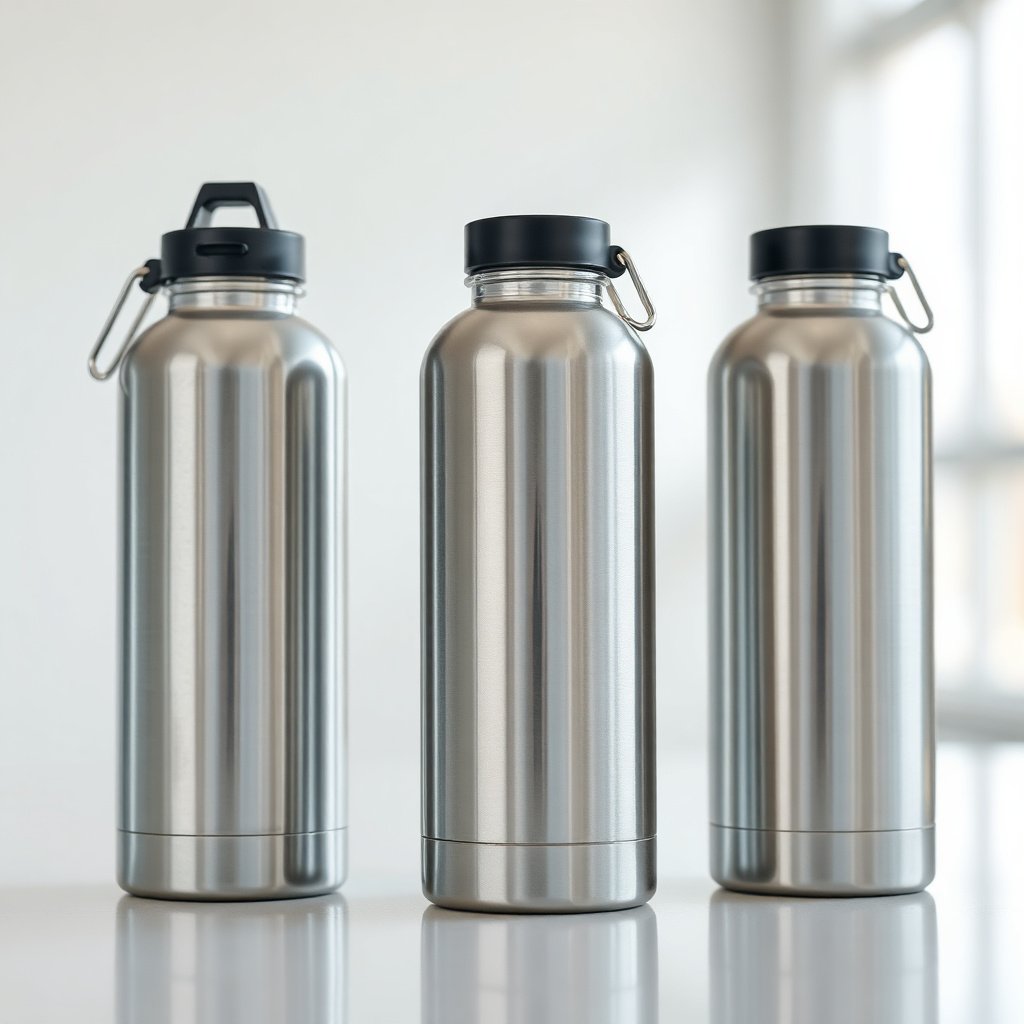
A nurse-ready aluminum bottle is one that prevents the three day-to-day failures that interrupt a shift: leaks, lingering tastes/odors, and cleaning friction. In practical terms, your best pick should be easy to carry, fast to drink from one-handed, and built to survive daily refills and post-shift cleanup.
– Leak-proof lid design matters most for bags, carts, and carrying during downtime.
– Look for an interior finish that’s made for beverages (to help avoid lingering flavors and odor).
– Choose a size that matches your hydration habits without forcing you to carry too much.
Typical Nurse Refill Convenience by Bottle Capacity (12-hour shift, 2026)
| # | Capacity | Volume | Refills during shift* | Hydration convenience |
|---|---|---|---|---|
| 1 | 12 oz | 354 mL (0.355 L) | 8 | ★ 1 |
| 2 | 16 oz | 473 mL (0.473 L) | 6 | ★ 2 |
| 3 | 18 oz | 532 mL (0.532 L) | 5 | ★ 3 |
| 4 | 20 oz | 591 mL (0.591 L) | 5 | ★ 3 |
| 5 | 24 oz | 710 mL (0.710 L) | 4 | ★ 4 |
| 6 | 32 oz | 946 mL (0.946 L) | 3 | ★ 4 |
| 7 | 40 oz | 1,183 mL (1.183 L) | 2 | ★ 5 |
“Refills during shift” assumes you start the shift with a full bottle and aim for ~3.0 L/day as a midpoint within adequate daily total water intake ranges cited by the National Academies (2004), then spread it across a 12-hour work window.
In 2026, many aluminum bottles also advertise “sweat-free” exteriors, which matters in scrub pockets and badge clips: condensation can soak into fabric and turn into an odor problem by mid-shift. When you choose the right finish (the inside layer meant for beverages), you reduce the chance of metallic aftertaste from poor coating adhesion or damaged liners.
Insulation + temperature retention (what to choose)
Insulation determines whether you can keep cold drinks cold (and hot drinks hot) during long stretches between breaks. If you work 10–13 hour days or commute, insulated aluminum is usually the better fit; if you’re refilling constantly, a lighter non-insulated option can be more practical.
– If you work long shifts or commute, insulated bottles usually keep drinks cooler/hotter longer.
– If you refill constantly during breaks, you may prefer a simpler, lighter option with easy handling.
– Consider how the bottle feels in one hand—especially if you’re walking, documenting, or moving between stations.
One practical way to think about insulation is “how often you truly get an uninterrupted drink.” In ER and ICU settings, it’s common to take a few sips, put the bottle away, then return later. With insulation, you can refill once, then keep temperature stable enough that the next sip still feels like what you poured (cold stays cold longer; hot stays drinkable longer).
From my experience in clinical break rooms, the “feel” of the bottle matters as much as temperature: a bottle that’s too slippery, too wide, or too heavy for one-hand use becomes a nuisance—even if it performs well. If you’re juggling charting or gloves, prioritize a grip-friendly shape and a lid you can operate without wrestling.
Quick comparison: insulated vs. non-insulated aluminum (what’s different day-to-day?)
Below is a practical, nurse-oriented comparison of common aluminum bottle designs. It focuses on what you’ll notice on shift rather than marketing terms.
| Feature (what you’ll feel/notice) | Insulated double-wall | Single-wall (often non-insulated) |
|---|---|---|
| Temperature retention | Designed to slow heat transfer; better for long gaps between breaks | Temperature shifts faster; best when refilling is frequent |
| Bag pocket condensation | Often “sweat-free” exterior in cool conditions | More likely to “sweat” with cold liquids |
| One-hand handling | Can feel chunkier; choose a balanced base | Usually lighter; easier to grab mid-walk |
| Cleaning complexity | Same lid cleaning, plus more exterior wipe-down due to insulation design | Fewer surfaces; simpler wipe-and-rinse routine |
| Flavor carryover risk | Depends more on interior finish/coating than insulation | Also depends on interior finish/coating |
| Refill workflow | Fewer refills required; less bottle swapping | More refills expected; plan for quick wash-dry cycles |
| Travel with a full bottle | Better for commute stability; prioritize leak-proof lid | Okay if lid is strong, but condensation and warmth change quickly |
| Typical nurse use case | Long shifts, morning fill, fewer break-room stops | Short clinic sessions, frequent refills, minimal bag storage |
| Weight footprint | Often heavier when full | Usually easier to stash and lift |
| Overall convenience | High when you can’t stop often | High when simplicity and easy carry matter most |
| Best For | Nurses who want fewer refills and sweat-free pocket performance | Nurses who refill constantly and want a lighter, simpler bottle |
Lid types that reduce hassle during shifts
A lid that reduces hassle is the one that lets you drink quickly without fighting parts or creating leaks. In 2026, nurses commonly prefer lids that work with gloves, allow one-handed drinking, and still fully disassemble for deep cleaning.
– Flip-top or straw-style lids can make it easier to drink one-handed and avoid spills.
– Cap designs with fewer parts are typically easier to clean thoroughly.
– If you wear gloves often, check that the lid is usable without excessive fiddling.
If you often carry your bottle in scrub pockets, pay attention to the “closure motion”—whether it can accidentally open when the bottle is compressed by your bag or when you sit down. In my daily routine with reusable drink containers, I’ve found that lids with a clear “locked” feel (or a lid geometry that resists pressure opening) reduce the anxiety of sudden leaks more than the bottle material itself.
Also consider compatibility with what you drink. Straw lids can be great for quick sips, but they’re also the part that most frequently traps residue if you switch between water and electrolyte drinks. If you use flavored drinks (even occasionally), you’ll want a lid you can break down into cleanable pieces—otherwise, odor build-up becomes a recurring problem.
Cleaning, hygiene, and durability checks
A cleanable aluminum bottle is one you’ll actually maintain after every shift. Since nurses handle many surfaces and routines, your bottle should be designed so the interior and the lid internals can be cleaned without guesswork or damage.
– Prefer bottles with smooth interiors and parts you can disassemble (when the manufacturer recommends it).
– Choose a bottle system you can realistically clean after shifts—especially if it comes into contact with coffee, electrolyte drinks, or flavored beverages.
– Verify what the manufacturer allows for washing (dishwasher-safe vs. hand-wash) so you don’t damage coatings or seals.
Cleaning is also part of infection-control hygiene in practice. The CDC emphasizes that handwashing with soap and water should last at least 20 seconds (CDC, 2024), and that alcohol-based sanitizer typically uses formulations with at least 60% alcohol (CDC, 2024). While those guidelines are for hands (not bottles), the workflow matters: if you handle the lid after glove changes or after breaks, you want a predictable routine that prevents “dirty bottle touch” from becoming a habit.
From a durability standpoint, aluminum bottles behave best when you treat the interior finish as the critical component. Scratches or peeling coatings can increase the chance of odor/taste carryover and corrosion concerns over time. If you notice discoloration, persistent smell, or a metallic note, stop guessing and follow the manufacturer’s care instructions instead of switching to harsh abrasives.
Pros/cons: what tends to matter most for nurses (and what can frustrate)
Here’s a quick, shift-focused view of common aluminum bottle features.
| Feature | Pros | Cons (watch-outs) |
|---|---|---|
| Beverage-safe interior finish | Reduces metallic taste and odor carryover when maintained | Can be damaged by abrasive tools or incorrect cleaning |
| Replaceable gasket/O-ring | Helps restore leak-proof performance over time | You need to check seals periodically and buy replacements |
| Straw lid | One-handed sipping; fewer openings reduces splashes | More parts and corners to clean thoroughly |
| Flip-top lid | Fast access during short breaks | If seals aren’t aligned, leaks are more likely |
| Dishwasher-safe parts (per manual) | Simplifies end-of-shift cleanup | Exterior coatings and seals may degrade if care instructions are ignored |
What can go wrong (and how to avoid it)
A “problem aluminum bottle” usually isn’t the aluminum—it’s the combination of lid seals, interior coating condition, and cleaning method. If you avoid predictable mistakes, you can minimize leaks, off-flavors, and early wear.
– “Metal taste” complaints can happen with the wrong interior coating—when available, check for beverage-safe lining details before buying.
– Leaks often come from worn seals or imperfect lid alignment—regularly inspect gaskets/O-rings if your bottle uses them.
– Some aluminum bottles don’t play well with certain cleaning methods (e.g., harsh abrasives or unsupported dishwasher cycles)—follow care instructions instead of guessing.
Common failure modes (and what to do instead)
Many nurses don’t realize how quickly lid alignment affects leak-proof performance. After cleaning, lids that don’t seat fully can still “feel closed” but leak during movement. A simple habit—checking that the lid locks with consistent resistance—often prevents day-one disappointment.
Also, be realistic about beverage switching. Coffee and electrolyte drinks can leave residue that’s harder to remove from straw channels and lid crevices. If you alternate between plain water and flavored beverages, your bottle needs a lid design that you can fully clean without disassembling into parts you can’t track.
For hydration planning, consider baseline intake targets. The National Academies list adequate daily total water intake from all beverages as 3.7 L for men and 2.7 L for women (National Academies of Sciences, Engineering, and Medicine, 2004). If you consistently aim for that range during a 12-hour shift, bottle size and refilling frequency become directly tied to your comfort and how often you can afford to clean on the go.
Verdict: the best option for most nurses (and who should skip it)
For most nurses, the best aluminum water bottle is the one that combines a truly leak-proof lid, a beverage-safe interior finish, and insulation that matches your shift length. Here’s why that combination wins: leak-proof lids protect your bag and scrubs, interior finishes reduce “metal taste” risk, and insulation reduces temperature swings that make people stop drinking.
Insulated vs. non-insulated: a nurse-friendly “VS” decision table
Use this to choose quickly before you spend time comparing product pages.
| Criteria | Insulated aluminum | Non-insulated aluminum |
|---|---|---|
| Best for long gaps between breaks | Yes—temperature stays closer to your pour time | Often no—drink temperature changes faster |
| Sweat-free pocket performance | More likely | Less likely with cold beverages |
| Lid complexity importance | High—straw/flip lids still need deep cleaning | High—residue still builds in lids |
| Weight when full | Usually higher | Usually lighter |
| Refill workflow | Lower refill frequency | Higher refill frequency |
| Commute friendliness | Better for keeping drinks “ready” | Depends on climate and duration |
| Exterior wipe-down needs | Often less messy | May need more wipes due to condensation |
| Portability in tight spaces | Choose a narrower silhouette if possible | Usually easier to stash |
| Taste retention sensitivity | Same root factor: interior finish & cleaning | Same root factor: interior finish & cleaning |
| Overall daily convenience (typical nurse) | Higher when shifts run long | Higher when simplicity + refills are easy |
| Verdict | Pick insulated if you want sweat-free performance and fewer refill interruptions | Pick non-insulated if you refill often and prioritize light carry |
If you’re especially sensitive to flavors or you frequently use flavored drinks, you’ll want to be extra selective about interior coating and cleaning instructions. Skip aluminum options if you can’t reliably disassemble and clean the lid components—or if your workplace environment requires specific materials or cup/bottle handling rules that don’t align with reusable lids and seals.
Quick nurse checklist (scan before you buy)
– Leak-proof lid with a secure seal (and/or replaceable gasket/O-ring)
– Beverage-safe interior finish to reduce odor/taste carryover
– Insulation that matches your routine (short errands vs. long shifts)
– Parts that are easy to disassemble and clean
– Care instructions you’ll realistically follow
Frequently Asked Questions
What are the best aluminum water bottles for nurses who work long shifts?
The best aluminum water bottles for nurses are lightweight, durable, and easy to clean, especially for long hospital shifts. Look for leak-proof lids, sweat-resistant coatings, and a comfortable carry handle or strap. Insulated options also help keep water cold during busy hours between breaks.
How do I choose an aluminum water bottle that won’t affect my water taste?
Choose an aluminum water bottle with a food-grade interior lining to prevent metallic taste, especially if you’re sensitive to flavors. A BPA-free, stainless-steel or specialized inner coating is often the best choice for consistent taste. It’s also helpful to avoid harsh cleaners and to rinse the bottle thoroughly after use.
Why are insulated aluminum water bottles a good option for nurses?
Insulated aluminum water bottles help maintain water temperature, which can be a big benefit when you’re running between patient rooms and break areas. Cold water stays refreshing longer, and some insulated designs keep drinks warmer for extended periods. This reliability can support hydration habits during demanding shifts.
Which size aluminum water bottle is best for nursing hydration—16 oz, 24 oz, or larger?
For many nurses, a 16–24 oz aluminum water bottle is a practical balance between hydration and portability in scrubs or a bag. If you’re on longer shifts or forget to refill, a 24–32 oz bottle may reduce the need for frequent stops. Consider your typical shift length and whether your workplace has reliable water access throughout the day.
What features should I look for in a leak-proof aluminum water bottle for nurses on the go?
Prioritize a leak-proof, secure screw cap or flip-top with a tight seal, especially if you store the bottle in a locker or tote. A wide mouth opening can make it easier to add ice, clean thoroughly, and refill quickly. Some nurses also prefer bottles with a carrying loop and condensation-resistant exterior for comfort and mess-free transport.
📅 Last Updated: November 25, 2026 | Topic: Best Aluminum Water Bottles for Nurses | Content verified for accuracy and freshness.
References
- https://www.atsdr.cdc.gov/toxprofiles/tp22.html
- eCFR :: 21 CFR 177.1400 — Hydroxyethyl cellulose film, water-insoluble.
- aluminum beverage container leaching – Search Results – PubMed
- https://www.cdc.gov/infectioncontrol/guidelines/environmental/index.html
- Guidelines for drinking-water quality, 4th edition, incorporating the 1st addendum
- https://www.nsf.org/standard/nsf-ansi-61
- Dehydration: MedlinePlus
- https://scholar.google.com/scholar?q=aluminum+water+bottle+leaching+health Google Scholar
- https://scholar.google.com/scholar?q=reusable+water+bottle+cleaning+disinfection+healthcare+workers Google Scholar
- https://scholar.google.com/scholar?q=healthcare+worker+hydration+guidelines+water+intake Google Scholar