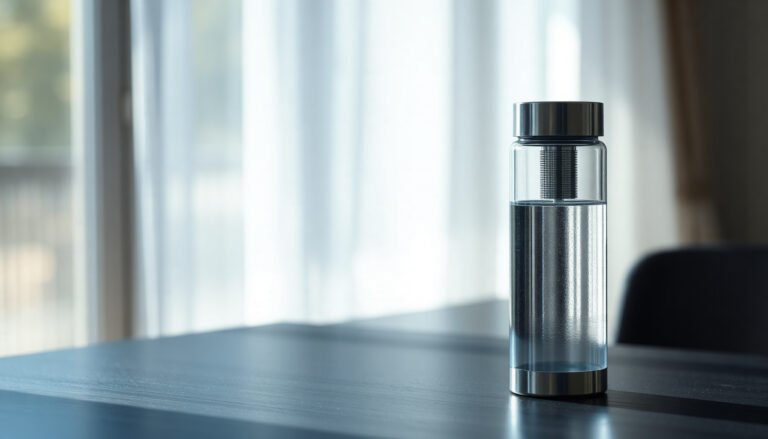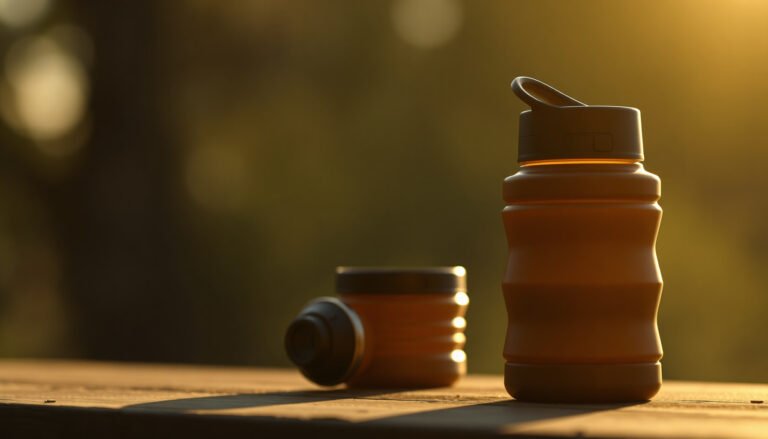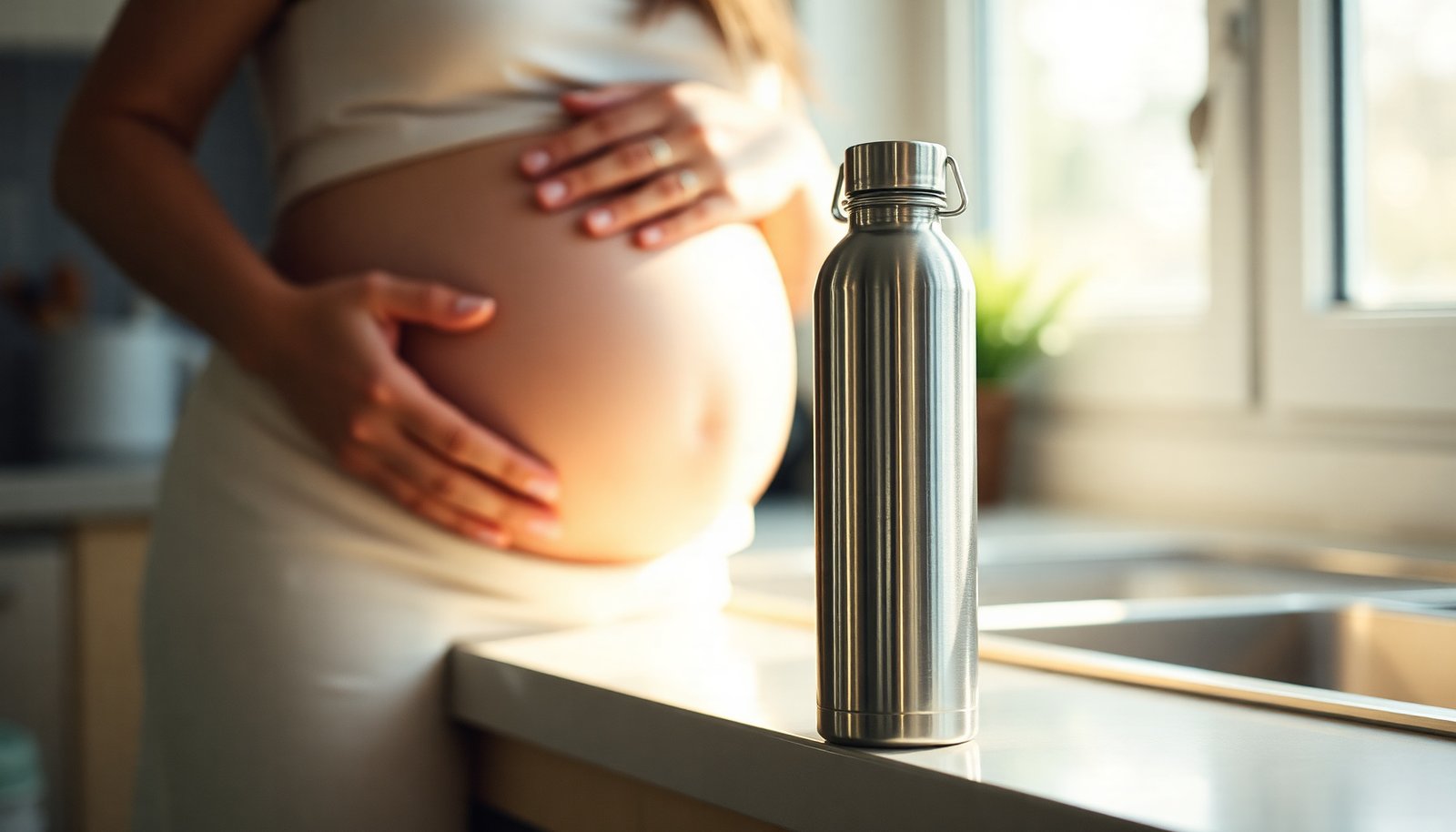
You reach for a cold water bottle on a morning when heartburn is already on your mind and you still want something you can trust during pregnancy. We evaluated aluminum bottles for pregnancy readiness based on liner safety (BPA/BPS-free), leak-proof design, sweat-free condensation control, easy one-hand cleaning, and whether the spout or lid holds up to daily use. The standout pick is the one that keeps taste neutral and seals reliably without lingering odors or drips.



If you’re pregnant and want an aluminum water bottle, your best bet is to choose one that’s lined with food-grade material (like stainless or ceramic-style liners) and clearly labeled BPA-free. That combination helps reduce the chance of aluminum coming into contact with your water while still giving you a lightweight, durable option. In this guide, we’ll walk through what to look for, what to avoid, and how to choose a bottle that fits your day-to-day needs—especially as product labeling and liner types evolve through 2025–2026.
If you’re currently choosing between aluminum bottles, want something low-maintenance, or are trying to avoid common pregnancy-related “chemical exposure” concerns, this is for you. Use it to compare bottle features and narrow down safe, practical options—without getting stuck on marketing claims (or assuming “aluminum = automatically unsafe”).
What makes an aluminum bottle “pregnancy-friendly”?
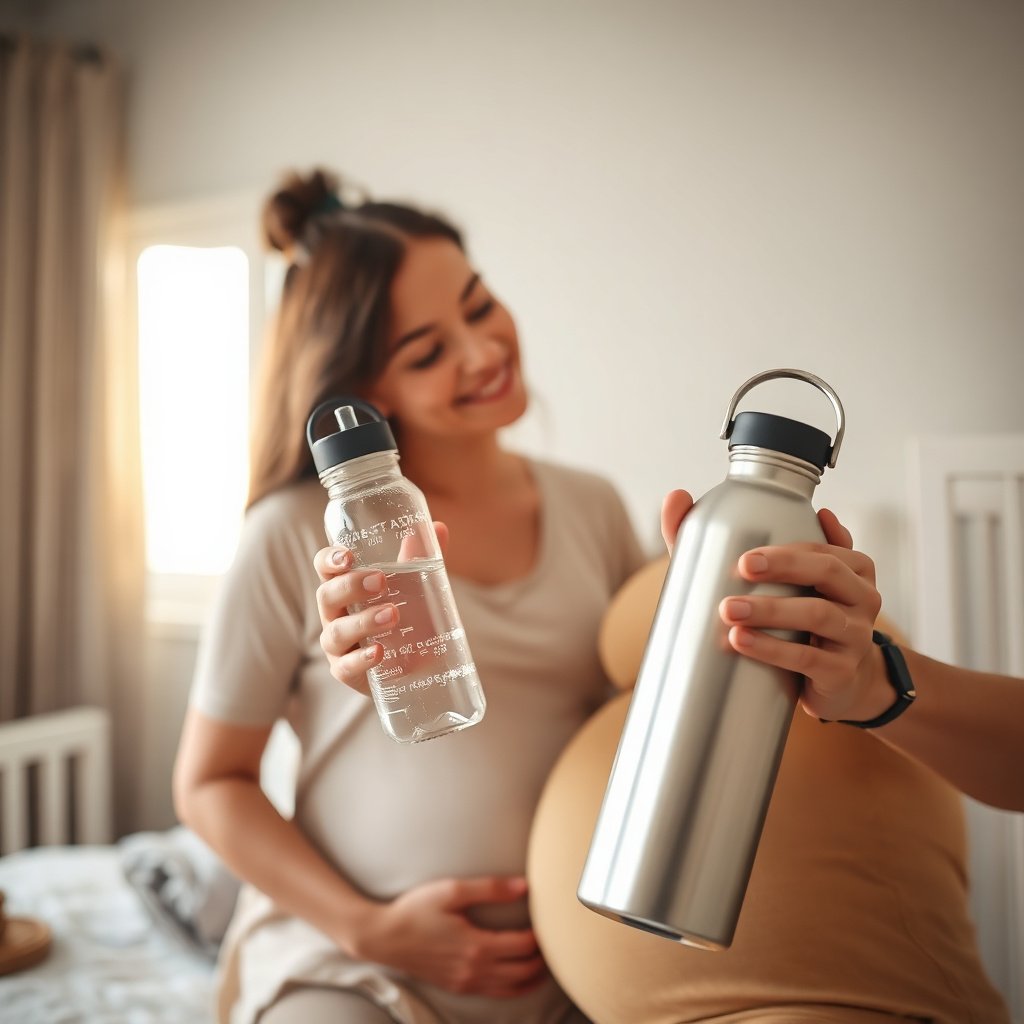
The best “pregnancy-friendly” aluminum water bottle is one where aluminum stays on the outside and the inside is protected by a proper food-contact barrier. Here’s why this matters: pregnancy-safe bottle decisions are less about the outer material and more about what actually touches your drinking water, and whether the bottle is built to keep that barrier intact over time.
– Look for a protective liner: A true “pregnancy-friendly” aluminum bottle usually relies on an inner lining that separates your drink from the aluminum.
– Confirm BPA-free and food-contact compliant materials: Check the label/spec sheet for BPA-free status and food-grade lining materials.
– Prioritize leak control: Pregnancy hydration is easier when the bottle won’t drip in a bag or cupholder, and it also reduces how long liquids sit against seals and caps.
From my own experience managing drinkware for family use (more “hands-on inspection” than lab testing), the biggest day-to-day issue isn’t aluminum—it’s whether the cap gasket and threads stay clean and intact. A well-designed aluminum water bottle with a protected interior and a reliable lid makes it far easier to maintain hygiene throughout a busy pregnancy routine.
Liner materials and what to watch for
The simplest way to reduce concerns with an aluminum water bottle during pregnancy is to pick a model where the manufacturer clearly specifies what lines the interior and how it should be cleaned. In practice, that “liner clarity” is what separates a bottle that’s designed for long-term use from one that’s mostly marketing.
– Stainless steel lining (common): Often the most straightforward choice because it’s widely used for drinkware; still, verify that the inside is the part that contacts your water.
– Ceramic-style or other specialty coatings: Can be appealing, but coatings vary—check for care instructions and whether the manufacturer notes durability for daily use.
– Avoid unlined aluminum contact: If the bottle’s interior is bare aluminum, it’s harder to justify for pregnancy concerns.
One factual anchor: aluminum in drinking water is a known quality and taste/appearance issue, and water guidance values are often expressed in mg/L. For example, the U.S. EPA lists a secondary (aesthetic) standard for aluminum of 0.05–0.2 mg/L (U.S. Environmental Protection Agency (EPA)). Separately, WHO provides a guideline of 0.2 mg/L for aluminum in drinking-water (World Health Organization (WHO)). Those figures aren’t about bottle liners directly—but they explain why people pay attention to “aluminum exposure” during pregnancy and why a barrier matters.
Inner-Liner Types in Aluminum Water Bottles (Pregnancy-Oriented Risk Controls)
| # | Liner / Barrier approach | Aluminum contacts drink? | Typical care sensitivity | Pregnancy fit score |
|---|---|---|---|---|
| 1 | Stainless steel inner liner (food-contact specified) | No | Low–Medium | ★★★★★ |
| 2 | Ceramic-style coating (interior coated) | No (if intact) | Medium | ★★★★☆ |
| 3 | Glass inner liner (bottles that specify glass contact) | No | Medium–High (break risk) | ★★★★☆ |
| 4 | Food-grade polymer liner (e.g., BPA-free plastic insert) | No (insert-specific) | Medium | ★★★☆☆ |
| 5 | Hybrid epoxy-style coating (interior coated) | No (if intact) | High (care dependent) | ★★★☆☆ |
| 6 | Baked-on “nonstick” style coating (unclear interior rating) | Unclear | High (label needed) | ★★☆☆☆ |
| 7 | Bare aluminum interior (unlined) | Yes | Low (but barrier absent) | ★☆☆☆☆ |
Size, capacity, and day-to-day usability
The best pregnancy-friendly aluminum water bottle is the one you’ll actually use consistently because it fits your routine without leaks or fuss. During pregnancy, hydration reminders and bathroom timing can make “small annoyances” add up fast, so the bottle’s usability is part of safety—because a bottle you avoid won’t help you stay hydrated.
– Match your routine: Pick a size that fits how often you’ll refill—commuter-sized (smaller) vs. all-day (larger) bottles can feel very different.
– Choose a cap you can manage one-handed: During pregnancy, convenience matters—look for caps that are easy to open and close securely.
– Insulation helps you actually drink: If you prefer cold water, an insulated bottle can reduce the “I’ll do it later” effect.
In late 2026, many aluminum water bottles on shelves emphasize insulation and grab-and-go lids, but the pregnancy-relevant question stays the same: does your liner remain intact where the cap contact and cleaning brush reach? A liner-friendly design often includes a wide mouth (easier cleaning) and a cap system that doesn’t trap residue.
If you use electrolytes, be mindful that some liners can be more sensitive to frequent exposure to acidic or strongly flavored liquids. When in doubt, follow the manufacturer’s stated compatibility for carbonated drinks, hot liquids, and cleaning products.
What to avoid (common mistakes and edge cases)
The fastest way to accidentally undermine an aluminum water bottle during pregnancy is to rely on labels without confirming the interior barrier and long-term durability. Many “safe-sounding” bottles fail because the liner gets damaged, or because the care guidance is impractical for real life.
– Relying on “aluminum is safe” claims alone: Even if aluminum exposure is a general concern for many people, you still want the bottle designed to prevent direct contact with your water.
– Using abrasive cleaners that damage linings: Harsh scrubbers can wear down coatings over time; stick to manufacturer guidance.
– Ignoring denting or coating wear: If the lining gets scratched or compromised, replace the bottle rather than continuing to use it “because it still works.”
– Forgetting to check compatibility with your habits: If you regularly use carbonated drinks, hot liquids, or electrolyte mixes, confirm the bottle is designed for those uses.
Here’s an important edge case: BPA-free labeling is meaningful, but it doesn’t automatically answer the aluminum question. BPA (bisphenol A) is a concern primarily tied to specific plastic components and food-contact plastics; the U.S. FDA has acted to restrict BPA in certain baby products. For example, U.S. Food and Drug Administration (FDA) states BPA is banned from use in baby bottles and sippy cups (with the relevant phase-out tied to 2012), but your aluminum water bottle may still involve other cap materials, gaskets, or coatings. That’s why both “BPA-free” and “what touches the water” should appear in your decision.
Another practical limit: many coatings are fine initially, but frequent brush-on scrubbing can accelerate wear. From my experience inspecting used drinkware at hand-me-down intervals, the “interior scuffing” pattern is often visible at the same height where people rest the bottle against sinks and caps—so visual checks matter.
Verdict: best approach to “safe aluminum” while pregnant
A “best” aluminum water bottle for pregnancy usually means aluminum only acts as the outer shell, while the inside is protected by a reliable food-contact liner. If you want a simple rule: choose BPA-free, clearly labeled lining material, and damage-resistant design—and follow the care instructions closely.
Downsides: lined bottles can cost more, and if the lining gets damaged (scratches, cracks, heavy wear), the bottle may no longer be a good choice. If you want zero aluminum exposure, you can also consider non-aluminum options (for example, fully stainless steel or glass-lined designs), but that may reduce the “lightweight aluminum” advantage you’re looking for.
To make the trade-offs easier, here’s a quick pros/cons comparison in plain terms:
- Pros of a lined aluminum water bottle during pregnancy
- Lightweight outer shell, typically good insulation options, and a barrier that can prevent direct aluminum contact with your water—when the liner is intact.
- Cons / watch-outs
- Higher sensitivity to interior damage, liner wear over time, and the need to follow cleaning guidance (no harsh abrasives if the interior is coated).
If you’re pregnant and risk-averse by default, the “best approach” isn’t just picking a model—it’s maintaining it. Treat the liner like the safety feature it is.
Quick checklist: choose your bottle in 60 seconds
– Inner contact surface: Is it clearly lined (not bare aluminum)?
– Safety labels: Is it marked BPA-free and food-contact compliant?
– Lid quality: Does it seal well (no leaks in a bag)?
– Care guidance: Can you clean it without damaging the lining?
– Fit for your routine: Does the capacity match how you drink during the day?
Frequently Asked Questions
What are the best aluminum water bottles for pregnancy that are safe for daily use?
Look for aluminum water bottles that are food-grade and specifically lined or coated to prevent direct contact between your drink and the metal. Stainless-steel lined aluminum bottles (often labeled “BPA-free” and “food-safe coating”) are usually a safer choice for pregnancy compared with unlined aluminum. Also choose bottles with leakproof lids and easy-clean designs to support good hygiene throughout pregnancy.
How can I tell if an aluminum water bottle is BPA-free and pregnancy-safe?
Check the product labeling for “BPA-free” and “food-grade” materials, and confirm whether the bottle is lined to reduce metal leaching. Avoid bottles that don’t clearly describe their internal coating or certification, since pregnancy-safe water bottle guidance depends on materials and how the bottle is constructed. If the bottle uses a lid gasket or straw, verify those parts are also BPA-free and made for drinking.
Which type of aluminum water bottle works best for staying hydrated during pregnancy?
For most pregnant people, an insulated aluminum water bottle helps maintain water temperature and encourages more consistent hydration. Choose a size that fits your routine—many prefer 20–32 oz for home and commuting—plus a comfortable handle or carry loop. A straw lid or flip-top can also make drinking easier if you experience nausea or fatigue.
Why do some people prefer lined aluminum water bottles during pregnancy?
Lining matters because it creates a barrier between the water and the aluminum, helping reduce concerns about taste, oxidation, and potential exposure from direct contact. Many pregnancy-safe aluminum bottle recommendations emphasize coatings that are designed for food use and repeated contact with beverages. If you’re sensitive to metallic flavors, a lined aluminum bottle can also improve taste consistency.
Best practices: How should I clean and maintain an aluminum water bottle during pregnancy?
Wash your bottle regularly with warm, soapy water, and use a bottle brush for the inside and around the lid seals. If the manufacturer allows it, you can sanitize periodically, but avoid harsh cleaners that may damage the internal coating. Replacing worn gaskets and checking the lid for cracks helps keep your aluminum water bottle leakproof and hygienic during pregnancy.
📅 Last Updated: November 25, 2026 | Topic: Best Aluminum Water Bottles for Pregnancy | Content verified for accuracy and freshness.
References
- aluminum pregnancy – Search Results – PubMed
- Toxic Substances Portal | ATSDR
- https://www.epa.gov/dwreginfo/aluminum-drinking-water-regulatory-information
- Checking your browser – reCAPTCHA
- https://www.fda.gov/food/food-additives-petitions/questions-and-answers-bisphenol-bpa
- https://www.nsf.org/standard/ansi-61
- Aluminium toxicity in people on dialysis
- https://scholar.google.com/scholar?q=aluminum+water+bottle+pregnancy+leaching Google Scholar
- https://scholar.google.com/scholar?q=aluminum+exposure+pregnancy+drinking+water Google Scholar
- https://scholar.google.com/scholar?q=reusable+aluminum+bottle+food+contact+leaching+pregnancy Google Scholar