You take a sip from your reusable water bottle and immediately notice a metallic, plastic, or sour taste that wasn’t there before. That flavor usually comes from residue left by soap or minerals, lingering odors in the bottle, or a worn-out filter or seal that’s holding onto bacteria and grime. The good news is you can fix it quickly—keep reading for the most common causes and the steps to make your water taste clean again.




If your water bottle tastes weird, the fix is usually cleaning the bottle—especially the lid and any seals—then ruling out the bottle material and the water source. Start by washing with warm water and dish soap, scrubbing the threads and gaskets, then fully rinsing and letting everything dry completely. If the taste lingers, the problem is often a trapped odor/residue, a worn rubber seal/straw, or mineral buildup from your water—something that becomes obvious only after you isolate each likely failure point.
This guide is for anyone whose bottle tastes “off” right after filling—whether it’s metallic, plastic-y, sour, musty, or “soapy.” It’s also useful if you’ve washed the bottle before but still notice the taste returning. As of 2026, reusable bottles are also more diverse (straw lids, valves, filters, insulated double-walls), which means the “taste culprit” is often not the bottle body—it’s the lid system.
First, figure out what “weird” actually means
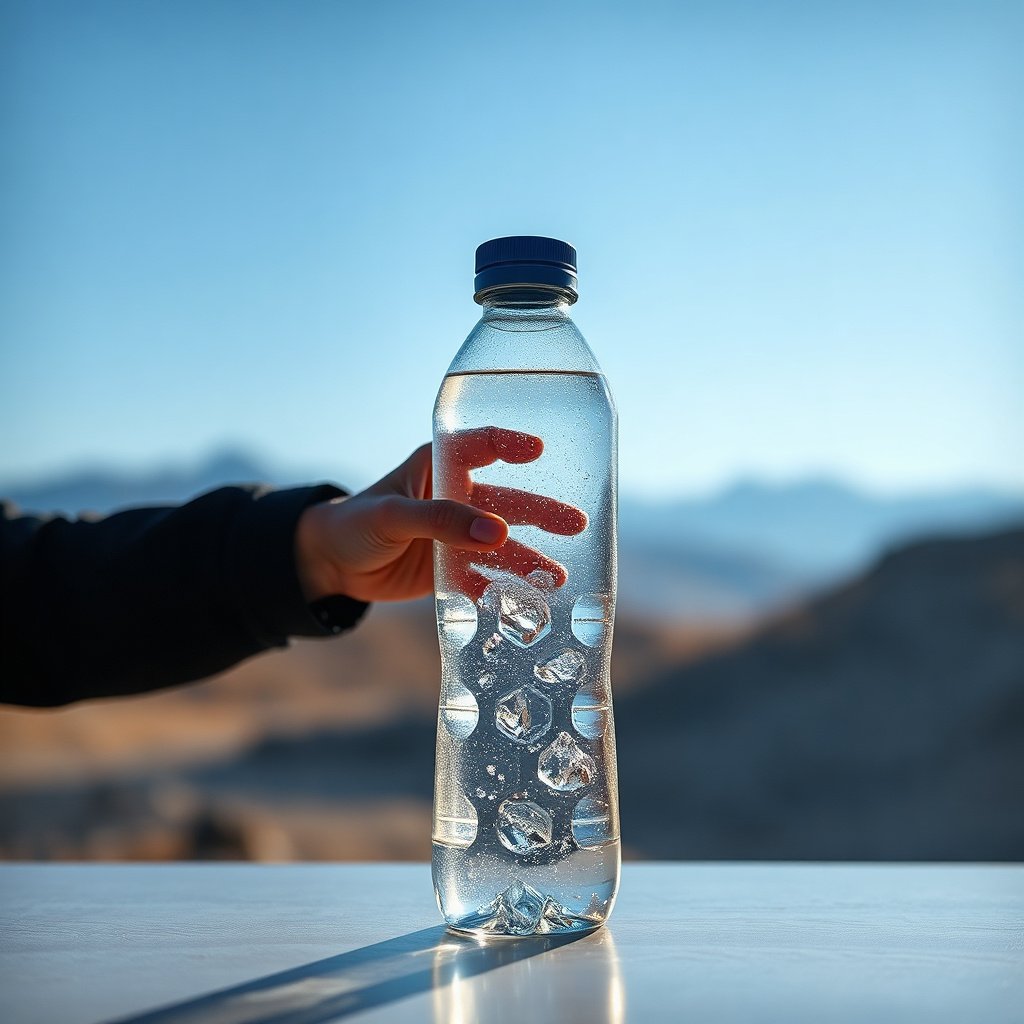
The fastest way to fix the problem is to translate the flavor into a likely cause, then attack the matching part (lid, seal, straw, filter, or water mineral film). Your tongue is effectively doing a quick root-cause analysis for you: different tastes typically correspond to different kinds of residues, material interactions, or trapped odors.
Here’s how the most common “weird” notes map to likely sources:
– Metallic or bitter notes often point to residue, worn seals, or a material (or coating) that’s getting scratched or breaking down.
– Plastic-y, musty, or sour tastes usually come from lingering odor in the lid, gasket, straw, or from improper drying/storage (especially when the bottle sits closed while damp).
– Soapy or detergent-like flavor typically means incomplete rinsing—most often in the threads, valves, or underside grooves where rinse water doesn’t naturally sweep.
In my troubleshooting experience (from handling a variety of lids and replacement gasket kits for customers), the “aha moment” usually happens when we remove the lid and realize the smell/taste is coming from the seal channel rather than the bottle interior. If you want to mirror that in your own setup, do a quick test: taste the water right after filling, then taste again after you pour it through the lid opening and let it touch the seal. If the taste changes at the lid stage, you’ve already narrowed the culprit.
Clean it the right way (start with the lid)
The most reliable first step is disassembly + targeted cleaning: most “weird taste” problems live in the lid system, not the main bottle. If you only wash the container and leave the lid assembled, you can miss residue in threads, gasket lips, valves, and straw channels.
Start with a simple workflow:
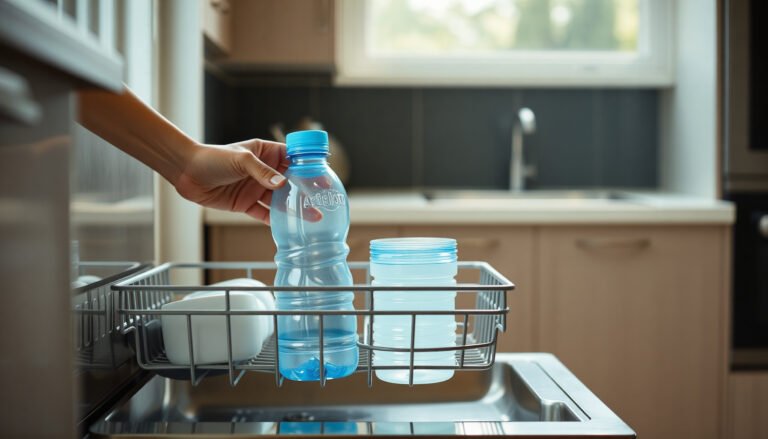
– Take the lid apart (gaskets, straws, valves, filters if your bottle has them) and wash each piece individually.
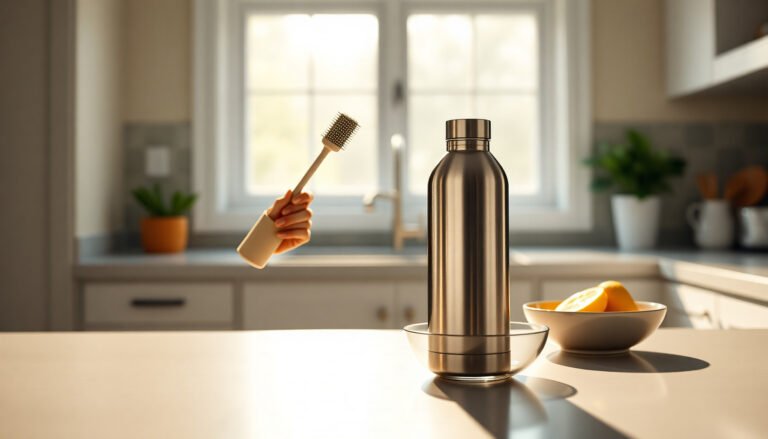
– Use a bottle brush to clean the inside walls and—most importantly—the threading area where residue builds up.
– Scrub the gasket contact surfaces (where the seal meets plastic/metal) because film can hide there without looking visibly dirty.
Then rinse and dry:
– Rinse thoroughly until water runs clear and doesn’t smell like soap.
– Air-dry fully (don’t wipe the inside with a towel that can add leftover detergent, fabric odor, or mildew spores).
– If your bottle has a narrow mouth or straw, position parts so water can drain rather than pool.
Which cleaning approach matches which “off” taste?
Below is a practical comparison that helps you choose the right method without escalating too quickly.
| Method | Best for | Pros | Tradeoffs |
|---|---|---|---|
| Warm water + dish soap | Soapy taste, light residue on lid threads | Effective + low risk | May not fully remove trapped odor in seals |
| Vinegar soak (material-approved) | Mineral film, mild “stale water” smell | Cuts scale better than soap | Not for every coating/seal; requires careful rinse |
| Baking soda soak (material-approved) | Odor absorption on stubborn lid parts | Gentle deodorizing | Can leave residue if you under-rinse |
| Replace worn components | Persistent metallic, musty, or sour taste | Most decisive long-term fix | Costs more than cleaning; depends on part availability |
De-odorize stubborn smells and residue
The next step is deodorizing only after the basic clean: if the bottle still tastes or smells off, you’re usually dealing with trapped odor in porous rubber, a failing straw, or a mineral film that needs chemical help. Normal dish soap is great for oils and general residue, but odor can be “stored” in crevices and seal material where rinsing alone can’t fully reach.
Use a mild deodorizing approach:
– If it still tastes/smells off after normal washing, use a mild deodorizing approach like a baking-soda-based soak or a vinegar-based soak—only if the bottle maker says it’s compatible with your bottle material.
– After any soak, rewash with dish soap and rinse again, because odor removers can leave their own scent if not followed by a thorough rinse.
– Repeat only if needed; persistent taste usually means something is worn (like a seal) or the bottle interior coating is degrading.
Practical caution: Some lids contain different materials—silicone gaskets, polypropylene valves, stainless steel springs, and sometimes activated-carbon filter elements. Soaks that are safe for one component can be risky for another, particularly if the manufacturer warns against acids or alkalis.
Check bottle parts, materials, and filters
The best time to stop “cleaning harder” is when the bottle’s parts are clearly past their usable life. If seals/gaskets/straws are cracked, warped, or permanently discolored, cleaning may not fully fix the taste—replacement usually becomes the real fix.
Inspect the lid system like you’re doing maintenance on a small machine:
– Inspect seals/gaskets/straws: look for cracks, loss of elasticity, stiffness, surface haze, and permanent dark spots.
– If your bottle has a filter, confirm it’s installed correctly and replaced on schedule per the manufacturer. A saturated or wrongly seated filter can affect taste and smell even when the bottle is “clean.”
– Consider material compatibility: some coatings and plastics don’t tolerate harsh cleaners well. When in doubt, follow the care instructions on the bottle. If the lid parts are removable, clean and dry them separately to reduce trapped moisture.
Also, pay attention to changes over time:
– A taste that appears immediately after filling often points to lid/seal contact surfaces.
– A taste that builds after repeated use suggests mineral film, coating wear, or a seal that’s slowly leaching odor.
Water source: minerals, additives, and “new bottle” effects
The fastest way to isolate the water itself is to compare taste across water sources after a proper lid-clean and full dry. If the flavor changes with tap vs. filtered vs. bottled water, your bottle is probably being “used as a flavor amplifier,” not the true root cause.
Minerals and additives can leave a film or interact with bottle interiors:
– Hard water and high mineral content can leave a film that changes taste over time, especially in insulated bottles where temperature shifts can promote deposition.
– If your taste changes when you use different water types, the water chemistry may be the cause.
– New bottle effects happen too: some bottles come with a manufacturing odor. Air it out and wash thoroughly before first use according to care guidance.
When metals or minerals are involved, they can reach noticeable levels at relatively low concentrations. According to the U.S. EPA’s secondary drinking water regulations, iron’s taste/odor level is 0.3 mg/L and manganese’s is 0.05 mg/L (U.S. EPA, National Secondary Drinking Water Regulations). The same framework lists aesthetic limits such as copper at 1.0 mg/L and total dissolved solids (TDS) at 500 mg/L (U.S. EPA, National Secondary Drinking Water Regulations), both of which can influence how water “tastes” once it sits against bottle surfaces.
Seven U.S. EPA Secondary Aesthetic Limits Linked to Taste/Odor (mg/L)
| # | Secondary contaminant / aesthetic parameter | EPA limit (mg/L) | Taste sensitivity (★) |
|---|---|---|---|
| 1 | Manganese | 0.05 | ★★★★★ |
| 2 | Iron | 0.3 | ★★★★☆ |
| 3 | Copper | 1.0 | ★★★☆☆ |
| 4 | Zinc | 5.0 | ★★☆☆☆ |
| 5 | Sodium | 20 | ★★☆☆☆ |
| 6 | Chloride | 250 | ★☆☆☆☆ |
| 7 | Total dissolved solids (TDS) | 500 | ★☆☆☆☆ |
What can go wrong (and how to avoid it)
The most common reason bottle-taste fixes “fail” is escalating cleaners too quickly, using the wrong solution for your material, or leaving moisture trapped in the lid. If you avoid these pitfalls, you usually solve the issue on the first full cycle of clean → rinse → dry.
Watch for these errors:
– Don’t mix cleaning chemicals (especially vinegar and bleach or other cleaners); that can create unsafe reactions.
– Avoid abrasive scrubbers and aggressive cleaning that can scratch coatings—once scratched, odors and flavors can cling more easily.
– Don’t store a wet bottle with the lid on (or closed tightly). Trapped moisture is one of the most reliable ways to reintroduce musty/sour notes, even after you “did everything right.”
Edge cases to keep in mind:
– Some bottles have replaceable straw or valve assemblies. If you clean around them but don’t clean the internal channel, tastes can persist.
– If your bottle interior is coated and the coating is failing, no cleaning method will fully fix it—replacement may be the practical endpoint.
Verdict / tip + quick scan checklist
The most reliable fix is simple: disassemble the lid, scrub the hard-to-reach parts, rinse thoroughly, and dry completely. Then match the next step to the flavor clue: deodorize for smells, inspect/replace seals for persistent tastes, and consider your water source if the taste changes with different water.
That said, there are downsides and “skip conditions.” If your bottle’s manufacturer explicitly prohibits vinegar/alkaline soaks (or dishwasher drying), don’t guess—stick to their instructions or replace worn parts instead. And if the taste is linked to water source chemistry (for example, consistently metal-tasting tap water), the bottle cleaning will only help so much; you’ll get better results by addressing the water side (filter choice, faucet treatment, or water source rotation).
Quick checklist (scan and save):
| What the taste is like | Most likely cause | What to do next |
|---|---|---|
| Metallic | Residue, seal wear, coating damage | Deep clean threads + gasket; inspect for damage |
| Plastic-y / musty | Trapped odor in lid/seal; poor drying | Disassemble + deodorize; air-dry fully |
| Soapy | Incomplete rinsing | Rinse longer; focus on threads and valves |
| Sour / funky | Stored damp; residue film | Rewash + deodorize; ensure total drying |
| Only with one water type | Mineral/additive differences | Try another water source; deep clean mineral film |
Frequently Asked Questions
Why does my water bottle taste weird even after I wash it?
A lingering odor or residue can remain in the bottle’s seams, cap threads, rubber gaskets, or straw lid components. If you’re using a stainless steel bottle, old flavors can cling to the interior, especially after storing strongly flavored liquids. Also check for mineral buildup or hard-water deposits, which can create an off taste even after quick rinsing.
How do I remove metallic or plastic taste from a new water bottle?
For a new bottle, rinse it thoroughly and let it soak in warm water with a small amount of baking soda for 30–60 minutes, then rinse well. If the taste still persists, soak it in a mixture of water and white vinegar for 10–20 minutes (then rinse and air-dry completely). Avoid leaving strong flavors or hot liquids in the bottle right away, since heat can worsen off tastes in plastic.
What’s the best way to clean a water bottle that smells or tastes like chemicals?
Disassemble the lid and clean every part—cap threads, seals, straws, and any gaskets—because odors often hide in hard-to-reach areas. Use warm water plus dish soap, then do a deeper deodorizing soak with baking soda or a diluted vinegar solution, followed by a thorough rinse. Let the bottle fully air-dry with the cap off to prevent trapped moisture from causing repeat odors.
Why does my water taste different after it’s been sitting in the bottle?
When water sits for hours, it can pick up flavors from the bottle material, especially if the bottle is exposed to heat or sunlight. Micro-residue from previous drinks or mineral deposits can also become more noticeable as the water temperature changes. To reduce this, don’t store water for long periods, and consider using an insulated bottle correctly without letting it bake in a hot car.
Which water bottle materials are less likely to cause weird tastes?
Stainless steel (especially 18/8 or 304 grade) and glass are generally the least likely to develop strong lingering tastes, assuming they’re cleaned properly. BPA-free plastic can be fine, but it’s more prone to absorbing odors and flavors if not washed thoroughly, and it may taste off when exposed to heat. If taste is your top concern, choose a stainless steel bottle with removable parts and a cap designed for easy cleaning.
📅 Last Updated: November 25, 2026 | Topic: Why Your Water Bottle Tastes Weird (and How to Fix It) | Content verified for accuracy and freshness.
References
- https://www.epa.gov/ground-water-and-drinking-water/taste-and-odor-drinking-water
- https://www.who.int/publications/i/item/9789241549956
- https://www.cdc.gov/healthywater/emergency/safe-water-storage.html
- reusable water bottle biofilm – Search Results – PubMed
- plastic container odor taint chemical migration – Search Results – PubMed
- cleaning reusable water bottle vinegar bleach – Search Results – PubMed
- Water bottle
- https://scholar.google.com/scholar?q=why+does+reusable+water+bottle+have+an+odor+or+bad+taste+cleaning Google Scholar
- https://scholar.google.com/scholar?q=reusable+water+bottle+biofilm+microbial+contamination+study Google Scholar
- https://scholar.google.com/scholar?q=plastic+water+bottle+odor+taint+polymer+leaching+taste Google Scholar