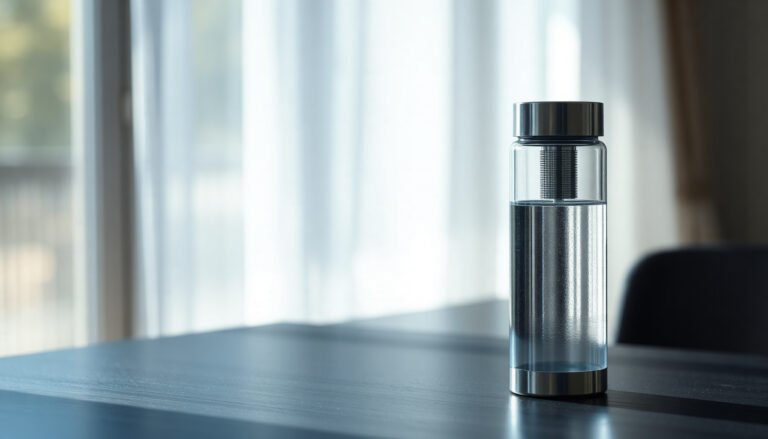
When you buy an aluminum water bottle with the right specs, you get a cooler that fits your day, a durable cap that seals reliably, and a price you can justify. This checklist helps you verify the basics—capacity, liner and coating, lid type, size and fit, and material and finish—so you can compare options quickly and avoid paying more for features you do not need. Use it before checkout to make your final choice with confidence.




If you want an aluminum water bottle that tastes right and doesn’t leak, start by verifying the interior lining and the lid’s seal design. After that, match capacity and (if needed) insulation to how you actually carry it—bag, gym, car, or hiking—so you avoid metallic taste, dents, and unreliable closures.
This checklist is for anyone replacing a bottle for work/school or outdoor use and wants fewer surprises—like metallic taste, denting, or lids that don’t seal well.
Check the Bottle Lining and Interior Finish
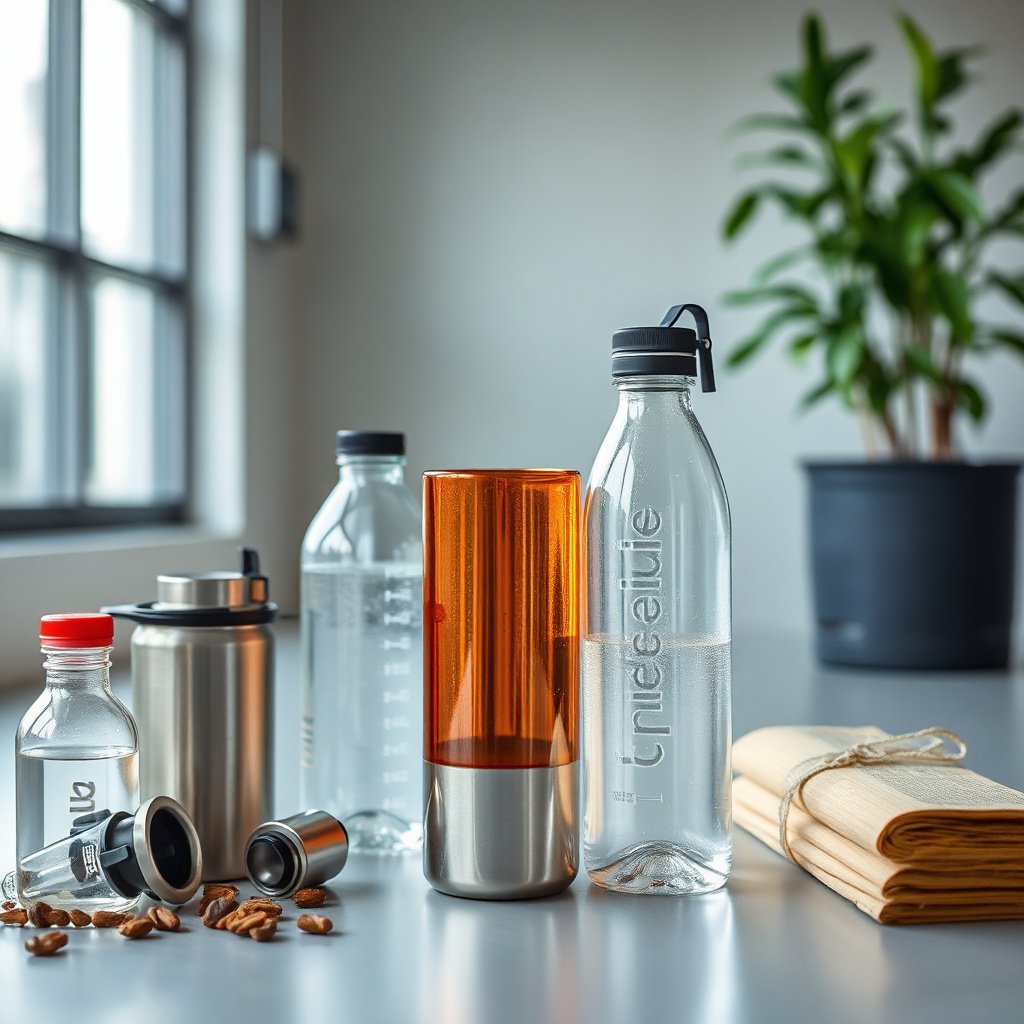
The fastest way to prevent metallic taste and corrosion concerns is to buy an aluminum water bottle with a clearly stated, non-reactive interior lining. Here’s what to verify so you don’t guess based on marketing alone—especially if you drink acidic beverages (like citrus water) or store liquids for hours.
Aluminum itself is reactive to some degree, and unprotected interiors can increase the chance of off-flavors over time. A lining (or a hard protective treatment) creates a barrier between your drink and the aluminum surface. Common approaches you’ll see include:
– Food-grade epoxy/resin liners (often smooth and easy to clean, but require gentle cleaning)
– Powder-coated interiors (can be durable, but may be more sensitive to abrasives and high heat)
– Stainless-steel liners (typically the most “chemically neutral” experience, but adds complexity/weight)
– Anodized aluminum (an oxide layer can help, but the brand should still clearly describe suitability for beverages)
Look for the brand’s language such as “food-safe,” “non-reactive,” or a specific lining material. If the bottle doesn’t clearly specify interior compatibility, treat that as a red flag—unclear interiors often lead to variability in taste and finish wear.
Also check care instructions. For many lined or coated interiors, harsh detergents and abrasive scrubbers can gradually degrade the protective layer. If you’re switching from a stainless-steel bottle, you may need to change cleaning habits for an aluminum water bottle with a coating.
Confirm the Lid: Seal, Threads, and One-Hand Use
A leak-resistant aluminum water bottle depends more on lid engineering than on aluminum body thickness. Before you buy, confirm the seal method, how the cap threads engage (or locks), and how easily you can operate it with one hand.
Start with these lid details:
– Gasket presence and design: Look for a removable or clearly defined gasket (the rubber/silicone ring). A gasket that sits correctly and is easy to inspect typically seals better than “mystery” sealing surfaces.
– Thread quality (for screw caps): Fine, consistent threads reduce cross-threading and help maintain a consistent compression seal.
– Locking mechanism (for flip or sport caps): Some caps are “leak-resistant” only when positioned upright. Others provide more complete sealing for bag carry, but the product page should say so.
– Operational fit: Can you open it one-handed while driving, walking, or lifting? That matters in real daily use—not just at the store.
Here’s a quick comparison of lid styles based on practical seal behavior and day-to-day handling:
| Lid type | Best for | Pros | Cons / watch-outs |
|---|---|---|---|
| Screw cap | Car, bag carry, “set it and forget it” | Often the most consistent gasket compression | Can be slower to open; over-tightening can wear gaskets |
| Flip-top / carry cap | Gym, office sips | Quick access and easy one-hand operation | Often more “upright-first” sealing—check bag/carry claims |
| Straw / chug cap | Frequent sipping, workouts | Reduces splashes during fast drinking | Extra parts (valves/tubes) can complicate cleaning; seals depend on gasket alignment |
| Magnetic / quick-lock | Commuters who want speed | Fast closure and easier handling with gloves | Only reliable if closure is designed for pressurized carry impacts—confirm leak claims |
From my own day-to-day observations with reusable bottles (not a lab pressure test), lid failures typically trace back to gasket misalignment, incomplete tightening, or “leak-resistant but not for lying flat” designs.
Match Size and Shape to Your Carry Style
A better-fitting aluminum water bottle is less about “more capacity” and more about whether it fits your real carry environment. The right size reduces lid stress, improves cup-holder compatibility, and prevents awkward bag compression that can loosen seals.
Start with capacity (volume). Then confirm the physical “fit”:
– Commuting: choose a shape that fits your cup holder or the side pocket you actually use
– Work/school: pick a capacity that matches your typical refill rhythm, not an all-day fantasy
– Gym: prioritize a diameter that fits your gym bag’s side pocket without crushing the lid area
– Hiking/outdoors: consider weight, but also whether the bottle’s profile fits bottle cages and doesn’t snag straps
Practical shape checks that save headaches:
– Bottle diameter: too wide = doesn’t fit pockets/cages reliably
– Base grip: some bottles have a slightly wider base for stability; confirm it still fits your mount
– Lid footprint: oversized caps can interfere with backpack zippers or the way bottles rest in compartments
– Handle/loop interference: handles are great until they prevent a clean slot carry
According to the National Academies’ dietary water guidance, total adequate intake is about 3.7 liters/day for men and 2.7 liters/day for women (2005). (National Academies of Sciences, Engineering, and Medicine, Food and Nutrition Board; DRIs)
This doesn’t mean you need one bottle that holds it all—it means capacity should match how often you can refill.
Typical Bottle Capacities vs. One-Day Coverage (Women’s 2.7L Target)
| # | Capacity (oz) | Volume (mL) | Volume (L) | Coverage of 2.7L |
|---|---|---|---|---|
| 1 | 12 oz | 355 | 0.355 | 13.2% |
| 2 | 16 oz | 473 | 0.473 | 17.5% |
| 3 | 18 oz | 532 | 0.532 | 19.7% |
| 4 | 20 oz | 591 | 0.591 | 21.9% |
| 5 | 24 oz | 710 | 0.710 | 26.3% |
| 6 | 32 oz | 946 | 0.946 | 35.1% |
| 7 | 40 oz | 1,183 | 1.183 | 43.9% |
If You Want Cold/Hot: Insulation and Performance Expectations
A truly temperature-retentive aluminum bottle is usually insulated (often double-wall or vacuum insulated), not just “aluminum.” If you buy a single-wall aluminum bottle and expect hours of cold or hot retention, you’re likely to be disappointed.
Here’s the key physics in plain terms: aluminum conducts heat very efficiently, so it transfers warmth and coolness rather than resisting change. For reference, aluminum’s thermal conductivity is about 205 W/m·K at ~25°C. (NIST; thermophysical properties reference data)
That means insulation design matters more than material choice when the goal is “ice stays ice longer.”
When evaluating insulation, look for:
– Double-wall vs vacuum insulation: Vacuum layers reduce heat transfer dramatically, especially for long holds.
– Condensation claims: insulated bottles often reduce “sweating,” but not always—ambient humidity and lid design affect results.
– Weight tradeoff: vacuum insulation can be heavier; aluminum’s lightness doesn’t eliminate that.
– Temperature scope: some bottles are tuned for cold retention, others for hot drinks—check the manufacturer’s ranges.
According to NIST thermophysical data, aluminum’s specific heat is roughly 897 J/kg·K, which is one reason it can still feel “stable” in short windows but won’t substitute for insulation over time. (NIST; specific heat capacity of aluminum)
In 2026, most mainstream insulated designs will outperform any non-insulated aluminum bottle within the same conditions, but the exact hours depend on lid sealing, ambient temperature, and whether you pre-chill or pre-heat.
Materials and Durability: What Can Wear Out First
An aluminum water bottle lasts as long as its wear-prone components: the lid gasket, threads, and interior finish. The good news is you can often extend lifespan by choosing designs that treat the lid as a serviceable part.
What typically fails first:
– Gaskets and seals: silicone/rubber can harden or deform with heat exposure and repeated tightening
– Thread interfaces: cross-threading or repeated drops can damage engagement surfaces
– Coatings/liners: abrasive cleaning, dishwashers (if not approved), and harsh chemicals can thin protective layers
– Lid hardware: straw valves, springs, and small internal parts can clog or wear
Here’s what to do before you commit:
– Check whether the manufacturer provides replacement gasket parts or replacement lids.
– Look for warranty terms that specifically mention seals or liners.
For longevity, look for replacement lid parts or clear reordering options if available (). If you can’t replace gaskets, a minor seal issue can turn into a full replacement.
Also, consider dent resistance. Aluminum bottles can dent—especially when the bottle is relatively thin or has a minimal protective ring near the base. If you’re commuting with it in a backpack, prioritize designs that have thicker walls where the lid meets the body and a stable base geometry.
What Can Go Wrong (Common Mistakes to Avoid)
Most problems come from buying on appearance—then realizing the interior and lid design don’t match your storage habits. If you avoid the mistakes below, you’ll reduce the chance of metallic taste, leaks, and cleaning frustration.
Key pitfalls:
– Skipping lining details: unlined or unclear interiors can increase the chance of taste transfer or corrosion over time.
– Assuming “leak-proof” means “splash-proof”: many lids are leak-resistant when upright, but not meant for lying flat inside a bag.
– Ignoring cleaning needs: certain finishes/linings can be harder to maintain without the right method or tools ().
Edge cases that matter in real life:
– Acidic drinks stored longer: citrus, electrolyte mixes, and flavored syrups are more likely to reveal interior finish issues if the lining is questionable.
– Dishwasher mismatch: if the bottle’s liner or gasket isn’t dishwasher-safe, heat and detergents can accelerate degradation.
– Over-tightening: for screw caps, “as tight as possible” can compress gaskets too much and cause premature wear.
If your life involves tossing a bottle into a gym bag, confirm whether the brand’s leak testing includes horizontal or impact-style storage claims. ().
Verdict: Use This Checklist First (And Know When to Skip)
If you want a simple, reliable purchase, use this checklist to verify lining safety, lid sealing, and the size/insulation match for your routine. That said, skip over “extras” (like complex lid features) if you mainly want a straightforward, easy-to-clean bottle—more parts often means more maintenance, and gasket replacements can become a hassle.
Choose this approach if:
– You’ve had previous bottles develop off-taste or seal failures.
– You carry your aluminum water bottle in a bag, car holder, or backpack with limited control.
– You drink regularly and want predictable results in 2025/2026 daily schedules.
Skip this approach (or at least adjust expectations) if:
– You only need short-term hydration (non-insulated can be fine).
– You’re sensitive to more intricate lid cleaning (straw valves and multiple internal seals can be annoying).
– You can’t follow care instructions for coated/lined interiors.
Quick Scan Checklist (Save This)
– Interior lining stated clearly and compatible with your drink type
– Lid seal design + gasket quality (and thread quality if screw-on)
– Leak risk for your storage (upright vs in a bag)
– Capacity and shape fit your commute/workout needs
– Insulated option matches your temperature goals
– Cleaning instructions you’re willing to follow
– Durability details (and whether parts can be replaced)
Frequently Asked Questions
What should I check first when buying an aluminum water bottle?
Start by confirming the bottle’s material and lining: look for food-grade aluminum with a safe interior coating (often stainless steel or BPA-free lining) if you want better taste neutrality. Check the lid design for a secure seal to prevent leaks, and verify whether the bottle is compatible with hot or cold drinks based on its insulation and finish. Finally, review the size you need (oz/ML), your daily carry preference, and whether it fits your cup holder or backpack side pockets.
How can I tell if an aluminum water bottle is safe for drinking?
Look for certifications or claims like “food-grade,” “BPA-free,” and “lead-free,” and ensure the interior lining is explicitly designed for beverages. If the bottle is unlined, make sure it’s suitable for water use and won’t react with acidic drinks like citrus or sports drinks. Also check for a smooth, non-flaking interior finish—scratches or worn coatings can affect safety and taste.
Why does the lid type matter more than I think with aluminum water bottles?
The lid is one of the most common reasons for leaks, spills, or inconsistent performance, especially if you toss your bottle in a bag. Choose a lid style that matches your routine—screw caps for high leak resistance, flip-top for quick access, and straw lids for easy sipping. Look for an easy-to-clean design with fewer crevices, since trapped residue can create odors and impact water quality.
Which features should I prioritize for an insulated aluminum water bottle?
Prioritize double-wall vacuum insulation if you need temperature retention for cold or hot drinks. Check for sweat-proof exterior performance to avoid condensation, and confirm the lid is insulated too to reduce heat transfer. Also consider the bottle’s capacity and weight balance, and whether it’s designed for everyday portability (like fitting bike cages and cup holders).
Best way to choose the right size aluminum water bottle for my daily needs?
Match the bottle size to your typical hydration goals and where you’ll use it—commuting and office use often fits a 16–24 oz bottle, while longer hikes may call for 32 oz or more. If you refill from a filter or fountain, choose a size that reduces refills but stays comfortable to carry. For gym or outdoor use, consider the bottle opening width for ice or easy cleaning, and check whether the aluminum water bottle buying checklist includes measurements that fit your gear.
📅 Last Updated: November 25, 2026 | Topic: Aluminum Water Bottle Buying Checklist: Things to Check First | Content verified for accuracy and freshness.
References
- https://www.who.int/water_sanitation_health/dwq/chemicals/aluminium.pdf
- https://www.atsdr.cdc.gov/toxprofiles/tp22.html
- https://www.epa.gov/dwstandardsregulations/secondary-drinking-water-standards
- https://www.fda.gov/food/chemical-contaminants/bisphenol-bpa
- https://www.nsf.org/standards/ansi-nsf-61
- aluminum water bottle leaching – Search Results – PubMed
- reusable water bottle biofilm cleaning – Search Results – PubMed
- https://scholar.google.com/scholar?q=aluminum+water+bottle+leaching Google Scholar
- https://scholar.google.com/scholar?q=aluminum+drinking-water+health+guideline Google Scholar
- https://scholar.google.com/scholar?q=reusable+water+bottle+biofilm+cleaning Google Scholar