Collapsible water bottles for school can save space in a backpack, but not all designs handle daily use. Most people assume any foldable bottle will leak less and clean easily, yet hinges, seals, and mouth openings usually determine the real performance. We judged options on leakproofing, material safety, odor-resistant ease of cleaning, and how well they spring back—making our top choice the model with a reliable gasket and wide-clean opening.




The best collapsible water bottle for school is one that stays truly leakproof when closed correctly, folds down small enough to fit your backpack, and uses food-safe materials that don’t develop persistent odor. Use the features in this guide to choose a bottle that’s easy to refill, easy to clean, and reliable enough for daily bag life.
If you’re packing lunches for middle school, high school, or college—or you just want a reusable bottle that takes up less space—this is for you. We’ll focus on the “school reality” items: bag size, daily cleaning, and how these bottles hold up with frequent use.
What “best for school” really means (quick checklist)

A collapsible water bottle earns “best for school” status when it handles the exact problems that happen between classes: spills, awkward drinking, and lingering taste. Start with leakproofing, then make sure the collapse design doesn’t make daily use harder than a rigid bottle.
– Leakproof seal matters most for bags, lockers, and car rides
– The bottle should collapse compactly without making it hard to drink
– Cleaning ease (wide opening + parts that come apart) prevents lingering taste or gunk
In practice, most “collapsible” failures show up at the closure: a gasket that isn’t fully seated, a cap that doesn’t compress evenly, or threads that trap moisture. When you’re choosing a collapsible water bottle for school, the goal isn’t just “it didn’t leak once”—it’s “it stays sealed after being jostled, squeezed into a pocket, and reopened daily.”
Key specs to choose the right collapsible size
The right size for a collapsible water bottle for school is the one that matches how often you realistically refill, while staying comfortable to drink from. You don’t need maximum capacity—you need the capacity you’ll actually finish and refill.
– Capacity: match it to your refill routine (e.g., more volume if your day has fewer water breaks)
– Packability: look for a true “fold down” profile that fits your backpack side pocket or main compartment
– Lid design: prioritize a cap you can open one-handed and close securely
How capacity ties to school-day behavior
A bottle that’s too small can turn into a daily “refill pressure” problem, while a bottle that’s too large may end up left behind because it’s bulky once filled. The “best collapsible water bottle for school” is usually the one that lets you finish at least most of it between refills.
If you plan around daily hydration targets, the numbers help you sanity-check what capacity makes sense. According to the National Academies of Sciences, Engineering, and Medicine, adequate total water intake for adolescents aged 14–18 is about 3.3 L/day for males and 2.3 L/day for females (National Academies, IOM (2005)). And if you’re converting bottle labels, 1 US fl oz equals about 29.5735 mL (NIST (Measurement of United States liquid units), updated figures).
What “packability” should look like in real life
When you’re shopping for a collapsible water bottle for school, “collapsible” can mean very different folding styles:
– Fold-flat bodies that reduce thickness significantly (best for backpack pockets)
– Accordion-style collapses (may compress, but can feel chunkier depending on the folds)
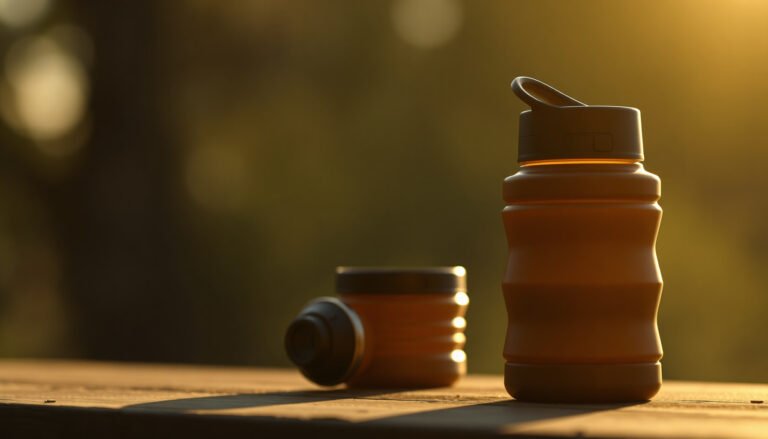
– Soft silicone with a rigid collar (often the easiest to pack, but depends heavily on the cap)
Your goal: when collapsed, the bottle should fit where you carry it—side pocket, lunch bag, or main compartment—without fighting the zipper or bending the cap assembly.
Materials, seals, and taste: what to look for
The best collapsible water bottle for school is typically the one made from food-safe, odor-resistant materials with a seal you can understand and maintain. If you can’t confidently describe where the leakproofing happens (gasket geometry, cap compression, threading contact), you’re taking unnecessary risk.
– Food-grade silicone or approved materials are typically preferred for taste and odor control
– Solid leakproofing usually comes down to the gasket/seal design—avoid bottles with vague “sealed” claims
– If it has multiple parts, confirm they’re easy to rinse/clean without trapping water
Odor control is mostly about how it dries
A collapsible water bottle for school can hold onto smells for one reason: moisture gets trapped in folds, creases, or seal channels. Over time, that moisture can make water taste “stale,” especially if you rinse quickly but don’t fully dry with the cap off.
In my day-to-day routine (mostly family logistics—school bags, lunch boxes, and “where did the cap go?” moments), I’ve found the biggest practical difference isn’t brand marketing—it’s whether the cap and gasket can be seated cleanly and dried completely before the bottle is put away. When the cap assembly is straightforward, leak risk drops and odor issues are less frequent.
Material comparison you can actually use
Below is a practical way to compare collapsible bottle materials based on how they behave during cleaning and daily use.
| Material approach | Pros for school use | Watch-outs |
|---|---|---|
| Food-grade silicone body (folds) | Flexible, packs small, and often tolerates frequent wash cycles better than delicate plastics. | Can hold moisture in seams/creases if you don’t dry thoroughly; odor prevention depends on consistent cleaning. |
| Rigid collar + removable gasket/cap parts | Easier to verify seal seating; parts you can remove are easier to rinse and keep clean. | If the gasket is complex or easy to mis-seat, “leakproof” claims won’t matter—closure technique matters. |
| Multi-material bodies (mixed plastic + seal) | Can provide a stiffer drinking experience while still collapsing for storage. | More materials often means more junctions where residue can trap odor if cleaning isn’t thorough. |
Quick rule for seal language: “clear beats vague”
For a collapsible water bottle for school, look for seal clarity: gasket placement, how the cap compresses it, and whether the gasket is removable/replaceable. Avoid bottles that only say “leakproof” without explaining the closure design.
As a cleaning sanity check, it also helps to confirm whether “sanitizing” methods are supported. For example, dishwasher “sanitize” cycles are designed to heat water to sanitizing temperatures per relevant standards (NSF/ANSI guidance on dishwasher sanitizing performance, commonly referenced), but not every bottle design is dishwasher-safe—always verify on the label or manual.
Example Bottle Capacities vs. Adolescent Daily Water Target (14–18)
| # | Capacity (mL) | Capacity (fl oz) | Full-bottle equivalents/day (males) | Full-bottle equivalents/day (females) | % of avg daily target per bottle |
|---|---|---|---|---|---|
| 1 | 350 | 11.8 | 9.4× | 6.6× | 12.5% |
| 2 | 500 | 16.9 | 6.6× | 4.6× | 17.9% |
| 3 | 600 | 20.3 | 5.5× | 3.8× | 21.4% |
| 4 | 700 | 23.7 | 4.7× | 3.3× | 25.0% |
| 5 | 750 | 25.4 | 4.4× | 3.1× | 26.8% |
| 6 | 900 | 30.4 | 3.7× | 2.6× | 32.1% |
| 7 | 1000 | 33.8 | 3.3× | 2.3× | 35.7% |
How to read this: these are capacity planning examples using adolescent total water adequate-intake targets for ages 14–18 (National Academies, IOM (2005)). They are not a medical recommendation and don’t account for sports, weather, or food water—just a sizing reference.
How to compare collapsible bottles (without getting fooled)
The quickest way to compare collapsible water bottles for school is to verify the closure first, then validate that the bottle can be fully cleaned and dried. If you do only one comparison step, do it at the gasket and cap: that’s where most leaks start.
– Check the closure + gasket area first; many failures happen around the cap
– Look for a bottle that’s easy to clean completely (not just “rinse and hope”)
– Confirm whether it’s dishwasher-safe (or what cleaning method the manufacturer recommends) using the label/manual
Use a “cap-first” evaluation
When you pick up a collapsible water bottle for school, run through this mini-check before you decide:
1. Open/close it a few times to confirm the motion is smooth (no grinding, no resistance that suggests misalignment).
2. Inspect the gasket path: it should sit flat with no twists.
3. Try a controlled seal test at home (for example, fill with water and observe for leaks over a short period) so you’re not discovering problems in a backpack.
Cleaning reality check: collapsibles need consistent routine
Many rigid bottles tolerate neglect better than collapsible ones because there are fewer hidden pockets. Collapsible water bottles for school, however, have folds and junctions that can trap residue. If you don’t clean on a regular cadence, the taste problem often appears before the leak problem.
Also confirm care instructions:
– If it’s dishwasher-safe, understand whether the cap/gasket comes apart.
– If it’s hand-wash only, look for a cleaning tool recommendation (bottle brush type, cap brush, narrow brush for threads).
What can go wrong (common mistakes and edge cases)
The most common failure mode for a collapsible water bottle for school is assuming the “leakproof” claim removes the need for correct closure and consistent cleaning. Here are the scenarios that lead to spills, odor, or daily frustration—even with a good bottle.
– Buying the wrong size: a bottle that collapses “a lot” but drinks awkwardly can become a daily annoyance
– Relying on the seal without testing: even “leakproof” bottles need correct closure every time
– Not cleaning thoroughly: collapsible designs can trap residue in creases, smell over time, and require more consistent cleaning
Edge cases to plan for
– You collapse it immediately after filling: Warm liquids can increase moisture trapped in folds. Let it cool if your bottle contains something other than plain water.
– You pack it while it’s still damp: Even a spotless bottle can smell if the gasket channels didn’t dry.
– Your cap is repeatedly opened one-handed: If the closure requires a full two-step seating motion, it may be worth practicing at home so it’s not a gamble in the hallway.
Verdict: the best pick depends on your daily routine
The best collapsible water bottle for school depends less on gimmicks and more on your willingness to manage the basics: a dependable seal, easy cleaning, and compact carry. If you prioritize those, collapsible bottles can be an excellent “space saver” choice in 2026 school schedules.
– If you want the safest school choice, prioritize leakproof sealing + easy cleaning over extra gadgets
– Downsides to expect: collapsible bottles can be more fiddly than rigid bottles and may need extra care to avoid odor buildup
– Skip collapsible bottles if you hate careful closure, don’t clean regularly, or need a super-fast “grab-and-go” bottle that you won’t assemble/disassemble
If your routine includes after-school sports, long commutes, or a bag that gets tossed in the car, seal reliability matters more than maximum collapse. If your routine includes limited sink access and you “rinse and go,” you may be happier with a simpler rigid bottle until you can commit to thorough drying.
Quick scan checklist (save this)
| Feature | What to look for | Why it matters for school |
|---|---|---|
| Leakproof closure | Clear gasket/seal design; easy to close fully | Prevents spills in backpacks/lockers |
| Collapse size | Packs down small without blocking drinking | Fits daily carry setup |
| Cleaning | Wide opening + parts that rinse clean | Reduces odor/taste over time |
| Materials | Food-safe, odor-resistant materials | Better tasting water day after day |
| Durability | Sturdy lid + reliable seal | Handles daily use without early failures |
– Confirm care instructions:
– If you’re sensitive to plastic taste:
Frequently Asked Questions
What are the best collapsible water bottles for school in 2026?
The best collapsible water bottles for school are lightweight, leakproof, and easy to clean, since students often carry them in backpacks and use them daily. Look for food-grade materials (like BPA-free silicone or Tritan liners), a secure cap with a good seal, and a compact folded size that fits lunch bags. Brands that offer multiple sizes (for different school days) and dishwasher-safe parts are usually the most practical for classroom use.
How do I choose a collapsible water bottle that won’t leak in my backpack?
Choose a collapsible bottle with a tight, threaded or lockable cap and a reliable silicone-to-cap seal to prevent drips during movement. Check for an internal gasket, a “spill-proof” or “leakproof” design, and a sturdy bottle mouth that’s less likely to crack or warp. It’s also smart to opt for a bottle that folds into a flatter shape so it doesn’t get crushed, which can compromise seals.
Which collapsible water bottle is best for kids who need frequent refills at school?
For kids, a collapsible water bottle with a larger capacity (often around 20–24 oz) helps reduce the frequency of refills while still staying packable. Consider bottles with a wide opening for easy filling from water fountains and cleaning, plus a durable, grip-friendly exterior for younger hands. A simplified design with fewer parts can also make maintenance easier, which is important for school routines.
Why should I use a collapsible water bottle instead of a rigid one for school?
A collapsible water bottle saves space, making it much easier to fit in backpacks, lockers, and school bags between classes. It’s also convenient for carrying extra water on hot days or during sports without permanently taking up room. Because many collapsible bottles are lightweight and pack down quickly, they can be more comfortable to carry than rigid bottles all day.
How do I clean and maintain a collapsible water bottle for school use?
Rinse the bottle right after use and clean it regularly with warm water and mild soap to prevent odors and residue. If your collapsible bottle is dishwasher-safe, follow the manufacturer’s instructions; otherwise, wash the cap, lid, and silicone folds thoroughly and let everything dry completely. For long-term maintenance, periodically check seams and seals for wear, since a worn gasket is a common reason for leaks.
📅 Last Updated: November 25, 2026 | Topic: Best Collapsible Water Bottles for School | Content verified for accuracy and freshness.
References
- Bisphenol A (BPA) | FDA
- https://www.cdc.gov/healthywater/emergency/creating-storing-water.html
- Drinking-water
- bisphenol A water bottle leaching – Search Results – PubMed
- water bottle biofilm cleaning – Search Results – PubMed
- Water bottle
- Silicone
- https://scholar.google.com/scholar?q=collapsible+silicone+water+bottle+leaching+BPA+safety Google Scholar
- https://scholar.google.com/scholar?q=reusable+water+bottle+material+leaching+phthalates+bisphenol+A+study Google Scholar
- https://scholar.google.com/scholar?q=water+bottle+biofilm+hygiene+cleaning+study Google Scholar