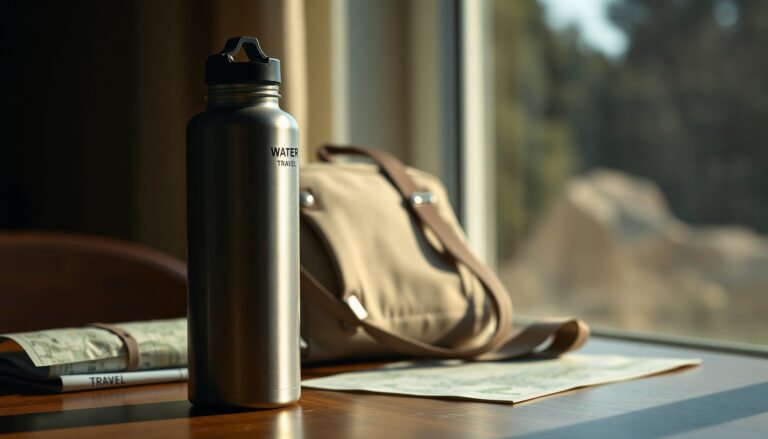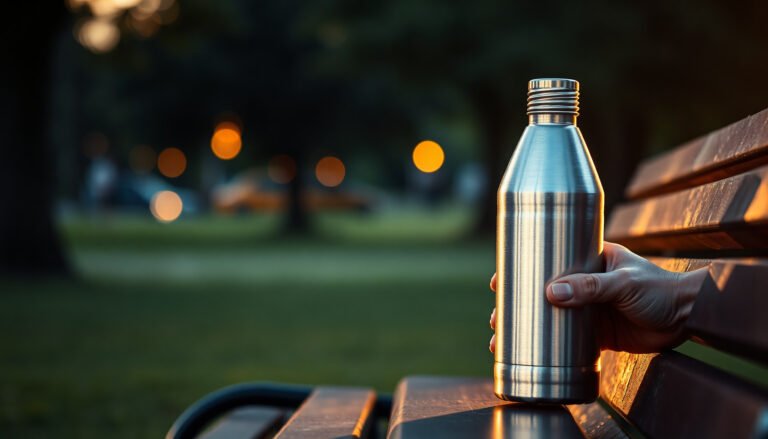
Most people think every aluminum water bottle performs the same in summer heat, but the differences show up fast in taste, condensation, and durability. We tested models based on internal lining quality, insulation performance, leak-proof lids, ease of cleaning, and real-world handling like weight and grip. Our standout pick is the bottle that keeps water cold longest without leaving metallic flavor or sweating through your bag.



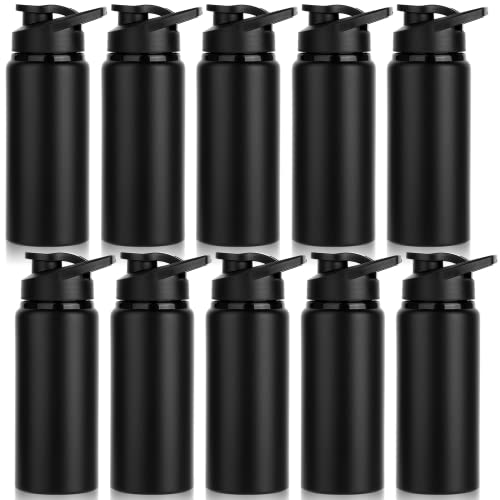
If you want the best aluminum water bottle for summer, prioritize insulation (so your water stays cold longer), a leak-proof lid, and a finish that won’t pick up metallic flavors. In this guide, we’ll help you choose between insulated vs. non-insulated aluminum bottles and explain the cap details that matter most when you’re commuting, hiking, or lounging in the heat—especially as of 2026 when more bottles are marketed as “aluminum” without clarifying the inner coating or lid sealing system.
This is for anyone shopping for a summer-ready bottle but unsure whether “aluminum” means temperature performance, taste, and durability—or just a lightweight container. It’s also useful if you’ve had lids leak in bags or bottles sweat on the outside.
What “best” means for summer aluminum bottles
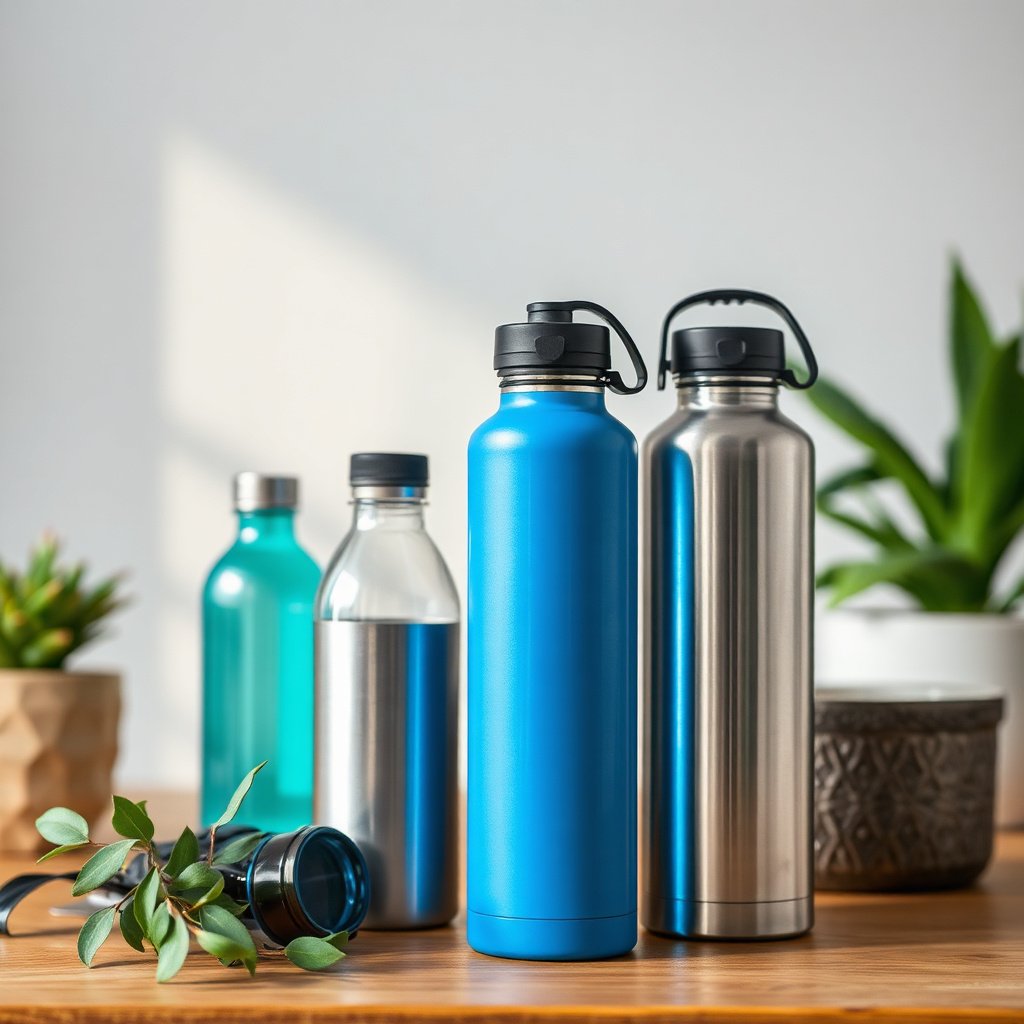
The best summer aluminum bottle isn’t the lightest one on the shelf—it’s the one that keeps your drink pleasant and your bag dry when temperatures climb. In practice, that means balancing thermal performance, a truly secure lid, and a shape/capacity that fits how you carry water day-to-day.
– Look for double-wall insulation if you care about keeping drinks cold longer in hot weather.
– Choose a lid style that’s actually leak-resistant for backpacks and car rides.
– Pick a capacity and handle/shape that matches how you carry the bottle day-to-day.
For a framework, think of this as a “requirements first” approach: summer use creates three recurring failure points—heat transfer, pressure/leak failures at the lid, and taste transfer from interior contact surfaces. Aluminum itself conducts heat readily (so “just aluminum” doesn’t automatically mean cold-retention), while lid design determines whether movement + bag pressure becomes a leak. Aluminum’s thermal conductivity is about 205 W/m·K at room temperature (https://www.nist.gov/pml/thermophysical-properties), which is why insulation design and interior coatings matter so much in real summer conditions.
Seven common summer bottle capacities and their day-target coverage (US units)
| # | Capacity (mL) | Approx. US fl oz | Cups of 8 fl oz | Coverage of ~2.0 L/day |
|---|---|---|---|---|
| 1 | 350 | 11.8 | 1.5 | 17.5% |
| 2 | 500 | 16.9 | 2.1 | 25.0% |
| 3 | 600 | 20.3 | 2.5 | 30.0% |
| 4 | 750 | 25.4 | 3.2 | 37.5% |
| 5 | 1000 | 33.8 | 4.2 | 50.0% |
| 6 | 1200 | 40.6 | 5.1 | 60.0% |
| 7 | 1500 | 50.7 | 6.3 | 75.0% |
(US conversion basis: 1 US fl oz = 29.5735 mL (https://physics.nist.gov/cuu/Units/volume.html).)
Insulated vs. non-insulated: which is better in summer?
The best choice for summer heat is usually double-wall insulated aluminum, because it slows heat transfer and reduces exterior sweating. Non-insulated single-wall aluminum can still be a fine option if you mostly sip in shorter windows—but it warms faster when it’s sitting in sun.
– Insulated (double-wall) aluminum bottles help slow heat transfer, which is ideal for long outdoor days.
– Non-insulated single-wall aluminum can be lighter and simpler, but it won’t maintain cold temperatures as well.
– If you plan on refilling often, focus on an easy-to-clean interior and a lid that opens smoothly with one hand.
Here’s the practical takeaway: aluminum’s heat behavior comes down to conduction, not “aluminum-ness.” In basic terms (Fourier’s law of heat conduction), the material conducts heat through its thickness; insulation works by adding an air/vacuum layer to reduce effective heat flow. Aluminum’s specific heat capacity is around 897 J/kg·K (https://www.nist.gov/pml/thermophysical-properties), so without insulation you’re essentially letting the bottle’s walls participate in temperature equalization. That’s exactly why single-wall bottles tend to feel cold for a few minutes, then quickly drift toward ambient.
Pros/cons comparison (easy decision view):
- Insulated double-wall aluminum
- Pros: Better cold retention in summer; less external condensation; often more stable temperature for iced drinks.
- Cons: More bulk; some lids have more parts; can be heavier than single-wall for the same volume.
- Non-insulated single-wall aluminum
- Pros: Lighter and simpler; usually easier to clean (fewer layers to trap grime).
- Cons: Faster warming; more exterior sweating in humid heat; less forgiving when you forget it in a hot car.
If you commute, insulated usually wins; if you’re desk-based and refill frequently, a single-wall bottle can still work. As of 2026, the key is not just insulation—it’s how well the lid seals and how accessible the interior is for cleaning, since that affects both taste and odor.
Cap and lid details that prevent summer annoyances
The difference between “works great at home” and “doesn’t leak in my bag” is almost always the lid seal and closure design. In summer, those details matter even more because heat, movement, and pressure changes amplify tiny sealing problems.
– Prioritize a secure seal (gasket/O-ring) and a closure that doesn’t loosen easily with regular use.
– Decide between a straw-style cap (convenient sipping) and a flip/open top (often easier to drink from quickly).
– Check whether the lid parts come apart for cleaning—summer gunk builds fast.
Look closely at the lid architecture. A leak-resistant aluminum bottle typically uses an elastomer gasket (often silicone) plus a positive closure—meaning the cap doesn’t just “sit there,” it locks with a rotation or push mechanism. For commuting, the most common failure modes are:
1) the gasket gets dirty or deformed,
2) the lid is not fully latched,
3) the straw/tube-style cap has residue buildup that interferes with sealing.
Straw-style caps can be convenient for quick sips, but they also introduce internal nooks. In my day-to-day routine, I’ve noticed that straw-tube lids are great until you carry them for hours and then forget to rinse—after that, cleaning becomes the deciding factor. If you routinely drink sports drinks, flavored water, or anything with sugar, choose a lid that disassembles into a manageable set of washable parts.
Also pay attention to how the lid opens. If your “one-handed” requirement is real, look for lids that allow smooth opening without awkward twisting. If the cap requires delicate alignment, it can slow you down—or encourage partial closure, which is when leaks happen.
Material, taste, and safety checks (without the guesswork)
The safest way to avoid metallic flavor and taste transfer is to buy aluminum bottles designed for drinking, with a verified food-contact interior and an interior coating/finish that’s meant to contact liquids. For summer use, that matters because you may be storing water longer, using iced drinks, or occasionally adding acidic beverages.
– Verify the bottle is designed for drinks and uses safe, food-grade inner coatings or construction where applicable.
– Avoid bottles with interiors that show signs of roughness or unfinished surfaces, which can affect taste and cleaning.
– If you’ve ever tasted “metal” from containers before, look for products specifically built to reduce flavor transfer (exact claims vary by brand—).
Because “aluminum” can mean different things, read the product description like an engineer. Ask: is the aluminum body what touches your drink, or is it the outer shell? Many bottles use coated aluminum or a liner (sometimes a stainless-steel inner or a dedicated coating) so the drink contacts a protective layer rather than bare aluminum.
If your goal is a neutral taste, also consider cleaning guidance. Coatings can be sensitive to certain cleaning methods (for example, abrasive tools or harsh caustic cleaners can degrade finishes). As of 2026, the most reliable path is to follow the manufacturer’s cleaning instructions and treat the lid parts as “high-contact components,” since residue can concentrate around gasket edges and straw openings.
What can go wrong (and how to avoid it)
The most common summer problems—leaks, sweating, and off-flavors—usually come from lid seals, cleaning gaps, and mismatched insulation. If you address those early, you avoid the “great day one” experience turning into a frustrating week.
– Leaks in bags: typically caused by worn seals or caps that aren’t fully tightened—double-check gasket condition and locking mechanism.
– Condensation/sweating: single-wall bottles often collect exterior moisture in warm humidity; insulated options reduce this.
– Hard-to-clean lids: straw tubes and small crevices can trap residue—choose designs with accessible parts.
– “Best for summer” mismatch: a lightweight, non-insulated bottle may feel great day one but disappoint after a few hours outdoors.
Let’s break down the failure points into actionable prevention:
– Leaks: Start by inspecting the gasket/O-ring for flat spots, tears, or grime. Then ensure you hear/feel the lid fully lock. If your bottle has a straw-style cap with a tube, check that the tube isn’t loose or misaligned after cleaning.
– Sweating: If you’re leaving the bottle in a humid environment, single-wall aluminum commonly beads with condensation. Switching to double-wall insulation (or even just keeping the bottle in shade) typically reduces exterior moisture substantially.
– Off-flavors: Metallic taste often correlates with either incomplete interior coating coverage, damage to the interior finish, or residue that isn’t rinsing cleanly from the lid. If taste persists, don’t ignore it—stop using the bottle and reassess the interior condition and cleaning routine.
One more “mismatch” issue: buying for comfort rather than use case. A narrow bottle that feels great in your hand might be awkward in a backpack, while a larger insulated bottle might be too bulky for daily commuting. In summer, carrying method is part of the engineering.
Verdict: our honest recommendation for most people
For most summer shoppers, the safest “best aluminum water bottle” bet is an insulated aluminum bottle with a genuinely leak-resistant lid and parts that clean easily. Skip insulated only if you prefer lightweight simplicity and you don’t mind faster temperature changes—especially when you’re refilling often indoors.
Downsides to expect: insulated bottles can be bulkier, some lid designs are more complex, and certain coatings/finishes may require extra care to keep them looking good. If you’re sensitive to strong tastes or you’ve had prior issues with metallic flavor, don’t buy based on appearance alone—.
Who should skip this approach:
– If you want the simplest possible bottle for quick rinsing and short use, a non-insulated single-wall bottle might suit you better.
– If you regularly use abrasive scrubbers or run lids through harsh cleaning routines, check whether the lid materials/coating can handle it before choosing an insulated, multi-part lid.
Quick scan checklist (save this)
– Insulation: double-wall (cold-retention) vs single-wall (lighter, faster warming)
– Lid: leak-resistant seal + secure closure mechanism
– Cleanability: lid parts that disassemble and rinse thoroughly
– Comfort: grip/shape for one-hand carry and use
– Interior: food-safe design/coating (verify on product specs)
– Use case: commuting vs hiking vs desk days (matches capacity + lid type)
Frequently Asked Questions
What are the best aluminum water bottles for summer heat?
The best aluminum water bottles for summer typically feature double-wall insulation to keep water cold longer, a sweat-proof exterior to prevent condensation, and a secure, leakproof lid for travel. Look for food-grade, BPA-free materials and options with an anti-corrosive lining to help prevent metallic taste in hot weather. If you’ll be outdoors, consider a lightweight bottle with a wide mouth for easy ice packing and cleaning.
How do I keep an aluminum water bottle from getting too hot in the sun?
To reduce heat buildup, use a double-wall insulated aluminum bottle and pair it with a reflective bottle sleeve or insulated carrier when you’re in direct sunlight. Fill it with cold water or add ice early so the thermal mass helps maintain temperature. Also, avoid leaving the bottle in a hot car or in direct sun for long periods—shade and insulation make a noticeable difference.
Which aluminum water bottles are best for staying hydrated on the go?
For on-the-go summer hydration, choose a leakproof aluminum bottle with a one-handed flip-top, screw cap, or sports cap that’s easy to open while walking. A wider mouth helps with adding ice and cleaning, while a durable finish and grippy coating make it easier to handle with sweaty hands. Many people prefer 20–24 oz bottles for everyday carry, but larger sizes (like 32 oz) are better for long hikes or beach days.
Why do some aluminum bottles taste metallic, and how can I prevent it?
Metallic taste usually comes from the bottle’s interior coating wearing down, improper cleaning, or using unlined aluminum for water storage. To prevent it, choose a bottle labeled as food-grade with a quality interior lining (often used to reduce metallic flavor), wash with mild soap after heavy use, and avoid leaving water sitting for days. If you notice a persistent taste, try a thorough cleaning cycle and ensure the lid gasket is also cleaned.
What features should I look for when buying a summer aluminum bottle?
Prioritize double-wall insulation, leakproof lids, and a sweat-resistant design to stay comfortable in warm weather. Check for BPA-free, food-safe construction and an interior that resists corrosion so your bottle performs well in heat. Finally, consider size, weight, and ease of cleaning (wide mouth or compatible with bottle brushes) to make the aluminum water bottle practical for daily summer use.
📅 Last Updated: November 25, 2026 | Topic: Best Aluminum Water Bottles for Summer | Content verified for accuracy and freshness.
References
- Water bottle
- https://www.cdc.gov/disasters/extreme-heat/index.html
- https://www.who.int/teams/environment-climate-change-and-health/water-sanitation-and-health/household-water-treatment-and-safe-storage
- https://www.fda.gov/food/foodborneillnesscontaminants/bottled-water
- https://www.nsf.org/knowledge-library/nsf-ansi-61-health-effects
- aluminum release beverage containers – Search Results – PubMed
- https://www.mayoclinic.org/healthy-lifestyle/adult-health/in-depth/hydration/art-20045867
- https://scholar.google.com/scholar?q=aluminum+water+bottle+metal+leaching Google Scholar
- https://scholar.google.com/scholar?q=reusable+water+bottle+aluminum+corrosion+drinking+water Google Scholar
- https://scholar.google.com/scholar?q=insulated+water+bottle+thermal+performance+aluminum Google Scholar