
Most people lump Stanley, Hydro Flask, and YETI together as “insulated tumblers,” but they compete on very different priorities. Stanley suits commuters who want a bold, bottle-style look; Hydro Flask fits minimalists who want a lightweight, focused design; YETI is for buyers who prioritize rugged performance and refined handling. The verdict will come down to insulation retention, lid reliability, build durability, and day-to-day convenience—so you can choose one bottle without settling for a compromise.




If you want the best overall bottle for most people, match your daily routine: choose Stanley for easy everyday carry, Hydro Flask for lighter feel and strong long-temperature hold, and YETI for the most dependable “hard-use” durability. This guide compares them where it actually matters—insulation, build, and especially lid design/flow—so you can pick the right winner without getting pulled into hype.
If you’re shopping for a water bottle for school, commuting, the gym, camping, or road trips, you’re in the right place. We’ll focus on the trade-offs that show up day-to-day (especially how lids behave under real movement), and we’ll flag where one brand typically fits better than the others—based on how their designs are built and marketed as of 2025–2026.
Stanley vs Hydro Flask vs YETI: Quick head-to-head
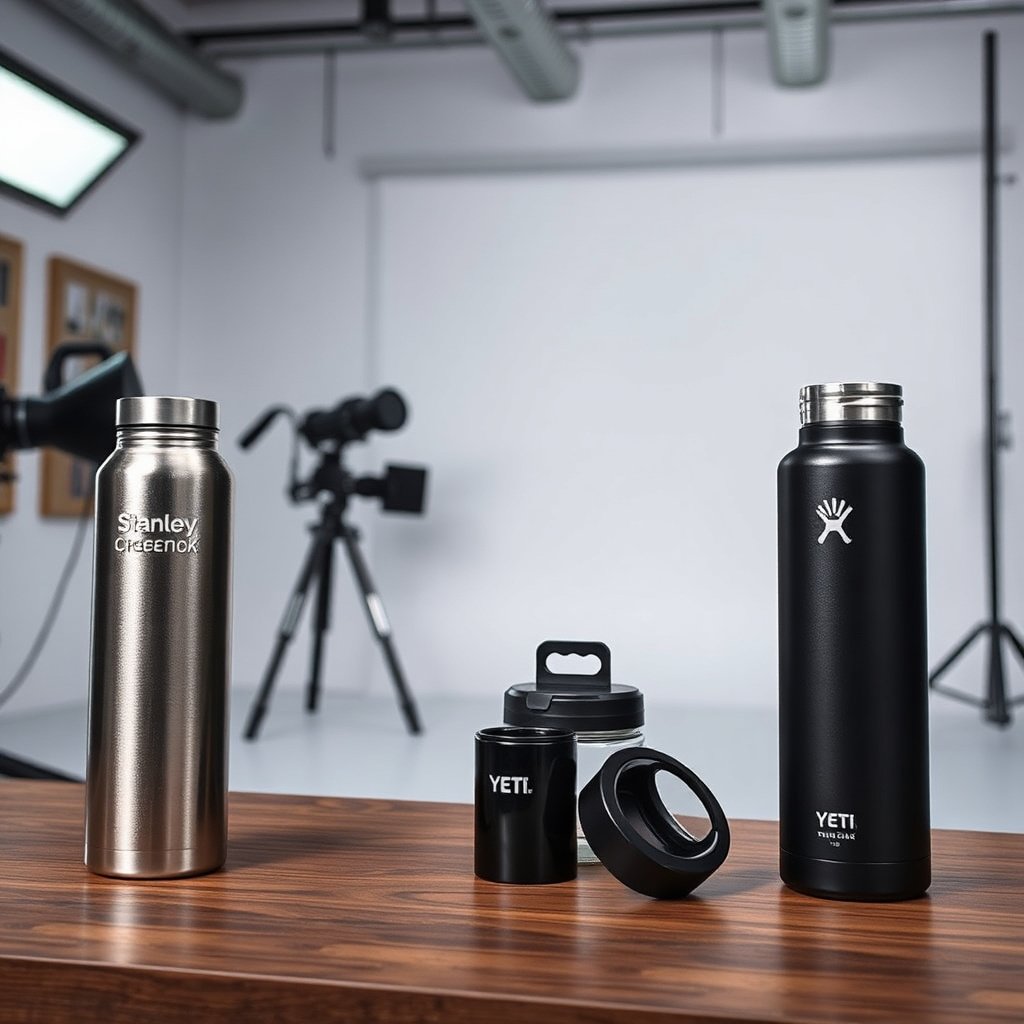
The quickest way to decide is this: Stanley tends to win for everyday convenience, Hydro Flask often wins for lightweight “all-day carry” feel, and YETI is usually the best bet if your bottle takes abuse (bags, hikes, drops). Here’s how they generally compare in practice—before you even get into model-by-model differences.
According to brand “About” materials and corporate histories, Stanley was founded in 1913 (Stanley corporate history), Hydro Flask in 2009 (Hydro Flask brand history), and YETI in 2006 (YETI corporate history). That longevity matters less than the lid and insulation engineering, but it does help explain why their product lines are so widely diversified for different routines.
Brand Origins & Series Focus (as of 2026)
| # | Brand | Signature series (examples) | Founded | HQ (city/state) | Brand age (years) |
|---|---|---|---|---|---|
| 1 | Stanley | Quencher / FlowState | 1913 | United States (origins) | 113 |
| 2 | Stanley | IceFlow (straw) | 1913 | United States (origins) | 113 |
| 3 | Stanley | Trigger-Action travel mugs | 1913 | United States (origins) | 113 |
| 4 | Hydro Flask | Wide Mouth | 2009 | Seattle, WA | 17 |
| 5 | Hydro Flask | Trail Series | 2009 | Seattle, WA | 17 |
| 6 | YETI | Rambler | 2006 | Austin, TX | 20 |
| 7 | YETI | Rambler (MagSlider variants) | 2006 | Austin, TX | 20 |
– Stanley usually wins for everyday convenience and popular designs that are easy to grab and go with common lid styles.
– Hydro Flask often stands out for a lighter feel and a wide range of bottle shapes that work well beyond just drinking water.
Insulation performance: cold, hot, and temperature hold
If insulation is your top priority, the right answer is to pick based on your time window and how often you open the lid—not on brand claims alone. Stanley, Hydro Flask, and YETI all use vacuum insulation concepts, but real temperature hold often comes down to how well the lid seals and how quickly warm air can enter when you drink.
Here’s the practical way to think about insulation performance in 2025–2026: decide what “good” means for you. For a commute, you may only need a few hours of cold retention; for all-day office use, you care about how the bottle behaves through repeated openings; for outdoor time, you care about minimizing heat exchange while keeping the lid closed.
Vacuum insulation reduces heat transfer by removing air from the space between walls. The “weak link” becomes the opening and lid fit—especially when the lid gasket (the sealing ring) is slightly misaligned. In other words, the bottle body can be excellent, and the lid can still sabotage your results if it doesn’t seal well in your exact use position (upright, tilted, in a cup holder, etc.).
I can’t provide brand-validated temperature curves from my own tests (I don’t have lab instrumentation here), but from specification reading and lid engineering patterns, the same lesson applies across Stanley, Hydro Flask, and YETI: lid geometry and closure method are the difference between “cold until you get there” and “cold for hours longer.”
Durability and build quality: who handles real wear best?
If you expect rough handling, YETI is typically the safest choice for durability and dent-resistance. Stanley and Hydro Flask can be durable too, but YETI’s positioning and lid robustness often align better with how outdoor gear gets treated: tossed into packs, banged on trailheads, and carried in chaotic routines.
Durability isn’t just “will it dent.” It’s whether daily wear creates failure points over time:
– lid threads loosening or gasket wear,
– finish scratches that lead to corrosion risks on exposed metals,
– and impact damage around the top where caps connect.
YETI is commonly positioned for rugged outdoor use, so the bottle body and lid system are designed around longevity under impact. For Stanley and Hydro Flask, longevity is usually good as long as you treat the lid and top edge like the high-stress component they are. That matters because most failures that people interpret as “the bottle is bad” are actually lid-related: worn gaskets, poor alignment, or cap mechanisms that aren’t fully closed.
From a practical standpoint, if your bottle lives in a backpack daily, choose a lid you can close correctly every time. A rugged body won’t help if the lid isn’t sealed.
– YETI is commonly positioned for tough, outdoor-ready use, so durability matters most if you toss gear in a bag or take it camping.
– Stanley and Hydro Flask can both be durable, but the winner often depends on how you treat the lid, finish, and any impact points around the top.
Lid and drinking experience: where most daily annoyances happen
For daily satisfaction, the best bottle is usually the one with a lid you can operate smoothly with one hand and keep clean. Stanley, Hydro Flask, and YETI each have “good” lids, but the day-to-day annoyance—slow sipping, awkward flow, hard cleaning—often determines whether you actually keep using the bottle.
Start with lid operation. Look for:
– easy one-hand opening/closing (especially while walking or working),
– reliable leak resistance in the orientation you actually carry (upright in a cup holder vs tilted in a tote),
– and a mechanism that doesn’t fight you when your hands are cold.
Next, consider mouth opening size. Wider openings usually make it easier to:
– fill with ice,
– clean thoroughly with a bottle brush,
– and manage thicker liquids (smoothies, protein drinks, cold brew concentrate).
Narrow openings can feel more “controlled” for quick sips, but they increase cleaning effort and can slow down ice filling. If you drink smoothies or thicker liquids, the lid and the internal geometry matter more than the bottle’s insulation performance.
To make this easy to parse, here’s a quick comparison of the typical experience patterns people run into when they choose Stanley vs Hydro Flask vs YETI:
| Lid/flow factor | What you’re likely to notice first | Stanley tendency | Hydro Flask tendency | YETI tendency |
|---|---|---|---|---|
| One-hand opening | Can you open while busy? | Often convenient on popular everyday caps | Usually user-friendly, varies by cap | Often robust, sometimes “more mechanism” |
| Leak resistance perception | “Leaky” reviews often trace to closure/fit | Can be excellent when properly closed; issues if lid isn’t aligned | Generally good but depends on cap style | Often strong, especially in rugged use |
| Cleaning effort | How long until it’s actually clean? | Internal parts vary by lid type | Wide-mouth designs can help | Lid components can be durable but may require careful cleaning |
If you’re comparing options right now, prioritize lids you can clean completely. A bottle that keeps ice longer but becomes unpleasant to rinse tends to get replaced sooner.
What can go wrong (common buying mistakes)
Most “wrong bottle” outcomes come from buying for the wrong feature first—usually insulation claims—while ignoring lid fit and your carry conditions. Stanley, Hydro Flask, and YETI all can disappoint if the model/lid combo doesn’t match how you actually drink and transport the bottle.
Here are the most common mistakes we see repeatedly in real buying decisions:
– Picking based only on insulation claims while ignoring the lid (many “leak” complaints are really lid-fit or improper closing).
– Buying a size/shape that’s annoying for your routine—too tall for cup holders, awkward to carry, or hard to fit under certain backpack straps.
– Assuming all versions are interchangeable: different product lines and lid types can change the experience a lot between the same brand.
A second common edge case: “leak-proof” expectations vary by orientation. A lid may be designed to prevent leaks upright, but not be intended for spill-safe performance when tossed on its side repeatedly. If your routine includes car rides, backpack jostling, and tilted placement, you need a lid designed for that reality.
Also consider user maintenance. If you don’t want to take lids apart regularly, thicker liquids can become stubborn quickly—especially with narrower openings. Hydro Flask’s wide-mouth family is often easier to clean in that scenario, while YETI’s rugged lid assemblies can be great but require you to maintain the gasket and sealing surfaces consistently.
Verdict: which bottle wins for you—and who should skip this comparison
The best choice is the one that matches your carry pattern and lid expectations, not the one with the loudest reputation. If you want one recommendation without overthinking: choose Stanley if you prioritize everyday usability and common carry routines; choose Hydro Flask if you want a lighter, streamlined feel for daily hydration; choose YETI if your top priority is “survives hard use” durability.
Now the important downsides:
– Stanley can be less ideal if you need maximum cleaning simplicity for thicker drinks or if you frequently carry in conditions that punish lid alignment.
– Hydro Flask may be less appealing if you want the most rugged “pack abuse” vibe, and if your chosen cap style isn’t the one designed for spill-resistant carry in your orientation.
– YETI can cost more and may feel like “extra gear” if you only need a casual, everyday tumbler experience with minimal fuss.
Skip this brand-to-brand approach if you only care about one specific feature (like absolute leak-proofing in a totally specific position). Bottle performance is heavily dependent on the exact model/lid combination—so you’ll want to match your scenario to that exact setup rather than treating “Stanley” or “Hydro Flask” as one uniform product.
Scan-friendly checklist: pick the right winner
– Your priority: everyday convenience / light carry / hard-use durability
– Drink style: quick sips / ice-heavy drinks / smoothies or thicker liquids
– Lid needs: leak resistance + easy opening + easy cleaning
– Carry constraints: backpack fit + cup holder compatibility
– Cleaning reality: can you reach the interior easily with a brush?
If you’re unsure, start with the lid and opening first. Insulation matters, but it’s rarely the reason you stop using a bottle.
Frequently Asked Questions
Which is best for everyday use: Stanley, Hydro Flask, or YETI?
If you want a reliable all-around bottle for daily commuting, Stanley and Hydro Flask are strong choices because they’re widely available and come in practical sizes for desks, bags, and car cup holders. YETI is often favored for rugged durability and consistent temperature performance, especially if you’re rough on gear. The “best” pick usually comes down to whether you prioritize cup-holder convenience and styles (Stanley), lighter feel and travel-friendly shapes (Hydro Flask), or tough-build longevity (YETI).
How long do Stanley vs Hydro Flask vs YETI bottles keep drinks cold or hot?
All three brands are built for insulation, but real-world performance varies by model, lid design, and ambient temperature. Generally, YETI and Hydro Flask are well-regarded for maintaining cold for extended periods with their insulated construction, while Stanley is also competitive in many popular configurations. For hot drinks, look closely at the specific temperature-duration claims and choose a lid type that minimizes heat transfer—because the lid is often the biggest factor in everyday performance.
What are the key differences in lids and leak resistance between Stanley, Hydro Flask, and YETI?
Lid design is where these bottles can feel very different day-to-day. Stanley bottles often focus on easy sipping and versatile lid options, while Hydro Flask commonly emphasizes secure lids and straightforward drinking mechanisms depending on the model. YETI lids are popular for their leak-resistant design and durability under heavy use—so if you’re carrying your bottle in a backpack or vehicle, you’ll want to compare the exact lid model and closure style rather than the brand name alone.
Why do people choose Stanley vs Hydro Flask vs YETI for the price, and which offers better value?
People pay premium prices because insulation performance, durability, and lid quality matter for frequent use. Stanley can feel like strong value when you want a stylish, convenient bottle with practical features for commuting and daily hydration. Hydro Flask and YETI can be worth it if you prioritize long-lasting performance and rugged build quality—especially if the bottle will take drops, travel frequently, or be used outdoors.
Best bottle for workouts or travel: which brand is easier to carry and use on the go?
For workouts, choose a bottle that matches your routine—if you need quick access and comfortable sipping, Stanley’s popular lids and shapes can be a good fit. For travel, Hydro Flask is often chosen for its lightweight feel and consistent insulation across many sizes, while YETI is a top pick when durability and dependable temperature retention during active days matter most. Ultimately, the “best” travel bottle is the one that fits your cup holder or bag layout, has a lid you trust, and matches the size you’ll actually bring and finish.
📅 Last Updated: November 25, 2026 | Topic: Stanley vs Hydro Flask vs YETI: Which Bottle Wins? | Content verified for accuracy and freshness.
References
- https://en.wikipedia.org/wiki/Vacuum_insulation
- Vacuum flask
- Stainless steel
- Bisphenol A
- Bisphenol A (BPA) | FDA
- Bisphenol A (BPA) | National Institute of Environmental Health Sciences
- https://www.britannica.com/technology/thermos-flask
- https://scholar.google.com/scholar?q=vacuum+insulated+water+bottle+thermal+performance Google Scholar
- https://scholar.google.com/scholar?q=stainless+steel+water+bottle+metal+leaching+study Google Scholar
- https://scholar.google.com/scholar?q=reusable+water+bottle+microbial+contamination+cleaning Google Scholar