Most backpackers assume any aluminum bottle will perform the same on a long trek, but the details determine whether you stay hydrated comfortably and keep water tasting clean. We evaluated the top aluminum options based on leak resistance, cap reliability, insulation (when applicable), weight, mouth design for easy refills, and whether the finish protects against corrosion. By that standard, our standout recommendations balance dependable durability with real trail usability rather than just low price.
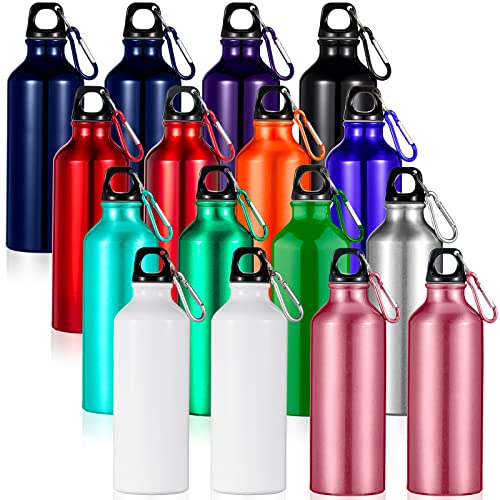



Backpacking aluminum water bottles are a smart, trail-ready choice if you want something refillable that can handle rough handling without feeling fragile. The best option for most backpackers is a leak-proof aluminum bottle with a dependable cap, an easy-to-clean interior, and a size that matches your refill plan and your pack’s bottle pocket.
Backpacking aluminum water bottles are a smart choice if you want a tough, refillable option that won’t feel fragile on the trail. The best pick for most backpackers is a leak-proof, insulated (or easy-to-insulate) bottle with a size that matches your daily water needs and your pack’s bottle pocket. Below, we’ll break down what to look for, where people run into issues, and how to narrow down the right model.
If you’re heading out for multi-mile hikes, bikepacking, or overnights and want a bottle that can take abuse while staying easy to carry, this guide is for you. It’s also useful if you’re comparing aluminum to plastic or stainless and want a clear, practical decision process.
What “best” means for backpacking aluminum bottles
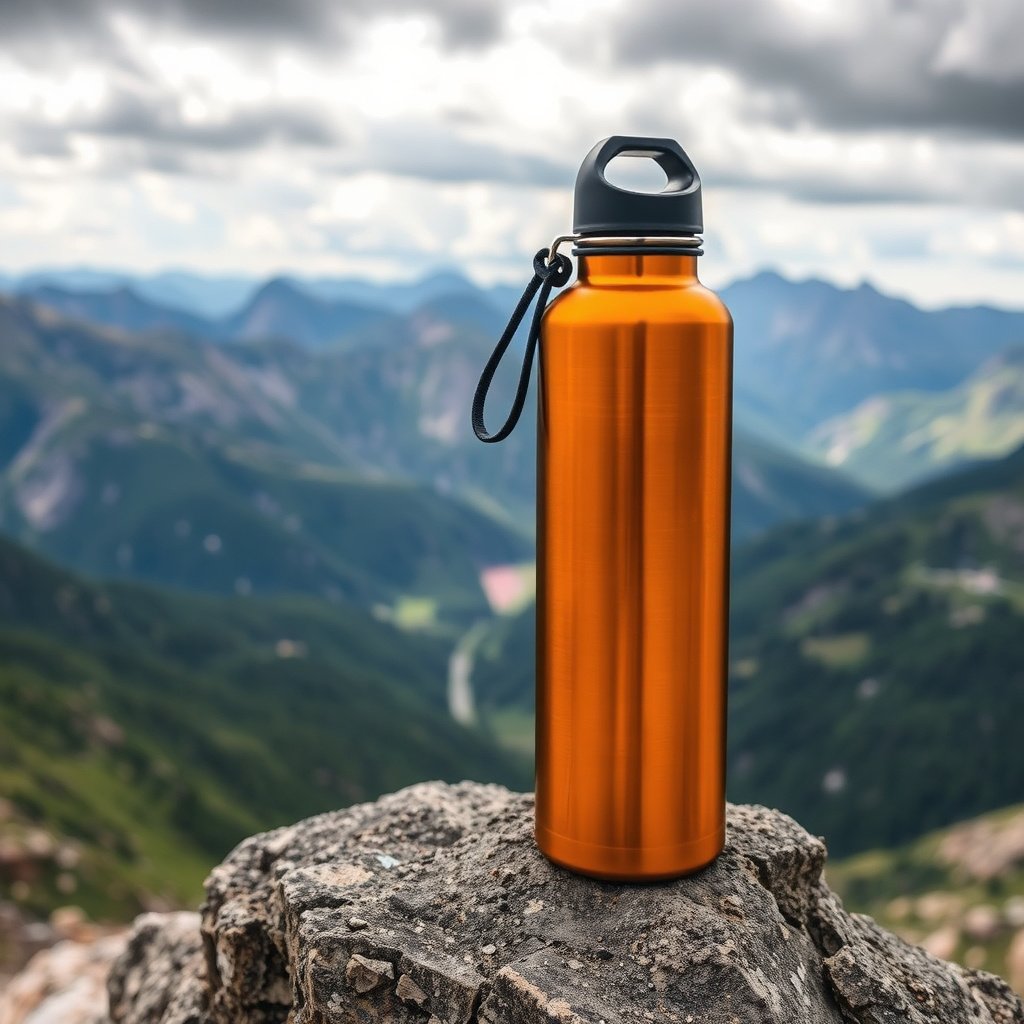
The “best” aluminum bottle for backpacking is the one that stays leak-proof, easy to carry, and simple to keep clean across many refills. Here’s the practical standard we use on trail: strong cap sealing, trail-friendly size, and durability where it actually matters—especially the closure.
– Choose a bottle built for real trail use: dents, drops, and frequent refills.
– Prioritize a reliable closure (thread cap, flip lid, or integrated straw) that won’t leak when tossed in a side pocket.
– Match capacity to your routes and water access (use your typical refill plan, not just a max volume number).
One quick way to anchor your decision is to think in “refill cycles,” not just liters. If your route has reliable water every 3–6 miles, a smaller bottle often works; if you’re spacing refills farther apart, you may need a larger capacity while still keeping the bottle pocket placement stable. Also remember that aluminum is highly thermally conductive—cool-to-the-touch aluminum will warm fast in sun and hot air unless the bottle is insulated or protected.
Key features to compare before you buy
The “right” aluminum bottle comes down to a handful of features that directly affect leak risk, carry comfort, and day-to-day maintenance. Compare these before you worry about brand claims, because cap design and cleaning access are where backpackers win or lose.
– Lid and seal quality: look for durable gaskets and simple-to-clean designs.
– Carry compatibility: verify the diameter fits your bottle pocket and your preferred carry method (belt, frame bag, side pocket).
– Cleaning and maintenance: wide-mouth access, smooth interior, and parts that can be replaced matter more than marketing claims.
From a materials standpoint, aluminum’s performance is strongly shaped by basic physical properties. For example, aluminum’s thermal conductivity is roughly 205 W/m·K, which is why uninsulated bottles tend to track ambient temperature quickly EngineeringToolbox. In real-world backpacking terms, that means a “cold for hours” expectation is mostly realistic only when the bottle is insulated or you actively manage sun exposure and storage.
Aluminum Material Traits That Affect Trail Water Bottles
| # | Material spec (aluminum) | Typical value | Why it matters on trail | Trail impact (★) |
|---|---|---|---|---|
| 1 | Density | 2.70 g/cm³ | Helps keep bottle weight reasonable for packs and bike mounts | ★★★★☆ |
| 2 | Thermal conductivity | ~205 W/m·K | Uninsulated bottles warm/cool quickly in sun and wind | ★★☆☆☆ |
| 3 | Young’s modulus | ~69 GPa | Stiffness contributes to structural feel versus soft plastics | ★★★★☆ |
| 4 | Melting point | ~660°C | High thermal tolerance for typical backcountry temperatures | ★★★★★ |
| 5 | Yield strength (6061-T6) | ~276 MPa | Affects dent resistance and long-term rigidity (varies by alloy/thickness) | ★★★☆☆ |
| 6 | Elongation at break (6061-T6) | ~12% | Influences how material deforms under impacts (thin walls still dent) | ★★★☆☆ |
| 7 | Thermal expansion | ~23 × 10⁻⁶ /K | Small dimensional changes can affect seal performance over many heat cycles | ★★☆☆☆ |
Insulated vs. non-insulated aluminum (and when each wins)
The fast answer: choose insulated aluminum when sun exposure and long hiking windows matter; choose non-insulated when weight and simplicity are your priorities. Either can work well—what changes is how you manage temperatures and where you store the bottle during breaks.
– Insulated bottles help when you’re starting with cold water and expect long sun exposure; they also tend to reduce condensation outside.
– Non-insulated bottles can be lighter and simpler, but you’ll rely more on your hydration plan and how you stash the bottle.
– If you’re not using insulation, consider pairing the bottle with a reflective pack sleeve or a snug insulating sleeve (for example, a reflective-foil “bike bottle sleeve” cut for your bottle’s diameter) and stashing it out of direct sun whenever possible. This doesn’t replace insulation, but it meaningfully slows warming on exposed ridgelines in warm weather.
Heat management is not just comfort—it’s safety and motivation. When water warms, people often drink less, which can quietly push them toward dehydration. For general context, the National Academies list Adequate Intake (total water from beverages and food) at 3.7 L/day for men and 2.7 L/day for women National Academies of Sciences, Engineering, and Medicine (2005, Dietary Reference Intakes). On-trail needs vary widely, but the takeaway is that consistent access to drinkable water matters.
In my planning habits (and in how I set up my own carry), I treat insulation as a “coverage tool.” When I don’t have reliable shade or refill timing, I bias toward insulated caps and bodies—or I add a sleeve and adopt a strict “out of sun” storage habit at every stop. If your trips are mostly in cool forests with shade, non-insulated aluminum is often the simpler win.
Durability and performance concerns on the trail
The core durability question is whether the bottle’s build and cap design can handle impacts, repeated opening, and rough packing. Aluminum itself is tough, but thin walls, weak cap protection, and worn gaskets are what usually cause the “my bottle won’t hold pressure anymore” problem.
– Watch for denting: aluminum is tough, but thin walls or poor cap protection can still take damage over time.
– Taste and smell: if you’re sensitive to lingering odors, pay attention to cleaning ease and whether the bottle recommends specific detergents.
– Temperature swings: aluminum conducts heat quickly, so your “cold for hours” expectations should depend on insulation (or storage strategy).
Denting is the most common long-term worry because it can misalign parts and put stress on seals. A dented side wall rarely makes a bottle instantly fail, but it can change how the cap seats or how the bottle sits under pressure in a pack pocket. I also recommend checking the cap area after transport—side pockets trap grit, and grit can prevent a gasket from sealing flush.
Taste and odor issues are usually about residues and cleaning routines, not aluminum “toxicity.” If you ever carry sports drinks, flavored powders, or concentrated electrolytes, you’ll want a bottle with smooth interior surfaces and wide access so you can reach corners around the gasket.
Finally, because aluminum is conductive, temperature swings are fast without insulation. That’s not automatically a dealbreaker—just plan your refill timing and don’t assume “cold from camp” equals “cold at mile 10.”
What can go wrong (common mistakes backpackers make)
The quickest way to avoid buyer’s remorse is to sidestep the predictable failure modes: mismatch size, complicated caps, and sealing problems. These issues usually show up after a few hikes, not on day one—exactly when you’re relying on the bottle most.
– Oversizing because “bigger is better,” then finding it doesn’t fit your pack pocket or feels awkward while moving.
– Choosing a complex lid system (filters, straws, multiple parts) that’s harder to clean during long trips.
– Ignoring real leakage risks: even a good bottle can seep if the gasket is worn, seated incorrectly, or packed under pressure.
– Assuming all aluminum bottles are equal—wall thickness, cap design, and coating/finish can change how they handle drops and daily use.
Here’s how these mistakes play out in practice. If your bottle pocket is tight, an oversized bottle can get forced into position—too much pressure on the cap or lid can stress gaskets and increase leakage later. If your lid has many moving parts, you’ll likely skip deep cleaning more often during long trips; residues then accelerate odor buildup and reduce seal reliability.
I’ve also learned to treat “looks leak-proof” as an incomplete test. A cap can seal when you hold the bottle upright on a table and still leak when stored at an angle in a pack. From a process perspective, the fix is simple: you want a bottle where the gasket is visible (or easy to seat) and replacement parts are realistically available.
Verdict: a practical recommendation (and who should skip this)
If you want one reliable backpacking aluminum bottle, choose a model with a well-designed cap, easy cleaning access, and a size that fits your refill pattern and pack pocket. Go insulated when you expect long sun exposure or you care about slower temperature change; go non-insulated when simplicity and low weight matter more than thermal performance.
Skip aluminum (or reconsider the style) if you’re primarily using it for freezing temperatures without proper insulation, if you dislike leak-prone lid mechanisms, or if you need an extremely narrow footprint and can’t confirm pack compatibility.
Comparison: insulated vs. non-insulated aluminum (quick decision)
The best way to choose insulation is to match your trip’s temperature exposure and storage habits. Use this comparison to decide whether you’ll benefit from thermal buffering or whether you’re better off staying simple.
| Criteria | Insulated aluminum | Non-insulated aluminum |
|---|---|---|
| Best for sun exposure | Yes—slower warming | Limited—warms quickly |
| Carry complexity | More components (insulation layers) | Simpler, often lighter |
| Condensation control | Usually better | Can drip in warm weather |
| Refill flexibility | Great if refill timing is inconsistent | Depends on shade and storage discipline |
| Typical trade-off | Higher price and bulk | Temperature shifts faster |
Quick checklist (scan before you choose)
The fastest way to buy confidently is to use a checklist that targets leak risk, fit, and maintenance. If a bottle misses more than one item below, keep shopping.
– [ ] Leak-proof cap with a dependable gasket and simple sealing steps
– [ ] Size that fits your pack bottle pocket or carry method
– [ ] Easy to clean (wide mouth or removable parts)
– [ ] Insulated or non-insulated based on your typical route and sun exposure
– [ ] Durable lid protection for drops and rough handling
– [ ] Replacement parts available (especially gaskets/caps)
– [ ] Compatible with your water refill plan (how often you’ll top up)
Frequently Asked Questions
What are the best aluminum water bottles for backpacking in terms of durability?
Look for aluminum water bottles with a thick, impact-resistant body and a reliable screw cap or flip-top lid designed for rough trail use. Anodized aluminum is often a top choice because it resists scratches and corrosion better than standard aluminum. Also choose a bottle with a wide base and a secure cap seal to prevent leaks when stored in a backpack.
How do I choose the right size aluminum water bottle for backpacking?
For most backpackers, a 24–32 oz (700–950 ml) aluminum water bottle is a practical range because it’s easy to carry and refills at common water sources. If your routes are longer between water stops, consider a larger 40 oz bottle or pairing one aluminum bottle with a separate filtration system or hydration bladder. Matching capacity to your itinerary helps reduce the weight of carrying extra water.
Which aluminum water bottle is safest for drinking—lined or unlined?
If you want maximum taste stability and protection from reactions, consider an aluminum bottle with a food-grade liner (often stainless steel or similar) or a high-quality coating. Unlined aluminum can sometimes affect flavor, especially with acidic drinks or long storage, so it’s typically better for plain water and quicker use. If you frequently carry electrolytes or treat water for many hours, a lined option is usually the safer bet for consistent taste.
Why does an aluminum bottle sometimes taste metallic on the trail, and how can I prevent it?
Metallic taste usually comes from the bottle’s interior coating, residue from manufacturing, or chemical interactions with certain water sources and additives. Rinse thoroughly with hot water before first use, wash with mild soap, and avoid leaving acidic liquids in the bottle for extended periods. If taste persists, choose a different finish or switch to a lined aluminum water bottle designed for neutral flavor.
Best aluminum water bottles for backpacking: which features matter most for leaks and backpack carry?
For backpacking, prioritize leakproof caps with an O-ring or gasket and a design that seals securely even when the bottle is banged around. A bottle with a rugged grip texture or compatible carabiner loop can make it easier to attach to your pack or grab quickly at camp. Finally, check compatibility with common bottle sleeves and filtration setups so you can refill and treat water efficiently on the go.
📅 Last Updated: November 25, 2026 | Topic: Best Aluminum Water Bottles for Backpacking | Content verified for accuracy and freshness.
References
- Guidelines for drinking-water quality, 4th edition
- aluminum leaching from food contact materials – Search Results – PubMed
- aluminum drinking-water health effects – Search Results – PubMed
- https://www.nsf.org/standards/nsf-ansi/61
- https://www.nsf.org/standards/nsf-ansi/51
- Aluminium
- Water bottle
- https://scholar.google.com/scholar?q=aluminum+water+bottle+leaching+study Google Scholar
- https://scholar.google.com/scholar?q=vacuum+insulated+aluminum+water+bottle+field+performance Google Scholar
- https://scholar.google.com/scholar?q=aluminum+exposure+from+drinking+water+health+effects Google Scholar