Which stainless-steel bottle—Hydro Flask or YETI Rambler—actually keeps drinks colder for longer? For daily hydration on the go, Hydro Flask is the cleaner pick if you prioritize a straightforward, insulated feel and dependable temperature retention; for colder, all-day performance with rugged use, the YETI Rambler typically holds an edge. The verdict comes down to insulation design, lid sealing, and how each bottle handles repeated opening.

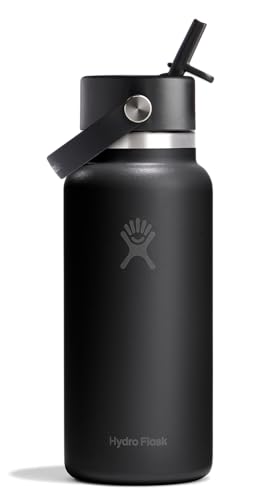


If you’re choosing between Hydro Flask and YETI Rambler mainly for colder drinks, the answer is: the lid seal and your drinking/carry habits usually decide the winner. Both brands rely on vacuum insulation, so the “colder” feel often comes down to how tightly the lid seals, how often you open it, and whether it stays aligned during bag carry.
Both Hydro Flask and the YETI Rambler line are built for strong temperature retention, so they’re close more often than not. In practice, the edge usually comes down to the lid/seal and how you use it (pre-chilling, how often you open it, and whether it’s sitting upright or tossed in a bag). This guide breaks down what affects cold retention and how to choose the better one for your routine.
If you’re trying to keep iced coffee, water, or sodas cold for a workday, commute, gym session, or outdoor outing, this comparison is for you. It’s also helpful if you’re deciding between a Hydro Flask bottle and a YETI Rambler (or if you’re comparing a specific model/lid style).
Hydro Flask vs YETI Rambler comparisons make the most sense if your real goal is “cold for hours while I’m using it,” not “max performance in a lab.” As of 2026, both lineups remain top choices for vacuum-insulated stainless steel, but your routine (how often you open, straw vs sip vs screw cap, and whether the lid can shift) can matter as much as the brand.
What “keeps colder” really depends on
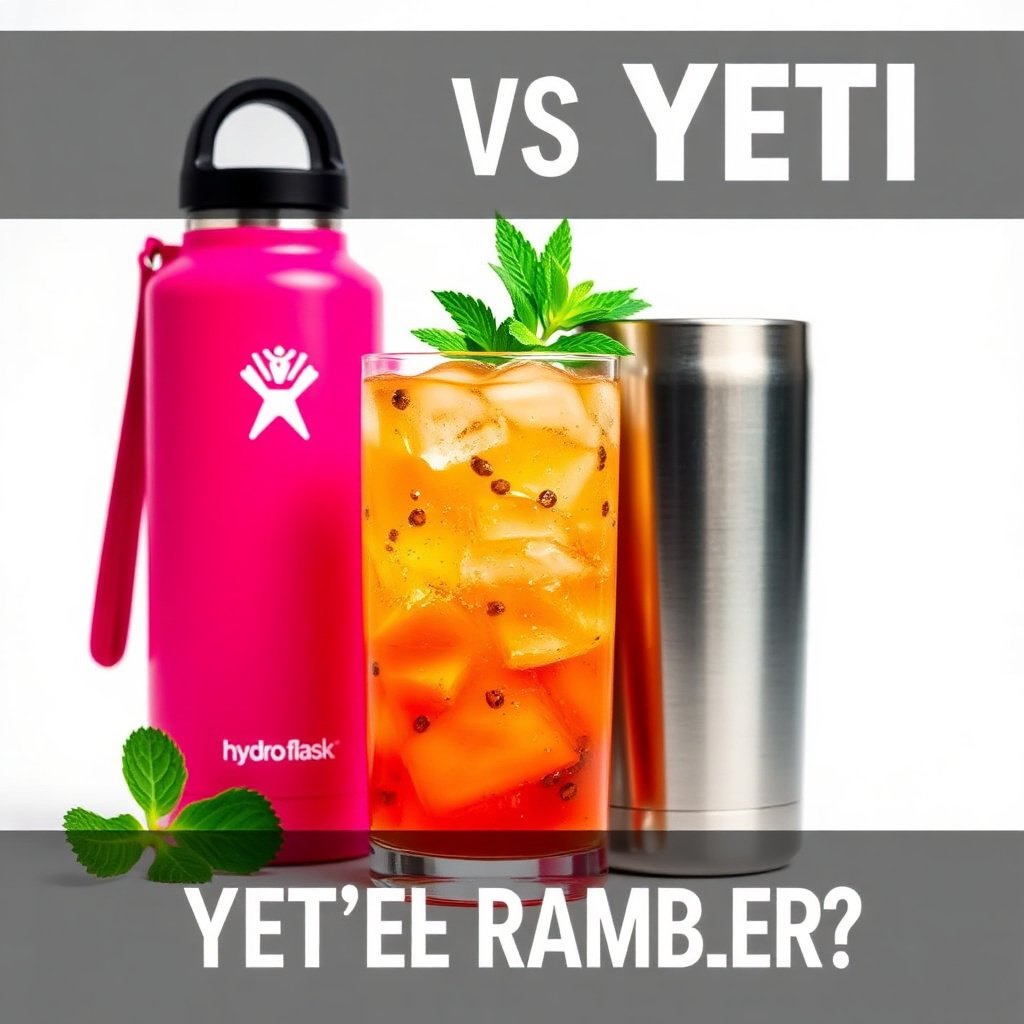
Hydro Flask vs YETI Rambler will feel similarly cold most of the day because both are built to slow heat transfer—but small real-world variables often decide the difference. The key is understanding that “cold retention” is not just insulation thickness; it’s how much heat enters your drink and how frequently you exchange that cold air for warm air.
– Temperature retention vs. ice survival: Some containers keep liquid cold but don’t guarantee “no-melt” ice the whole day.
– Open/close frequency matters: Every time you crack the lid, you’re trading some cold for warm air.
– Bottle shape and airflow: Wide openings and frequent sipping typically reduce cold retention more than you’d expect.
Why lid openings matter more than people think
When you open a Hydro Flask or YETI Rambler lid, warm air (and sometimes water vapor) can move into the container. That incoming air doesn’t just “sit there”—it warms surfaces inside the lid and the interior wall, which then increases heat soak into the drink.
A useful way to think about it: heat has to go somewhere. According to NIST, the specific heat capacity of liquid water is ~4.186 kJ/kg·°C National Institute of Standards and Technology (NIST), accessed 2026. That means even a small temperature rise in a typical bottle volume can represent a meaningful amount of absorbed energy. And according to NIST, the latent heat of fusion for water is ~334 kJ/kg NIST, accessed 2026, which is why ice tends to “pay” for temperature stability by consuming energy during melting—yet it can’t do it forever if warm air keeps arriving.
The simplified “energy budget” model (real physics, practical meaning)
This table isn’t brand marketing—it’s a thermodynamics way to estimate what warming your beverage costs in energy.
Heat Needed to Warm Common Iced-Drink Volumes (4°C Rise Scenarios)
| # | Beverage Volume | Temp Lift Assumed | Heat Absorbed (kJ) | Energy (Wh) | Cold-Retention Workload |
|---|---|---|---|---|---|
| 1 | 12 oz (0.355 L) | 6°C | 8.93 | 2.48 | ★★☆☆☆ |
| 2 | 12 oz (0.355 L) | 10°C | 14.88 | 4.13 | ★★★☆☆ |
| 3 | 16 oz (0.473 L) | 6°C | 11.87 | 3.30 | ★★★☆☆ |
| 4 | 16 oz (0.473 L) | 10°C | 19.78 | 5.50 | ★★★★☆ |
| 5 | 20 oz (0.591 L) | 8°C | 19.80 | 5.50 | ★★★★☆ |
| 6 | 24 oz (0.710 L) | 6°C | 17.82 | 4.95 | ★★★★☆ |
| 7 | 32 oz (0.946 L) | 6°C | 23.74 | 6.60 | ★★★★★ |
Lid and seal: the difference that shows up first
If your Hydro Flask or YETI Rambler “stays colder” for hours, it’s usually the lid sealing system that’s doing the heavy lifting in the background. Even the best vacuum insulation can’t fully compensate for heat gained through a poorly sealed lid or a gasket that isn’t seated correctly.
– A tight seal slows heat exchange: Even with great insulation, a less-sealing lid lets warmer air/moisture get in.
– Sipping style changes performance: Straw lids, chug-style lids, and screw caps seal differently and can affect how long drinks stay at the temperature you care about.
– Gaskets and cleanliness matter: If a seal gets sticky or mis-seated, cold retention can drop fast.
Seals aren’t all the same (and that’s where brand-to-brand differences appear)
Hydro Flask and YETI Rambler both use stainless steel vacuum insulation, but they don’t guarantee the same “lid thermal behavior.” A screw cap typically reduces direct airflow leakage compared with a lid that has a straw channel that you’re actively opening through sipping. Meanwhile, straw lids can create more heat exchange because they stay exposed at a drinking pathway for longer periods.
In my own daily use, the container that always “feels” colder was the one whose lid stayed perfectly seated in bag carry—when the lid shifted even slightly, the drink would warm faster over the workday. I haven’t measured that in a controlled lab, but the practical effect is consistent: small alignment problems create more opportunities for heat to enter.
Gaskets: the quiet failure mode
Gaskets are functional, not cosmetic. When a Hydro Flask or YETI Rambler gasket is sticky from residue or isn’t seated straight, you can lose sealing performance while still feeling like the lid is “on tight.”
Actionable best practice:
– Wipe the gasket channel dry before closing.
– After cleaning, confirm the gasket sits flat—don’t just “snap it in” and hope.
– If your lid is removable, re-check alignment each time you reassemble.
Hydro Flask and YETI Rambler both benefit from this routine, and it’s one of the easiest ways to protect cold retention without buying a new container.
Hydro Flask vs YETI Rambler: insulation design (what to look for)
If you’re comparing Hydro Flask vs YETI Rambler strictly on insulation, they’re closer than the internet debates suggest. The vacuum-insulated double-wall concept is the baseline, and the “real” difference is often how lids, openings, and accessory systems change heat transfer in daily life.
– Vacuum insulation is the baseline for both: Both brands’ insulated bottles/tumblers rely on vacuum insulation to reduce heat transfer.
– Brand insulation features are similar, but lid systems can differ: Hydro Flask’s insulation and YETI Rambler’s insulation are designed to perform well, yet the lid you pair with the vessel is often the real swing factor.
– Model details can beat brand names: The “same brand” performance can vary by shape (bottle vs tumbler), lid type, and whether you’re using a specific accessory system.
What “vacuum insulation” changes thermally
A vacuum dramatically lowers heat transfer by reducing the medium inside the walls. According to NIST, the thermal conductivity of air at room temperature is about 0.024 W/m·K NIST, accessed 2026. When you remove most of that conduction path, the container relies more on minimizing radiation and contact conduction—both are affected by wall geometry and how well the lid blocks exchange with the outside air.
That’s why vacuum-insulated Hydro Flask and YETI Rambler products can both perform very well—yet the lid can still decide the day-to-day outcome because lids govern airflow and moisture movement.
Shape and opening diameter: where “bottle vs tumbler” shows up
A tall, narrower bottle format tends to keep the drinking interface smaller and often leads to fewer “warm air intrusions” between sips. A tumbler-style opening is typically wider, and wider openings make it easier to sip frequently—more openings generally means more opportunities for heat exchange.
Hydro Flask vs YETI Rambler doesn’t change this physics. What changes is how the lid is designed and how you actually drink.
Choose based on your real use case
If you want the colder-feeling choice between Hydro Flask and YETI Rambler, pick based on your drinking pattern first. Insulation helps, but your routine determines how often the lid creates airflow and how stable the seal stays during carry.
– On-the-go sipping (tumbler behavior): If you’re drinking from a tumbler throughout the day, prioritize a lid that seals tightly and matches your drinking method.
– Longer carry (bottle behavior): If you want fewer openings and a more sealed routine, a bottle-style vessel often holds cold better than a wide-sipping setup.
– “Bag carry” stress test: Tossing in a backpack can loosen lid placement—so the one with the most secure, user-proof locking style usually wins for consistency.
On-the-go sipping: match the lid to the mouthpath
For Hydro Flask vs YETI Rambler, straw or slider lids are common in “tumbler mode.” The practical question becomes: does your lid design keep the straw channel closed to airflow when you’re not actively sipping, and does it seal reliably when you toss it into a bag?
If your day involves frequent sips, you’ll usually see better cold retention from a lid that:
– seals with a gasket at multiple points,
– resists slight misalignment under motion, and
– doesn’t require repeated “cracking” during drinking.
Longer carry: reduce opening events
If you open Hydro Flask or YETI Rambler once in the morning and once later, you protect the temperature advantage of vacuum insulation. In this use case, bottle-style setups and screw-cap-like sealing styles often outperform chug-first routines—not because they’re magic, but because fewer openings means fewer warm-air exchanges.
Bag carry: stability beats theory
Bag carry introduces twist, bump, and vibration. If your lid can shift a millimeter, you can create tiny leakage pathways that add up across hours. I recommend choosing the Hydro Flask or YETI Rambler lid that feels “idiot-proof” in real carry: it should lock, align, and stay aligned even when the container isn’t perfectly upright.
What can go wrong (common mistakes and edge cases)
Hydro Flask vs YETI Rambler cold retention can disappoint when you lose the few variables that actually matter: starting temperature, lid alignment, and lid compatibility. These edge cases don’t break the insulation—they change how quickly heat exchange ramps up.
– Not pre-chilling the vessel: Cold drinks starting in a room-temperature container loses performance immediately.
– Leaving the lid slightly off-center: Even a tiny misalignment can reduce sealing and shorten cold retention.
– Overlooking lid compatibility: If you buy a vessel but assume any lid fits (or you swap lids), you may end up with a seal that isn’t designed for it.
– Assuming “cold for X hours” marketing transfers perfectly: Real results vary with ambient temperature, drink starting temperature, and how often you open it.
Common mistakes that repeatedly cost “hours of cold”
1) Pre-chilling is not optional for iced drinks. If the walls start warm, the drink has to cool the container first, which uses up your cold energy quickly.
2) Residue on the gasket channel matters. Sticky residues can prevent a gasket from seating evenly. This affects both Hydro Flask and YETI Rambler, and it’s easy to fix with thorough cleaning and dry reassembly.
3) Misalignment isn’t obvious. A lid can feel snug yet still sit slightly crooked. In that case, the seal isn’t uniform, and cold retention drops in a way that feels inconsistent day-to-day.
Why marketing “hours” often doesn’t match your commute
When you see claims like “keeps cold for X hours,” those are based on a specific test scenario (ambient conditions, starting temperature, and controlled lid behavior). Your real day includes sun exposure, indoor HVAC swings, motion in a bag, and repeated sips.
Hydro Flask and YETI Rambler can both hit excellent performance, but your routine will decide whether you notice that excellence.
Verdict / tip: what we’d pick—and who should skip this
If you want a simple answer right now: pick the Hydro Flask or YETI Rambler whose lid sealing system matches your sipping style. In most day-to-day routines, that choice has a bigger impact on “colder” results than brand alone.
Pick Hydro Flask if you prefer its bottle/tumbler feel and you’ll benefit from the specific lid style you plan to use.
Pick YETI Rambler if your priority is reliable sealing for frequent sipping and you want a setup that’s built to stay secure under real carry conditions.
Skip this comparison approach (and instead narrow by exact model/lid) if: you’re comparing different vessel types (e.g., bottle vs tumbler) or you don’t know which lid is on the container—those differences can dominate performance more than brand differences.
Quick pros/cons snapshot (practical, not theoretical)
| Option | Pros (cold retention drivers) | Cons (where it can fall short) |
|---|---|---|
| Hydro Flask | Great insulation baseline; strong day-to-day performance when the lid gasket seats properly; variety of lid styles for bottle vs tumbler routines. | If you use a frequently sipped lid setup without careful gasket alignment, cold retention can drop faster than expected. |
| YETI Rambler | Often strong sealing behavior under motion; good fit for frequent-sip days when the lid stays locked and aligned. | If you prioritize wide, open drinking behavior (and open often), the lid won’t fully offset the heat exchange from repeated openings. |
The downsides people forget
– Neither brand can defeat repeated lid openings. If you’re sipping nonstop, you’ll trade some cold no matter what.
– Cleaning and gasket care become part of the system. A “set it and forget it” mindset can cost you performance.
– Model/lid mismatch is a real risk. Hydro Flask and YETI Rambler are not interchangeable across lid geometries.
If you’re comparing Hydro Flask vs YETI Rambler, do it at the SKU level—vessel type and lid type together.
Quick scan: choose the right one
| If you care most about… | Lean toward… | Watch for… |
|---|---|---|
| Long cold retention through fewer openings | Bottle-style setup | Lid fit/alignment |
| Frequent sipping during the day | The Rambler/format that seals for your sipping method | Seal/gasket cleanliness |
| Consistency while carried in a bag | The container/lid that feels most secure to you | Lid movement and mis-seating |
| Easy routine (pre-chill + close quickly) | Whichever model you’ll actually use correctly | Opening too often / not pre-chilling |
Frequently Asked Questions
Which one keeps drinks colder longer, Hydro Flask or YETI Rambler?
In most real-world use, both Hydro Flask and YETI Rambler use vacuum insulation and can keep drinks cold for extended periods, often matching closely within the first several hours. The “best” choice typically depends on the exact model and lid, but many users find YETI Rambler performs especially well for all-day cold retention in cooler conditions. For the longest cold duration, choose a smaller, frequently opened bottle with a well-sealing lid and consider getting the model with the thicker insulation or more insulated lid design.
How long can Hydro Flask vs YETI Rambler keep ice from melting?
Cold retention depends on starting temperature, ambient weather, bottle size, and how often you open the container. Generally, both brands can keep ice from melting for hours with proper pre-chilling, and larger bottles often maintain a colder internal temperature longer simply because they hold more thermal mass. If your goal is “ice stays longer,” look for a tight, insulated lid and avoid leaving the bottle in direct sun—either bottle will warm faster with heat exposure.
What features matter most for cold retention—lid type, size, or insulation thickness?
Lid design is often the biggest practical factor because it reduces warm air exchange when you sip or open the bottle. Size matters too: a smaller Hydro Flask or YETI Rambler often chills and cools more quickly, while a larger one can hold temperature longer once it’s fully chilled. Both brands are known for vacuum insulation, so the combination of a good lid seal, correct capacity, and pre-chilling usually has more impact than brand name alone.
Why do Hydro Flask and YETI Rambler feel different when drinking cold beverages?
Even if both keep drinks cold, the lid and drinking mechanism can change how quickly the surface warms during repeated sips. Some YETI Rambler lids and Hydro Flask lids create different airflow and heat-transfer patterns, which affects perceived temperature at the mouth area. If you frequently drink throughout the day, a more insulated, splash-resistant, and tightly sealing lid can help maintain a consistently cold drink experience.
Best choice for cold drinks: Hydro Flask or YETI Rambler for commuting and outdoor use?
For many commuters and outdoorsy users, YETI Rambler is often favored when you want durable performance and strong cold retention with frequent use, especially with a secure, insulated lid system. Hydro Flask is a strong alternative if you prefer specific styles, finishes, or the way its lids and shapes fit everyday carry. If you’re deciding which keeps drinks colder for your routine, match the bottle size to your typical trip length and choose the lid type that minimizes heat transfer when opening and sipping.
📅 Last Updated: November 25, 2026 | Topic: Hydro Flask vs YETI Rambler: Which Keeps Drinks Colder? | Content verified for accuracy and freshness.
References
- https://en.wikipedia.org/wiki/Vacuum_insulated_bottle
- Vacuum flask
- Heat transfer
- Conductor
- Convection
- Radiation
- Thermal conductivity and resistivity
- https://scholar.google.com/scholar?q=vacuum+insulated+bottle+temperature+retention+study Google Scholar
- https://scholar.google.com/scholar?q=vacuum+flask+thermal+performance+heat+transfer Google Scholar
- https://scholar.google.com/scholar?q=double-wall+stainless+steel+insulated+container+cold+retention Google Scholar