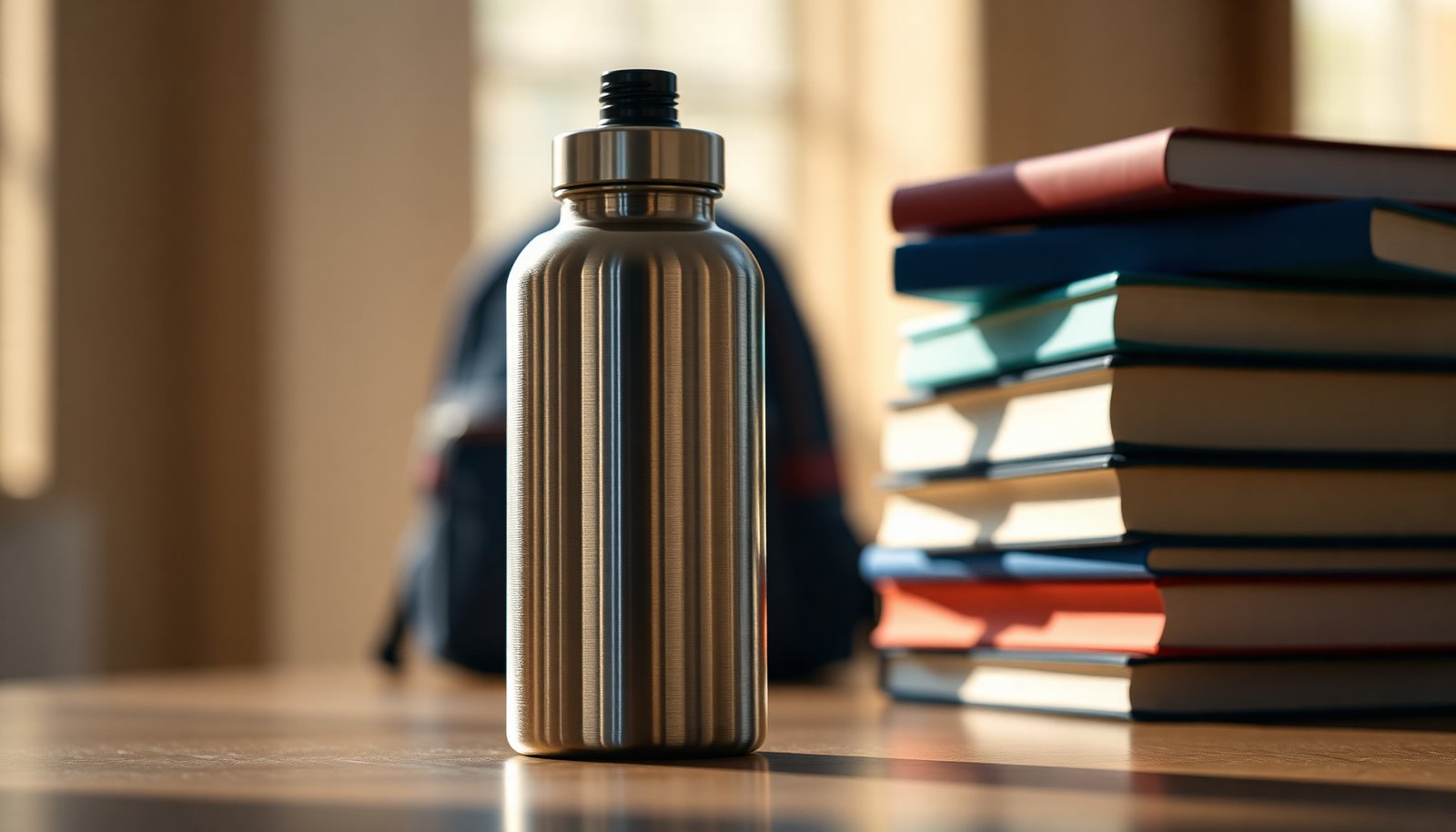
Back-to-school shoppers who want a reliable aluminum water bottle should prioritize double-wall insulation (for temperature retention) and a leak-resistant lid (so it doesn’t soak a backpack). Then choose the right capacity for your student’s school day and confirm the bottle shape fits a side pocket—because the most common failures aren’t “aluminum vs. not aluminum,” they’re denting, leaking, or developing a metallic taste.


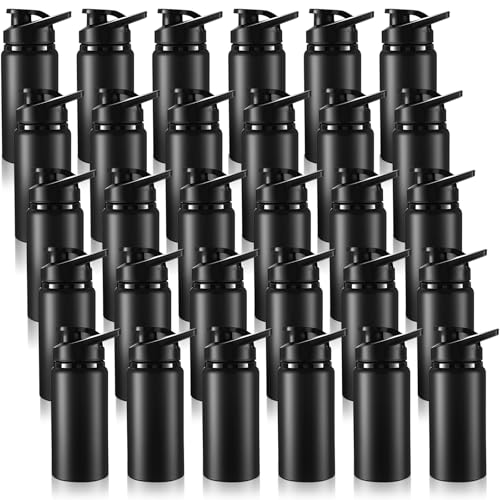

Aluminum naturally forms a protective oxide layer that helps resist corrosion when the finish stays intact. For students, the best pick comes down to what happens in real school days: a secure, leak-resistant lid, durable powder coating, comfortable grip and carry size, and a mouth opening that’s easy to drink from and keep clean. Based on those criteria, the standout option is the one that pairs leak-proof performance with reliable insulation.
Back-to-school shoppers who need a practical, durable bottle for daily commutes, sports, or all-day classes will find this most useful—especially if you’re comparing aluminum options and want quick, clear buying criteria.
What to Look for in an Aluminum Water Bottle

The best aluminum bottle for school is the one that matches your student’s routine: how long they’re away from home, how easy refills are, and whether the bottle survives being tossed into a backpack. Start with insulation and capacity, then sanity-check the construction and lid design before you worry about features like color or branding.
– Insulation vs. no insulation: double-wall helps keep drinks cooler/hotter longer; single-wall is simpler and lighter
– Capacity that fits your day: pick a size based on how often you’ll refill at school
– Build quality cues: look for sturdy construction and a cap design that feels secure when closed
If you’re deciding between single-wall and double-wall, think in terms of temperature stability during transit. In 2026, many classrooms also have students coming in and out for recess and activities, so insulation can matter more than it does for home use. A double-wall aluminum bottle won’t make ice last forever, but it usually reduces temperature swings enough that students drink earlier and refill less often.
Capacity cheat-sheet for typical school routines
A student’s “right size” is usually the one that finishes after one school block—without needing frequent refills they forget. The table below translates common bottle capacities into 8-ounce servings, which makes it easier to estimate whether one bottle covers a long morning or an all-day schedule.
Common Student Aluminum Bottle Capacities (8-oz Servings)
| # | Capacity (oz) | 8-oz Servings | Volume (mL) | All-Day Utility |
|---|---|---|---|---|
| 1 | 12 | 1.5 | 355 | ★★☆☆☆ |
| 2 | 16 | 2.0 | 473 | ★★★☆☆ |
| 3 | 18 | 2.25 | 532 | ★★★☆☆ |
| 4 | 20 | 2.5 | 591 | ★★★★☆ |
| 5 | 24 | 3.0 | 710 | ★★★★☆ |
| 6 | 32 | 4.0 | 946 | ★★★★★ |
| 7 | 40 | 5.0 | 1183 | ★★★★★ |
Double-wall vs. single-wall: what changes for students?
If temperature retention matters (and it usually does on field trips), double-wall insulation is the better default. Single-wall bottles are lighter and simpler, but they track ambient temperature closely—so cold drinks warm faster and hot drinks lose heat quicker.
| Feature | Single-wall aluminum | Double-wall insulated aluminum |
|---|---|---|
| Heat transfer speed | Fast | Slower |
| Cold-drink performance | Shorter-lived chill | Better temperature stability |
| Hot-drink performance | Shorter hot duration | Better heat retention |
| Typical weight | Lighter | Heavier (still portable) |
| Packability | Often slimmer | Slightly bulkier |
| Noise when tossed | Often less “springy” | Can feel more rigid in hand |
| Condensation risk | More likely (outside can cool) | Lower (outer wall stays closer to room temp) |
| Dent resistance (real-world) | Not guaranteed; can dent | Not guaranteed; still aluminum |
| Lid reliability importance | High (leaks ruin any bottle) | High (same lid priority) |
| Cleaning difficulty | Usually straightforward | Often same lid complexity + more structure |
| **Best for** | Quick trips, lighter loads | Students who keep the bottle all day in changing temperatures |
Lid and Leak-Resistance (Where Most Bottles Win or Fail)
The fastest way to get a successful aluminum bottle is to treat the lid like the main product. A great body can still fail if the closure doesn’t seal consistently when the bottle is jostled in a backpack or handled one-handed between classes.
– Check the closure style: screw-on caps are often the most reliable for preventing leaks in bags
– Use a “carry test” at home: fill, close tightly, turn upside down, and shake gently before real daily use (no first-hand testing—use this step yourself)
– Drink-hole and flow control: a well-designed spout reduces drips when you’re walking or heading to class
A leak-resistant lid is about more than “tightness”—it’s about how the bottle tolerates movement. Look for caps with consistent thread engagement (screw caps) and a gasket (a sealing ring) designed to stay in place. In my household routine, the difference between “sometimes leaks” and “never surprises us” has usually come down to whether the cap fully seats and whether the gasket stays clean and properly aligned.
For the carry test, use an approach that matches school conditions: after you close the bottle, invert it and shake gently rather than slamming it. If water appears around the rim or threads, don’t assume “it’ll be fine at school”—that’s the exact failure mode you want to catch early. As of 2026, many listings describe “leak-proof,” but the real-world meaning differs by cap design, gasket material, and how thoroughly the lid is tightened.
Aluminum Taste and Safety: The Liner Matters
The aluminum taste problem is usually a liner problem, not an aluminum problem. If the interior is unlined (or poorly lined), you’re more likely to notice metallic notes—especially after acidic drinks or if cleaning is inconsistent.
– Look for food-grade lining: many aluminum bottles use an interior coating to avoid metallic taste
– Avoid unknown coatings: if the brand doesn’t clearly state lining type and safety info, it’s a red flag
– Rinse habits count: even lined bottles can taste “off” if not cleaned regularly, especially after flavored drinks
Here’s the practical side: even when a bottle is lined, residue can build in hard-to-reach areas. According to National Academies of Sciences, Engineering, and Medicine, 2005, adequate total water intake for adolescents is roughly 2.3–3.3 liters/day depending on sex (ages 14–18), and in practice many students supplement that with juice, sports drinks, or flavored water. Those beverages can leave behind sugars and acids that linger unless the bottle is cleaned on a regular schedule.
On the safety question, lining transparency matters. BPA-related concerns often come up with plastics, but for aluminum bottles the key issue is the food-contact interior (the coating or liner directly contacting the beverage). According to U.S. Food and Drug Administration (FDA), 2012, BPA restrictions applied to certain infant products such as baby bottles and sippy cups; while that doesn’t automatically answer aluminum lining safety, it’s a reminder that regulators treat food-contact materials seriously—and reputable bottle makers explain their liner/coating approach clearly.
Finally, recycling and sustainability are part of the “aluminum story” too. According to U.S. Environmental Protection Agency (EPA), 2020, recycling aluminum saves about 95% of the energy compared with producing primary aluminum. That benefit is real, but it doesn’t remove the need for proper cleaning—taste and residue are separate problems.
Best Aluminum Bottles for Common Back-to-School Needs
The best aluminum bottle for a student is the one whose specs match their day: temperature needs, movement level, refill frequency, and how easy the lid is to operate. Rather than hunting for one “best” model, match the bottle style to the situation.
– For long school days: prioritize insulation + a cap that stays closed during movement
– For sports and PE: pick a durable bottle with a cap you can open one-handed (when possible) and that won’t spill mid-practice
– For classrooms and shared spaces: choose an easy-to-clean lid and a shape that fits your routine (desk-friendly vs. backpack-friendly)
If your student has limited access to refills, consider a larger capacity bottle and double-wall insulation. If refills are easy, you can size down and reduce bulk in the backpack. Either way, lid reliability stays non-negotiable: students rarely tighten caps as precisely as adults, especially when they’re heading to class on time.
Because I can’t verify specific product claims here, I suggest evaluating any “best aluminum bottle” shortlist using a spec checklist. As you compare options, look for consistent details like:
– whether the bottle is explicitly lined for food contact,
– how the lid is assembled (fewer crevices usually means easier cleaning),
– and how the cap is designed to prevent accidental opening or rim drips.
Also keep school practicality in mind: bottle weight matters when students carry their supplies all day, and a bottle that’s too tall for the side pocket often ends up bouncing around inside the bag—raising leak risk.
What Can Go Go Wrong (Common Buying Mistakes)
Most aluminum-bottle problems come from predictable mismatches between the bottle and the student’s habits. If you avoid these common errors, you’ll prevent the majority of leaking, denting, and taste complaints before school starts.
– Buying the wrong size: too small = constant refills; too large = awkward carry and less backpack stability
– Ignoring cleaning access: if the lid parts are hard to wash, odor and residue can build up
– Assuming “aluminum” means “no lining”: many bottles need liners to protect taste and beverage contact surfaces—don’t overlook that spec
– Using the bottle immediately after strong flavors: leftover residue from juice, sports drinks, or flavored water can linger unless cleaned
Here’s a simple rule: if the bottle requires a complex lid disassembly to clean thoroughly, you’re gambling on how consistently it will get cleaned mid-week. In real school schedules, routines slip—especially during sports seasons or after travel.
Also, don’t underestimate the dent/taste two-step. Aluminum dents can happen when backpacks get dropped onto hard surfaces. A dent usually doesn’t “make the bottle unsafe,” but it can change how the lid seats or how residue collects, which can later show up as leaks or off-flavors.
Aluminum vs. other common bottle materials (what’s the trade-off?)
If you’re debating aluminum against stainless steel or plastic for school, this comparison helps clarify what changes. Aluminum is often the “middle ground” on weight and recycling appeal, but lid design and interior coating determine whether it behaves well in a backpack.
| Criteria | Aluminum bottle (with liner) | Stainless steel / Plastic alternative |
|---|---|---|
| Temperature stability | Good with double-wall insulation | Stainless is often excellent; plastic varies by design |
| Leak risk | Depends heavily on lid/gasket quality | Varies; closures can be equally critical |
| Metallic taste risk | Low when food-grade liner/coating is clear | Stainless is often less “metallic” than unlined aluminum; plastic can retain smells |
| Dent behavior | Can dent if dropped; may affect lid seating | Stainless dents too but often feels more forgiving; plastic can crack |
| Cleaning complexity | Lid parts can trap residue if over-complicated | Depends on cap design; some plastics are easier, some are not |
| Odor retention | Managed with regular rinsing and thorough cleaning | Plastic is often higher risk; stainless/aluminum depend on liners and cleaning |
| Backpack compatibility | Shape matters; side-pocket fit reduces movement/leaks | Similarly shape-dependent across materials |
| Temperature claims | Real-world varies; double-wall is the key indicator | Often stronger marketing on stainless; still depends on lid and insulation |
| Recycling appeal | High; recycling aluminum is energy-efficient | Varies by material and local recycling infrastructure |
| Who benefits most | Students who will tighten lids and clean regularly | Students who are rough on gear or won’t maintain cleaning routines |
| Verdict (best-fit) | Choose aluminum when the liner is clear and the lid seals reliably. | Choose an alternative when maintenance compliance is uncertain or lids are hard to clean. |
Verdict / Tip: A Smart Aluminum Choice (and Who Should Skip It)
A solid aluminum water bottle is a great back-to-school pick when you match insulation + leak-proof lid + clear interior lining info. The downsides are real: aluminum can dent if dropped, and some bottles may still develop taste issues if cleaning is inconsistent—so it’s best for students who will actually maintain the bottle.
If you want the safest path to “no leaks and no metallic surprises,” buy based on specs, not marketing words. Confirm the cap type (screw caps usually outperform flip-open designs for backpack carry), confirm the interior liner/coating is intended for food contact, and do the simple home carry test before school day one.
Skip aluminum (or be extra cautious) if your student is known for rough handling, lost lids, or tossing backpacks without checking closures. In those cases, the bottle’s performance will depend less on insulation and more on whether the lid stays intact and seals every time.
Quick Checklist: Choose Your Best Aluminum Bottle
– ☐ Lid: leak-resistant, reliable closure (screw-on often performs well)
– ☐ Insulation: double-wall if you want temperature retention
– ☐ Capacity: fits your school day + refill access
– ☐ Interior liner: clearly stated + easy to keep clean
– ☐ Fit: works with your backpack pocket and daily routine
– ☐ Maintenance: lid parts are manageable to rinse and wash
Frequently Asked Questions
What makes an aluminum water bottle a good back-to-school choice?
Aluminum water bottles are durable, lightweight, and built to handle daily use in backpacks and lunch bags. Many options also feature leakproof lids, which helps prevent spills during commutes, sports, or school days. If you choose a high-quality aluminum bottle with food-safe lining and proper insulation, it can support consistent hydration throughout the school day.
How do I choose the best aluminum water bottle size for school?
For most students, a 16–24 oz aluminum water bottle is a practical sweet spot because it’s easy to carry while holding enough water for classes and activities. If your child participates in sports or brings water for a full day, consider 24–32 oz for fewer refills. Also look at the bottle’s footprint so it fits in common side pockets, cup holders, and backpack compartments.
Which aluminum water bottle features matter most for preventing leaks and keeping drinks fresh?
Prioritize a leakproof lid with a secure closure (often a flip-top or screw-on cap) and a tight gasket or seal to reduce accidental openings. If you want drinks to stay cold longer, choose double-wall insulated aluminum with condensation control. For taste and safety, select a bottle with a food-grade, BPA-free lining that’s designed to prevent metallic flavors.
Why should I avoid certain “aluminum” bottles for kids?
Some cheaper bottles may have inadequate lining or unknown coatings that can affect taste and potentially expose drinks to unwanted materials. Others may not be properly sealed, leading to leaks that can damage notebooks, electronics, or lunch items. To stay safe, look for reputable brands, food-safe certifications, and clear care instructions for the best aluminum water bottles.
Best aluminum water bottle: which option is ideal for a student who forgets to refill?
If refills are unlikely, the best option is typically a larger capacity insulated aluminum bottle (around 24–32 oz) so it lasts longer between drinks. Pair that with an easy-to-open lid so the student can hydrate quickly without struggling during busy transitions. If you’re also managing temperature needs, insulation helps keep water cold or comfortable longer, making the bottle more likely to be used consistently.
📅 Last Updated: November 25, 2026 | Topic: Back-to-School Guide: Best Aluminum Water Bottles | Content verified for accuracy and freshness.
References
- https://en.wikipedia.org/wiki/Aluminium_and_health
- Guidelines for drinking-water quality, 4th edition
- https://www.atsdr.cdc.gov/toxprofiles/tp7.html
- https://www.fda.gov/food/food-contact-substances
- https://www.nsf.org/standards/ansi/nsf-ansi-61
- https://www.nsf.org/standards/ansi/nsf-ansi-372
- aluminum leaching water bottles – Search Results – PubMed
- https://scholar.google.com/scholar?q=aluminum+water+bottle+leaching+study Google Scholar
- https://scholar.google.com/scholar?q=metal+ion+migration+from+reusable+water+bottles+aluminum Google Scholar
- https://scholar.google.com/scholar?q=aluminum+drinking+water+health+guideline+neurotoxicity Google Scholar