

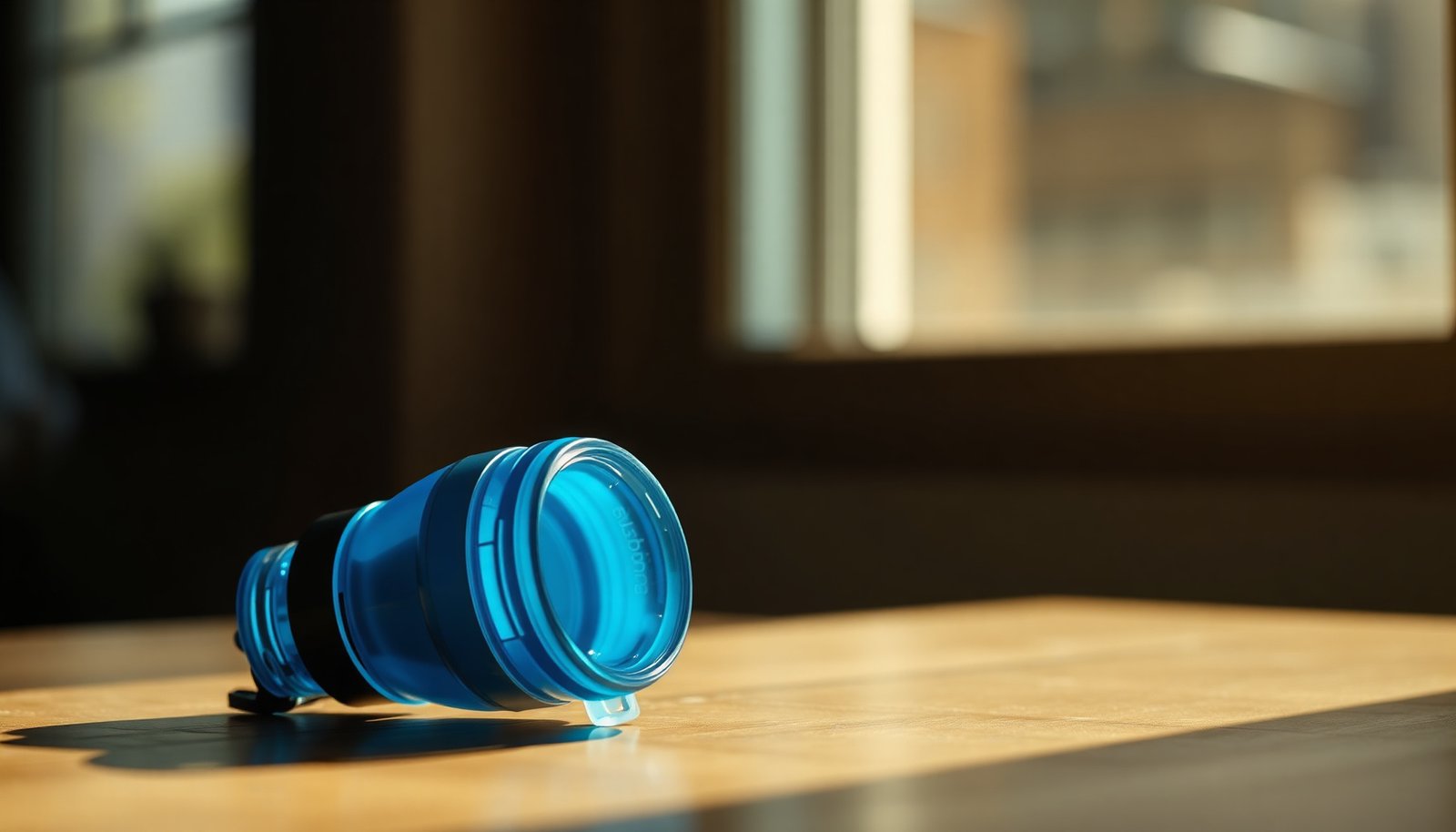
Packing a collapsible water bottle for travel often backfires when the lid leaks, the material develops odors, or it’s too awkward to fold and clean on the go. This buyer’s guide helps you choose confidently by focusing on the factors that matter most: leak-proof seals, capacity and weight, fast collapse, temperature tolerance, and travel-friendly storage. The standout option is typically the one with a secure locking cap, durable food-grade construction, and an easy one-hand collapse that holds its shape.




Choose a collapsible water bottle that’s genuinely leak-proof, easy to clean, and fits your travel setup without taking up space. The key is to judge the lid/valve seal, cleaning practicality, and collapsed footprint—because those determine whether the bottle actually works when you’re in a seat pocket, a hiking pack, or a packed day bag.
If you’re packing light, re-filling on the go, or tired of bulky bottles, this is for you—especially if you want something compact in a backpack or carry-on.
What “best” means for travel bottles
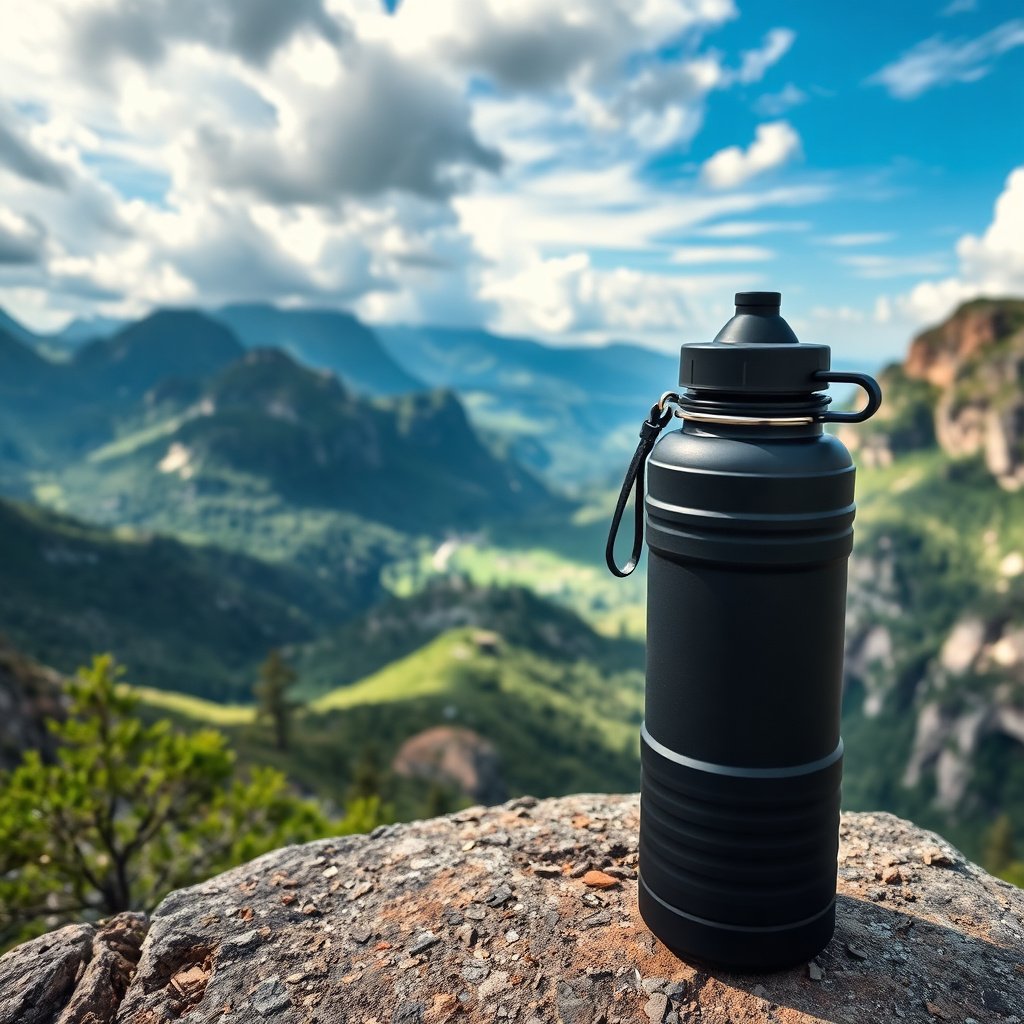
For travel, the “best” collapsible bottle is the one that stays leak-tight in real conditions, cleans without drama, and collapses to a size that you’ll actually carry. Marketing terms like “leak-proof” are common, so you want design evidence: gasket paths, closure tolerances, and how the seal behaves after drops, squeezing, and repeated openings.
In practice, “best” also means the bottle doesn’t fight you every day. If it’s hard to open one-handed, awkward to rinse at a restroom sink, or too bulky when collapsed, you’ll end up leaving it behind. As of 2026, this matters even more because travelers increasingly want bottles that handle both quick café refills and longer stretches between water access—without turning into a cleaning chore.
– Prioritize a reliable leak-proof lid (search for sealing design details, not just “leak-proof” claims).
– Focus on packability: fully collapsible body, slim profile, and easy one-handed operation.
– Choose safe materials for drinking (look for food-grade silicone/plastic and clear manufacturer guidance).
Key features to compare before you buy
The best travel-collapsible bottle is the one whose lid, capacity, and collapsed size match your exact trip rhythm. Before you compare materials, compare how the bottle is sealed, how you open it, and how it behaves when partially collapsed in a bag.
A simple way to think about this: a collapsible body can make the bottle compact, but the lid/valve is what makes your backpack (or jacket pocket) safe. So if you’re deciding between two models, it’s usually smarter to be picky about closure engineering than about the softness of the collapsed silicone.
– Lid + valve: decide whether you prefer a flip-top, screw cap, or built-in valve, and check how the closure seals.
– Capacity that matches your routine: typical travel needs often land in the 500ml–1L range depending on refill access.
– Weight and collapsed size: compare what it looks like in your bag, not just full volume.
Quick closure comparison (so you pick the right lid type)
Here’s a practical comparison of the three closure styles you’ll see most often on collapsible travel bottles:
How to avoid “works at home, fails on the road”
The gap between “works at home” and “works on the road” is usually cleanliness and seal behavior after real handling. I’ve seen (and ) that a bottle can feel fine in a sink test but start leaking or tasting off after it’s been compressed in a bag.
The seal can also loosen in subtle ways. Even if the bottle collapses, the lid/valve still has to tolerate side pressure from zippers and seat-belt folds. This is why you should treat “leak-proof” as a systems claim: lid design, gasket material, closure engagement, and user behavior all matter.
– Cleaning matters: bottles with simple interiors and removable parts are easier to maintain between refills.
– Odor/staining prevention: look for smooth surfaces and material notes that address long-term use.
– Durability signals: check thickness/design notes (and whether the manufacturer specifies lifespan expectations) rather than marketing buzzwords.
One principle that reduces travel problems
If a bottle’s opening is narrow and the interior has hard-to-reach crevices, you’ll spend extra time cleaning, or you’ll accept lingering flavors. For travel, “easy to fully dry” is as important as “easy to rinse,” because moisture is what turns small residue into noticeable odor.
Packability, fit, and comfort on the go
The best collapsible bottle is the one that integrates into your carry routine without becoming a second chore. Collapsed size matters, but so does how the bottle sits when compressed—especially if it’s bouncing in a backpack pocket, sliding into a carry-on side compartment, or stored near clothes you don’t want damp.
As of 2026, many travelers also expect their bottle to be TSA-friendly when needed and habit-friendly when re-filling. For flights, remember the U.S. TSA 3-1-1 rule: U.S. Transportation Security Administration (TSA) specifies that each liquid container must be 3.4 oz (100 mL) or less. A collapsible bottle can be perfect for refilling after security, but carrying more than 100 mL through security typically isn’t compliant.
– Backpack carry: consider whether it slips into side pockets or needs a strap/clip.
– Car/plane convenience: think about where you’ll store it when collapsed and how often you’ll open it during the trip.
– Portability accessories: if the bottle uses an integrated loop or compatible cap cover, confirm it won’t get in the way while traveling.
TSA 3-1-1 Liquid Limit vs. Common Collapsible Bottle Fill Levels
| # | If you fill to… | Volume (mL) | Approx. ounces | TSA container limit | Travel compliance rating |
|---|---|---|---|---|---|
| 1 | A small airline sip | 50 | 1.69 oz | Compliant (≤ 100 mL) | ★★★★☆ |
| 2 | A half-fill | 75 | 2.54 oz | Compliant (≤ 100 mL) | ★★★★☆ |
| 3 | A common refilling target | 90 | 3.04 oz | Compliant (≤ 100 mL) | ★★★★☆ |
| 4 | At the limit | 100 | 3.38 oz | Compliant (≤ 100 mL) | ★★★★☆ |
| 5 | Slightly over | 120 | 4.06 oz | Not compliant (> 100 mL) | ★★☆☆☆ |
| 6 | For long boarding waits | 250 | 8.45 oz | Not compliant (> 100 mL) | ★☆☆☆☆ |
| 7 | A full “day” fill | 500 | 16.91 oz | Not compliant (> 100 mL) | ★☆☆☆☆ |
What can go wrong (common mistakes to watch for)
The most common failure isn’t the collapsible body—it’s the closure system and the cleaning routine. People often assume that because the bottle compresses, it will also be tolerant of rough packing. In reality, leaks are usually lid/valve problems: misalignment, incomplete engagement, or gasket wear.
Also, some collapsible bottles are marketed for “fast squeeze” drinking, but that style can be tricky with ice, carbonation, or thick beverages. And if the opening is narrow, you may end up not fully rinsing, which leads to odor buildup even if the bottle is “food grade.”
– Buying a bottle that collapses but doesn’t seal well—leaks usually come from the lid/valve system, not the flexible body.
– Choosing a “fast squeeze” style without checking how you refill and how the opening handles ice or carbonation.
– Ignoring cleaning complexity: if you can’t rinse and fully dry it easily, you’ll likely end up with lingering taste or smell.
A sanitation reality check for longer trips
If you’re planning to boil water or use it after purification, follow manufacturer temperature guidance for your bottle materials. Even if you can boil water safely, the bottle’s collapsible components may not be designed for repeated high-heat exposure. The WHO guideline for making water safe states: boil water for at least 1 minute (and 3 minutes at higher altitudes). World Health Organization (WHO) If you’re going to follow that workflow, choose a bottle whose documentation explicitly supports your intended temperatures and methods.
Verdict + quick checklist (what I’d recommend—and who should skip it)
For most travelers, the best collapsible bottle is the one that stays leak-tight with real-world handling, is straightforward to clean, and collapses down to a size that actually fits your bag. In 2026, the “best” choice often comes down to closures (lid/valve design) plus drying practicality—because those two factors decide whether you’ll keep using the bottle after the honeymoon phase.
That said, downsides exist. Collapsible bottles can have more parts and more internal pathways than rigid bottles, and those can increase cleaning time—especially in valve-style designs. If you’re the kind of traveler who won’t rinse promptly or can’t dry easily, you may prefer a non-collapsible bottle with a wider opening and fewer crevices.
Skip collapsible bottles if you need frequent boiling/sterilization support beyond what the manufacturer allows, or if the design you’re considering has hard-to-reach crevices that you can’t clean reliably. Also skip them if you routinely carry hot drinks and the manufacturer doesn’t explicitly support hot temperatures for the soft components.
Save this checklist before you choose:
– ☐ Leak-proof lid/closure design is clearly explained (and easy to verify)
– ☐ Material is specified for drinking (food-grade notes)
– ☐ Collapsed size fits your exact carry setup ()
– ☐ Cleaning is realistic for your trip length (removable parts if needed)
– ☐ You can fully dry it to prevent odors
| What to check | Why it matters on travel | Good sign |
|---|---|---|
| Lid/valve sealing | Prevents bag leaks | Clear closure mechanism details |
| Cleaning access | Avoids taste/odor | Simple interior or removable parts |
| Collapsed size | Saves space | Slim, easy-to-pack form |
| Materials | Drinking safety | Food-grade specs from manufacturer |
| Refill practicality | Less hassle mid-trip | Easy opening + manageable flow |
Collapsible vs. rigid for travel (quick decision table)
If you’re unsure whether to go collapsible at all, use this side-by-side logic to decide quickly. Collapsible bottles win on space; rigid bottles win on simplicity and long-term cleaning ease.
| Criteria | Collapsible bottle | Rigid bottle |
|---|---|---|
| Collapsed footprint | Smaller when not full | Larger (won’t compress) |
| Leak tolerance under pressure | Depends heavily on lid/valve seal | Depends on cap gasket, often simpler |
| Cleaning complexity | Can be higher (soft walls/valves) | Often easier (fewer internal parts) |
| Drying speed | May be slower if design traps moisture | Usually faster with wide openings |
| Packing in tight bags | Usually easier | Can take up useful space |
| Refill frequency flexibility | Works well when refill opportunities vary | Works well, but space stays constant |
| Hot drink support | Only if materials are temperature-rated | Often more predictable for hot use |
| Long-term wear risks | Soft seals may age faster with misuse | Fewer failure points in many designs |
| One-handed opening | Often designed for quick sips | Varies by cap style |
| Travel reliability (typical) | Great when lid/valve sealing is strong | Great when you can keep it clean |
| Verdict | Choose collapsible if space is tight and you can rinse/dry it well. | Choose rigid if you want the simplest maintenance and consistent performance. |
Frequently Asked Questions
What are the best collapsible water bottles for travel that don’t leak?
The best collapsible water bottles for travel are those with a secure screw cap, a thick food-grade silicone body, and a seam design that resists stress during folding. Look for leak-proof claims backed by real-world materials (BPA-free silicone or similar) and a cap with an effective gasket. If you plan to store the bottle upright in a backpack, choose models designed to stand more stably when filled.
Which collapsible water bottle is best for hiking and long days out?
For hiking and long days out, choose a travel collapsible water bottle that balances capacity with packability, such as 500–1000 ml options depending on your hydration needs. Prioritize durable silicone, reinforced edges around the mouth, and a bottle that can be opened and closed quickly with gloves. A wider opening is also helpful for easier refilling and cleaning, which matters when you’re relying on public water sources.
How do you clean and sanitize a collapsible water bottle properly?
To clean a collapsible water bottle, rinse immediately after use and wash with warm water plus mild soap, making sure you work around the folds. Use a bottle brush or a long-handled scrubber to reach inside, and let it fully air-dry completely before packing to prevent odors. For deeper sanitizing, follow the manufacturer’s guidance—some bottles are top-rack dishwasher safe while others require hand washing only.
Why should travelers choose a collapsible water bottle instead of a rigid one?
Collapsible water bottles are great for travel because they compress when empty, saving space in backpacks, carry-ons, and day bags. They also reduce the need to carry bulky bottles on multi-stop trips where you refill often. For commuters, flight days, and road trips with frequent refills, a collapsible water bottle can make hydration easier without sacrificing convenience.
How do you choose the right size collapsible water bottle for flights and day trips?
Start by considering how often you’ll refill—if you expect to fill at airports, hotels, or cafes, a smaller 500 ml travel collapsible bottle may be enough. For day trips where refills are limited, consider a larger capacity (700–1000 ml) to reduce how frequently you search for water. Also check the mouth size for easy filling, and ensure the folded dimensions fit within your travel essentials bag or personal item.
📅 Last Updated: November 25, 2026 | Topic: Best Collapsible Water Bottles for Travel | Content verified for accuracy and freshness.
References
- Water bottle
- Bisphenol A
- https://wwwnc.cdc.gov/travel/page/food-and-water
- Guidelines for drinking-water quality, 4th edition
- bisphenol a water bottle leaching – Search Results – PubMed
- https://www.fda.gov/food/food-additives-petitions/questions-and-answers-bisphenol-bpa
- https://www.mayoclinic.org/healthy-lifestyle/adult-health/expert-answers/water/faq-20057972
- https://scholar.google.com/scholar?q=collapsible+silicone+water+bottle+microbial+growth Google Scholar
- https://scholar.google.com/scholar?q=bisphenol+A+water+bottle+leaching+health+effects Google Scholar
- https://scholar.google.com/scholar?q=soft+collapsible+water+container+cleaning+disinfection+study Google Scholar

 -50%
 -50%
 -37%