

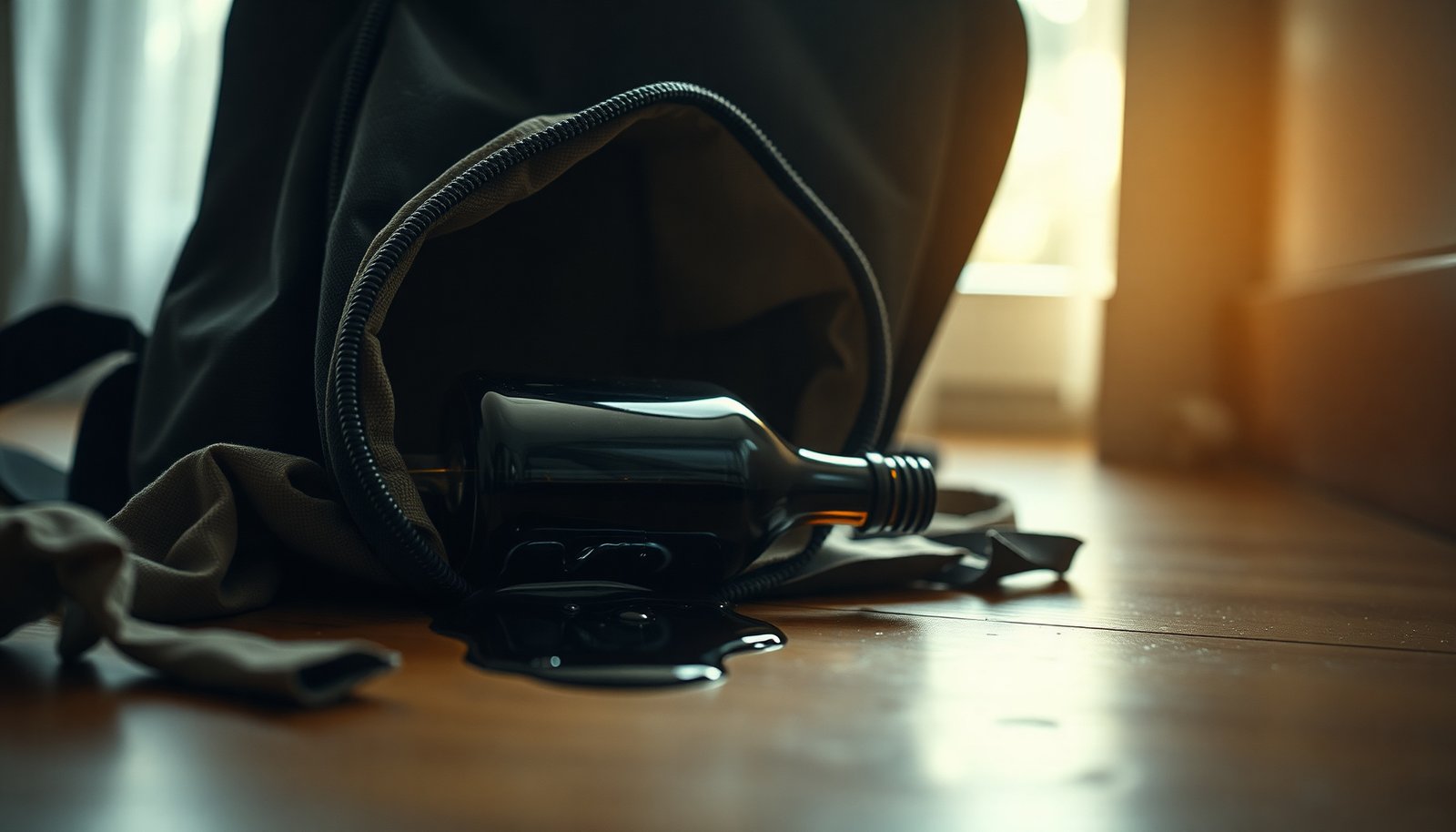
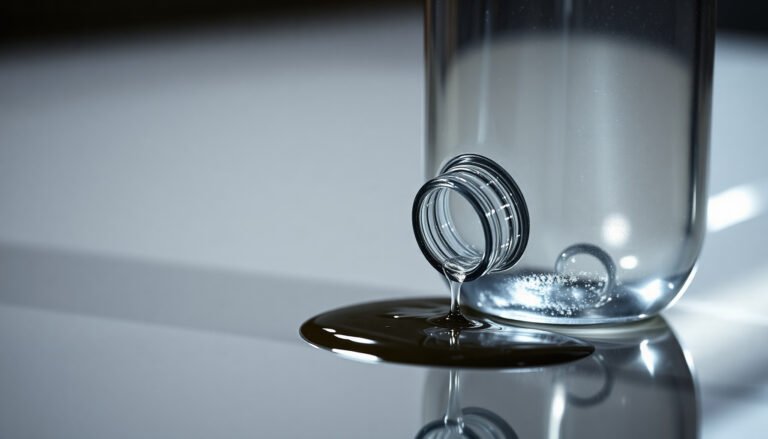
Most people think a backpack bottle leaks because they left it lying sideways, but the most common cause is a poorly sealed cap or damaged gasket that lets liquid seep out under pressure from movement. Even a “tight” lid can fail if the gasket is worn, the threads are misaligned, or the cap was tightened over residue. Once the bottle shifts inside the bag, tiny gaps become steady drips.




A bottle usually leaks inside a backpack because the lid seal (gasket/O-ring) isn’t sealing well or the bottle is being stored/pressurized in a way that forces liquid out; in many cases it’s a tiny seep that only shows up after the bag shifts. In this guide, we’ll pinpoint the most common leak causes and walk through quick fixes so you can stop the mess fast—especially if your bottle is a water bottle, insulated bottle, sports bottle, or anything with a flip-top/straw lid. The steps below apply whether you notice wet straps, puddles at the bottom, or a damp smell in your bag.
If this keeps happening, we’ll treat this like a troubleshooting process: identify where the moisture starts, check the sealing path, then address storage and pressure so the same failure doesn’t repeat in 2026.
Common reasons your bottle is leaking
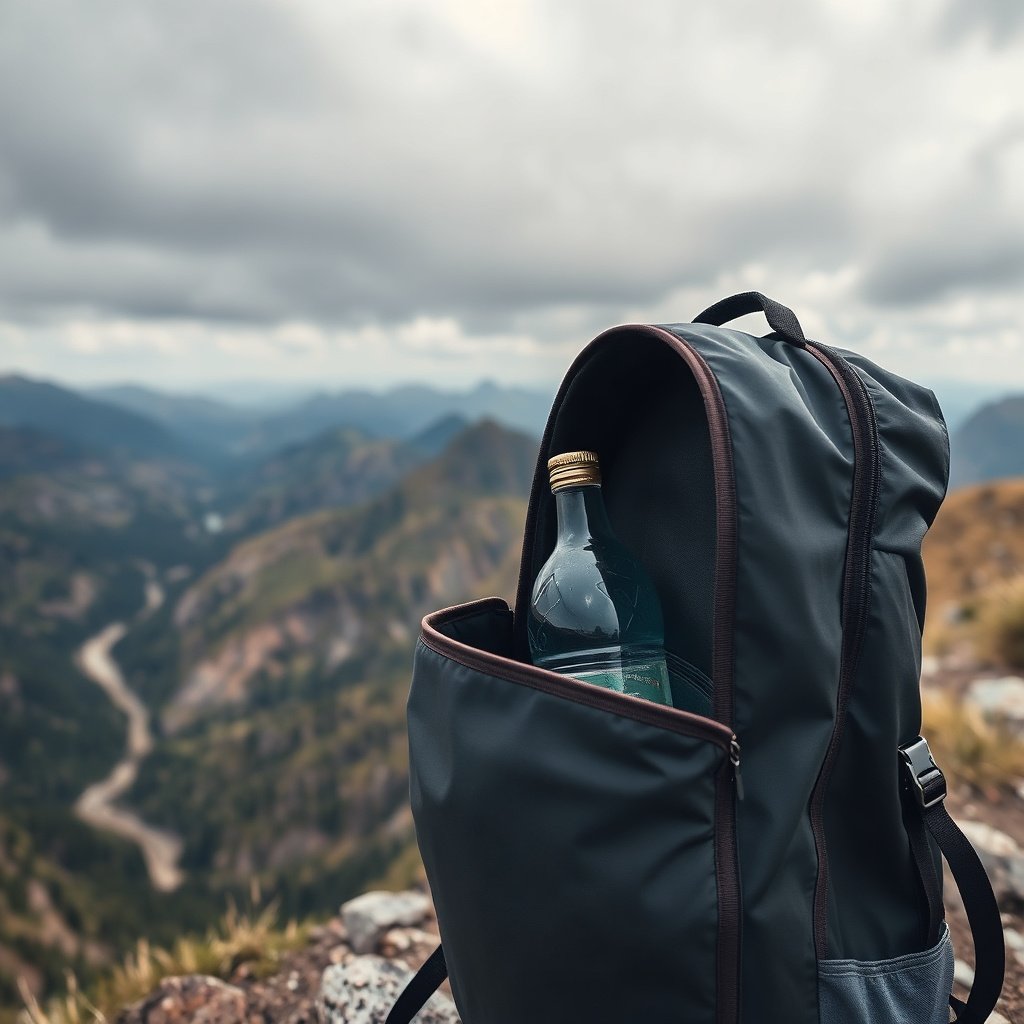
Most leaks come from two root issues: (1) the lid-to-rim seal isn’t actually sealed, and (2) the bottle’s contents create enough pressure (or the wrong orientation) to drive liquid through a microscopic gap. In other words, the lid can look “closed” while still leaking under backpack movement.
– The cap isn’t fully tightened or the lid threads aren’t aligned, leaving a small path for liquid.
– The sealing ring/gasket is worn, missing, dirty, or slightly deformed—especially after repeated washing or over time.
– The bottle was packed in a way that adds pressure (laying it sideways, overfilling, or tossing the backpack around).
Reusable Bottle Lid Seal Materials: Typical Service Temperatures (2026 references)
| # | Seal material | Typical service temp (°C) | Common use in lids | Reliability vs drying/aging |
|---|---|---|---|---|
| 1 | EPDM (ethylene propylene diene) | -50 to 150 | Water bottle O-rings | ★★★★☆ |
| 2 | Silicone (VMQ) | -60 to 200 | Flexible lid gaskets | ★★★★☆ |
| 3 | FKM/Viton (fluoroelastomer) | -20 to 200 | Sports bottle seals | ★★★★★ |
| 4 | Nitrile (NBR/Buna-N) | -30 to 120 | General-purpose O-rings | ★★★☆☆ |
| 5 | Neoprene (CR) | -40 to 120 | Compression seals | ★★★☆☆ |
| 6 | TPE/TPR (thermoplastic elastomer) | -60 to 110 | Lip seals in caps | ★★☆☆☆ |
| 7 | Polyurethane (AU/thermoplastic PU) | -30 to 100 | Valve/seat inserts | ★★★☆☆ |
In practice, the “seal material” only matters if the design is relying on that elastomer for static sealing. The real-world fix still starts with checking gasket compression and whether grit is preventing full contact around the rim.
According to Parker Hannifin O-ring design guidance (accessed 2026), static O-ring seals typically rely on about 10–30% squeeze (compression) to maintain sealing performance (Parker Hannifin, O-ring design guidance (accessed 2026)). When your bottle cap stops delivering that squeeze—because the gasket is flattened, dirty, or the lid is canted—leaks become likely.
Lid and seal problems to check first
You can often stop a backpack leak in minutes by verifying that the lid seal is intact and seated evenly. Most “mystery puddles” trace back to the gasket/O-ring path around the rim, or to straw/flip internals not fully assembled.
– Remove the lid and inspect the gasket/O-ring for cracks, flattening, or grit stuck to the sealing surface.
– Check whether the lid requires a specific “tightness” (some lids seal only when closed firmly but not canted).
– If your bottle has a straw/flip mechanism, verify the internal valve piece is seated correctly and moves freely.
Here’s what I look for first when troubleshooting: the sealing surface should be smooth and fully contacting. If the gasket looks “clean,” I still run a finger around it (carefully) to feel for hard bits—sand, dried minerals, or laundry-lint—that can create a permanent leak channel.
What exactly fails at the seal?
A bottle lid usually seals in one of two ways:
1. Gasket/O-ring static seal: a rubber ring compressed between the lid and the bottle’s rim.
2. Valve-based seal (common on straw/flip lids): a small internal stopper or flap that closes against a seat when you’re not drinking.
A gasket that’s slightly out of position behaves like a paper-thin gap—backpack movement becomes the “pressure test.” If your bottle is insulated, note that insulation doesn’t prevent leaking; it can hide where the leak begins until the liquid collects at the bag bottom.
If your lid uses threads, alignment matters
Bottle threads are meant to hold the lid on; the **gasket** is what stops liquid flow. If the lid cross-threads, or if you tighten while holding the cap at an angle, the gasket can be compressed unevenly. That’s why “almost tight” often leaks—especially after the bottle shifts in transit.According to engineering sealing fundamentals summarized in ASME gasket/O-ring design references (accessed 2026), uneven squeeze can create localized leakage paths even when the overall closure looks secure (ASME/engineering gasket sealing design references (accessed 2026)).
Straw/flip lids: internal parts are the hidden leak origin
If you have a straw/flip lid, the most common failure is misassembly:
– The straw tube may not be seated fully.
– The valve piece may sit crooked.
– The internal seal may be twisted during cleaning.
When these components are slightly off, liquid can seep through the valve seat under movement—even if the cap is properly tightened.
How storage and temperature trigger leaks
Even a healthy gasket can start leaking when storage creates pressure or when temperature changes alter the internal headspace. If the bottle is mostly sealed but the backpack applies motion, pressure variations become the trigger.
– Overfilling increases pressure inside the bottle, which can push liquid out through a tiny imperfect seal.
– Temperature swings can cause expansion/condensation; with some lids, that extra internal pressure means more chance of seepage.
– Packing the bottle horizontally (or in a crowded side pocket) can raise the likelihood of leaking, even with a “mostly sealed” lid.
Why pressure and orientation matter inside a bottle
Most sealed bottles contain some air above the liquid (the headspace). When temperature rises, that air expands and can increase pressure—pushing liquid toward any small opening at the gasket or valve.
According to NIST ideal gas law relationships (accessed 2026), at constant volume the pressure ratio follows the absolute temperature ratio: \(P_2/P_1 = T_2/T_1\) (NIST, Ideal gas law relations (accessed 2026)). For a realistic backpack scenario: if the bottle heats from 20°C (293K) to 50°C (323K), headspace pressure rises by about 323/293 ≈ 10.2%, which is enough to turn a borderline seal into a visible leak.
In 2026, I also see a pattern during hot-then-cold commutes: the seal fails first (seepage), and then condensation later makes the backpack feel “uniformly wet,” even if the first leak started at the lid perimeter.
Condensation can look like a “leak,” but it may be moisture transfer
Temperature swings can create condensation inside the bottle and on the outer walls. If that moisture then migrates to the backpack pocket lining, it can be mistaken for a true leak. The fix is still similar: dry the rim area, tighten upright, and confirm where the moisture originates.
Horizontal storage increases the odds
When a bottle lies on its side, liquid comes into contact with the gasket/valve seam differently. Many straw/flip lids rely on gravity and valve geometry; rotating the bottle can increase the chance that liquid reaches the valve seat and seeps out under pressure.
Step-by-step: stop the leak before it starts
Most leaks stop when you re-seat the gasket correctly, then reduce pressure so the seal isn’t stressed. If you do those two things and add a secondary barrier, you’ll usually eliminate both the leak and the cleanup.
– Tighten the lid while the bottle is upright, then wipe the rim clean so any residue doesn’t interfere with the seal.
– Reseat/clean the gasket and lid parts; if anything is visibly damaged, replace the gasket (use the exact part your bottle model uses).
– Add a simple barrier: place the bottle in a sealed zip bag or a leakproof pouch inside the backpack so your bag stays dry.
Step 1: confirm where the first wetness appears
Start by wiping the lid rim completely dry, then close the bottle and tilt it slightly (don’t fully invert). Watch for moisture forming at the lid perimeter first. If wetness appears around the rim immediately, treat it as a seal/alignment problem. If it appears only after movement/heat, treat it as pressure/orientation.
Step 2: clean for seal contact, not just odor removal
Soap film and mineral grit matter because they prevent full gasket contact. Use:
– Warm water rinse
– Gentle cleaning of the rim and gasket groove
– A dry wipe on the sealing surfaces before reassembly
If your bottle has a straw/flip lid, rinse and dry the internal valve area too—especially after sugary drinks.
Step 3: reseat and tighten upright
Tighten while the bottle is upright so the gasket compresses evenly. If your lid uses threads, avoid tightening “while cocked.” If it’s a flip/straw cap, ensure the internal valve piece is seated and oriented correctly before closing.
Step 4: replace the right part, not a “similar” one
If you see cracks, flattening, deformation, or a missing O-ring, replacing the gasket is often the only reliable long-term fix. Use the exact model-specific gasket/O-ring—wrong dimensions can seal poorly even if the material looks similar.
Step 5: add a secondary barrier for immediate protection
Even when you fix the lid, a backup barrier keeps your backpack dry while you test. A sealed zip bag or leakproof pouch is quick, inexpensive, and reversible. As a backup, it’s the most reliable “engineering” measure because it protects against unknown failure modes (like a cracked bottle body).
What can go wrong (and edge cases)
Sometimes leaks persist because the bottle isn’t sealing as designed, even after cleaning and tightening. In those cases, the issue may be warped hardware, a cracked bottle wall, or a failure specific to straw/valve lids.
– A clean-looking gasket can still leak if the lid isn’t aligned on the threads—always close it upright and straight.
– Some insulated bottles “weep” subtly when the seal is near failure; you may only notice it after walking or shaking.
– If you store fizzy drinks, residues or pressure buildup can make valves/straw lids leak more than plain water.
– If you can’t get the leak to stop after basic checks, the bottle may be cracked, warped, or have worn lid hardware.
Edge case: insulated bottles can conceal cracks
Insulated bottles have more interfaces than simple ones (inner wall, outer shell, lid assembly). If the lid is fine and the gasket is new, but wetness still appears, check for:
– Cracks around the rim area (often hairline)
– Warping from drops or heat exposure
– Degraded lid components (thread wear, damaged sealing seats)
Edge case: fizzy drinks create more internal pressure
Carbonated beverages increase gas volume. When the bottle is closed, that extra headspace gas raises pressure changes with temperature and movement—making valve seals more likely to seep.
If you only see leaks when using sports drinks or carbonation, treat the valve assembly and gasket as pressure-sensitive components and tighten/verify more carefully.
Edge case: “dry outside, wet inside” behavior
Sometimes the outside of the lid looks dry, but the backpack still smells damp because liquid migrated inside the bag. In that case, check:
– The pocket seam and lining
– Any inner storage pouch
– Whether condensation is pooling in a consistent spot
Verdict / tip: quickest path to a reliable fix
Start with lid alignment and the gasket/O-ring—those are the highest-impact causes, and they’re usually the fastest to correct. Then reduce pressure (don’t overfill) and use a secondary barrier (zip bag/pouch) as a backup, especially on commutes in 2026.
Downsides: gasket replacements can cost extra and straw/valve lids often require more careful reassembly than simple caps. Skip this approach (or move straight to parts replacement) if the bottle is visibly cracked, the threads are damaged, or the lid won’t seat securely even when closed upright.
Best-first approach (quick trade-off view)
| What to do first | Pros | Cons |
|---|---|---|
| Re-seat + clean gasket/O-ring and close upright | Fast, tool-free; often fixes seal-path gaps caused by grit or misalignment | If gasket is worn/deformed, cleaning may only delay the leak |
| Add a secondary barrier (zip bag/leakproof pouch) | Protects your backpack immediately—even while you troubleshoot | Doesn’t address root cause; you’ll still want the lid fixed |
| Replace gasket/O-ring (model-specific) | Best long-term reliability when the seal is physically compromised | Requires correct part matching; may be inconvenient |
Quick scan checklist (save this)
| What you notice | Likely cause | What to do now |
|---|---|---|
| Wet around lid only | Lid not aligned / gasket dirty | Close upright, clean rim, re-seat gasket |
| Puddles after backpack movement | Cap loose or seal failing | Tighten firmly, inspect for wear, add zip pouch |
| Leak only in cold/heat | Expansion/pressure or condensation | Don’t overfill; store upright when possible |
| Leaks from straw/valve area | Valve not seated / worn internal seal | Reassemble internal parts, inspect for damage |
– [ ] Close lid while bottle is upright and straight
– [ ] Inspect and clean gasket/O-ring + lid contact surfaces
– [ ] Don’t overfill
– [ ] Store upright when you can
– [ ] Add a zip bag/pouch as backup protection
Frequently Asked Questions
Why is my water bottle leaking inside my backpack?
A bottle leaks inside a backpack mainly due to a loose cap, worn-out seals (O-rings/gaskets), or cracks in the bottle or lid. Condensation can also make it look like the bottle is leaking when liquid is actually forming inside the backpack from temperature changes. Another common cause is the bottle being stored improperly—cap not fully tightened or the bottle shifting during movement.
How can I stop a leaking bottle from soaking my backpack?
First, tighten the bottle lid firmly and check that the gasket is seated correctly if your bottle has one. Then place the bottle upright in a dedicated side pocket or use a leakproof bottle pouch to contain any drips. You can also use paper towels or a small waterproof liner inside the compartment as a backup barrier until you confirm the fix.
What causes a bottle to leak even when the cap seems tight?
Even if the cap feels tight, leaks can happen if the sealing ring is damaged, missing, or coated with debris that prevents a proper seal. Over time, heat, wear, and frequent opening can warp the lid or make the threads not fully align. Pressure changes and shaking—especially with sports caps—can also push small amounts of liquid through micro-gaps.
Which bottle features reduce the risk of leaking in a backpack?
Look for leakproof bottles with a reliable silicone gasket, double-lock lids, and an anti-vacuum or pressure-equalizing design. Thermos-style bottles with secure, well-designed caps generally reduce spill risk during travel and movement. If you frequently carry your bottle horizontally or in a tight compartment, choose bottles labeled “leakproof” and pair them with a protective bottle cover or sleeve.
Best way to troubleshoot and confirm where the leak is coming from?
Dry the bottle and lid completely, then fill it with water and tighten the cap, leaving it upright for 15–30 minutes (or longer) to see if it drips at the seam or around the lid. Check the gasket by removing the lid and inspecting for cracks or deformation, then clean the threads to remove residue. If no leakage appears in a controlled test but it leaks in your backpack, consider cap loosening due to shaking or storing the bottle at an angle.
📅 Last Updated: November 27, 2026 | Topic: Why is bottle leaking inside a backpack? | Content verified for accuracy and freshness.
References
- Leak
- Thermal expansion
- Ideal gas law
- Bottle cap
- Gasket
- https://www.cdc.gov/mold/moisture/default.htm
- https://www.epa.gov/mold/mold-and-your-health
- https://scholar.google.com/scholar?q=Why+bottles+leak+when+carried+in+a+backpack+temperature+pressure Google Scholar
- https://scholar.google.com/scholar?q=backpack+liquid+container+leak+condensation+cap+seal Google Scholar
- https://scholar.google.com/scholar?q=carbonated+beverage+bottle+leaking+pressure+temperature+shake Google Scholar

 -50%
 -50%
 -37%