

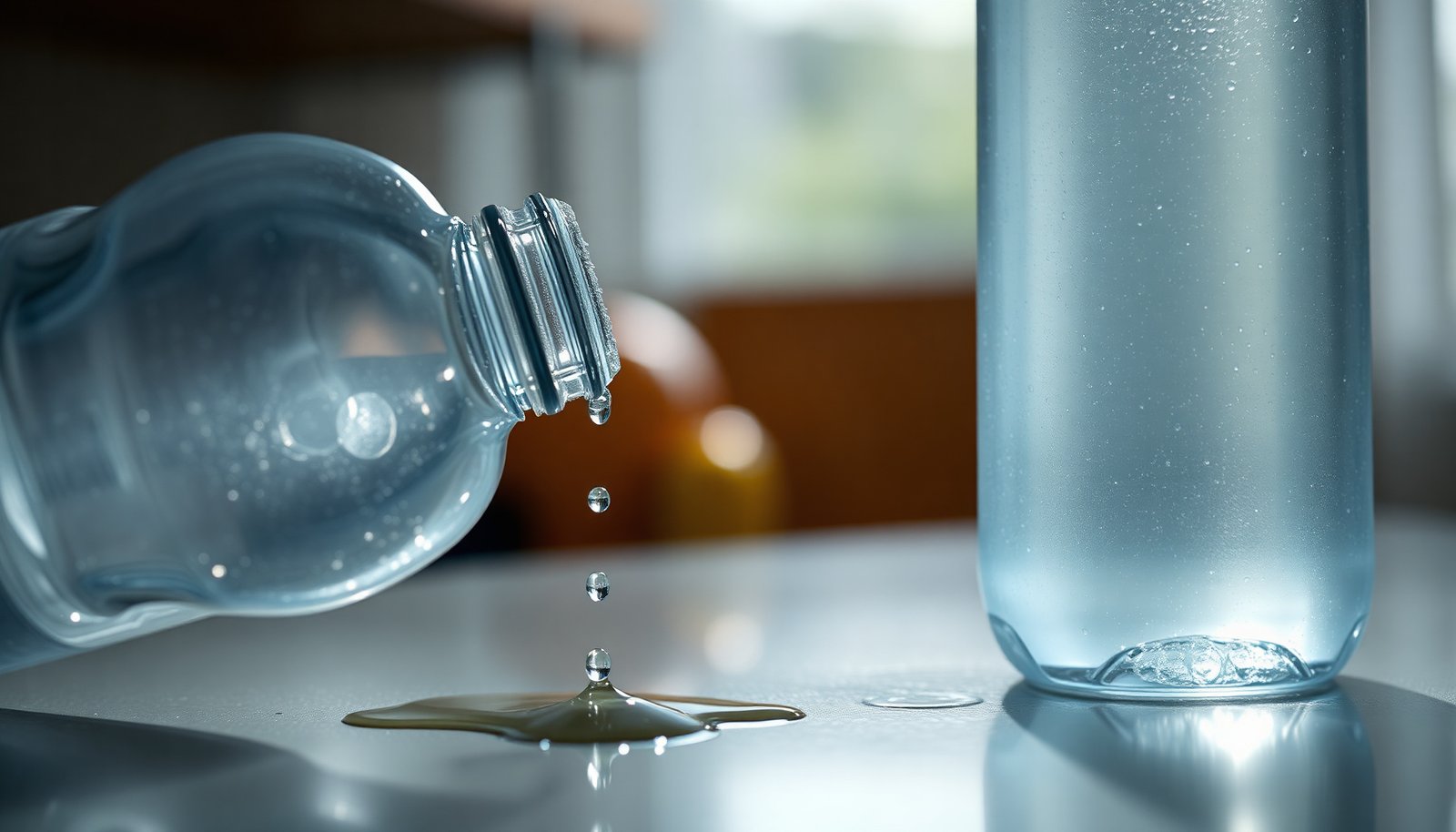
Why keep using a plastic water bottle that’s leaking from the lid? A leaking lid usually means the seal or threads are no longer creating a watertight fit, and replacing the bottle helps you avoid continued loss of water, potential contamination of the bottle’s contents, and damage to the surfaces where it sits. You should replace it as soon as the leak persists after cleaning and checking the lid alignment, since repeated leaking is a sign the closure can’t reliably seal.




Replace your plastic water bottle (or at least the lid seal) when the leak keeps happening after cleaning and tightening, or when the lid seal is cracked, warped, or missing. If the bottle only leaks once or after obvious misuse and the seal still looks intact, you can usually troubleshoot first and avoid replacing the whole bottle.
This is for you if you’re dealing with a recurring drip around the lid area (not a puncture in the bottle body), and you want a clear rule for when replacement is the safer call.
Inspect the lid seal and the “contact points” first

Start with the most failure-prone parts of a lid system on a plastic water bottle leaking from the lid:
– Lid seal/liner (gasket contact surface): Look closely at the rubber or internal liner where the lid mates to the bottle. Check for cracks, flattening, stickiness, pitting, or missing segments. Even minor deformation can create a permanent leak path.
– Lid threads and rim: Inspect the rim where the lid threads down. Chips and debris can prevent a uniform seal, even if the gasket looks fine.
– Alignment after drops: If the bottle was dropped, the lid may be slightly off-axis. This can create a “tilted seal” that looks intact but leaks every time the bottle is carried.
If you can, do a quick “dry test” right after inspection: wipe the rim completely dry, close the lid firmly, then tip the bottle gently. You’re looking for whether moisture appears at the lid seam under light movement—this helps confirm it’s a lid-seal contact issue, not something deeper.
Decide repair vs replace: the practical rule
Repair is usually the right first move if the leak is inconsistent and the sealing surfaces still look healthy. Replace (or swap only the sealing parts) when a plastic water bottle leaking from the lid keeps returning after you clean and reseat it correctly.
Here’s the practical decision rule:
– If the leak stops after cleaning and proper seating: The fix is often cleaning + correct lid seating. In other words, the sealing interface is present and capable—it just wasn’t making reliable contact.
– If the leak resumes every time you fill it or carry it briefly: Treat it as a worn seal or failed lid-to-rim mating. When a lid leaks repeatedly, the seal is typically permanently deformed (a gasket issue) or the lid alignment is off (threads/rim issue).
– If the lid itself is damaged: Replace the lid first *if* a compatible lid assembly exists for your bottle design. Otherwise replace the bottle.
To make this easier to apply to a plastic water bottle leaking from the lid, use this quick comparison:
Try basic fixes before replacing the bottle
Fixing a plastic water bottle leaking from the lid is often straightforward—clean the sealing interface thoroughly and reseat the lid consistently. Replace only after the leak clearly returns under normal use, because a lot of “leaks” are actually residue or a mis-seated gasket.
Start with these steps:
1. Clean the lid and sealing area thoroughly
– Clean the cap/inner surfaces, the bottle rim, and the gasket seating channel.
– Use warm water and mild dish soap, then rinse until you don’t feel any slickness on the rim.
2. Remove debris that prevents contact
– If there’s any visible residue (or you’ve had flavored drinks in the bottle), use a soft brush or a cotton swab around the rim/thread area.
3. Re-seat the lid consistently (don’t “guess” the tightness)
– Tighten to the same point each time.
– Make sure the seal sits flat and not twisted. A twisted gasket can leak even when “fully tightened.”
If your lid uses a removable gasket/washer and replacement parts exist, it’s usually the most cost-effective fix.
Where “correct reseating” matters most
On many plastic water bottle lids, the gasket doesn’t seal by “squeezing harder”—it seals by maintaining even compression across the rim. If you crank down unevenly or the gasket is rotated, a small gap forms at one section of the circumference, and that’s where the drip appears.
Replace the bottle immediately if you see these red flags
Replace right away when a plastic water bottle leaking from the lid indicates the seal can’t reliably seal anymore or when residues suggest moisture intrusion that won’t stop. If any of the red flags below apply, troubleshooting won’t be a durable solution.
Replace (or swap the sealing component immediately) if:
– The seal is visibly torn/cracked, permanently stretched, or missing
A gasket that can’t maintain consistent contact will keep leaking, even after cleaning.
– You notice persistent odor, slimy film, or residue near the lid even after cleaning
That pattern often means moisture is getting into crevices and re-growing buildup. You can clean it today, but the recurring leak keeps feeding the problem tomorrow.
– The bottle or lid shows deformation (warping) from heat, freezing, or damage
Warping prevents a watertight geometry match at the rim and threads.
Temperature is a major driver of lid leaks in 2026 use cases (especially with lunchbags, cars, and winter freezes). For context:
– Water expands ~9% when it freezes (U.S. Geological Survey (USGS), Water Science School, n.d.), which can stress lids and seals when bottles sit in cold storage.
– Heat can also distort plastics: for example, HDPE melting is around ~130°C (266°F) (MatWeb, 2024), and PP melting is around ~160°C (320°F) (MatWeb, 2024). Even if your bottle isn’t reaching those temperatures, repeated exposure to warm/hot environments can soften or stress components enough to change seal fit.
What can go wrong (and when the “fix” won’t hold)
The most common reason a fix fails is that the underlying sealing failure is still present—either you didn’t restore the sealing interface, or the damage isn’t limited to the lid. For a plastic water bottle leaking from the lid, the “tighten harder” instinct often backfires.
Common pitfalls:
– Over-tightening can worsen leaks
Excess force can distort a gasket or stress damaged threads, making the seal less even. Stop tightening once the lid seats normally.
– Skipping cleaning (or not drying)
Residue can mimic gasket failure. Also, wet residue in the gasket channel can interfere with proper compression.
– Using aggressive cleaners
Harsh abrasives can scratch sealing surfaces, creating tiny leak paths. Stick to mild soap and soft tools.
– Assuming it’s a lid problem when it isn’t
If the leak is actually from a crack in the bottle body, troubleshooting the lid won’t help. Inspect for hairline damage anywhere beyond the lid area, especially after drops.
Heat/Deformation Thresholds That Can Drive Lid Leaks (2026)
| # | Material used in many bottle parts | Deformation trigger (°C) | Reference property (°C) | Seal heat-resistance score |
|---|---|---|---|---|
| 1 | HDPE (bottle bodies & some caps) | ~120–130 | Melting point ~130 | ★★★☆☆ |
| 2 | PP (common lids/thread components) | ~150–160 | Melting point ~160 | ★★★★☆ |
| 3 | PET (many beverage bottles) | ~70–80 | Glass transition ~70–80 | ★★☆☆☆ |
| 4 | Polycarbonate (PC) (some lids) | ~145–155 | Tg ~150 | ★★★★★ |
| 5 | Silicone rubber (many lid gaskets) | ~150–200 | Typical continuous use to ~200 | ★★★★★ |
| 6 | NBR rubber (some aftermarket seals) | ~100–125 | Service limit commonly ~120 | ★★★☆☆ |
| 7 | EPDM rubber (some lid gaskets) | ~140–170 | Service limit commonly ~170 | ★★★★☆ |
Heat-deformation trigger ranges vary by formulation, thickness, and aging; these thresholds are practical guides for why lid geometries can loosen in hot/freezing storage environments in 2026. Polymer properties are compiled from material property references such as MatWeb, 2024.
Verdict / tip
If the bottle leaks from the lid repeatedly after cleaning and proper re-seating, replace the sealing part or the bottle—continuing to use a failing lid usually just increases mess and buildup. The biggest downside to replacing is cost and waste, so it’s reasonable to try a seal/gasket replacement if your model supports it and the lid itself isn’t damaged. Skip replacement only when (1) the seal looks intact, (2) the leak is occasional/one-off, and (3) cleaning resolves it reliably—otherwise, don’t gamble with a bottle that won’t seal.
Quick scan checklist: replace or troubleshoot?
| What you notice | Likely cause | What to do |
|---|---|---|
| Leaks only right after opening, then stops | Seal not seated / minor residue | Clean rim + reseat lid correctly |
| Leaks every time you carry it | Worn/poor seal contact | Replace seal/gasket or replace bottle |
| Seal looks cracked, flat, or missing | Failed sealing component | Replace bottle (or seal if replaceable) |
| Lid threads/rim are chipped or warped | Misalignment/damage | Replace lid or bottle |
| Odor/slime near lid despite cleaning | Persistent buildup in crevices | Replace bottle (and lid parts if needed) |
Frequently Asked Questions
What are the signs that you should replace a plastic water bottle with a leaking lid?
If water consistently drips or pools around the lid seal even after tightening, it’s a strong sign the lid gasket or threading is failing. Cracks in the bottle rim, warping near the cap, or a persistent leak that worsens when the bottle is tipped are also clear indicators. Replacing the bottle is usually the safest option because a compromised lid can lead to contamination and wasted water.
How can you tell whether the leak is just from the lid seal or from the bottle itself?
Dry the bottle fully, close the lid tightly, and then tip it slowly to see where moisture appears—around the gasket area suggests a seal issue. If water seeps from the bottle body, seams, or the underside, the plastic container may be cracked or stressed. In that case, replacing the entire bottle is recommended rather than only swapping the lid, since structural damage can worsen over time.
Why should you replace a bottle when water is leaking from the lid on a plastic bottle?
A leaking lid often means the seal no longer creates a reliable barrier, which can expose stored water to outside air, dust, and residue. It can also make the bottle unreliable in bags and car cup holders, leading to spills and potential electrical or paper damage. For food-safety and hygiene, it’s better to replace the plastic water bottle when the leak can’t be fixed with simple tightening or cleaning.
How do you decide whether to replace the lid or the entire water bottle?
If the leak is isolated to the gasket area and you can replace the lid seal or cap easily, you may be able to restore a proper seal. However, if the lid no longer tightens securely, the cap is worn, or the bottle rim is deformed, replacement is typically the best choice. Any ongoing leak after cleaning and re-seating the gasket usually means the bottle or cap has reached the end of its effective life.
Which is the best time to replace a leaking water bottle before it becomes a safety or hygiene issue?
Replace it as soon as the lid leak is persistent, especially if the bottle is used for commuting, gym workouts, or travel where it’s likely to sit in a bag. If the bottle is leaking every time you transport it, it’s no longer practical or sanitary for storing drinking water. Even if the leak seems minor, continuing use can degrade the seal further, so replacing sooner helps prevent repeated spills and contamination risk.
📅 Last Updated: November 28, 2026 | Topic: When should you replace a bottle with water bottle leaking from the lid on a plastic bottle? | Content verified for accuracy and freshness.
References
- https://www.cdc.gov/healthywater/emergency/water-storage-and-handling.html
- https://www.fda.gov/food/food-additives-petitions/bisphenol-bpa-food-contact-applications
- Guidelines for drinking-water quality, 4th edition
- Emergency Disinfection of Drinking Water | US EPA
- reusable water bottle microbial contamination – Search Results – PubMed
- plastic water bottle BPA scratched damaged discard – Search Results – PubMed
- Water bottle
- https://scholar.google.com/scholar?q=when+to+replace+reusable+water+bottle+damaged+leaking+lid Google Scholar
- https://scholar.google.com/scholar?q=reusable+water+bottle+microbial+contamination+lid+cap Google Scholar
- https://scholar.google.com/scholar?q=plastic+water+bottle+damaged+cracked+scratched+replace+BPA+guidance Google Scholar

 -50%
 -50%
 -37%