

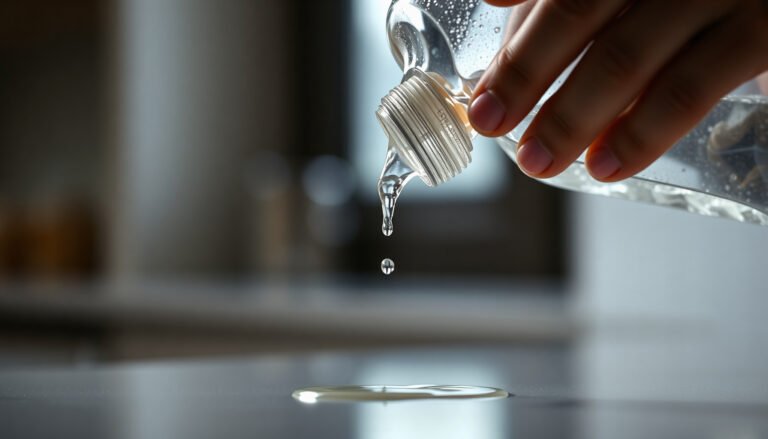
A lid leak that soaks your luggage during travel is the practical signal that the bottle may no longer be reliable. You will learn how to check the lid gasket, threads, and carry conditions, and how to distinguish a fixable misalignment from damage that keeps returning once pressure and motion build. By the end, you will know when a quick reset is enough and when replacement prevents wasted water, ruined gear, and repeated leaks.




If your water bottle is leaking from the lid during travel, replace it when the seal is worn, cracked, or won’t seat correctly after cleaning and reassembly. If the leak is minor and you can restore a tight, watertight seal (often by cleaning or replacing the lid gasket), you usually don’t need a full bottle replacement. Use the failure location—lid seal vs. gasket vs. bottle body—to decide quickly and avoid carrying a bag full of moisture.
Who this is for / when it applies
This guidance is for people whose water bottle lid leaks specifically while the bottle is in motion (not slowly, not from the seams). It applies if you’re packing a water bottle for a commute, flight, road trip, or day bag and you notice liquid pooling on other items.
It’s also most relevant when the leak is clearly originating at the lid area—like around the cap underside, the rim, or the lid’s locking interface. If your water bottle shows droplets only when tossed into a bag, set sideways on a tray, or jostled in a cup holder, the most likely culprit is a seal that’s no longer compressing evenly.
Replace vs. fix vs. keep using (fast decision rules)
If you’re trying to decide fast, start with the simplest fix—clean and reseat—then replace only when the water bottle lid can’t form a reliable watertight compression seal. This approach protects you from unnecessary replacements while still addressing the failure mode that actually causes lid leaks.
Here are the decision rules I recommend for a leaking water bottle from the lid:
– Fix first if the lid feels loose, the gasket looks intact, and the leak stops after cleaning and properly aligning/reclosing the lid. A surprising number of lid leaks are caused by residue or a gasket that’s slightly twisted during reassembly.
– Replace the bottle (or at least the lid/gasket) if leakage continues because the seal can’t compress evenly, the lid threads/bayonet don’t lock securely, or the gasket is damaged/flattened. In these cases, repeatedly tightening the lid usually makes the problem worse.
– If the leak location is unclear—or you see moisture around the bottle seams, welds, or base—treat it as a structural seal issue and plan to replace sooner rather than later. Even a perfectly good lid gasket won’t fix a failing body seal.
To make this easier to apply, use this comparison table for a leaking water bottle lid:
| What you observe | Most likely cause | Best action for a leaking water bottle lid |
|---|---|---|
| Leak stops after re-closing once | Gasket misalignment or leftover debris | Clean sealing surfaces, reseat, keep using after verifying |
| Leak returns after a few minutes in a bag | Gasket compression set or uneven sealing | Replace lid gasket (or lid); avoid “over-tightening” |
| Lid wobbles or doesn’t lock consistently | Worn threads/bayonet or locking hardware | Replace the lid (if parts exist) or replace the bottle |
| Moisture shows near seams/base | Body seal failure (not just the lid) | Replace the bottle; don’t rely on lid gasket fixes |
What to check on the lid and seal
A leaking water bottle lid usually has one of three problems: the lid isn’t sealing, the gasket is degraded, or the sealing surfaces have residue preventing full compression. The fastest way to find which one is failing is to inspect the gasket/O-ring and the cap’s mating surfaces after a careful cleaning.
Start with the gasket/O-ring:
– Remove the lid and inspect the gasket/O-ring: look for cracks, tears, warping, tacky residue, or a permanently flattened shape.
– If the gasket is a removable ring, note whether it sits evenly in its channel. Twisting is common after reassembly—especially after quick cleaning in a sink.
Then check how the lid mates to the bottle:
– Make sure the lid seats smoothly and locks with normal resistance. If your water bottle lid requires excessive force, that’s a red flag that the seal geometry is already compromised.
– Don’t ignore wobble. If you can wiggle the lid side-to-side while closed, uneven compression is likely—meaning the gasket can’t form a reliable watertight barrier during travel.
Finally, clean sealing surfaces thoroughly:
– Clean the cap underside, the bottle rim, and the gasket channel. Salt/food buildup, drink residue, and even tiny trapped debris can cause a “nearly seals” situation where a leaking water bottle only fails once it’s jostled.
– If you use hot water, make sure the gasket is not boiling in place; heat can temporarily change material behavior and cause uneven reseating when it cools.
To understand why gasket condition matters, it helps to know how elastomers behave under compression. According to Parker O-Ring Handbook (2019), static O-ring seals typically require meaningful “squeeze” compression (often discussed in the 15–30% range) to maintain an effective seal under motion and vibration. When the gasket is already flattened or hardened, that compression can’t be achieved—even if the lid closes.
Common Lid-Gasket Elastomers and Their Sealing Implications (Typical Ranges)
| # | Gasket material | Typical hardness (Shore A) | Typical service temp (°C) | Seal reliability |
|---|---|---|---|---|
| 1 | Silicone (VMQ) | 50–60 | -55 to 200 | ★★★★★ |
| 2 | Fluoroelastomer (FKM) | 70–90 | -20 to 200 | ★★★★☆ |
| 3 | EPDM | 60–70 | -40 to 125 | ★★★☆☆ |
| 4 | Nitrile (NBR) | 60–70 | -30 to 100 | ★★★☆☆ |
| 5 | TPE (Thermoplastic elastomer) | 50–70 | -50 to 120 | ★★☆☆☆ |
| 6 | Natural rubber (NR) | 40–70 | -20 to 70 | ★☆☆☆☆ |
| 7 | Polyurethane elastomer (TPU) | 85–95 | -40 to 80 | ★☆☆☆☆ |
Note: In 2026, lid gasket materials vary widely by brand and design, so treat this table as “what to expect from elastomers in general,” not a guarantee for any specific water bottle model.
What to do during travel (so you don’t lose your bag)
If your water bottle lid is leaking while you’re away from home, the immediate goal is containment until you can inspect the gasket and sealing surfaces. You don’t need perfect troubleshooting at the gate or on the highway—just prevent the leak from turning into a soaked bag.
Do this during travel:
– Use a temporary barrier: store the bottle inside a zip bag or wrap it with a towel until you can inspect/repair the lid at your destination.
– If your water bottle uses a removable gasket, carry a replacement gasket (or the parts you need) and swap it when you get a chance.
– Keep it upright when possible and avoid overfilling. Pressure and sloshing amplify even tiny seal weaknesses, especially with flip-top lids and drink spouts.
Heat matters too. According to FDA Food Code (2022), cold potentially hazardous food should be held at 41°F / 5°C or below, and hot potentially hazardous food should be held at 135°F / 57°C or above. While beverages may not be “food,” this standard reflects a practical reality: warm environments accelerate microbial growth risk when residues sit in a leak path. In 2026, that’s especially relevant for cars parked in sun.
What can go wrong (common mistakes and edge cases)
If you keep trying to “force it to stop,” you can accidentally make a leaking water bottle lid worse—especially if the gasket is already damaged. The most common mistakes happen when people treat the symptom (wetness) instead of the mechanism (seal compression and alignment).
Watch for these pitfalls:
– Over-tightening doesn’t always help: if the gasket is worn or misaligned, extra force can deform it further. Instead, remove the lid, clean the gasket channel, and check for twist or flattening.
– Ignoring tiny leaks: even a slow seep can become a bigger mess after hours of vibration and temperature changes. A water bottle lid that leaks “a little” often fails “a lot” later.
– Confusing lid leaks with bottle-body leaks: if moisture appears around seams, welds, or the base, the lid fix won’t solve the root cause. In that situation, the water bottle body seal is failing, and replacement is typically the safer move.
– Reusing a badly degraded gasket: once the seal is permanently deformed, cleaning alone usually can’t restore a reliable seal. Material compression set (permanent loss of spring back) is the reason.
Edge cases that can confuse diagnosis:
– Lids that leak only when the bottle is sideways: the seal may be adequate upright, but fails when sloshing pressure pushes the gasket off-center.
– Lids that leak only when hot or cold: temperature can change elastomer behavior and internal pressure. In 2026, this is common when people refill with very hot liquids and then immediately cap and store.
Verdict / tip (and who should skip the “fix” route)
If your leaking water bottle lid seal can be restored—meaning the gasket is intact and the lid locks consistently—start with cleaning and correct reassembly rather than replacing the whole bottle. If the seal still won’t hold watertight after reseating, replacement is the correct call.
Here’s the practical verdict:
– Replace/repair only the seal components first when the gasket looks good and the lid seats normally. Many bottle manufacturers offer gasket replacements, and lid-only replacements are often less expensive than a full bottle.
– Skip repeated “patch attempts” and replace sooner if the gasket is cracked/flattened, the lid doesn’t lock consistently, or the leak is coming from the bottle body rather than the lid.
Downsides to consider before you keep using a leaking water bottle:
– Even if the leak stops temporarily, a seal that’s failing under motion may return mid-trip.
– A leaking water bottle can leave odor and residue in the cap crevices, which makes future cleaning harder.
Who should skip the fix route:
– Anyone who sees moisture around seams/base (body seal issue).
– Anyone whose water bottle lid threads/bayonet feel worn, gritty, or inconsistent.
– Anyone with a gasket that is visibly flattened, torn, or permanently warped—even after cleaning.
Quick scan checklist (save this):
| What you see | Likely cause | What to do next |
|---|---|---|
| Leak stops after cleaning/reseating | Debris/misalignment | Keep using after verifying it seals |
| Gasket looks cracked/warped/flattened | Worn seal | Replace lid gasket (or lid/bottle) |
| Lid won’t lock / wobbles | Damaged threads/locking parts | Replace lid or bottle |
| Leak appears at seams/base | Body seal issue | Replace bottle |
| Leak only when bag is on its side | Seal weak under motion | Repair/replace seal; pack upright or use barrier |
Frequently Asked Questions
When should you replace a water bottle if it leaks from the lid during travel?
You should replace the bottle once you’ve confirmed the leak is coming from a worn, cracked, or no-longer-sealing lid component, not from overfilling or temporary condensation. If tightening the lid, adjusting the gasket, and cleaning the sealing surfaces doesn’t stop the leaking after a few uses, the lid seal likely needs replacement or the bottle should be retired. For travel—where you may not be able to monitor or dry the bottle—replacing a persistently leaking bottle is the safest choice to avoid spills and contamination.
How can you tell whether the lid leak is a seal problem or a cracked bottle issue?
Check whether water escapes only when the bottle is upright, squeezed, or jostled—leaks that behave like “cap/threads/gasket” issues often point to a compromised lid gasket or misalignment. Inspect the lid and rim for cracks, warping, or residue that prevents a tight seal, and run a quick test by filling the bottle and turning it over briefly. If you see leaks from the bottle body seam, around the threads, or through hairline cracks, the bottle is not travel-safe and should be replaced rather than repeatedly cleaned or resealed.
Why does a travel water bottle leak from the lid even when it’s closed?
Common causes include a worn or hardened gasket, trapped debris on the sealing surface, and improper lid closure (especially if the bottle is slightly misaligned). Temperature changes during travel can also expand and contract materials, loosening the seal, while carbonation or thick liquids can increase pressure and force water past the lid. Even small leaks can become worse over time, so if the issue repeats across different fills and conditions, plan to replace or service the lid.
What’s the best way to troubleshoot a leaking water bottle lid before deciding to replace it?
First, clean the lid and sealing ring thoroughly with warm water and, if appropriate for the material, a mild dish soap; rinse and dry completely. Next, check that the gasket sits correctly in its groove and that the lid is tightened according to the design (some bottles require fully closing or locking). Do a controlled leak test—fill to a mid-level, wipe dry, then tip, shake gently, and observe—before you decide whether replacement is necessary.
Which parts should you replace first—gasket, lid, or the whole bottle—when the lid leaks during trips?
If your bottle has a removable gasket or replaceable lid components, start by replacing the gasket, since it’s often the first wear point in a travel water bottle lid seal. If the gasket is intact but the lid is cracked, warped, or won’t tighten securely, replace the lid assembly (if compatible) rather than discarding the entire bottle. However, if the leak persists after replacing the gasket and lid—or if you detect cracks, seam issues, or persistent pressure leaks from the bottle body—replace the whole bottle to ensure travel leak-proof performance.
📅 Last Updated: November 28, 2026 | Topic: When should you replace a bottle with water bottle leaking from the lid during travel? | Content verified for accuracy and freshness.
References
- reusable water bottle microbial contamination cap lid – Search Results – PubMed
- water bottle biofilm cap gasket – Search Results – PubMed
- household drinking water storage container tight fitting lid microbial contamination – Search Res…
- drinking water storage container hygiene and microorganisms – Search Results – PubMed
- https://www.who.int/water_sanitation_health/dwq/safe_storage/en/
- https://www.epa.gov/ground-water-and-drinking-water/emergency-disinfection-and-water-treatment
- Water | Ready.gov
- https://scholar.google.com/scholar?q=leaking+reusable+water+bottle+lid+gasket+replace+travel Google Scholar
- https://scholar.google.com/scholar?q=reusable+water+bottle+microbial+contamination+cap+lid+biofilm Google Scholar
- https://scholar.google.com/scholar?q=water+storage+containers+safe+storage+tight+fitting+lid+damaged+container Google Scholar

 -50%
 -50%
 -37%